LGBTQIA+ Mental Health
& Wellbeing
Minority stress, coming out, specific mental health conditions, affirming therapy, NHS pathways in Wales and England, and the links between LGBTQIA+ identity, neurodivergence, and domestic abuse.
Minority stress — why LGBTQIA+ mental health differs
Minority stress theory explains that LGBTQIA+ people carry an additional psychological burden from chronic exposure to stigma, discrimination, microaggressions, and internalised shame. This is not fragility — it is a rational response to a genuinely hostile environment.
Sources of minority stress
- External — discrimination, rejection, harassment, hate crime, institutional hostility
- Internal — internalised homophobia or transphobia, fear of rejection, shame
- Concealment — the cognitive and emotional effort of hiding identity
- Anticipatory — ongoing anxiety about how others will react
- Cumulative microaggressions — individually minor, collectively exhausting
- Structural — discriminatory systems, lack of legal protection, hostile media
Protective factors — what reduces risk
- Family acceptance — the single most protective factor for young people
- LGBTQIA+ community connection and peer support
- Access to affirming, competent mental health support
- Legal protections that are enforced
- Visible positive representation in schools, media, and public life
- Identity affirmation by professionals — using correct names and pronouns
🏴 If you are in Wales
Mental health services in Wales operate separately from England. If you are in Wrexham, Flintshire, Denbighshire or anywhere else in Wales, these are your routes in.
- C.A.L.L. Mental Health Helpline for Wales — 0800 132 737, free, 24/7. Text ‘help’ to 81066. Welsh available on request. callhelpline.org.uk
- NHS 111 Wales, option 2 — 24/7 mental health option. A practitioner will talk through how you are feeling and can arrange referrals
- Meic — free, confidential helpline for children and young people up to 25 in Wales. 0808 80 23456, text 84001. Daily 8am–midnight. meiccymru.org
- Samaritans Welsh language line — 0808 164 0123, 7pm–11pm daily
- NHS Talking Therapies is England-only — you cannot self-refer to it from Wales
- Local primary care mental health support services (LPMHSS) in Wales accept GP referral and, in some areas, self-referral
Local support — Wrexham, North Wales & Shropshire
National helplines matter, but isolation is one of the biggest drivers of poor mental health. These are the services actually operating on the Wrexham and Oswestry border.
Wrexham & North Wales
Viva LGBT+
Youth groups and one-to-one support for LGBTQ+ people under 25 across North Wales. Weekly Wrexham group on Thursdays, 6–8pm, plus groups in Rhyl, Flintshire and Llandudno Junction. They also work with families, friends and professionals.
01745 357941Umbrella Cymru
All-Wales gender and sexual diversity specialists. Self-referral, no age limit — emotional support, advocacy, counselling, practical help including deed poll. They also support families and professionals.
umbrellacymru.co.uk | 0300 302 3670, text 07520 645700Unique Transgender Network
Voluntary group supporting trans, non-binary and gender-diverse people across North Wales and West Cheshire. Monthly face-to-face meetings in Bangor, plus online.
Shropshire, Telford & Oswestry
Urgent NHS mental health — MPFT
Freephone, 24/7, any age, for you or someone else. Text STW to 85258.
0808 196 4501Talking Therapies (Shropshire)
Self-referral for 16+ registered with a local GP.
0300 123 6020 (Shropshire) | 01952 457 415 (Telford & Wrekin)XYZ Youth Club
LGBTQI+ youth group led by qualified youth workers, based in Shrewsbury with sessions elsewhere in Shropshire. Check current venues before travelling.
Shropshire Senior Rainbow Friends
Social and mutual support group for LGBT+ people over 50 across Shropshire, Telford & Wrekin and the borders. Meets monthly in Shrewsbury.
Via Age UK Shropshire: 01743 233 123Coming out — psychological process & support
Coming out is not a single event — it is an ongoing process that happens repeatedly across different relationships and contexts throughout a person's life. There is no right way, timeline, or order.
What coming out involves
- First coming out to oneself — often the most significant and private stage
- Selective disclosure to trusted individuals — does not mean disclosure to everyone
- Each new relationship and context may require a decision about disclosure
- Coming out does not end — a person may come out hundreds of times across their life
- The psychological cost of concealment is significant — but so is the risk of unsafe disclosure
Risks and protective factors
- Disclosure in unsupporting environments increases mental health risk significantly
- Having at least one accepting person significantly changes outcomes
- Young people should not be pressured to disclose before they are ready
- Young people have the right to confidentiality from healthcare professionals
- Professionals should not disclose a young person's identity to parents without their consent unless there is a safeguarding concern
- Childline, Meic and Switchboard all offer confidential support
Specific mental health conditions & LGBTQIA+ people
Depression & anxiety
- Rates significantly elevated across the community; minority stress, discrimination, and concealment are primary drivers
- Standard CBT may be less effective without affirming adaptation
- Peer support from other LGBTQIA+ people has strong evidence
PTSD & trauma
- Hate crime, conversion practices, and rejection-related trauma are significant sources of PTSD
- Trans people frequently carry trauma from healthcare interactions
- Trauma-informed, LGBTQIA+-affirming therapy is essential
- Galop supports LGBTQIA+ people affected by abuse and violence: 0800 999 5428
Eating disorders
- Higher rates in LGBTQIA+ populations — particularly in gay and bisexual men, and trans people
- Body dysphoria can interact with disordered eating in complex ways
- Services need to understand the specific presentations in this community
- Beat helpline: 0808 801 0677 — check current hours
Self-harm & suicidal ideation
- Significantly elevated rates — particularly in trans and non-binary young people
- Family rejection is a primary risk factor; acceptance is the primary protective factor
- Professionals should ask about LGBTQIA+ identity as part of holistic assessment
- C.A.L.L. Wales: 0800 132 737 | Samaritans: 116 123 | Switchboard: 0800 0119 100
Personality disorder misdiagnosis
- BPD is overdiagnosed in LGBTQIA+ people — particularly trans women and AFAB people
- Emotional intensity, identity exploration, and relational difficulties may be responses to minority stress, not disordered personality
- Always consider underlying trauma, neurodivergence, and social context before diagnosing personality disorder
Substance use
- Higher rates of alcohol and substance use in LGBTQIA+ populations, particularly in venues historically associated with community gathering
- Often a response to minority stress, isolation, and trauma
- Trauma-informed addiction support is essential
- Wales: DAN 24/7 bilingual drug and alcohol helpline 0808 808 2234
🧠 Neurodiversity & LGBTQIA+ identity
Research consistently shows higher rates of gender incongruence and sexual diversity in autistic and ADHD populations — and higher rates of autism and ADHD in LGBTQIA+ people. These are co-occurring identities, not cause-and-effect relationships.
- Autistic reduced social conformity may facilitate earlier, more authentic self-identification
- Support for both identities should proceed in parallel
- Gender-affirming services must make neurodivergent adaptations
- Do not attribute gender identity to neurodivergence — these co-occur, they do not cause each other
- Neurodivergent LGBTQIA+ people often face compounding barriers in services
🏠 Domestic abuse & LGBTQIA+ mental health
Domestic abuse is a leading cause of C-PTSD, depression, and suicidal ideation. LGBTQIA+ people in abusive relationships face additional barriers to recognition and support — and LGBTQIA+-specific abuse tactics, such as threatening to out someone or using misgendering as control, cause distinct psychological harm.
Finding LGBTQIA+-affirming therapy
Not all therapists are equipped to work with LGBTQIA+ clients. Asking the right questions before booking protects you from harm and saves time.
Questions to ask before booking
- “Do you have experience working with LGBTQIA+ clients?”
- “What is your approach to gender identity and sexual orientation?”
- “Have you received any specific training in LGBTQIA+ issues?”
- “Do you use my stated name and pronouns?”
- Any hesitation or caveat in response to these questions is informative
- Avoid any therapist who suggests identity is a problem to be resolved
Where to find affirming therapists
- Pink Therapy — UK-wide directory of LGBTQIA+ and gender-diversity affirming therapists
- BACP therapist finder — filter for LGBTQ+ experience
- LGBT Foundation — national helpline, advice and signposting: 0345 3 30 30 30, Mon–Fri 9am–9pm, Sat–Sun 10am–6pm. Note: 0345 numbers are not free — check your tariff
- MindOut — LGBTQ mental health charity. Online chat is national, Mon–Wed 3–5pm
Conversion practices warning
Any approach that attempts to change, suppress, or discourage sexual orientation or gender identity is harmful, has no clinical evidence base, and causes serious psychological harm. It is not acceptable in any form, by any professional, in any context. Galop runs a dedicated conversion practices helpline: 0800 999 5428
NHS pathways
- Your GP — first point of contact in both Wales and England. You can request a GP you feel comfortable with, and ask for longer appointments if needed
- Wales — referral via your GP to local primary care mental health support services. C.A.L.L. (0800 132 737) and NHS 111 option 2 are both available 24/7 without a referral. BCUHB Mental Health →
- England — NHS Talking Therapies — self-referral available in England only. Request a therapist with LGBTQIA+ experience. Self-refer here →
- Under-18s — CAMHS in England, S-CAMHS in Wales. Referral via GP, school, or social care
- Shropshire — MPFT Talking Therapies: 0300 123 6020 — mpft.nhs.uk →
Digital & peer support
Switchboard
UK LGBTQIA+ support line — phone, instant message and email. Free. Open daily 10am–10pm.
0800 0119 100 | switchboard.lgbt →LGBT Foundation
National helpline, advice, mental health support and signposting. Mon–Fri 9am–9pm, Sat–Sun 10am–6pm. 0345 calls are chargeable.
0345 3 30 30 30 | lgbt.foundation →LGBT HERO
National health and wellbeing charity for LGBTQ+ people. Information, advice, and a moderated peer-support forum.
lgbthero.org.uk →Kooth
Free anonymous online counselling for young people. Commissioned locally — check your postcode for availability. Counsellors online weekdays 12pm–10pm, weekends 6pm–10pm.
kooth.com →Meic Cymru
Free, confidential helpline for children and young people up to 25 in Wales. Phone, text or online chat, in Welsh or English. Daily 8am–midnight.
0808 80 23456 | meiccymru.org →Identity validation & mental health
The evidence on identity validation is clear and consistent: being affirmed reduces mental health risk. These NAAVoices posts explore the evidence in depth.
Why Identity Validation Can Save Lives
The research evidence on why being seen, named, and affirmed is not just kind — it is clinically protective.
Read the post →The Importance of Identity Validation for Mental Health
How affirmation directly supports mental health and wellbeing — and what the absence of it costs.
Read the post →From the Founder
Founder's Journal
Personal writing on survival, recovery, identity, advocacy, and the journey that built NAAVoices.
Browse LGBTQIA+ & mental health posts on NAAVoices

Do I Believe in Karma
We’re told that what goes around comes around. But what happens when good people suffer while those who caused the harm seem to walk away? A reflection on karma, justice, accountability and rebuilding your life.

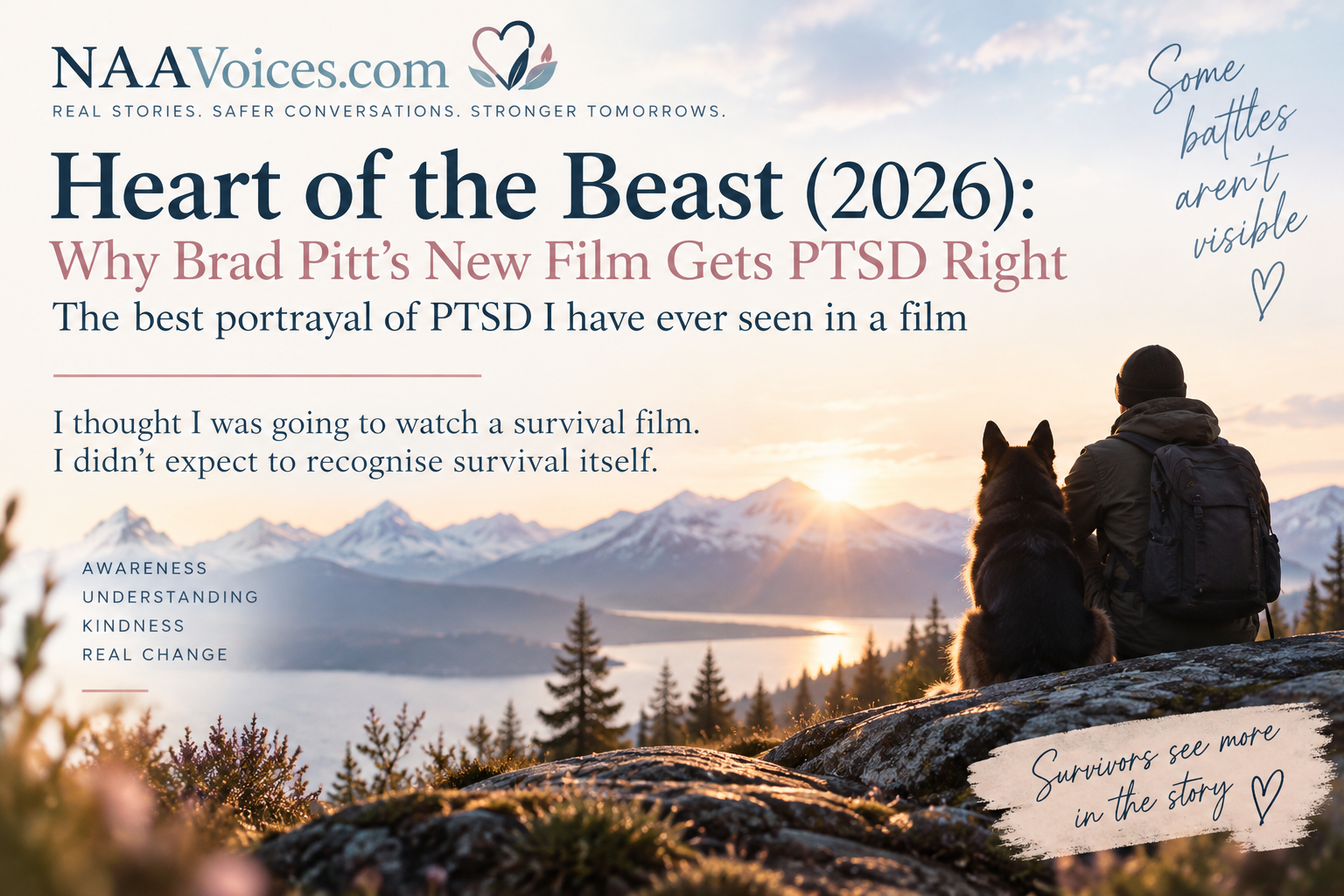
Heart of the Beast (2026): Why Brad Pitt’s New Film Gets PTSD Right
I thought I was going to watch a survival film. I didn't expect to recognise survival itself. Heart of the Beast doesn't oversell trauma. It shows the silent version of PTSD, the one people don't see, and it was probably the best portrayal of post-traumatic stress disorder I have ever seen in a film.
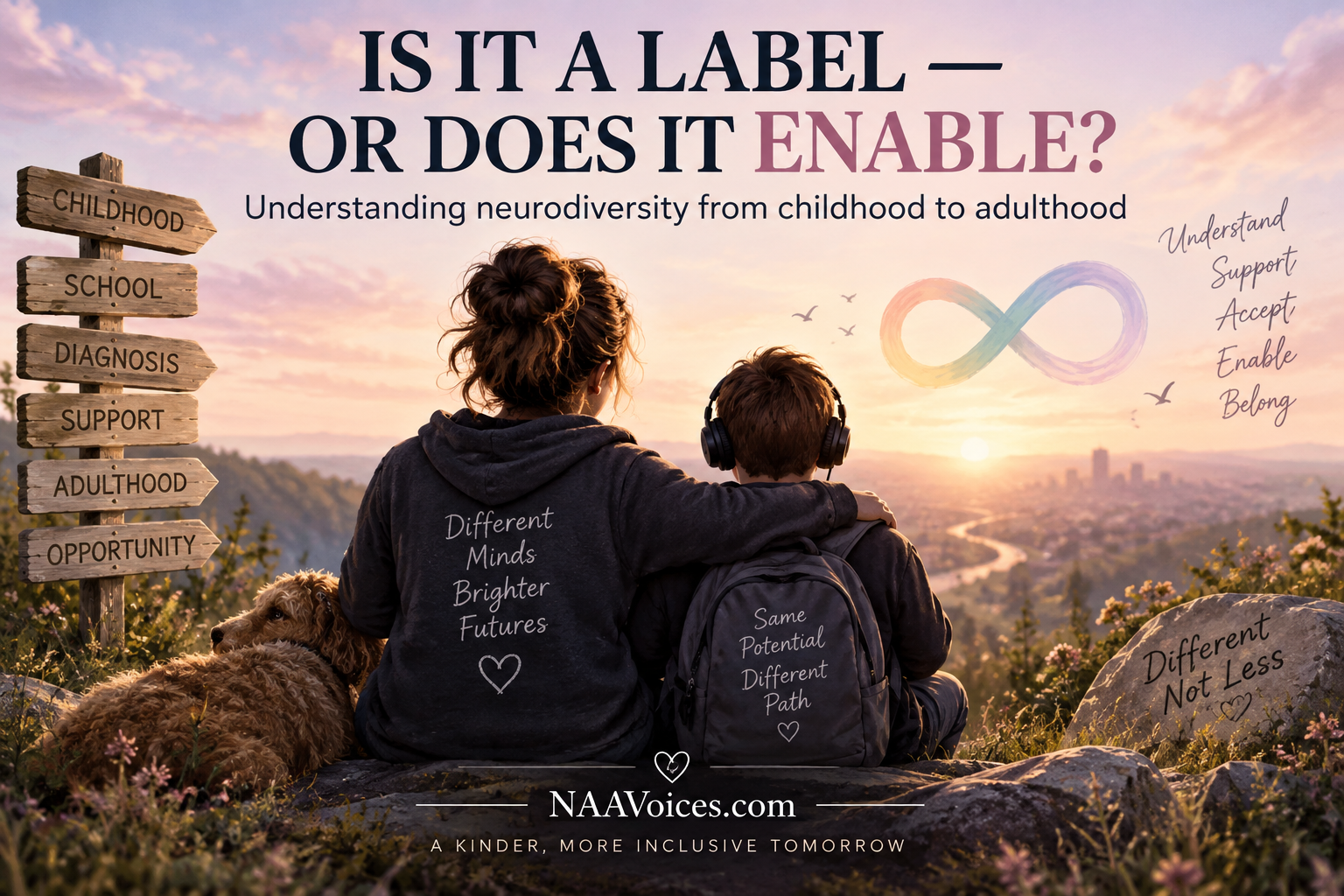
Is It a Label, or Does Understanding Neurodiversity Enable Us?
Is diagnosis really a label, or can understanding enable? An honest look at neurodiversity, masking, long waiting lists, exhausted parents and the children who grow into adults—sometimes without ever understanding why life has felt so difficult.
The Bravest Thing I Did When No One Was Watching.
What is the bravest thing I have ever done when no one was watching? My answer is simple. I kept going. Through trauma, diagnosis, and post-separation abuse. Through every hard day and every trigger. I kept supporting my children. I studied and passed with distinction. I built and learned and grew. Post-traumatic growth is real.…
Home Is Not Always an Address
What if home isn't an address at all? A 140-mile journey, a song in the car and one simple comment from my daughter made me realise that healing can change what the word “home” means.

Four Julys: A Letter to My Daughter
For years, I documented the fear, behavioural changes and words my daughter brought home, while attempts to protect her were reframed as hostility and parental alienation. This is a letter to her, to the parents still fighting to be heard, and to the professionals responsible for recognising patterns before a child suffers further harm.

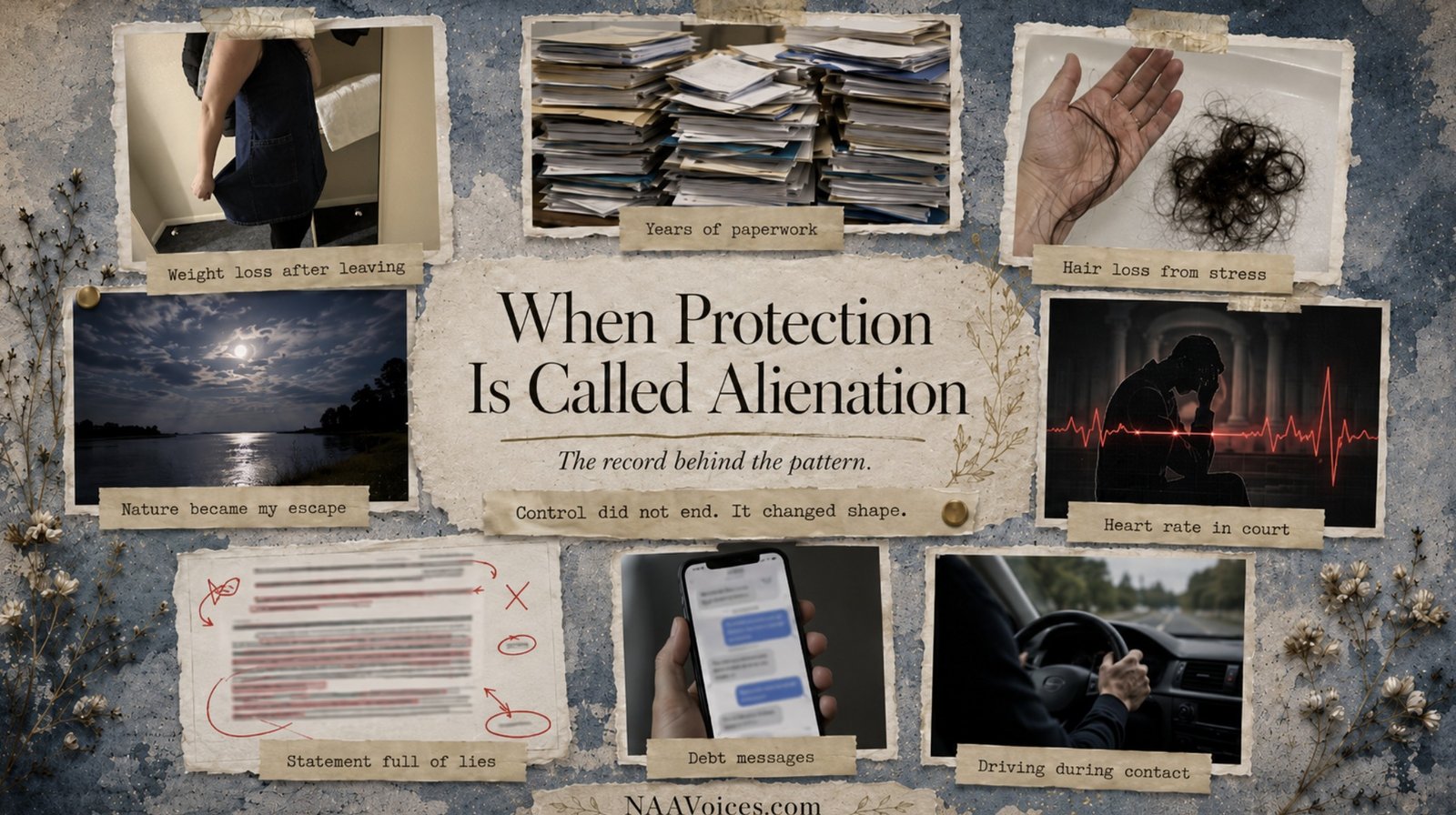
When Protection Is Framed as Parental Alienation
The accusation lands, and from that moment the protective parent is the one under investigation. It happens to mothers and to fathers. This is what it did to my family, what finally shifted it, and the practical things I wish somebody had told me in year one.

The Therapy Nature Gives Me
Therapy doesn’t always happen in a counselling room. Life is often a million miles an hour, and I’m regularly asked how I keep going or how I never seem to stop. The truth is, that’s the reality of living with ADHD and PTSD. Keeping busy is often how I cope. Silence leaves space for memories,…

Wales HCA immunisation training resource pack | NAAVoices
Wales HCA Immunisation Training Pack | NAAVoices Professional Resources Immediate danger: 999 · Samaritans: 116 123 · National DA Helpline: 0808 2000 247 · CALL Wales: 0800 132 737 NAAVoices Survivor-led · Evidence-informed Home Domestic Abuse Neurodiversity Mental Health About Professional Resources Wales Primary Care · HCA Immunisation Training HCSW ImmunisationTraining Resource Pack A comprehensive,…
I Thought I’d Fail
A survivor's reflection on trauma, PTSD and post separation abuse, and the day I was asked to list everything I had achieved and could only write one thing: I survived.
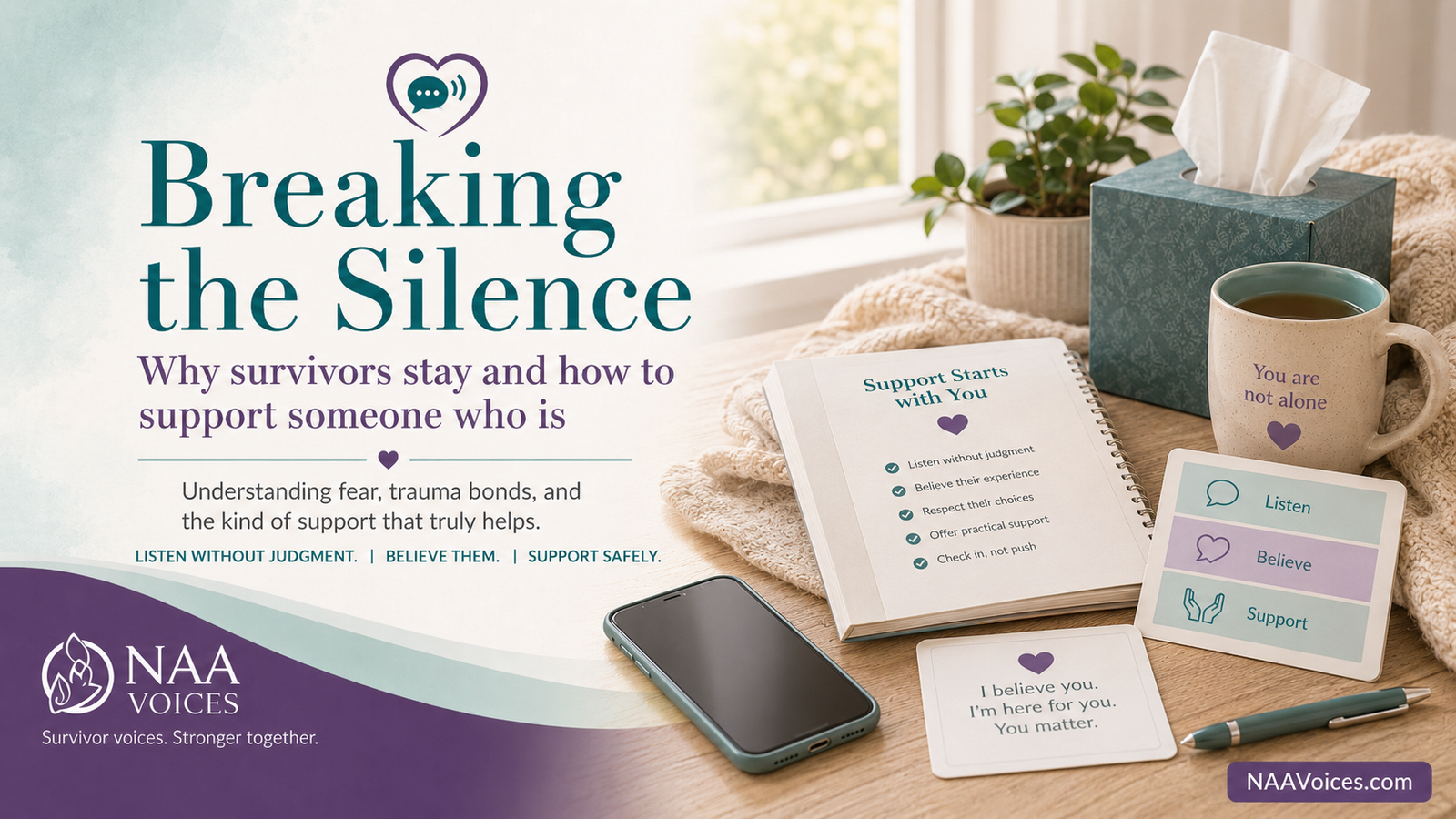
Breaking the Silence: Why Survivors Stay
Breaking the Silence: Why Survivors Stay “Why didn’t you just leave?” is the question survivors hear most — and the one we most need to retire. This is about the invisible chains that keep people bound, and how anyone who wants to help can offer support that truly helps. Leaving is rarely a single decision,…
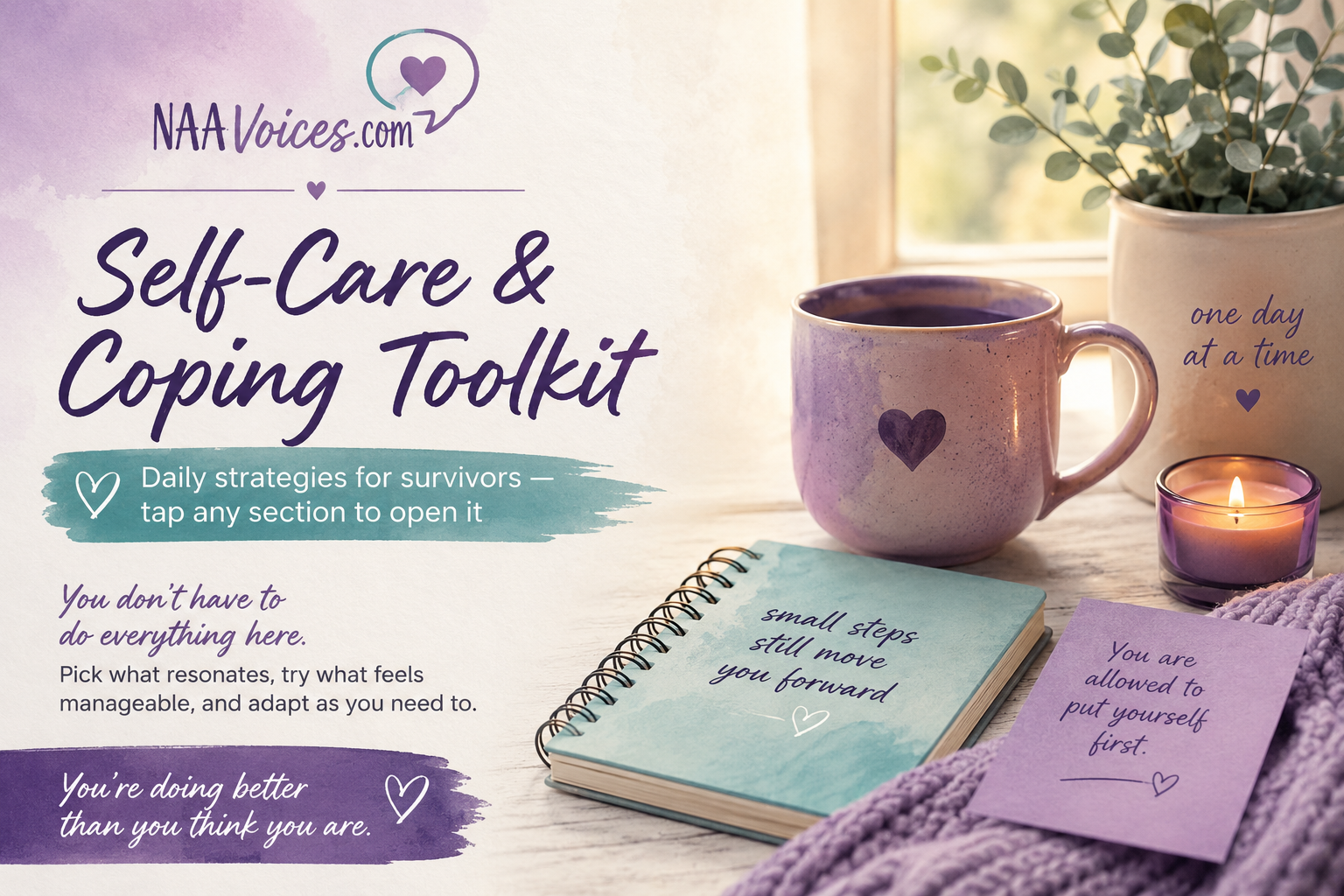
Self-Care & Coping Toolkit: Daily Strategies
An interactive self-care toolkit for survivors — grounding techniques, breathing exercises, safe-place visualisation and gentle coping tools you can use today.
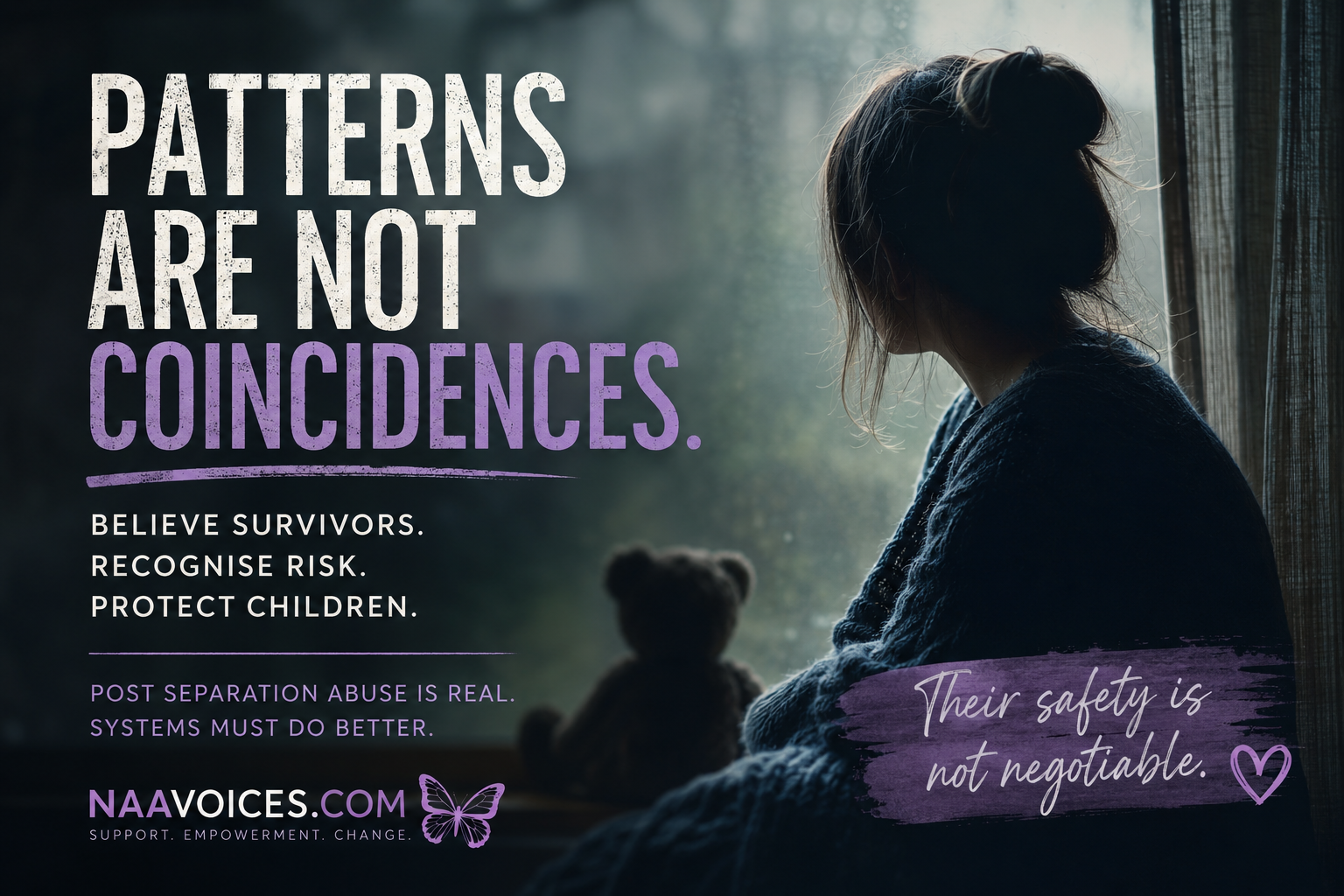
When Patterns Are Missed: Post Separation Abuse, Trauma, and the Cost of Incomplete Safeguarding
survivor's account of post separation abuse and coercive control, and why fragmented safeguarding misses the patterns that put women and children at risk.

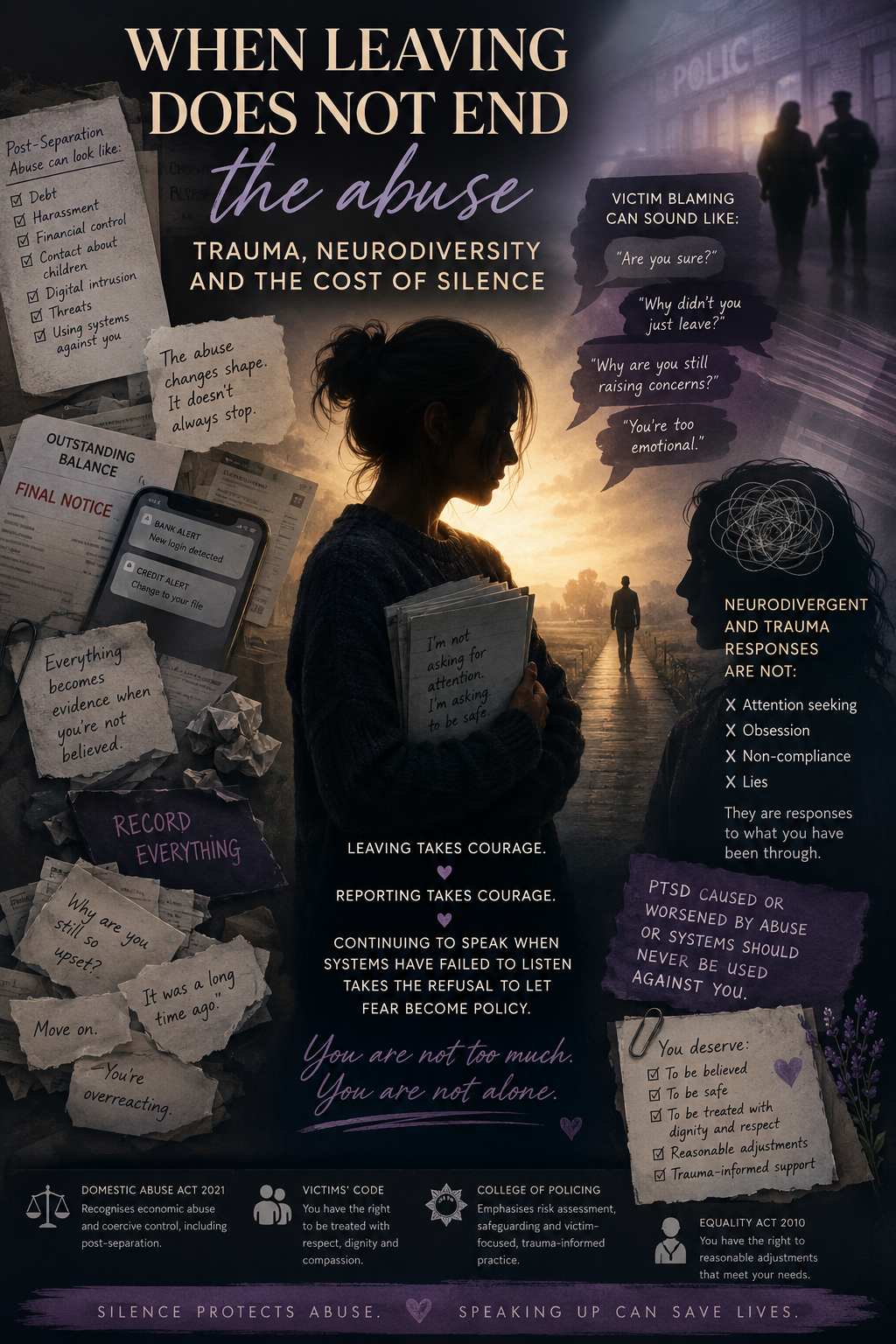
When Leaving Does Not End the Abuse: Trauma, Neurodiversity and the Cost of Silence
Leaving a relationship does not always end domestic abuse. Post-separation abuse can continue through finances, data, systems, safeguarding processes and fear. This advocacy piece explores economic abuse, victim blaming, trauma, neurodiversity, PTSD, policing, reasonable adjustments, and why silence should never feel safer than seeking help.
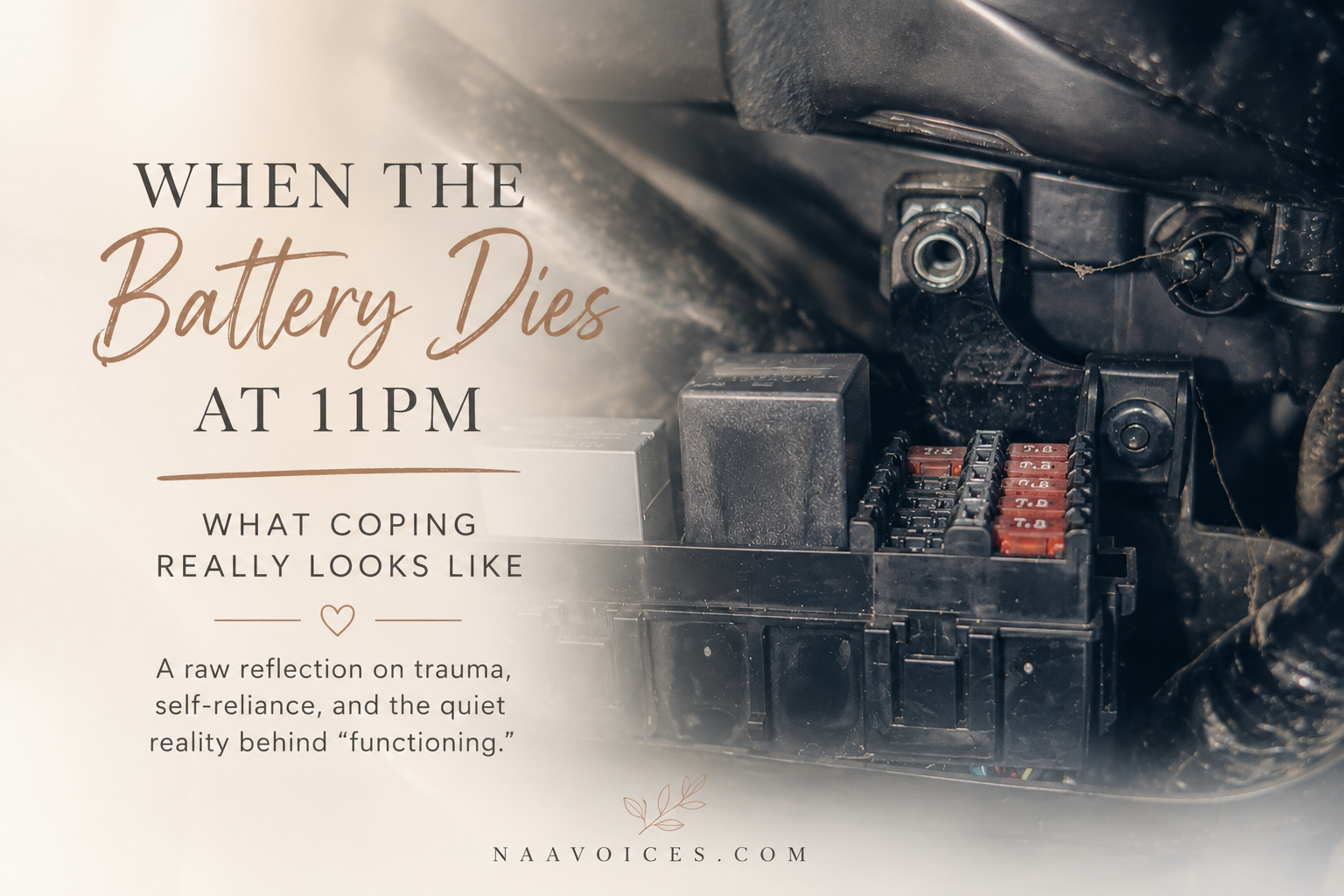
When the Battery Dies at 11PM: The Things That Keep Us Alive
A personal reflection on trauma, independence, motorbikes, self-regulation, and the quiet reality of having to be your own safety net.
The Hidden Pressure of GCSEs: Why Showing Up Is Enough
This is for every child sitting exams right now: the ones the world can see are struggling, and the ones it can't.
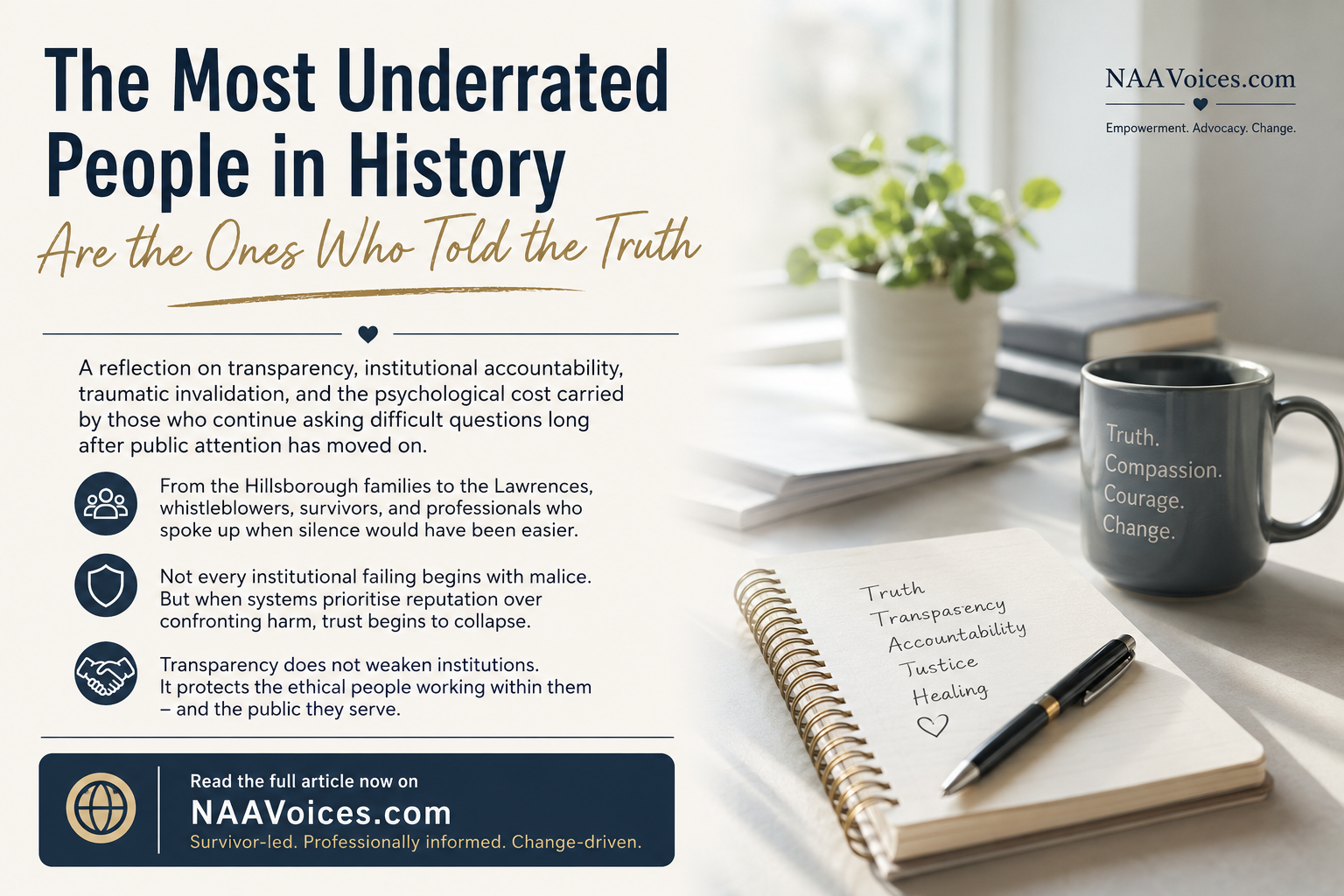
The Most Underrated People in History Are the Ones Who Told the Truth
whistleblowers, institutional accountability, Hillsborough, Stephen Lawrence, coercive control, safeguarding, PTSD, transparency, traumatic invalidation, policing culture, survivor voices, NAAVoices
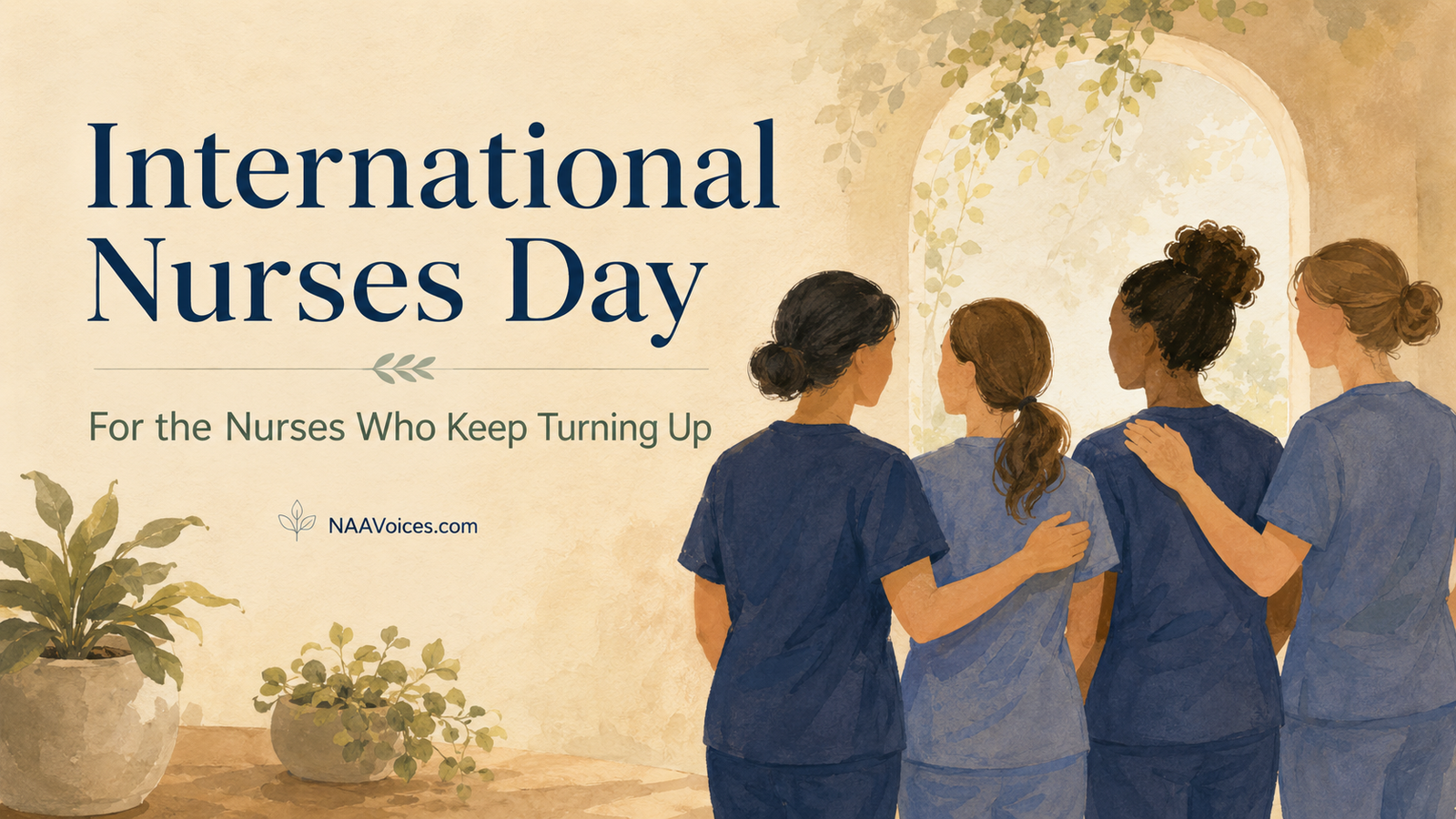
International Nurses Day: For the Nursing Teams Who Keep Turning Up
For International Nurses Day, a reflection on primary care nursing teams, the patients who walk through our doors, the families behind nurses, and the managers who make compassionate care possible.
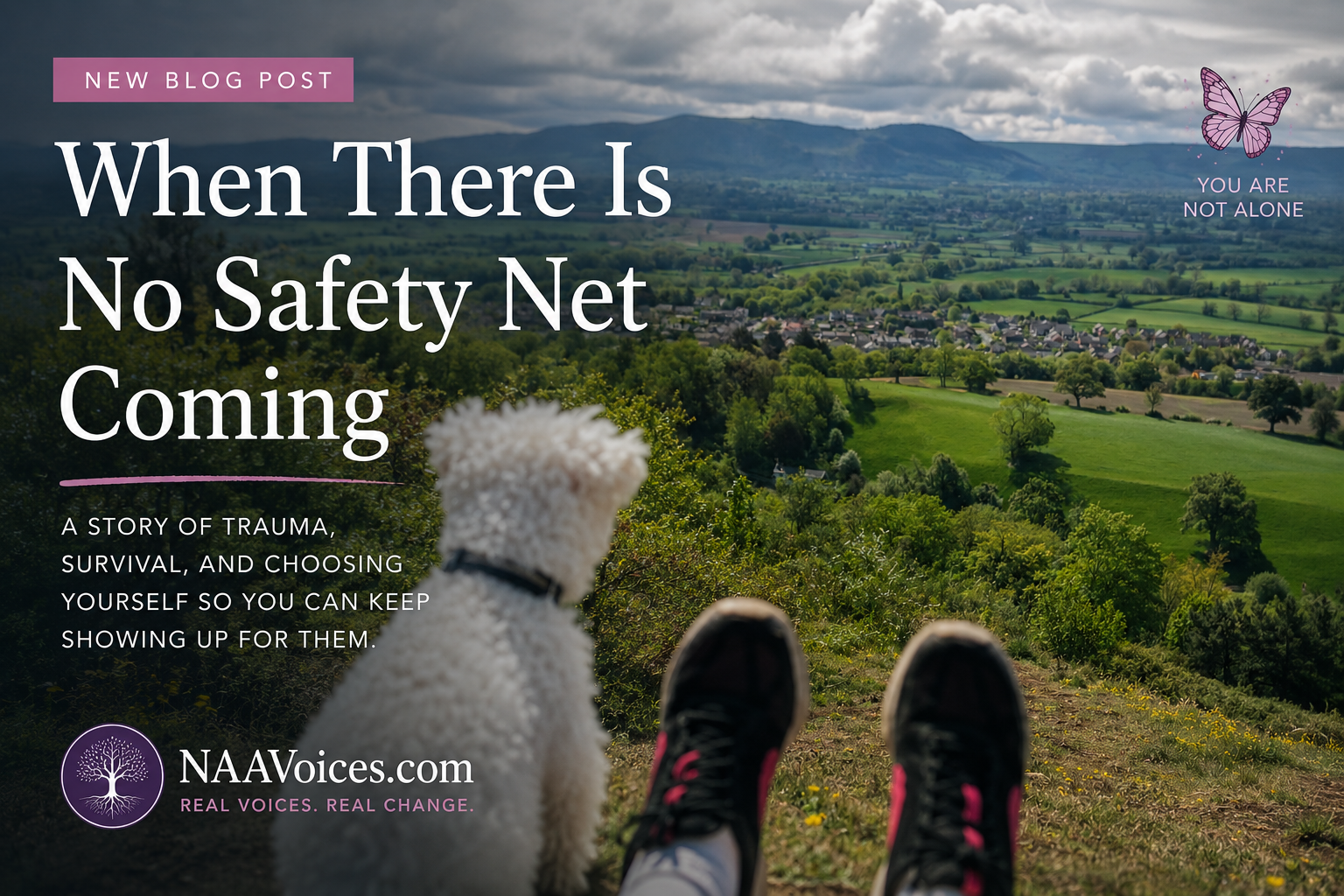
When There Is No Safety Net Coming
A personal reflection on trauma, grounding, survival, parenting after abuse, and the reality of healing when there is no safety net coming. A NAAVoices story about resilience, nervous system recovery, self-care, and children surviving trauma.
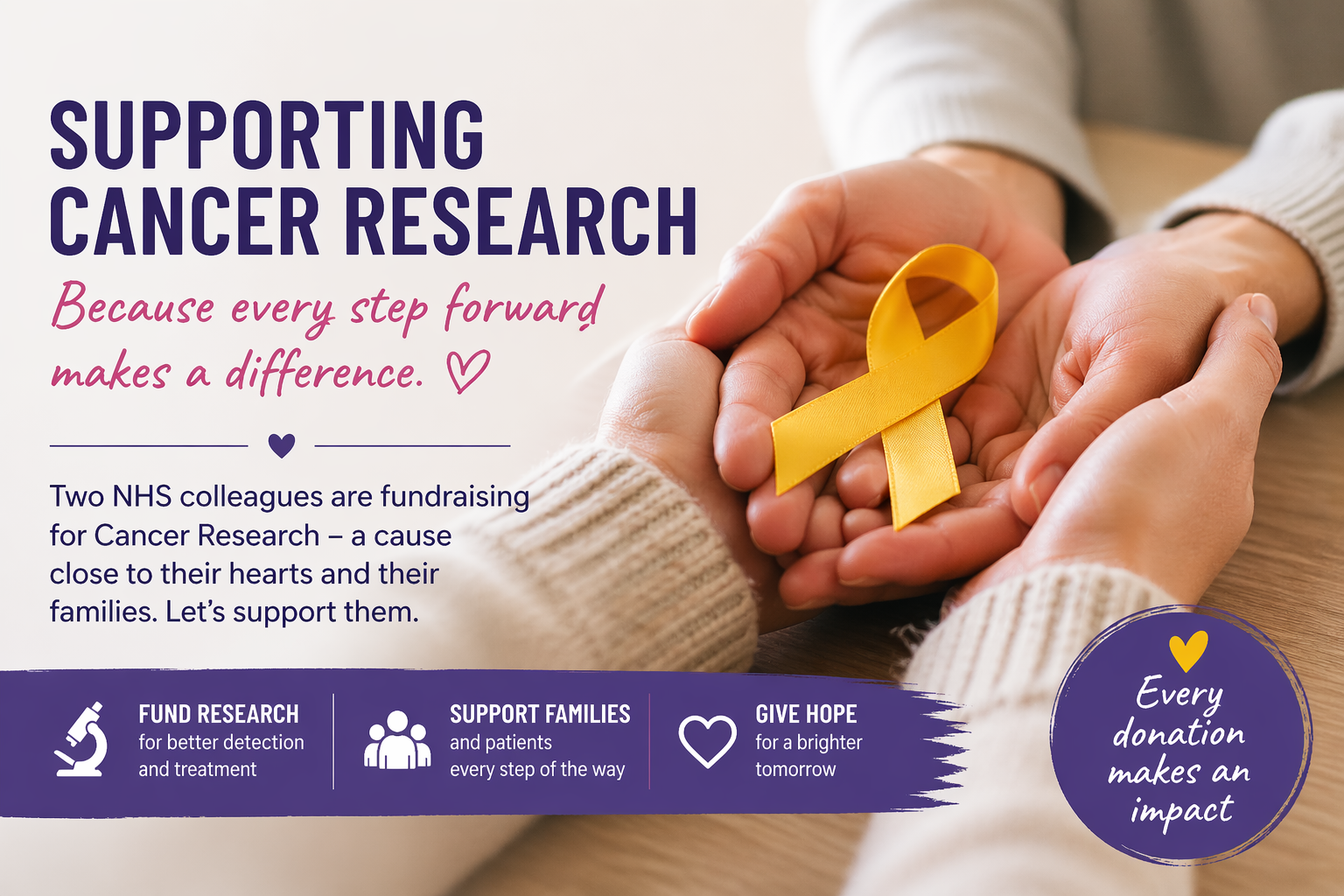
Small Acts, Big Impact, Supporting Cancer Research
Two of my colleagues are fundraising for Cancer Research, combining their frontline experience in general practice with personal lived experience of cancer. This is a cause close to home — support their efforts or share to help make a difference.






🌿 Dedication Month: Community Voices & Advocacy
This month highlights trusted individuals and organisations who have shared their resources and lived experience with NAAVoices. Each link represents a committed voice working to support families and make reliable information easier to access.

A trusted starting point for families seeking clear, accessible information about cerebral palsy, including diagnosis, treatment options, financial planning, and community support.
Discover more from NAAVoices.com
Subscribe to get the latest posts sent to your email.