LGBTQIA+ Support,
Rights & Resources Hub
Information, advocacy, and evidence-informed resources for lesbian, gay, bisexual, transgender, queer, intersex and asexual people — and their families. Covering mental health, gender incongruence, legal rights, schools and community support, with Wales-specific routes throughout.
You are valid. You are not alone. Support is available.
🚨 Crisis support
Only 999, Samaritans and C.A.L.L. are staffed around the clock. If you need someone right now and the others are closed, use one of those three.
Mental Health
Minority stress, coming out, affirming therapy
Gender Incongruence
Young people, parents, professionals, NHS
Rights & Law
Equality Act, schools, workplace, hate crime
Organisations
National, local, trans, family, youth
What does LGBTQIA+ mean?
LGBTQIA+ is an inclusive acronym representing a spectrum of sexual orientations and gender identities. Each letter represents a distinct identity, and the + acknowledges that many more exist.
Why this matters — the evidence
LGBTQIA+ people face significant and well-documented inequalities. These are not inevitable. They are consequences of hostile environments, discrimination and inadequate support — which means they can change.
In schools — Britain
- 45% of LGBT pupils — including 64% of trans pupils — are bullied for being LGBT (Stonewall, School Report, 2017)
- Just 29% of bullied pupils said teachers intervened when present
- 42% of LGBT+ pupils reported being bullied in the past year — double the rate for non-LGBT+ pupils (Just Like Us, 2021)
In schools — Wales specifically
- 54% of LGBT pupils in Wales — including 73% of trans pupils — are bullied at school. Higher than the Britain-wide figure (Stonewall, School Report Cymru, 2017)
- Only a quarter of bullied pupils said teachers intervened
- RSE has been mandatory in Wales since 2022 and explicitly includes LGBTQ+ relationships
Family acceptance and rejection
- Family rejection is the strongest single predictor of poor mental health outcomes in LGBTQIA+ young people; family acceptance is the strongest protective factor
- 24% of young people experiencing homelessness in the UK identify as LGBTQ+ — a substantial overrepresentation (akt)
- Around four in five of the young people akt supports cite family rejection or abuse after coming out as the reason for their homelessness
- Parents who receive information and support become more accepting over time. Acceptance is learnable, not fixed
Much of the UK evidence base dates from 2017 and comes from self-selecting surveys. They show the scale of a real problem; they do not predict any individual's life. Sources: Stonewall, Just Like Us, akt.
Identity validation — why it matters
Being seen, named and affirmed for who you are is not merely kind — it is protective. Affirmation is an active intervention, not a passive attitude.
Why Identity Validation Can Save Lives
The research evidence on why being seen, named and affirmed is not just kind — it is clinically protective.
Read the post →The Importance of Identity Validation for Mental Health
How affirmation directly supports mental health and wellbeing — and what the absence of it costs.
Read the post →Where it shows up
In schools
- Bullying is under-addressed, and transphobic bullying is challenged less consistently than homophobic bullying
- Schools have legal duties under the Equality Act 2010 and the Public Sector Equality Duty
- RSE is mandatory in Wales, with no parental right of withdrawal; England's arrangements differ
- Visible inclusion and positive messaging measurably improve outcomes
In families
- How a family responds at the point of disclosure has a measurable effect on outcomes
- Rejection is a leading route into youth homelessness
- Parents do not have to get it right immediately. Moving towards acceptance is what counts
- Support exists for parents too — you are allowed to need help with this
In healthcare
- LGBTQIA+ people report higher levels of discrimination from healthcare providers
- Trans people frequently face delays, refusals and inappropriate questioning
- The 2024 independent review of NHS gender services for young people found many had co-occurring mental health and neurodevelopmental needs not being adequately addressed
- Affirmative practice — not assuming heterosexuality or cisgender identity — costs nothing
In domestic abuse
- Domestic abuse occurs in LGBTQIA+ relationships at broadly comparable rates to heterosexual ones
- Severely underreported — fear of being outed, homophobia and transphobia within services
- Abusers may weaponise identity: threatening to out a partner, deliberate misgendering, withholding hormones or medication
- Galop is the specialist LGBT+ anti-abuse charity in the UK: 0800 999 5428 — galop.org.uk
Related NAAVoices hubs
Domestic Abuse Hub
LGBTQIA+ domestic abuse, coercive control, legal rights, safety planning and recovery.
DA Hub → Helplines → Galop →Neurodiversity Hub
Higher rates of gender diversity in autistic and ADHD populations. Assessment, IDP and EHCP, self-screening.
ND Hub → ND & gender →Mental Health Hub
Minority stress, affirming therapy, crisis support and local services across North Wales and Shropshire.
MH Hub → LGBTQIA+ & MH → Switchboard →From the Founder & NAAVoices Blog
Founder's Journal
Personal writing on survival, recovery, identity, advocacy, and the journey that built NAAVoices. Written in Amy's own voice.
🏳️🌈 Browse LGBTQIA+ posts on NAAVoices
LGBTQIA+ Support, Rights & Resources
Information, advocacy, and evidence-informed resources for lesbian, gay, bisexual, transgender, queer, intersex and asexual people — and their families. Covering mental health, gender incongruence, legal rights, schools and community support, with Wales-specific routes throughout.
You are valid. You are not alone. Support is available.
🚨 Crisis support
Only 999, Samaritans and C.A.L.L. are staffed around the clock. If you need someone right now and the others are closed, use one of those three.
Mental Health
Minority stress, coming out, affirming therapy
Gender Incongruence
Young people, parents, professionals, NHS
Rights & Law
Equality Act, schools, workplace, hate crime
Organisations
National, local, trans, family, youth
What does LGBTQIA+ mean?
LGBTQIA+ is an inclusive acronym representing a spectrum of sexual orientations and gender identities. Each letter represents a distinct identity, and the + acknowledges that many more exist.
Why this matters — the evidence
LGBTQIA+ people face significant and well-documented inequalities. These are not inevitable. They are consequences of hostile environments, discrimination and inadequate support — which means they can change.
In schools — Britain
- 45% of LGBT pupils — including 64% of trans pupils — are bullied for being LGBT (Stonewall, School Report, 2017)
- Just 29% of bullied pupils said teachers intervened when present
- 40% are never taught anything about LGBT issues at school
- 40% have skipped school because of homophobic, biphobic or transphobic bullying
- More recently, 42% of LGBT+ pupils reported being bullied in the past year — double the rate for non-LGBT+ pupils, at 21% (Just Like Us, Growing Up LGBT+, 2021)
In schools — Wales specifically
- 54% of LGBT pupils in Wales — including 73% of trans pupils — are bullied at school. Higher than the Britain-wide figure (Stonewall, School Report Cymru, 2017)
- 90% regularly hear phrases such as “that’s so gay”
- 56% report their school says homophobic and biphobic bullying is wrong. Only 33% say the same about transphobic bullying
- Only a quarter of bullied pupils said teachers intervened
- RSE has been mandatory in Wales since 2022 and explicitly includes LGBTQ+ relationships, so this picture should be improving — but the 2017 data is the most recent Wales-specific evidence
Family acceptance and rejection
- Family rejection is the strongest single predictor of poor mental health outcomes in LGBTQIA+ young people; family acceptance is the strongest protective factor
- 24% of young people experiencing homelessness in the UK identify as LGBTQ+ — a substantial overrepresentation (akt)
- Around four in five of the young people akt supports cite family rejection or abuse after coming out as the reason for their homelessness
- 59% faced discrimination or harassment when accessing housing services
- Parents who receive information and support become more accepting over time. Acceptance is learnable, not fixed
Self-harm and suicide
- Rates of self-harm and suicidal thoughts among LGBT young people are far above the general population. Stonewall’s 2017 research found 61% of LGB young people and 84% of trans young people had self-harmed at some point
- These are prevalence figures from a self-selecting survey, not a measure of what any individual will experience
- The direction of the evidence is consistent: hostile environments raise risk, affirming ones lower it
- If you are struggling: Samaritans 116 123 or C.A.L.L. Wales 0800 132 737, both free and 24/7
Identity validation — why it matters
Being seen, named and affirmed for who you are is not merely kind — it is protective. Affirmation is an active intervention, not a passive attitude.
Why Identity Validation Can Save Lives
The research evidence on why being seen, named and affirmed is not just kind — it is clinically protective. Essential reading for families, professionals, and anyone supporting an LGBTQIA+ person.
Read the post →
The Importance of Identity Validation for Mental Health
How affirmation directly supports mental health and wellbeing — and what the absence of it costs. Evidence-informed guidance for individuals, families and professionals.
Read the post →
Where it shows up
In schools
- Bullying is under-addressed, and transphobic bullying is challenged less consistently than homophobic bullying
- Schools have legal duties under the Equality Act 2010 and the Public Sector Equality Duty
- RSE is mandatory in Wales, with no parental right of withdrawal; England’s arrangements differ
- Visible inclusion and positive messaging measurably improve outcomes — including for pupils who are not LGBT+
In families
- How a family responds at the point of disclosure has a measurable effect on outcomes
- Rejection is a leading route into youth homelessness
- Parents do not have to get it right immediately. Moving towards acceptance is what counts
- Support exists for parents too — you are allowed to need help with this
In healthcare
- LGBTQIA+ people report higher levels of discrimination from healthcare providers
- Trans people frequently face delays, refusals and inappropriate questioning
- Mental health services often lack LGBTQIA+-specific training
- Intersex people are underserved across almost all pathways
- The 2024 independent review of NHS gender services for young people in England found many had co-occurring mental health and neurodevelopmental needs that were not being adequately addressed — reinforcing the case for holistic, integrated care
- Affirmative practice — not assuming heterosexuality or cisgender identity — costs nothing
In domestic abuse
- Domestic abuse occurs in LGBTQIA+ relationships at broadly comparable rates to heterosexual ones
- It is severely underreported — fear of being outed, homophobia and transphobia within services, and the myth that same-sex relationships cannot involve abuse
- Abusers may weaponise identity: threatening to out a partner, deliberate misgendering, withholding hormones or medication
- Galop is the specialist LGBT+ anti-abuse charity in the UK: 0800 999 5428
Related NAAVoices hubs
Domestic Abuse Hub
LGBTQIA+ domestic abuse, coercive control, legal rights, safety planning and recovery.
Neurodiversity Hub
Higher rates of gender diversity in autistic and ADHD populations. Assessment, IDP and EHCP, self-screening.
Mental Health Hub
Minority stress, affirming therapy, crisis support and local services across North Wales and Shropshire.

Do I Believe in Karma
We’re told that what goes around comes around. But what happens when good people suffer while those who caused the harm seem to walk away? A reflection on karma, justice, accountability and rebuilding your life.

Heart of the Beast (2026): Why Brad Pitt’s New Film Gets PTSD Right
I thought I was going to watch a survival film. I didn't expect to recognise survival itself. Heart of the Beast doesn't oversell trauma. It shows the silent version of PTSD, the one people don't see, and it was probably the best portrayal of post-traumatic stress disorder I have ever seen in a film.
Is It a Label, or Does Understanding Neurodiversity Enable Us?
Is diagnosis really a label, or can understanding enable? An honest look at neurodiversity, masking, long waiting lists, exhausted parents and the children who grow into adults—sometimes without ever understanding why life has felt so difficult.
The Bravest Thing I Did When No One Was Watching.
What is the bravest thing I have ever done when no one was watching? My answer is simple. I kept going. Through trauma, diagnosis, and post-separation abuse. Through every hard day and every trigger. I kept supporting my children. I studied and passed with distinction. I built and learned and grew. Post-traumatic growth is real.…
Home Is Not Always an Address
What if home isn't an address at all? A 140-mile journey, a song in the car and one simple comment from my daughter made me realise that healing can change what the word “home” means.

Four Julys: A Letter to My Daughter
For years, I documented the fear, behavioural changes and words my daughter brought home, while attempts to protect her were reframed as hostility and parental alienation. This is a letter to her, to the parents still fighting to be heard, and to the professionals responsible for recognising patterns before a child suffers further harm.

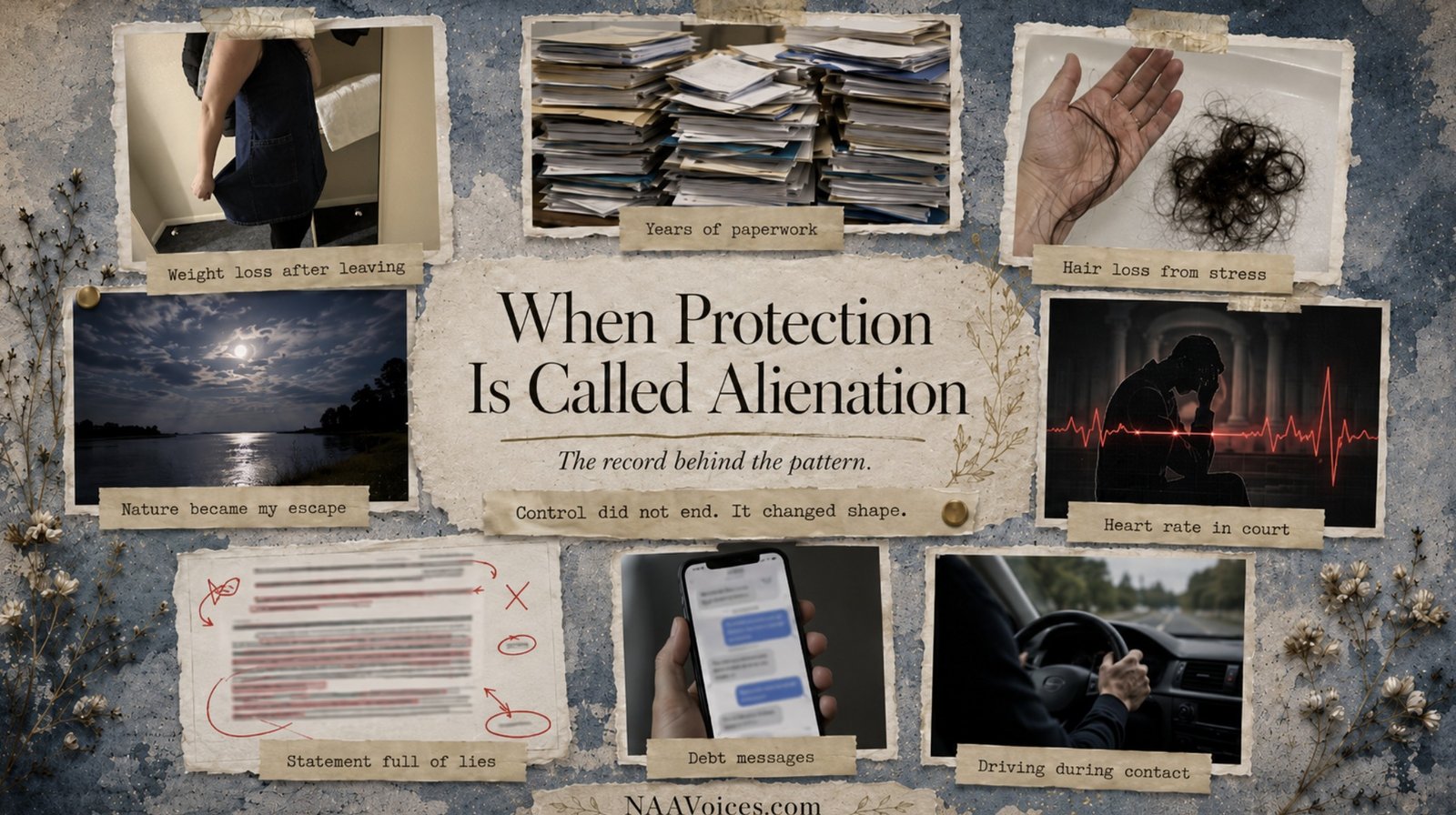
When Protection Is Framed as Parental Alienation
The accusation lands, and from that moment the protective parent is the one under investigation. It happens to mothers and to fathers. This is what it did to my family, what finally shifted it, and the practical things I wish somebody had told me in year one.

The Therapy Nature Gives Me
Therapy doesn’t always happen in a counselling room. Life is often a million miles an hour, and I’m regularly asked how I keep going or how I never seem to stop. The truth is, that’s the reality of living with ADHD and PTSD. Keeping busy is often how I cope. Silence leaves space for memories,…

Wales HCA immunisation training resource pack | NAAVoices
Wales HCA Immunisation Training Pack | NAAVoices Professional Resources Immediate danger: 999 · Samaritans: 116 123 · National DA Helpline: 0808 2000 247 · CALL Wales: 0800 132 737 NAAVoices Survivor-led · Evidence-informed Home Domestic Abuse Neurodiversity Mental Health About Professional Resources Wales Primary Care · HCA Immunisation Training HCSW ImmunisationTraining Resource Pack A comprehensive,…
I Thought I’d Fail
A survivor's reflection on trauma, PTSD and post separation abuse, and the day I was asked to list everything I had achieved and could only write one thing: I survived.
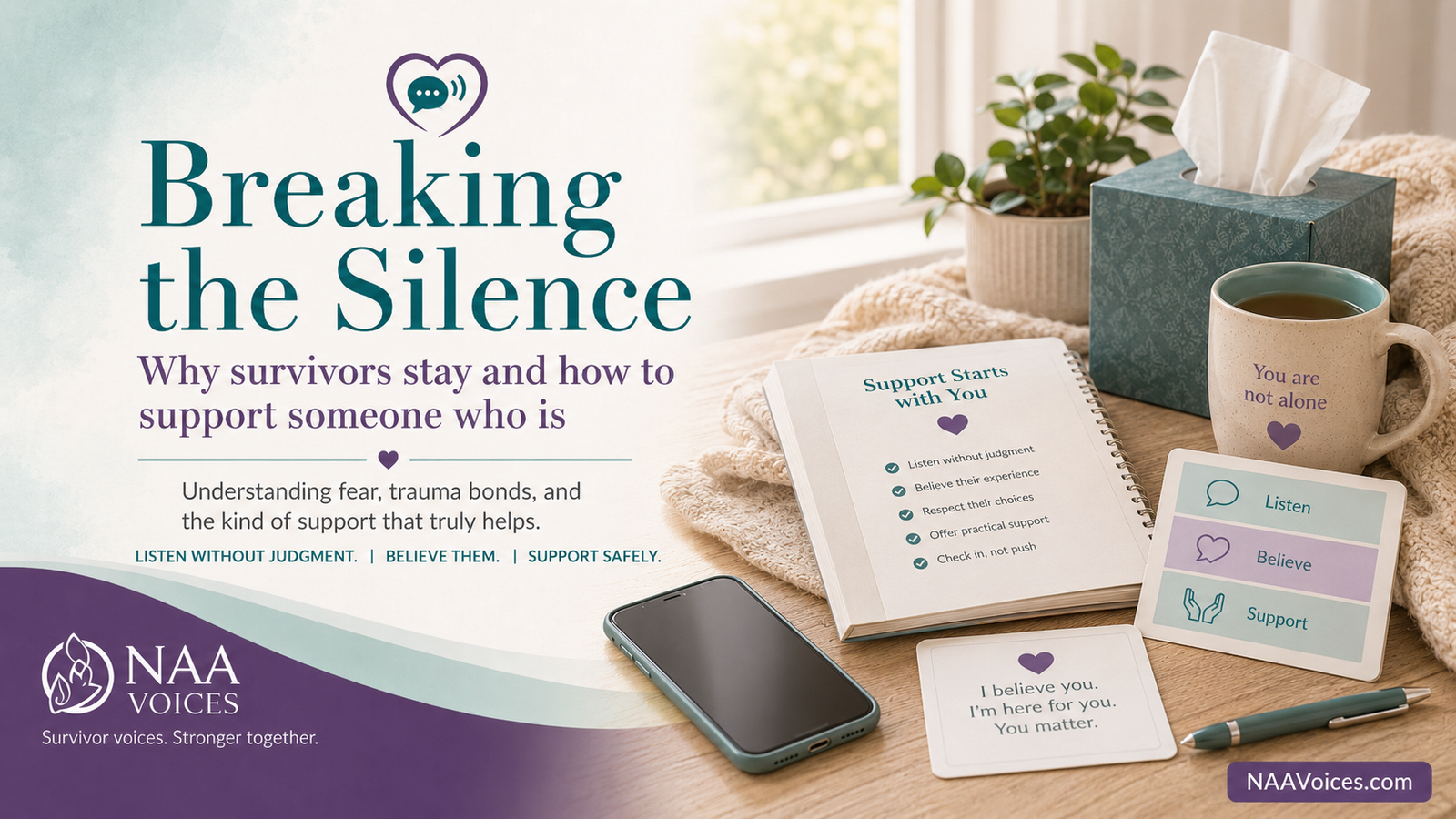
Breaking the Silence: Why Survivors Stay
Breaking the Silence: Why Survivors Stay “Why didn’t you just leave?” is the question survivors hear most — and the one we most need to retire. This is about the invisible chains that keep people bound, and how anyone who wants to help can offer support that truly helps. Leaving is rarely a single decision,…
Self-Care & Coping Toolkit: Daily Strategies
An interactive self-care toolkit for survivors — grounding techniques, breathing exercises, safe-place visualisation and gentle coping tools you can use today.
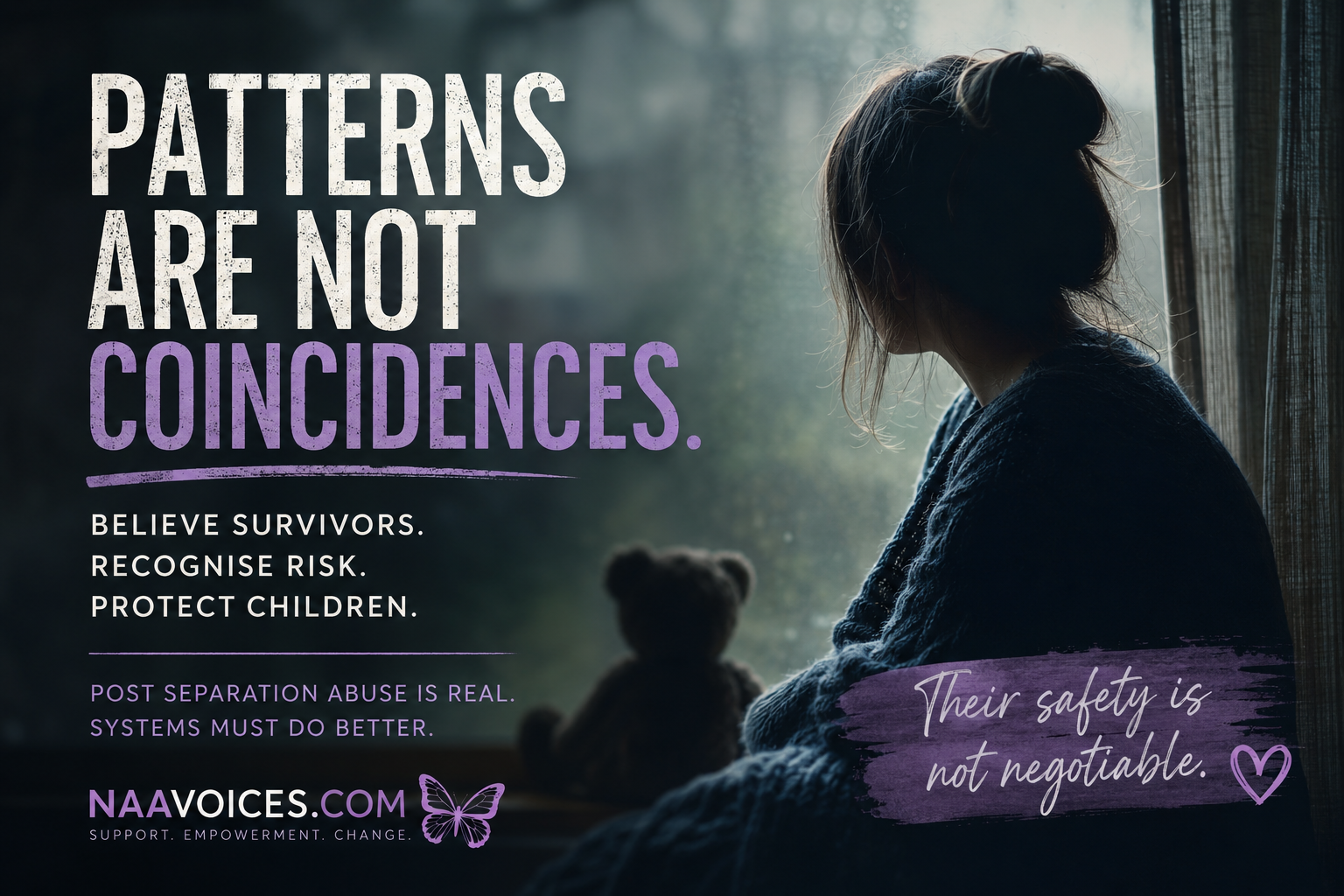
When Patterns Are Missed: Post Separation Abuse, Trauma, and the Cost of Incomplete Safeguarding
survivor's account of post separation abuse and coercive control, and why fragmented safeguarding misses the patterns that put women and children at risk.

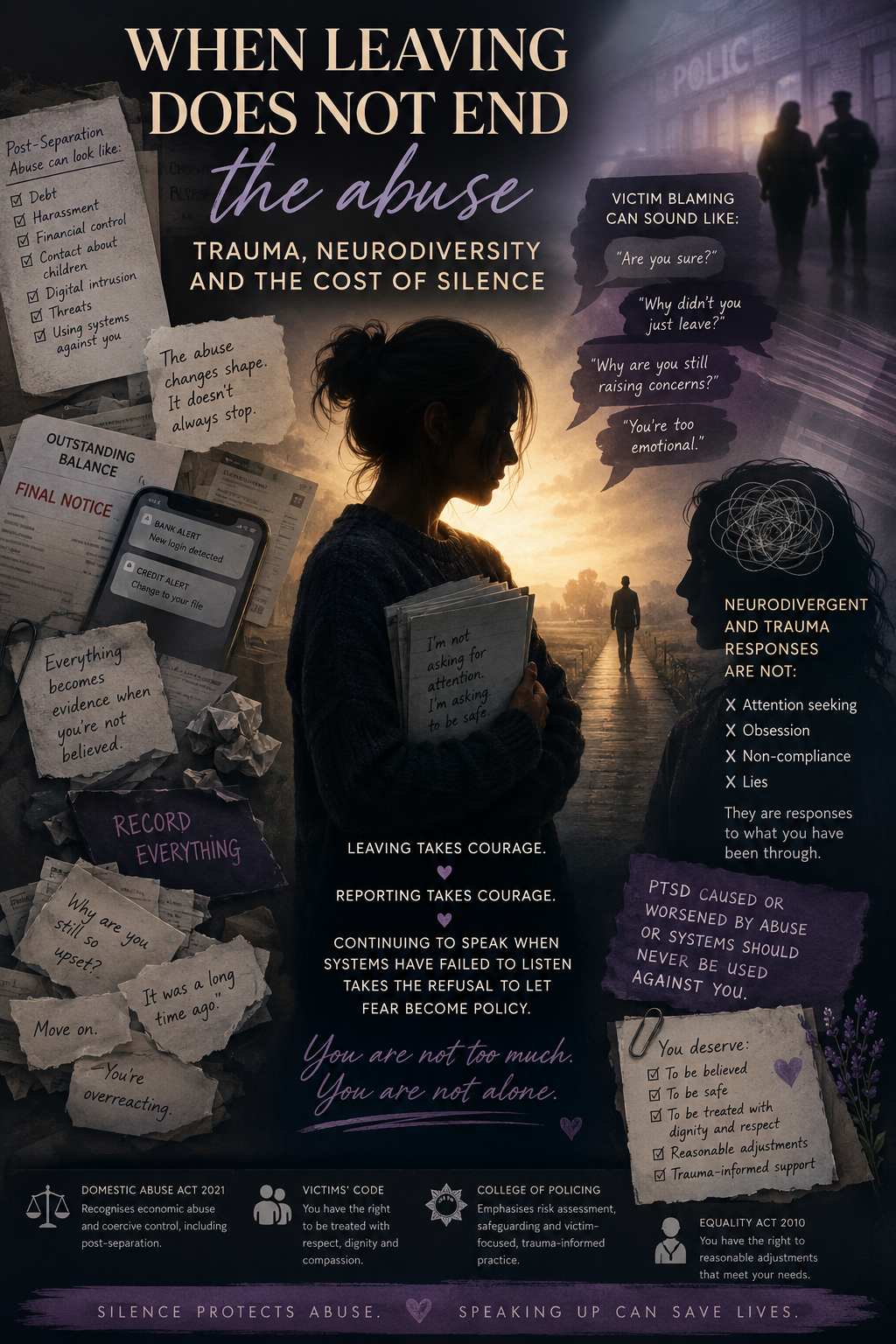
When Leaving Does Not End the Abuse: Trauma, Neurodiversity and the Cost of Silence
Leaving a relationship does not always end domestic abuse. Post-separation abuse can continue through finances, data, systems, safeguarding processes and fear. This advocacy piece explores economic abuse, victim blaming, trauma, neurodiversity, PTSD, policing, reasonable adjustments, and why silence should never feel safer than seeking help.
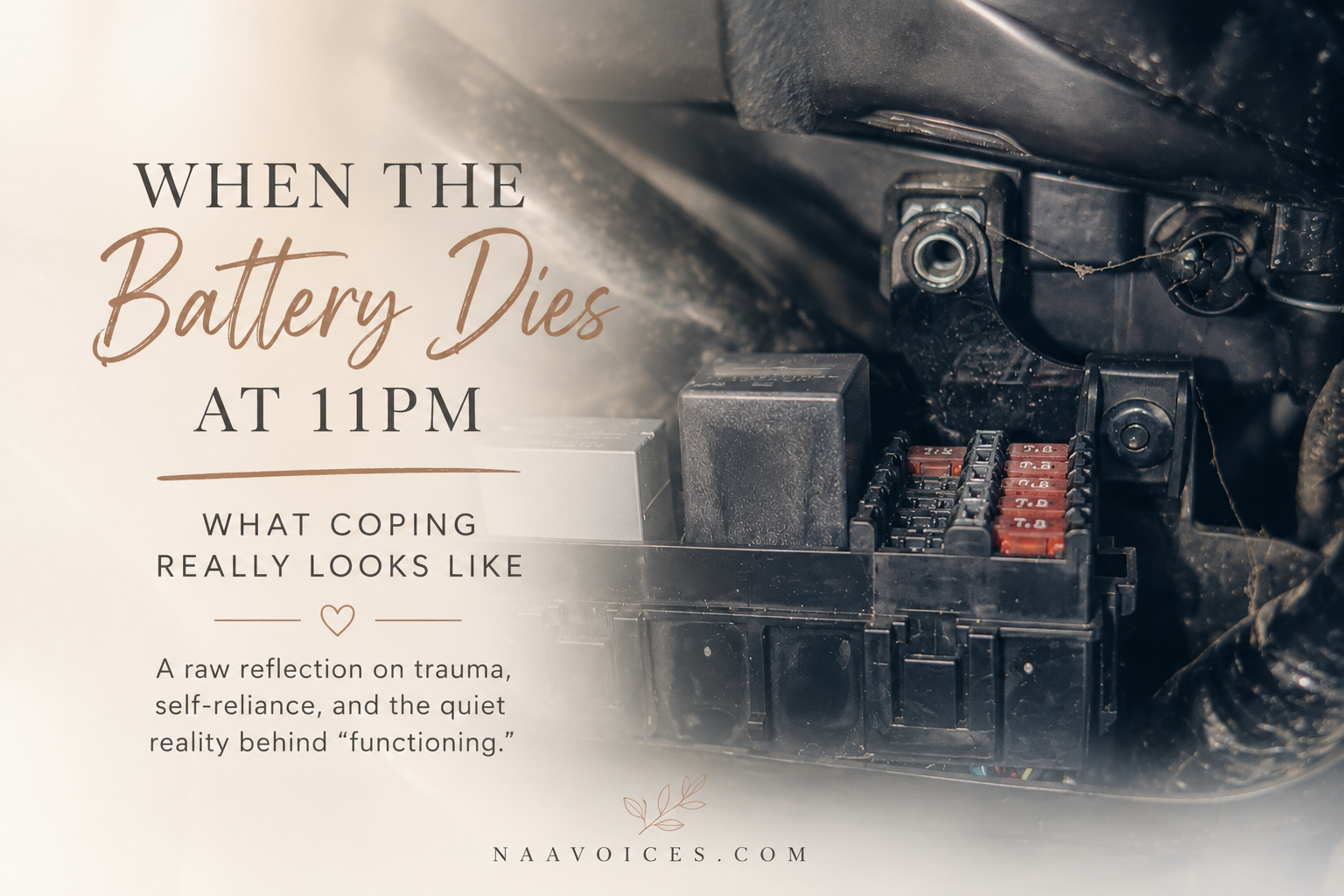
When the Battery Dies at 11PM: The Things That Keep Us Alive
A personal reflection on trauma, independence, motorbikes, self-regulation, and the quiet reality of having to be your own safety net.
The Hidden Pressure of GCSEs: Why Showing Up Is Enough
This is for every child sitting exams right now: the ones the world can see are struggling, and the ones it can't.
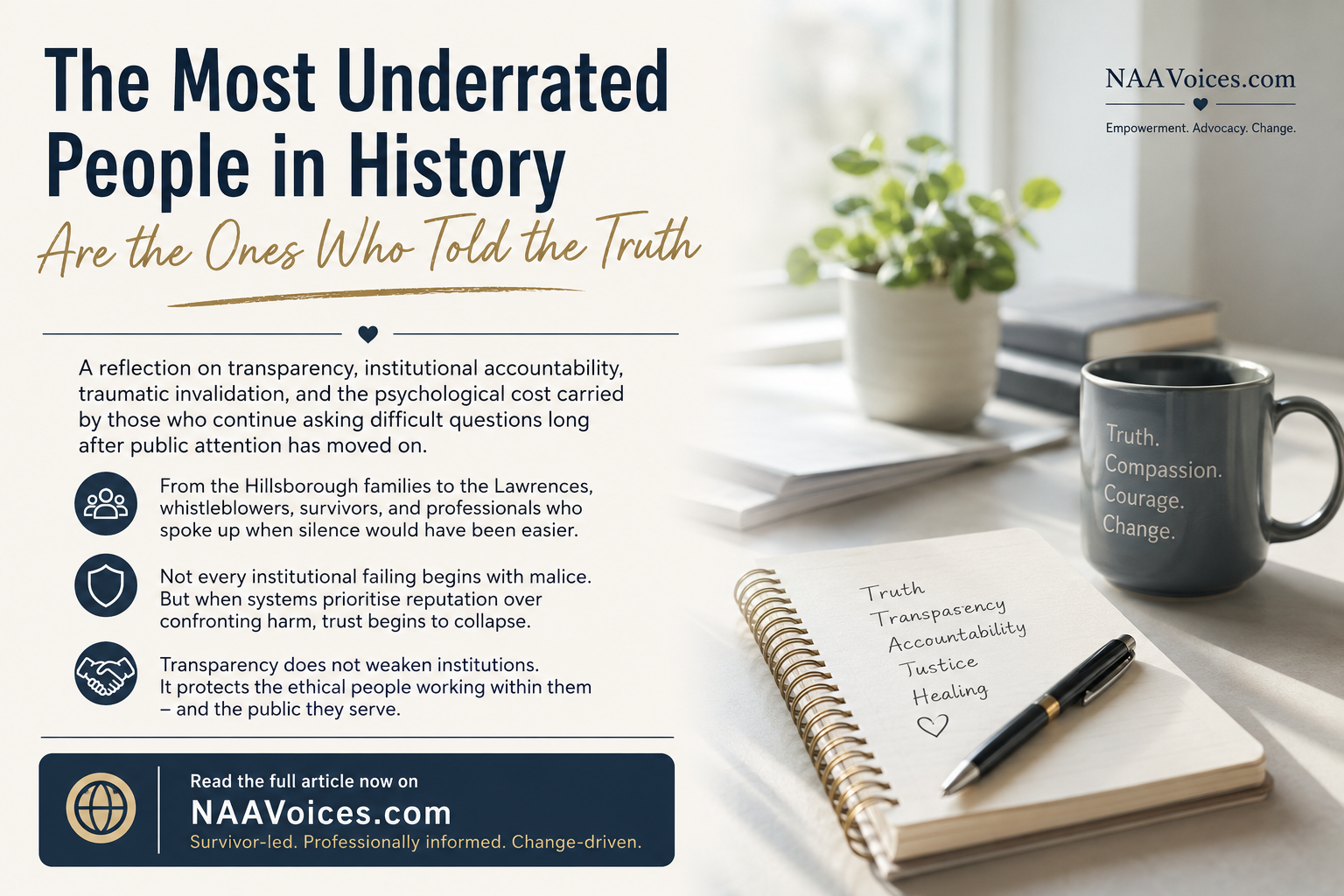
The Most Underrated People in History Are the Ones Who Told the Truth
whistleblowers, institutional accountability, Hillsborough, Stephen Lawrence, coercive control, safeguarding, PTSD, transparency, traumatic invalidation, policing culture, survivor voices, NAAVoices
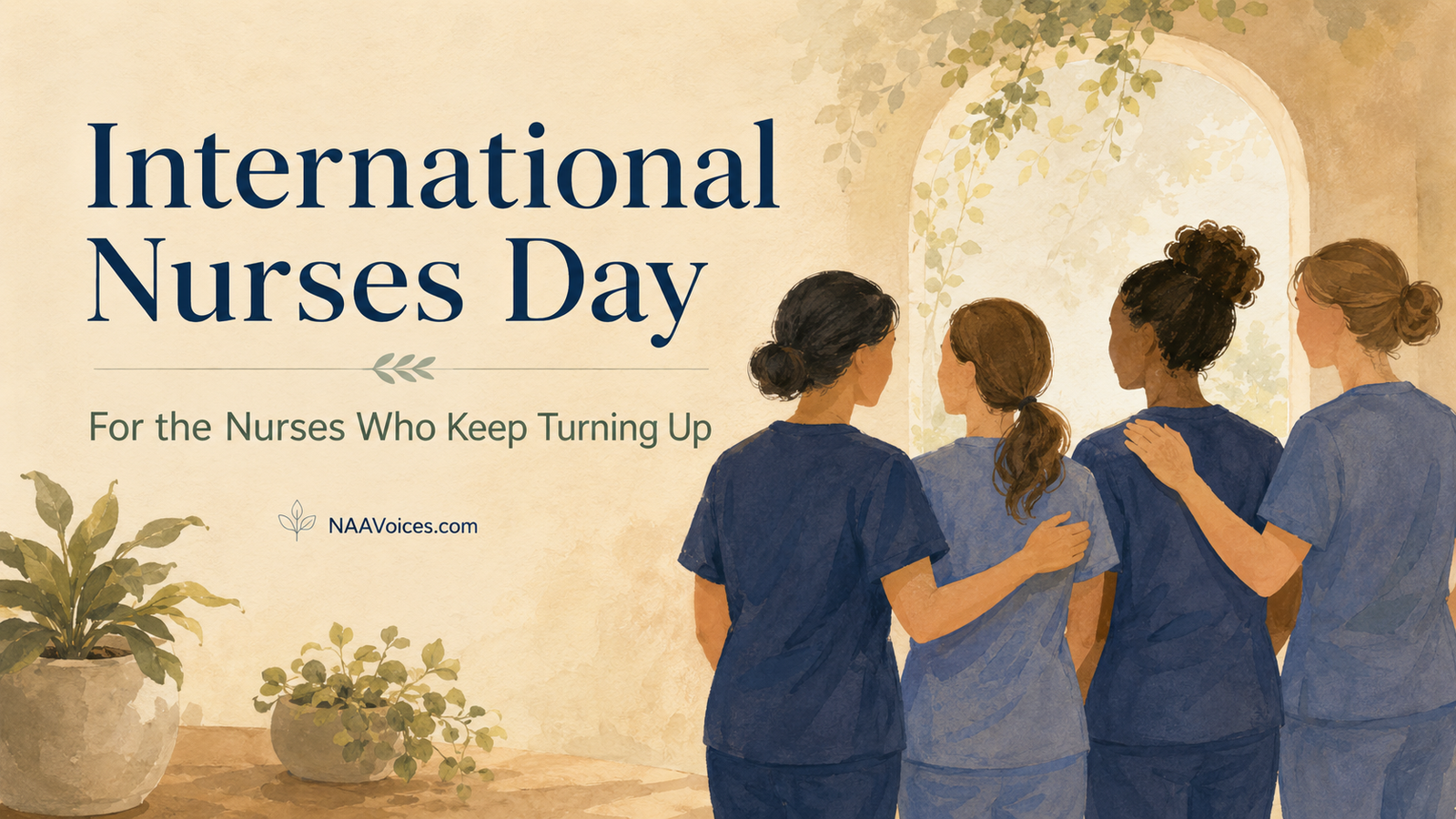
International Nurses Day: For the Nursing Teams Who Keep Turning Up
For International Nurses Day, a reflection on primary care nursing teams, the patients who walk through our doors, the families behind nurses, and the managers who make compassionate care possible.
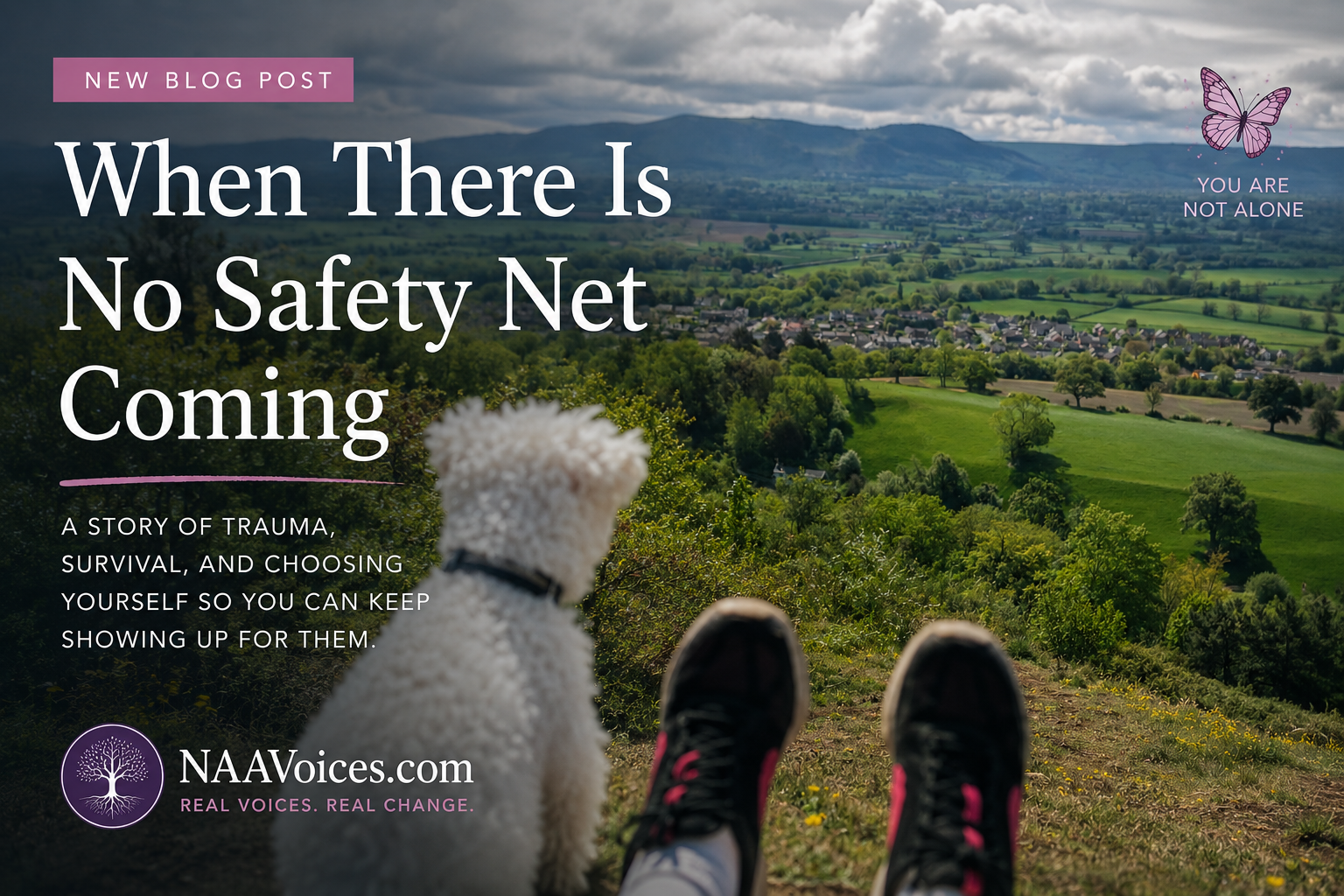
When There Is No Safety Net Coming
A personal reflection on trauma, grounding, survival, parenting after abuse, and the reality of healing when there is no safety net coming. A NAAVoices story about resilience, nervous system recovery, self-care, and children surviving trauma.
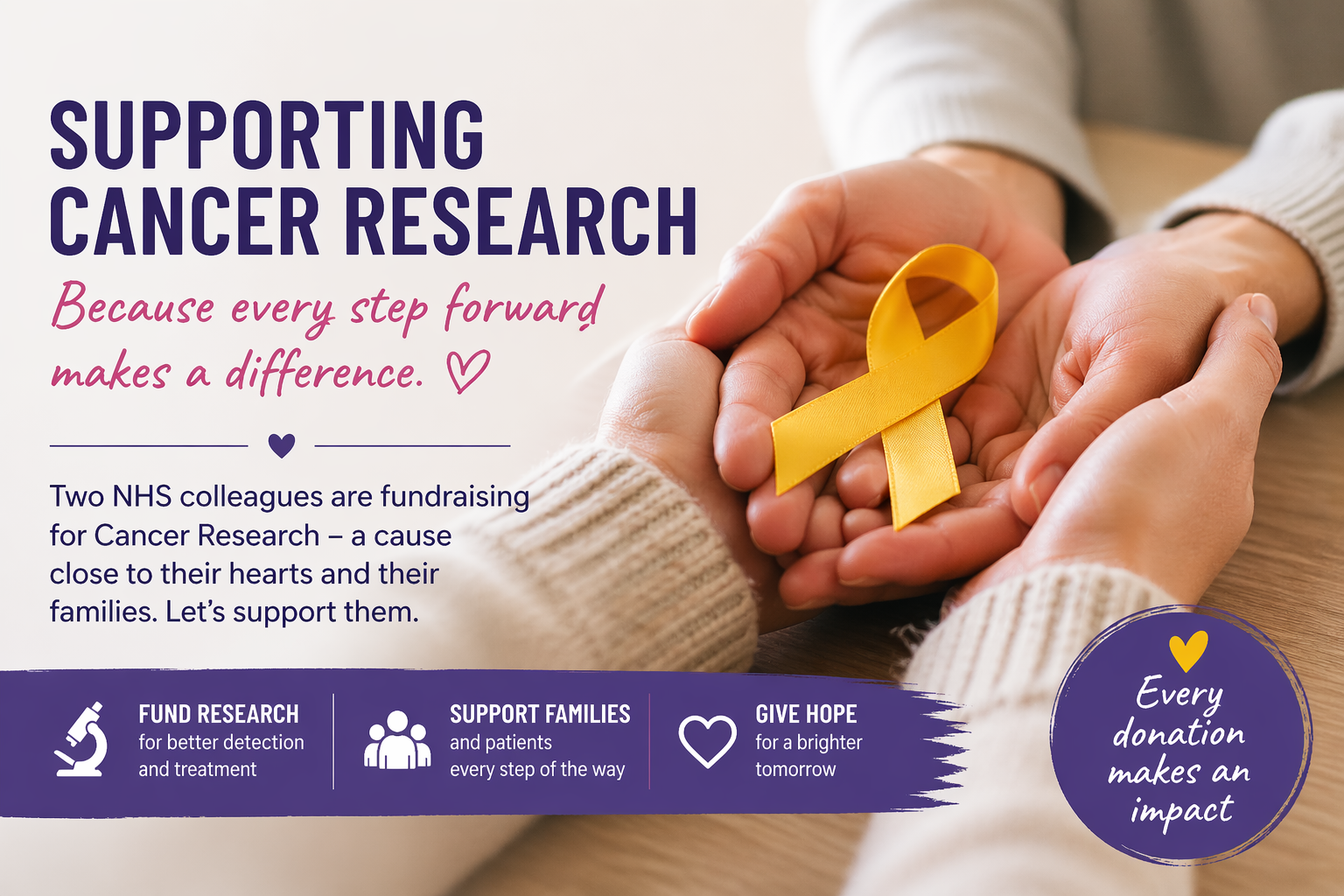
Small Acts, Big Impact, Supporting Cancer Research
Two of my colleagues are fundraising for Cancer Research, combining their frontline experience in general practice with personal lived experience of cancer. This is a cause close to home — support their efforts or share to help make a difference.




🌿 Dedication Month: Community Voices & Advocacy
This month highlights trusted individuals and organisations who have shared their resources and lived experience with NAAVoices. Each link represents a committed voice working to support families and make reliable information easier to access.

A trusted starting point for families seeking clear, accessible information about cerebral palsy, including diagnosis, treatment options, financial planning, and community support.
Discover more from NAAVoices.com
Subscribe to get the latest posts sent to your email.