NAAVoices was not created from certainty, but from lived experience and professional insight. As I migrate earlier work from the original platform, this post has been reviewed and approved for transfer. It remains true to its original context, with only minor clarity edits where needed. Some moments do not require rewriting to remain honest.
An Unusually Calm Morning
Usually, anything involving police contact is there in my body before my mind has even caught up.
The dread starts early. My chest tightens. My thoughts begin racing ahead of me. I rehearse everything that could go wrong before I have even properly started the day.
But this morning was different.
There was no panic. No spiralling. No crushing sense that I might fall apart before I even got there.
Just a kind of quiet.
Not peace exactly, but something close enough to feel unfamiliar.
The night before, I had been awake all night drafting and finalising a document on Misconduct in Public Office relating to PC Rolls. Printed, organised, ready to go.
It was one of those documents built out of pure necessity. The kind you create when you have been left carrying too much for too long, and the only way to cope is to force some sort of order onto the chaos.
What made it more complicated was that this was not the first time I had done something like that.
Back in July, I had already created a similar document to examine, for my own sake, whether there was any truth in what they were trying to imply about Sergeant Smith. I needed to test it properly against the guidance, the standards, the facts, and everything they seemed to be leaning on.
I needed to know whether there was something there that I was somehow missing.
There was not.
And because there was not, I refused to hand that document over.
That mattered to me. It still does.
By then, I already knew how easily words could be lifted, reshaped and slotted into narratives that do not reflect the truth. I was not going to hand over something that could be used to support an allegation I did not believe in.
So the document I took with me that morning, the one I did agree to share with DC Jackie from Professional Standards, was the one about PC Rolls.
Not the officer she was investigating.
Meeting Away From the Station
We met at a Costa near the station rather than inside it.
That mattered too.
I had no confidence that my body would cope with the station building itself. Sometimes trauma is not dramatic from the outside. Sometimes it is just knowing exactly which doors your nervous system cannot walk through without paying for it later.
I arrived early, bought a drink and sat waiting with that rare steadiness I usually only find at work, when I slip into professional mode and hold myself together because I have no choice.
And that was part of what felt so strange.
Sitting there, I could tell that under different circumstances, in a different life, I probably would have got on well with Jackie. She felt easy to talk to. Warm. Human.
But that is where it becomes complicated.
Because once you have been pinned into the role of “victim”, even ordinary human connection can start to feel risky.
You find yourself wondering whether being treated like a person will later be twisted into something else. Whether kindness will be questioned. Whether simple decency will be made to look suspicious.
That does something to you.
It makes you cautious in places where you should be able to exhale.
The Conversation
I am not someone who rushes conversations, and I did not rush this one either.
I spoke to Jackie about the previous day. The fifth handover. The fresh set of officers. The sleepless night that followed. That awful, familiar feeling of being dragged back to the beginning all over again.
She was under no obligation to sit and absorb any of that. It was not the formal purpose of the meeting.
But she listened anyway.
I wanted her to understand that the damage is not only in the original harm.
It is in the repeating.
The retelling.
The constant reopening.
The way systems can make you bleed from the same wound over and over and still call it procedure.
We also spoke about the software I had used to organise the evidence. It had worked well. Far better than the chaos I had been left to live inside.
It did what should have been done properly from the start.
It put things in order.
It made patterns visible.
It made the chronology make sense.
I kept thinking how different all of this might have been if the case had been documented properly at the beginning. How much might have been prevented. How much trust might not have been lost.
Jackie asked more than once if she could have a copy of the document I had prepared.
I had not expected to say yes.
But again, that is why the distinction matters so much.
The document I gave her was the one on PC Rolls. It reflected where I believed the scrutiny should have been directed. It was grounded in guidance, police conduct standards, and the failures that had shaped what happened to my children and me.
The July document about Sergeant Smith was different.
I had created that one only to check for myself whether there was any substance in what they were trying to suggest.
There was not.
Because of that, I refused to hand it over.
That refusal mattered because it was one of the few places I still had control. One of the few moments where I could say no.
No, I am not helping you build something I do not believe is true.
But the PC Rolls document was different.
I did not share it because I suddenly trusted the process. I shared it because if that document made someone stop and properly look at what had happened, then maybe some purpose could still come from the work and pain that had gone into it.
The scale of it seemed to land with her too.
Equality Act references.
Police codes of conduct.
Home Office guidance.
Layer after layer of material that I had had to pull together because no one else had done it for me.
Because that is what happens when systems fail you for long enough.
You end up becoming your own researcher, your own organiser, your own advocate, your own witness.
Jackie clearly had empathy. You could feel that.
And I do not imagine her role is an easy one.
Being Heard Without Being Rewritten
Jackie had brought a statement for me to sign.
That mattered more than it should have had to.
Unlike the statement produced in the children’s case, this one had not been rewritten into someone else’s version of me. It had not been flattened into language that sounded more convenient, more polished, more like them than me.
It still sounded like my voice.
It still felt like my words.
That should not feel remarkable.
But after everything else, it did.
We spoke briefly about what would happen next. Jackie said that if the CPS took the matter forward, it was unlikely I would be called.
I could not ignore the meaning sitting underneath that.
My account did not fit the version of events they appeared to be working from. That has been one of the strangest, most unsettling parts of all of this.
The feeling of being pushed to the edge of something that happened to me, as though I am just another witness passing through rather than the person whose life sits at the centre of it.
Jackie stayed professional throughout. She offered me a direct line of contact if I heard nothing more on either the Misconduct in Public Office issue or the coercive control complaint.
I appreciated that.
But appreciation is not the same as trust.
And trauma knows the difference.
The Thirty Minutes That Broke the Calm
I left that meeting feeling as steady as I had when I arrived.
For about thirty minutes.
Then it all caught up with me.
That is the part people do not see.
The bit after.
The drop.
The crash.
The moment your body realises it is no longer being held upright by pure force of will.
I had held it together in the meeting. I had spoken clearly. Sat calmly. Signed what needed signing. Probably looked, from the outside, perfectly composed.
But the body keeps score.
The drive. The music one of the children had on in the car. The emotional comedown from holding myself so tightly in place.
All of it landed at once.
My tolerance disappeared.
I went straight back to the same few songs I loop when I need to regulate. The ones I cling to when I can feel myself slipping.
This time, they did not hold me.
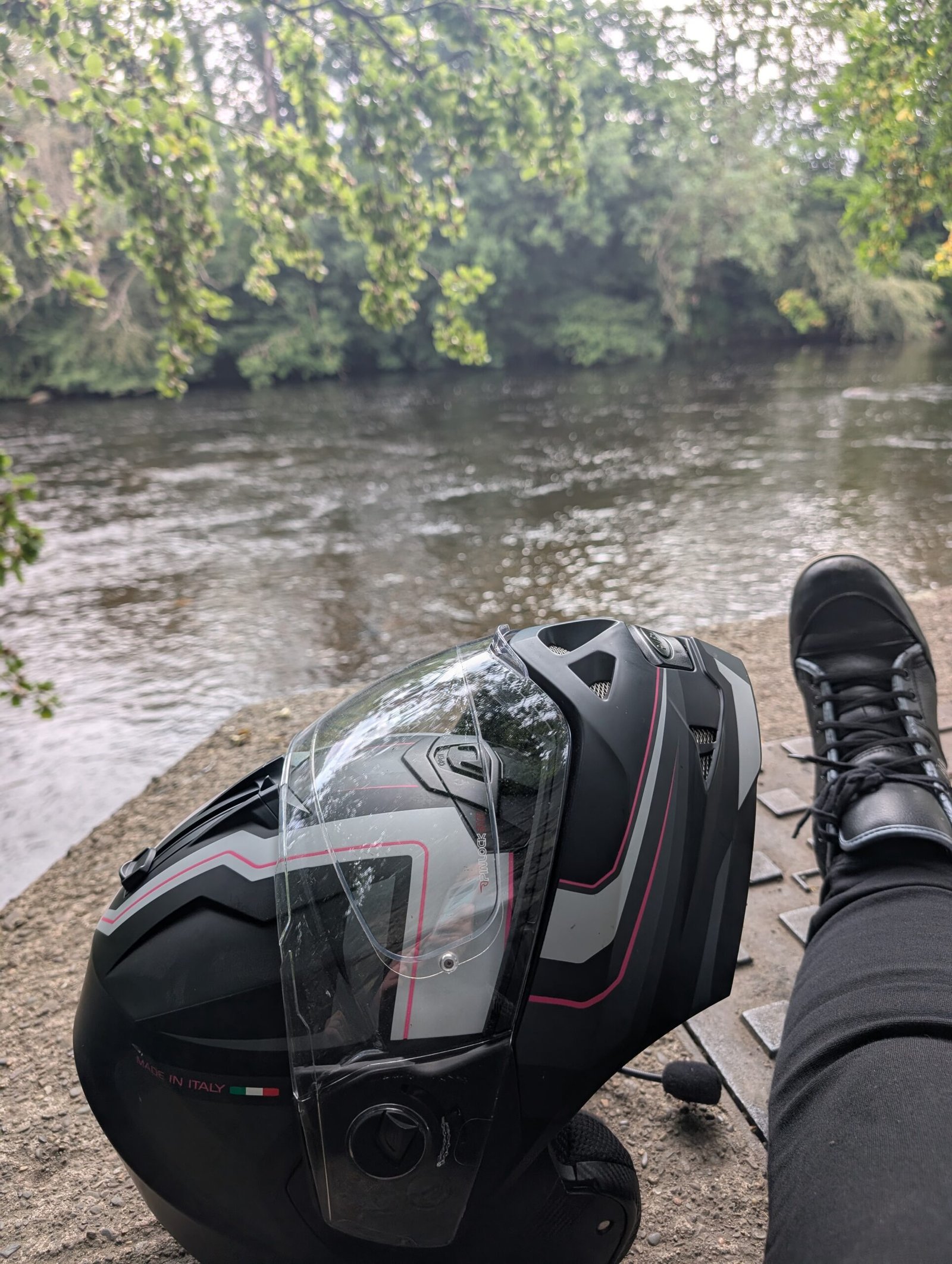
I had to pull over because the dizziness had tipped into that frightening space where you know you are no longer safe to keep driving.
Not tired.
Not emotional.
Unsafe.
And none of that was about Jackie personally.
It was not about one conversation in one café.
It was about what that conversation represented. The reliving. The cumulative weight. The reality of how much my life has changed, and how much I have changed, because of what started this and everything that followed.
Some harm does not happen in the room.
Some of it arrives afterwards, when you are in the car, trying to get through an ordinary journey, and your body suddenly reminds you that none of this was ordinary at all.
On Being the Reluctant Victim of an Investigation I Never Asked For
I hope the CPS make a decision soon on the Misconduct in Public Office case.
Not because I think a decision will suddenly make any of this feel fair, but because sometimes you just need one door to close.
Even badly.
Even imperfectly.
You just need it to stop standing open in front of you.
I expect it will end up at a gross misconduct hearing.
I even asked whether I could be invited, given that I am apparently the unwilling victim of this implied abuse.
And that still does not sit right with me.
Not remotely.
In November, four years of disclosed abuse was not enough for me to be treated as a victim.
Four years.
Four years of harm, fear, coercion and trying to be heard.
That was not enough.
But now I am expected to accept that I am the victim of Sergeant Smith, the one officer who actually treated me like a human being.
I cannot accept that, because it is not true.
That is not what happened.
The truth is far messier than the version that fits neatly inside professional processes. Sergeant Smith saw a person where others had seen a problem, a case, a complication or something to move along.
He stepped into a situation long after others should have acted.
And now it feels as though that humanity is the very thing being picked apart.
There is something deeply difficult to sit with in that.
The idea that someone could lose a forty-year service history for recognising the person in front of them, for treating me with dignity after earlier failures had already stripped so much away, is incredibly hard to sit with.
I do not know how I will get through court if it comes to that.
I say that honestly.
I will somehow have to stand in that environment, under all that weight, and hope my body does not give out beneath the pressure.
And I imagine Sergeant Smith probably regrets ever opening the complaint I had originally submitted.
Probably regrets knocking on my door at all.
That thought sits heavily too, because none of this should have unfolded the way it has.
People always like to tidy things up afterwards.
They say, why did you do this?
Or he should have done that instead.
Or you could have done it differently.
As though there was ever some clean, perfect route through a situation like this.
As though trauma leaves you with the luxury of calm strategy.
As though any of us were moving around this in ideal conditions.
Looking back, part of me wishes Sergeant Smith had never got involved.
Not because he did something wrong.
But because maybe then neither of us would have ended up here, being used in a process that feels less about truth and more about moving scrutiny to somewhere safer, somewhere easier, somewhere more convenient.
I did not ask for this investigation.
I did not ask to be made the centre of a version of events that does not reflect what happened.
And I certainly did not ask for the part people never see afterwards.
The shaking after the meeting.
The looped music.
The pulled-over car.
The body that no longer handles stress the way it used to.
The effort of looking functional while something inside you is still splintering.
That is the aftermath people miss.
The meeting is one hour.
The statement is a few pages.
The signature takes seconds.
But the fallout comes home with you.
And sometimes it stays long after everyone else has walked away.
This is PTSD.


Accountability & Experience: My West Mercia Police Story
- Back to reality. Two Days of Kindness Can’t Erase Months of Trauma 28/07/2024
- Two Years On: The Day I Met Jackie 29/07/2024
- The Impact of Ignoring Domestic Abuse Reports 3/08/2024
- At the Starting Line, Again — The Cost of Being Passed from Officer to Officer 5/08/2024
- Professional Standards, Signed Statements, and the Aftermath You Do Not See 5/08/2024
- When Coercive Control Is Dismissed as a Bad Relationship 17/12/2024
- The Cost of Speaking Truth: A Year That Changed Everything 27/12/2024
- When the Police Came Knocking: A Personal Journey Through Fear and Recovery 29/12/2024
- The Friday Everything Broke 06/02/2025
- The Power of Truth: Advocating Against Police Misconduct 18/04/2025
- The Accountability That Never Comes from West Mercia Police 28/05/2025
- Why I Write 03/10/2025
- Two Years On: A Survivor’s Account of Instatutianal Failure 20/11/2025
- Two Years On: What They Could Never Take 10/04/2026
- The Break in Me — Two Days That Made the Damage Impossible to Ignore 11/08/24 + 15/08/2024 Reflection 21/04/2026
- The Most Underrated People in History Are the Ones Who Told the Truth
My Lived Experience: A Personal Journey Through Trauma and Recovery
- Back to reality. Two Days of Kindness Can’t Erase Months of Trauma 28/07/2024
- Still Standing- The Quiet Aftermath of Survival Life After Trauma: Motherhood, Exhaustion, and Carrying On Without a Safety Net 1/08/2024
- Learning to Recognise and Manage Triggers of Post-Traumatic Stress Disorder Resulting from Coercive Control 2/08/2024
- The Impact of Ignoring Domestic Abuse Reports 3/08/2024
- At the Starting Line, Again — The Cost of Being Passed from Officer to Officer 5/08/2024
- Professional Standards, Signed Statements, and the Aftermath You Do Not See 5/08/2024
- Returning to Work with PTSD: When a Place of Safety No Longer Feels Safe 10/09/2024
- 🧠 When Therapy Isn’t Enough: A Reflective Journey into Psychosomatics
- When Coercive Control Is Dismissed as a Bad Relationship 17/12/2024
- When the Police Came Knocking: A Personal Journey Through Fear and Recovery 29/12/2024
- Finding Silence in the Midst of Overload: Navigating Safety and Trauma 25/01/2025
- The Friday Everything Broke 06/02/2025
- Finding Strength Amidst Chaos and Control 11/03/2025
- The Power of Truth: Advocating Against Police Misconduct 18/04/2025
- Living Behind the Mask: My Journey with PTSD 22/05/2025
- When Trauma Shatters Your Coping Strategies: How PTSD Changes Everything for the ADHD Brain 09/09/2025
- Why I Write 03/10/2025
- Understanding Dissociation Through Lived Experience, Neuroscience, and Survivor-Led Advocacy 💙 16/10/2025
- Angel Numbers & Everyday Spirituality: Finding Light in Life’s Patterns 21/10/25
- When Your Nervous System Remembers: Understanding Polyvagal Theory After Narcissistic Abuse 28/12/2025
- Two Years On: What They Could Never Take 10/04/2026
- The Break in Me — Two Days That Made the Damage Impossible to Ignore 21/04/2026