Category: Founder’s Archive

This category contains posts automatically imported from the founder’s original blog, preserving the personal journey, reflections, and lived experiences that shaped the creation of NAAVoices.com.

  • Day 3 of 8 The System That Kept Me Silent: Understanding the Architecture of Abuse

    Day 3 of 8 The System That Kept Me Silent: Understanding the Architecture of Abuse

    When I left, I was given a warning that would haunt me: “They will become disciples.”

    Those words came from someone who knew. Someone who’d watched the pattern before. Yet even with that warning ringing in my ears, I couldn’t fully grasp what was about to unfold. The same family who’d refused to house him for years would soon close ranks. They would platform his narrative.

    Abuse isn’t chaos. It’s architecture. It’s a deliberately constructed system. It is designed to manufacture doubt, recruit accomplices, and keep you questioning your own reality. It continues until silence feels safer than speaking.

    Today, I want to map that system for you. I do this not because every story is identical. I do this because seeing the blueprint helped me understand that what happened to me wasn’t random. It was engineered.

    The Manipulation Isn’t Love Gone Wrong, It’s Control Gone Right

    For years, I believed I was experiencing “messy love.” It’s the kind where passion and pain intertwine. Sometimes, the good days make you forget the bad ones. But abuse isn’t messy love. It operates exactly as designed, functioning as a control system.

    The manipulation started subtly. First, it was my own family I lost touch with. Not through any dramatic declaration, but through a thousand small discouragements. A sulk when I wanted to visit them. Escalating to being accused of ‘Snatching his son’, when I tried, returning home to an aggressive drunk. A crisis that always seemed to emerge just before family gatherings. Gradually, incrementally, my world shrank until his family became my only “family.”

    And that’s when the real work began.

    Manipulation in abuse follows a predictable pattern:

    • Engineer doubt: Every memory you have gets questioned. “That’s not what happened.” “You’re being dramatic.” “You always twist things.”
    • Control narratives: Your story gets rewritten before you even tell it. By the time you speak, they’ve already briefed the jury.
    • Manufacture isolation: When you question yourself and can’t trust your own narrative, who can you turn to? When “family” becomes your only support and they’re all hearing his version, where do you go?

    The mechanism worked so well that I self-policed. I edited my words before speaking them. I questioned my memories before trusting them. I silenced myself before anyone else had to.

    When Your Circle Becomes the Audience: The Disciple Effect

    The hardest truth I’ve had to accept is that some people don’t just watch abuse happen; they participate in it. They become what I now call “disciples.” These are active enablers. They don’t just look away. They actively work to maintain the abuser’s reputation and control.

    When I finally set boundaries, the family transformation was swift and coordinated. People who’d privately acknowledged his issues for years suddenly became his strongest advocates. They weren’t just neutral; they were recruiters.

    The roles they played were distinct but interconnected. I won’t go into depth about my experience here. At the end of the day, they remain my Child’s Grandparents. For my child’s sake, and for my child’s sake alone, I will not do that.

    I supported other victims. After hearing their stories with consent to share, here are some examples.


    • Enablers rationalise harm by reframing abuse as hardship, turning perpetrators into victims and survivors into burdens.
    • They minimise danger by insisting on neutrality, treating safety as a matter of opinion rather than a matter of urgency.
    • They redirect concern away from the survivor, casting doubt on her credibility, stability, or motives.
    • They isolate victims by quietly influencing mutual connections, eroding trust in every shared space.
    • They pressure survivors to reconcile, not for healing—but to preserve their own comfort, reputation, or routine.
    • They weaponise community, implying that protection is conditional and belonging must be earned through silence.
    • They avoid accountability by clinging to context, as if understanding the abuser’s past absolves their present harm.
    • They uphold the status quo by discouraging disruption, even when that status quo is built on the suffering of others.
    • They deflect responsibility by framing the survivor’s resistance as instability, bitterness, or a desire for revenge.
    • They demand forgiveness before safety, reconciliation before truth, and compliance before healing.
    • They confuse loyalty with complicity, choosing proximity to harm over proximity to justice.
    • They silence survivors not with threats, but with expectations: to be calm, kind, and quiet.
    • They protect the system that failed her—because confronting it would mean confronting their own role within it.

    The Threats That Trap: A Three-Pronged Prison

    Threats of abuse aren’t always explicit. They’re often implied, suggested, and demonstrated through the consequences faced by others who’ve tried to leave before. But whether spoken or shown, they serve one purpose: to make leaving feel more dangerous than staying.

    The threats came in three forms, each designed to trap a different part of me:

    Threats to me were about survival: Financial ruin. Custody weaponised before I even contemplated leaving. My professional reputation was threatened if I spoke to the police. That it would end in ‘Suicidal Madness’, Hopefully mine now his….

    Threats to himself were about guilt: The suicide threats that arrived whenever I drew a boundary. The health crises that emerged when I mentioned space. The self-harm that was somehow always my responsibility to prevent. These weren’t cries for help; they were control tactics designed to make me responsible for his choices.

    Threats to my world centred on the issue of belonging. I was already isolated from my own family. The threat of losing his family, too, felt like stepping off a cliff into complete abandonment. They were my child’s grandparents. They were my emergency contacts for help during the latest episode with him. They were people I loved and considered family. The threat wasn’t just losing him, it was losing everyone.

    Each threat type worked together to create a state of paralysis. Self-harm threats made me fear guilt. Social threats made me fear isolation. Together, they built a prison where staying felt like the only survivable option.

    The Pattern That Predicts: Your Escape Map

    It took me years to see it. Abuse follows a loop. It’s a predictable, repeatable pattern. Once recognised, it becomes your map to freedom. Here’s what I learned:

    Stage 1: Isolate. They distance you from your support system, making their network your primary or only “family.” It happens so gradually you don’t notice until you realise you haven’t seen your own family in months.

    Stage 2: Recruit. They turn bystanders into disciples through charm offensives, crisis stories, and selective truths. By the time you need support, everyone’s already been briefed on why you’re “difficult.”

    Stage 3: Test Compliance. Small boundaries get breached to gauge your tolerance. Each time you don’t react, the boundary retreats further.

    Stage 4: Punish/Pity Cycle Resist and face the smear campaign. Comply and get the pity play. Either way, they maintain control whilst appearing reasonable to onlookers.

    Stage 5: Entrap via Conditional Belonging. Your place in the “family” becomes conditional on accepting the abuse. Rock the boat and lose everything. Stay silent and keep your fragile belongings.

    Stage 6: Escalate at Exit. When you finally try to leave, everything intensifies. The disciples mobilise. The threats materialise. The “concern” for you becomes overwhelming. This is the extinction burst, the final attempt to regain control.

    Understanding this pattern gave me something crucial: the ability to predict what would happen next. When I finally left and the smear campaign began, I wasn’t surprised. When the family closed ranks, I was prepared. When the threats escalated, I had already documented everything.

    The Day I Stopped Debating My Safety

    The turning point often comes when survivors realise they are spending more energy justifying their need for safety. They use more energy on justification than actually pursuing it.

    Some try to preserve relationships for the sake of their children—only to find that access is conditional. Conditional on proximity to the person who caused harm. Conditional on silence. Conditional on tolerating DARVO tactics that rewrite history and discredit truth.

    Survivors describe how enablers stand beside the perpetrator, not out of ignorance, but despite knowing the patterns. Despite witnessing the harm. Despite understanding what he is capable of.

    They hoped others would prioritise a child’s well-being over the comfort of a familiar pattern. But instead, they watched those same people risk that child’s safety to preserve their own denial.

    Every conversation became a trial.
    Every boundary required a dissertation.
    Every protective decision needed committee approval from people who benefited from the survivor’s silence.

    The pushback was immediate and intense. But something remarkable happened:
    When survivors stopped engaging with the debates, those debates lost their power.
    When they stopped trying to convince people who didn’t want to be convinced, they found energy they’d forgotten they had.

    What Breaking Free Actually Looks Like

    Leaving isn’t a moment, it’s a process. It’s not just physically removing yourself; it’s untangling from a system designed to make leaving feel impossible.

    Here’s what I learned:

    Document everything. Every threat, every incident, every message. Not to convince others, but to remind yourself when the gaslighting makes you doubt your own experience.

    Reduce communication to one channel. Written only. No phone calls where words can be twisted. No doorstep confrontations where witnesses mysteriously “didn’t see anything.”

    Stop protecting their reputation. Their actions are not a secret to be kept. Speaking truth isn’t vengeance; it’s recovery.

    Accept the losses. I lost his family. I lost the future I’d imagined. But I gained something worth more: myself.

    Build forward, not back. I couldn’t return to who I was before. That person was gone. Instead, I built forward into who I could become.

    The Truth That Sets You Free

    Here’s what I wish someone had told me earlier: The family that enables abuse was never your family. The belonging that requires your silence was never real belonging. The love that costs you your safety was never love.

    When I was warned not to believe his family, I thought it meant they’d lie about him. What it actually meant was that they’d lie about me. They’d rewrite history. They’d erase their own knowledge of his patterns. They’d sacrifice my truth for their comfort.

    But here’s what else I learned: Their denial doesn’t diminish my truth. Their enabling doesn’t erase my experience. Their complicity doesn’t make me complicit in my own silencing.

    The system that kept me trapped was intricate, intentional, and intergenerational in nature. But systems can be dismantled. Patterns can be broken. And survivors, we can speak.

    Moving Forward: From Survivor to Advocate

    Today, I don’t just survive, I advocate. Through Nurse Against Abuse, I help others identify these patterns. I name the tactics. I validate the experiences. I remind survivors that what they’re experiencing isn’t chaos. it’s control. And control can be broken.

    If you recognise yourself in this story, know this:

    • Your confusion is not a coincidence; it’s manufactured
    • Your isolation is not circumstantial; it’s orchestrated
    • Your fear is not weakness; it’s a rational response to a real threat
    • Your desire to leave is not betrayal, it’s survival

    The system that keeps you trapped is counting on your silence. It’s banking on your shame. It’s investing in your isolation.

    But you’re reading this, which means you’re already on your way to breaking free. You’re seeing the pattern. You’re naming the system. You’re refusing to be silenced.

    And that—that is how we break the architecture of abuse. One voice, one story, one survivor at a time.


    If you’re experiencing abuse, you’re not alone. Contact the National Domestic Abuse Helpline on 0808 2000 247

  • Day 4: “It’s OUR Money Now” – The Financial Prison Nobody Sees

    Day 4: “It’s OUR Money Now” – The Financial Prison Nobody Sees

    Part of the countdown to the end of Domestic Abuse Awareness Month

    ⚠️ Disclaimer: This account has been anonymised to protect all parties involved. Any similarity to specific individuals or situations is coincidental. Should anyone recognise themselves in these details, such recognition would constitute their own acknowledgement of the described behaviours. This is one survivor’s story among millions who face financial abuse.

    One Month. Four Weeks. 30 Days.

    That’s how long I’d known him before my money became “our money.” Before my bank card lived in his pocket. Before my savings became his safety net.

    If you’ve ever wondered how someone “lets” financial abuse happen, keep reading.

    This is how the trap gets built while you’re falling in love.


    📊 The Statistics You Need to Know

    Economic abuse occurs in 99% of domestic violence cases. It affects 1 in 6 women in the UK. 60% of survivors say economic abuse was the main reason they couldn’t leave. The average debt from economic abuse is between £5,000 and £15,000. Recovery time after leaving ranges from 6 to 18 months. (Source: Surviving Economic Abuse UK, 2023).

    As a nurse working with vulnerable families, I believed I’d recognise the signs. I was trained to spot patterns of emotional manipulation, isolation, and financial control. I can assess risk, offer safety planning, and take appropriate safeguards. I understood coercive control academically.

    But abuse doesn’t discriminate. It doesn’t look like the textbook examples. It looks like compromise, like being “understanding,” like giving the benefit of the doubt. It creeps in through small decisions and is hidden in the silences, the guilt, the justifications we make to ourselves.

    The truth is, professional knowledge doesn’t immunise you from lived experience.

    Recognising abuse in your own life often comes long after you’ve helped others escape it.


    🚩 The First Red Flag You’ll Miss

    “Sorry to ask… Is there a little money on the card?”

    Such a small request. He’s hungry. Forgot his wallet. What kind of partner lets someone they love go hungry?

    Within four weeks, I’d lent him over £500 to fix his car. A loan, never repaid, because “partners support each other.” His response should have been my warning: “I already just could not get by without you.”

    Eight weeks. That’s all it took to become essential to his survival. Not his partner – his lifeline. The words felt like love. They were actually a confession.

    The Internal Dialogue We Don’t Talk About:
    My logical brain said, “This is fast. This is concerning.”
    My emotional brain said, “He needs me. I’m important. This is what love looks like.”

    My logical brain said, “He’s an adult who managed before meeting you.”
    My emotional brain said, “But things are tough for him right now.”

    My logical brain said, “You’re already adjusting your budget around his needs.”
    My emotional brain said, “Couples share. Don’t be selfish.”

    But here’s the thing about trauma bonds – they don’t form from red flags you see.

    They form from the ones you explain away:

    • “He’s had bad luck” (not a pattern of irresponsibility)
    • “His ex controlled the finances” (not his inability to manage money)
    • “He’s embarrassed to ask” (not entitled to your resources)
    • “Once he’s back on his feet…” (he was never planning to be)
    • “This is temporary” (it’s actually the new normal being established)

    The professional in me knows:

    This is called “loan sharking”, creating small debts that establish patterns of financial dependence. It’s intermittent reinforcement that creates psychological addiction. The unpredictability of requests keeps you anxious and compliant. Each “emergency” triggers your fight-or-flight response, bonding you through shared crisis.

    The survivor in me knows:

    It felt like being needed, being valued, being the “supportive partner.” When someone says they can’t survive without you after eight weeks, your alarm bells should scream. Mine sang love songs instead.

    The woman who rebuilt knows:

    Real partners don’t create financial emergencies. They prevent them. Real love doesn’t cost you your savings. It protects them. Anyone who “can’t get by without you” after two months isn’t looking for love. They are looking for a life raft.

    By month three, my second bank card lived in his pocket. By month six, I was checking my balance with dread. By year one, I couldn’t remember what financial freedom felt like.

    It all started with: “Sorry to ask…”

    He wasn’t sorry. And it wasn’t a question. It was a test. And I passed with flying colours, straight into financial prison.


    💔 From Nearly £30,000 Saved to £4,500 in Debt: A Timeline

    When we met:

    ✓ Nearly £30,000 in savings
    ✓ Zero debt
    ✓ Annual holidays with my children
    ✓ Financial independence
    ✓ A stable job I loved
    ✓ Confidence in managing money and planning for the future

    I was proud of what I’d built. Years of careful budgeting had created a safety net for my children and me. We had security. We had options. We had freedom.

    When I fled:

    ✗ No savings
    ✗ £4,500 in credit card debt for items he wanted and refused to return
    ✗ 3½ years since our last family holiday
    ✗ Complete financial destruction
    ✗ Overdraft maxed out
    ✗ Credit score damaged
    ✗ Trapped in a joint mortgage he refused to pay, contribute to, or let me buy him out of
    ✗ Watched the interest rate rise—£600 more per month, while he refused to engage
    ✗ Paid both mortgage and rent while living in temporary homeless accommodation
    ✗ Sold my children’s toys to pay off debts
    ✗ Relied on food banks to feed the family
    ✗ Couldn’t afford Christmas
    ✗ Family and friends quietly left food parcels at the door
    ✗ Lived in survival mode, every day a calculation of what could be sacrificed next

    This wasn’t poor budgeting, it was financial abuse: systematic, silent, and devastating.

    It weaponised housing, debt, and dignity. At the same time, I was accused of financial abuse myself, in textbook DARVO fashion, consistent with narcissistic patterns.

    Escaping meant starting from scratch, emotionally, financially, and legally


    🏥 When Your Professional Life Becomes Part of the Trap

    I’m a registered nurse with years of experience. I now excel at spotting subtle changes that save lives. I have spent years advocating for vulnerable patients, assessing capacity, and raising safeguarding concerns. Yet behind the professionalism, I was living a private hell.

    Work became my refuge, not because it was easy, but because it felt safer than home. However, it was the only place where I could help others in ways I couldn’t help myself.

    The questions haunted me:

    • How can I teach autonomy when I lack it myself?
    • How can I spot vulnerability when I can’t see my own?
    • How can I be trusted with lives but not with my own bank card?
    • How did someone who saves lives need saving herself?

    My salary became “our money,” controlled at a covert level. His sporadic income remained “his money,” spent freely. Every pay rise triggered his “inadequacy,” demanding expensive consolation purchases.

    The Shopping List of Control:

    • £7,000 car (his broke down)
    • £14,000 business venture (left me in debt)
    • £30,000+ from my divorce settlement (house deposit, he demanded 50/50 equity)
    • Designer watches (to soothe his “inadequacy”)
    • Three cars purchased, insured, and repaired
    • Professional courses after each incident
    • More clothing than any human could ever need

    The irony?

    The very skills that made me competent made me a target.

    Empathy was weaponised.

    Problem-solving meant fixing his chaos.

    Resilience kept me enduring.

    Financial stability made me exploitable.

    Professional pride kept me silent.

    The uniform that symbolises strength became the costume I wore to pretend everything was fine while my world quietly collapsed.


    🎭 The Child Maintenance Con Game

    The Psychology Behind It (What Therapists Call It):

    • DARVO: Deny, Attack, Reverse Victim & Offender
    • Financial Gaslighting: Making you question financial reality
    • Manufactured Guilt: Creating false moral obligations
    • Weaponized Incompetence: “I’m bad with money, you handle it”

    Picture this manipulation:

    First major attempt at separation, 18 months before I fled.

    1. He sends child maintenance
    2. Tells everyone I’m bleeding him dry
    3. I feel so guilty that I transferred it back
    4. This occurred monthly. He threatened to take his own life up to 30 times in an hour. He used these threats to coerce me into taking him back.

    The everyday reality: He threatened me with “£7 a week” from his benefits if I ever left.

    £7 A WEEK.

    I saved more than that each day by not purchasing his vapes, Pot Noodles, nuts, and Irn-Bru. I won’t even discuss the ‘alcohol’ episodes.


    ⚖️ When Courts Become Weapons

    The Ultimate Betrayal: In family court, HE accused ME of financial abuse.

    The same man who:

    • Hadn’t paid a penny toward the mortgage! Leaving for his affair 2 weeks after getting the keys.
    • Spent £14,000 of my money setting up his business the year I left him. He claimed he was paying it off with his benefits. Meanwhile, he was also spending my wages on everything he wanted.
    • Used false addresses for credit cards (the neighbour handed me the details)
    • He accused his ex of racking up debts in his name. In reality, he had hidden and defaulted on those debts. He then forwarded them to me after I put an offer in on the house. I had to pay them off in order to secure the mortgage.
    • Worked cash-in-hand while claiming benefits

    The court believed him. Despite four years of bank statements. Despite messages calling my money “our money.” Despite evidence that he used my accounts, I have never had the opportunity to provide this proof. This will change one day.

    Ask yourself: If the system meant to protect victims can be weaponised against them, how can they be protected? What are our chances without documentation?


    🏠 Held Hostage By My Own Mortgage

    The house I bought with MY divorce settlement became my prison. He refused to leave. He refused to sign the remortgage papers. My mortgage offer almost expired.

    Then, miraculously, one week before the court date, he signed.

    Convenient timing? Or calculated control?

    While my children slept in emergency accommodation, he lived in the house I paid for. He claimed our child was living with him to access benefits I couldn’t.

    And yet claimed to be a victim?


    💪 The Plot Twist: My Recovery

    Six Months After Freedom:
    ✓ Children on holiday abroad – first time in 4 years
    ✓ New car purchased
    ✓ Motorbike bought (my secret dream)
    ✓ No 3am panics about money
    ✓ Buying basics without anxiety
    ✓ Living, not just surviving

    The truth? I rebuilt in six months what he destroyed in four years.

    The Hidden Epidemic Among Professional Women:
    We don’t talk about it at work. The nurse, the teacher, the lawyer, the executive – we’re all hiding the same secret. We earn a good income, but we can’t explain where it goes. We’re educated, independent, strong… and trapped.

    The shame tells us: “You should know better”
    The reality is: Intelligence doesn’t protect against manipulation

    A Day in the Life (Maybe You recognise this):

    • Check bank balance with stomach in knots
    • Transfer last £20 for his “petrol”
    • Skip breakfast (saving money)
    • Text from him: “Card declined at Costa”
    • Transfer another £10
    • Start a 12-hour shift caring for others
    • Message: “Nothing for dinner, send money”
    • Stop at the food bank on the way home
    • Children ask why Dad has new trainers, but their shoes have holes
    • Lie awake calculating how to survive until payday

    🛑 Recognising Financial Abuse

    Early Warning Signs Professionals Miss:

    Month 1-3: “The Honeymoon Trap”

    • They’re “between jobs” but have big plans
    • Your card is “just more convenient” for online orders
    • They’ll “pay you back” (spoiler: they won’t)
    • Sudden emergencies requiring immediate cash

    Month 4-6: “The Normalise Phase”

    • Joint account “makes sense” (but only you deposit)
    • They’re “terrible with money” (weaponised incompetence)
    • Your promotion is “our success” (but your raise disappears)
    • Family events you can’t attend due to “budget”

    Month 7-12: “The Tightening Grip”

    • You’re googling “why am I always broke”
    • Lying to friends about why you can’t go out
    • Credit cards appearing in your name
    • Their anger when you question spending

    Year 2+: “The Prison Complete”

    • Debt you don’t understand
    • Fear of checking bank statements
    • Children asking questions you can’t answer
    • Complete financial fog despite earning well
    • Working overtime but using food banks
    • Your children’s needs becoming “unaffordable luxuries”

    📝 Your Financial Freedom Toolkit

    Starting Today:

    1. Screenshot everything – Every message about money
    2. Open a secret account – Use a different bank
    3. Document the debts – What’s yours vs. what’s manufactured
    4. Tell someone – Break the silence
    5. Contact specialists – Surviving Economic Abuse understands
    6. Know this truth – The debt is evidence, not shame

    Remember: Every receipt is evidence. Every transfer tells the story. Every message proves the pattern.


    💬 Let’s Talk About This

    The CMA sends letters monthly. Always a week late. Seven months and counting.

    I don’t care.

    Every penny goes to my children’s savings. He took their holidays, their stability, their home. They deserve every penny back.

    I don’t want his money. I wanted my children’s safety.


    🎯 The Bottom Line

    To my fellow survivors: You’re not stupid. You’re not weak. You were systematically trapped by someone who claimed to love you. Your professional success doesn’t make this your fault. Your education doesn’t mean you should have known better.

    To those still trapped: The price of staying will ALWAYS be higher than the cost of leaving. That promotion won’t fix this. That next payday won’t solve it. They won’t change when the “stress” reduces.

    To everyone else: Financial abuse IS domestic abuse. It happens to doctors, lawyers, CEOs, teachers, and nurses. It’s not about being “bad with money.” It’s about control.


    📢 For Friends & Family Reading This:

    Signs your loved one might be trapped:

    • They stopped joining social events (can’t afford it)
    • Always “waiting for payday” despite a good job
    • Partner answers financial questions for them
    • Nervous when spending any money
    • Stories don’t add up (“he handles the finances”)
    • Weight loss (“not hungry” at mealtimes)
    • Defensive about relationship money matters
    • Children’s needs suddenly “too expensive”

    How to help:

    • Don’t judge – they’re already ashamed
    • Offer specific help: “I’m buying lunch today”
    • Document what you observe
    • Share resources casually
    • Be patient – leaving takes an average of 7 attempts
    • Say: “I’m here when you’re ready”

    The professional truth I wish I’d known: Rebuilding finances takes 6-18 months.

    Rebuilding your life while trapped? That’s impossible.


    📞 Get Help Now:

    • National Domestic Abuse Helpline: 0808 2000 247
    • Surviving Economic Abuse: survivingeconomicabuse.org
    • Citizens Advice: Financial abuse support
    • Women’s Aid: Financial independence toolkit

    Your money can be rebuilt. Your life cannot be re-lived.
    Choose yourself. Choose freedom.

    DomesticAbuseAwareness #FinancialAbuse #EconomicAbuse #SurvivorStories #BreakTheSilence

  • Day 5: The Science Behind Survival – When Your Body Remembers What Your Mind Tries to Forget

    Day 5: The Science Behind Survival – When Your Body Remembers What Your Mind Tries to Forget

    Part of the countdown to Domestic Abuse Awareness Month

    Day 5 focuses on the science behind survival, the part I know both professionally and personally.

    Trauma isn’t just emotional; it’s neurological. The body keeps the score long after the danger ends.

    As a nurse, I understand the physiology of trauma. I can explain how the amygdala, our brain’s alarm system becomes hypervigilant after prolonged threat exposure.

    I know that the nervous system gets stuck in survival mode, unable to distinguish between past danger and present safety.

    I’ve seen it in patients: the racing heart rate, the elevated cortisol, the way their bodies react before their minds can even process what’s happening.

    I could teach this. I do teach this to those who are struggling to understand the cause of their health when there are no other answers.

    But knowing it academically doesn’t prepare you for living it.

    The Personal Reality

    Even after I left, my body reacted like I was still in danger.

    Loud noises. Unexpected messages. Footsteps behind me. Instant panic.

    My colleagues saw the shift in me. The hair falling out. The ECG shows irregular rhythms that shouldn’t have been there. The physical manifestation of a nervous system that couldn’t stand down.

    It took time, research, studying, and therapy for me to understand what was happening: my nervous system was stuck in survival mode.

    My body was still fighting a battle I’d already escaped.

    I know the amygdala doesn’t forget a threat easily. It needs retraining through safety, breathwork, and connection.

    As a survivor, I learned that healing isn’t intellectual, it’s embodied.

    You can’t talk yourself out of hypervigilance; you have to teach your body it’s safe again.

    That’s the part they don’t put in the textbooks.

    You can understand every neural pathway, every stress hormone, every trauma response, and your body will still betray you with a panic attack in the shop because someone walked up behind you too quickly.

    The shift happens when you stop fighting your nervous system and start working with it.

    The Power of Self-Regulation

    That’s where self-regulation becomes power.

    Every time you ground yourself, feeling your feet on the floor, naming five things you can see, focusing on your breath, you’re not just “calming down.” You’re literally rewiring your brain toward peace.

    Every time you breathe properly, with that long exhale that activates your vagus nerve, you’re telling your nervous system: “We’re safe now. You can stand down.”

    Every time you stay present instead of dissociating, you’re building new neural pathways. Ones that lead to safety instead of survival.

    It’s not quick. It’s not easy. But it’s real.

    The body keeps the score, yes. But the body can also learn a new story.

    Mine is still learning.

    Some days are better than others.

    Some triggers still catch me off guard.

    But I’m no longer at war with my own nervous system.

    I understand it now. I work with it. And slowly, so slowly, it’s learning to trust that the danger has passed.

    That’s the science behind survival. And that’s the hope in healing.

    If you or someone you know is experiencing domestic abuse:

    • National Domestic Abuse Helpline: 0808 2000 247 (24/7)
    • C.A.L.L. Helpline (Wales): 0800 132 737
    • Men’s Advice Line: 0808 8010 327

    You deserve safety. You deserve peace. You deserve to teach your body that it’s finally safe to heal.

  • Day 6: Leaving Isn’t a Single Event, It’s Reclaiming Yourself, Piece by Piece

    Day 6: Leaving Isn’t a Single Event, It’s Reclaiming Yourself, Piece by Piece

    Part of the countdown to the end of Domestic Abuse Awareness Month

    What major historical events do you remember?

    The Day I Left

    People frame leaving as bravery, but it’s far more complex.

    It’s survival layered with fear, logistics, and sacrifice.

    Leaving meant letting go of everything I’d built long before I met him.

    I funded the home from my own savings, paid the mortgage alone, and raised my child as a single parent because of past events. A fair amount of time over the 18 months I spent living there was likely lost because he wouldn’t leave.

    But finances and stability meant nothing compared to facing another day in that house, sleeping in clothes, and having my voice recorder always running on my phone.

    I was done with the manipulation. I knew the truth.

    The trauma bond was broken, but it still took more for me to find the strength to leave.

    November 2023.

    The day I finally said enough.

    The day I took my three beautiful children and left, making ourselves homeless because staying meant we were no longer safe.


    After seeing the fear in my son’s eyes, a mirror of the dread I had long buried.

    I knew there was no going back.

    No manipulation could ever drag me into that darkness again.

    I still remember the look in his eyes, the flinch when my ex stood up.

    The fear I’d carried for years had taken root in him.

    I packed our bags in silence while, upstairs, he cast himself as the victim, accusing me of cruelty, unaware that within ten minutes, we would be gone. Free.

    He could try all his usual tricks – tantrums, shouting, threats.

    None of it could change my decision to leave.

    I was desperate for freedom, for safety, to live, but had nowhere to go and felt trapped from the second I woke up!

    Every sound made my heart race.

    I pretended it was just another day, but inside, I knew: if I didn’t leave, I’d be gambling not just with my sanity, but with our safety.

    So I left. Freedom came with consequences, and I paid for it.

    But if you think the abuse stopped when I walked out that door, you’d be wrong.

    Control Became a Narrative

    In the weeks and nearly two years since I left, abuse didn’t stop; it evolved.

    When direct control failed, the focus shifted to controlling the narrative: how others saw me, what they were told, and which version of events survived.

    I can now name the pattern: blame-shifting, performative victimhood, and quiet history rewrites.

    The old caution is accurate:

    listen to how someone talks about every ex; they may be describing themselves.

    I wish I’d believed those who came before me, but abusers are skilled performers.

    He worked hard to make me doubt my judgment until I stopped accepting his script and wrote my own.


    Those early days were filled with police disclosures, failing to document, safeguarding calls, and court forms.

    Exhausting doesn’t begin to cover it.

    But even in that exhaustion, there was one undeniable truth: I could breathe again.

    I could choose when I saw my family. I could choose to spend time with all three of my children. I could choose to rebuild the bond we’d all been starved of.

    As time passed, trauma set in, and I realised I needed help.

    Yet, despite the torment that followed, I thrived as the version of myself I refused to let him strip away, the nurse, the empath, the mum, the student, the one committed to saving others from the pain I was forced to endure.

    Some days, I questioned whether it was worth it, whether facing the consequences of leaving was worth it.

    But the reality is, yes, it is!

    That autonomy, the freedom, and the ability for our children to live, bond, and be a family after years of control was worth everything.


    Here’s what he could never understand, what he could never do no matter how hard he tried: he could not change how I perceive the greatness in others, or diminish my capacity to help and to heal.

    While he continued his attacks through family court, while he manipulated the world around him, I was building.

    Not just surviving – thriving:

    Through the pain, Through the love and words of my children. In 12 months I achieved.

    • A distinction in a postgraduate certificate in the Neuroscience of Psychology and Mental Health
    • Developed and published my original trauma-based therapy methodology m, created tools to help others navigate what I’d lived through
    • Published 6 books in total, 4 of which are part of my “From Troubled Minds to Empowered Voices” collection, including working with my daughter at age 4
    • Founded a peer support website – NAA Advocating for Change – providing information and resources for self-advocacy around mental health, domestic violence, and LGBTQIA+ awareness
    • Reestablished this blog after starting it before I left him.
    • Started doing things I enjoyed again, went to the rugby, taught my kids how to change pads and discs on cars, Fitted a new kitchen and bathroom myself, learnt to plaster, proving I could create a home with my own hands! And taught my kids.
    • Got a motorbike again.
    • Achieved financial stability after years of economic abuse and coercion, and brought a new car.
    • I studied the Children’s Act and police legislation. I took courses, constantly expanding my knowledge and capabilities to pray I could help others access the system that was supposedly meant to protect, because protecting against control had almost destroyed me and everything.
    • When insomnia was rife, and still to this day, I use the knowledge I gained and have now supported women who can’t afford legal representation, nor access legal aid, through domestic abuse, family court, and mistreatment, turning my pain into purpose

    Of all my achievements, one stands above the rest.

    My five-year-old now draws pictures of her family, her older brothers, herself, and me, all smiling in a row.

    To some, it’s a small thing.

    But not long ago, every drawing was filled with sad faces.

    The most significant accomplishment I hold is reflected in the bond my children now share: the love they deserved but were once starved of.

    Two nights ago, as I lay beside my little one, she whispered her nightly “I love you.” I always reply, “I love you more,” before she finishes. But she didn’t say “you” this time, she told her brother’s name.

    A day spent with him, learning guitar, and being loved.

    Her “safe people,” as she calls them, include her two teenage boys, me, and others close to us.

    And I am proud of that.

    The boys lived through hell, yet not one resents a single hair on her head.

    Our home is finally filled with safety, guitars, time, together, and days out. Their friends became a support and part of our family, and they accepted her, letting her join in, her little protectors!

    Years apart in age, never divided, no resentment, no rivalry.

    Just pure sibling banter, jest, bickering, love and fierce protection… Just Normal!

    How it was years before she was born.

    That is what I’m proudest of. And in that safety, they’ve found the freedom to be who they truly are.


    In the quiet of night, I continue working on more, but that will have to be saved for another blog!

    But all of it has made me stronger, sharper, more determined.

    He thought breaking me would be easy.

    He thought taking everything would leave me empty.

    He was catastrophically wrong.

    The Truth About Leaving

    I no longer respond to character attacks.

    I don’t read anything directly from him; friends, family, or colleagues do it for me.

    Then they outline what needs to be done, which, funny enough, I usually predict.

    Just by revisiting the statement I wrote before I left him.

    That’s DARVo in action.

    I document. I protect my children. I keep moving.

    Every book I publish is a testament to survival.

    Every woman and man I have supported proves that pain can transform into purpose.

    Every course I complete, every skill I learn, every achievement I claim, all pieces of myself I’ve reclaimed from the wreckage he tried to create.

    Leaving isn’t a single event. It’s a process of reclaiming yourself, piece by piece.

    And I’m not done yet.


    For anyone still in the darkness: You are stronger than you know.

    The person you were before the abuse is still within you, transformed yet waiting for you to remember.

    And when you leave and finally break free, you’ll discover you’re capable of more than you ever imagined.

    To those who came before me and tried to warn me: I see you now.

    I believe you!

    And I’m using everything I learned to make sure others don’t have to learn these lessons alone.


    If you or someone you know is experiencing domestic abuse:

    • National Domestic Abuse Helpline: 0808 2000 247 (24/7)
    • C.A.L.L. Helpline (Wales): 0800 132 737
    • Men’s Advice Line: 0808 8010 327

    You deserve safety. You deserve peace. You deserve to reclaim your life.

  • DAY 7 | The Mask of Charm, When Public Persona Hides Private Harm

    DAY 7 | The Mask of Charm, When Public Persona Hides Private Harm

    Day 7 of the countdown turns to one of the hardest truths I’ve ever had to face.

    Not everyone who appears kind is kind. Some abusers are masterful performers; they display compassion in public and practise cruelty in private.

    During that time, people saw only what they wanted to see: a respectable partner, community‑minded, articulate, impressive.

    I was told—often—how “lucky” I was.

    I nodded, smiled, and felt a little piece of me fade each time.

    Behind closed doors, words became weapons.

    Silence became punishment.

    I began doubting my own perceptions because the world only recognised their charm.

    It’s profoundly disorienting when your abuser is socially admired.

    You start questioning yourself simply because everyone else seems so certain they’re wonderful.

    Eventually, I learned a truth that changed everything: credibility is not the same as character.

    Charm is a form of currency for control; it buys them allies long before you realise you’ll need witnesses.

    Charm is the perfect disguise.

  • DAY 8 | The Quiet Before It Starts, Recognising the Calm That Isn’t

    DAY 8 | The Quiet Before It Starts, Recognising the Calm That Isn’t

    Day 8: When Silence Speaks First

    We’re entering the final eight‑day countdown to the end of Domestic Abuse Awareness Month.

    Each day, I want to unpack one truth I lived through.

    This isn’t theory or statistics.
    This is lived experience.

    These reflections aren’t about blame; they’re about understanding.

    Day 8 begins where most stories truly start: with silence.

    Abuse rarely arrives shouting.
    It arrives softly—dressed as care, cloaked in concern, disguised as love.

    I remember believing I was lucky. I thought I had someone who cared deeply. They checked in constantly.

    They wanted to know where I was “to make sure I was safe.”

    Only later did I realise: I wasn’t being protected, I was being monitored.

    That kind of calm isn’t comfort. It’s a warning.

    Coercive control often masquerades as devotion.
    Your boundaries blur.
    Your voice quietens.
    Your world shrinks to fit someone else’s version of safety.

    Looking back, the pattern is unmistakable:

    • My autonomy traded for “love.”
    • My friendships slowly erased.
    • My life reduced to his comfort zone — never mine.

    If you feel that heavy calm, trust your instinct.

    Real safety doesn’t confine you — it expands you.

    It lets you breathe, move, choose, and be.


  • Angel Numbers & Everyday Spirituality: Finding Light in Life’s Patterns

    Angel Numbers & Everyday Spirituality: Finding Light in Life’s Patterns

    Finding Meaning in the Mess

    This is a story about resilience and routine. It is also about learning to calm a nervous system that’s been through too much. You don’t have to be spiritual to relate. The takeaway is simple: use what works.

    For me, that includes trauma-informed workflows, safeguarding logs, and—unexpectedly—angel numbers. Not because they’re magical, but because they show up. Repeatedly. Predictably.

    When the world feels chaotic, even one small pattern can help you keep going. Angel numbers became a quiet anchor, something I couldn’t control, but could count on. They weren’t weaponised. They weren’t manipulated. They just… appeared.

    A Conversation That Landed

    I’m not religious. I never had that pull, even with some exposure growing up. But I do believe. I do feel. And sometimes, someone walks in and reframes everything.

    She had been finding her strength again. She showed me her new tattoo — three of the same number in a row. She’d been noticing that sequence for years.

    Without thinking, I said, “11:11.”

    She smiled. “They’re angel numbers,” she said. “And 11:11 might be yours.”

    Her words shifted something in me. These numbers didn’t have to evoke fear. They could be gentle reminders from the universe, nudges to trust the journey.

    She spoke about her guides, about how these numbers helped her feel protected. She shared a moment in a taxi when the mileage hit 444. She saw it as a message from her nan — a sign that she didn’t need to carry her past alone.

    I don’t feel much these days, but that registered.

    These numbers can be signs of love. Of connection. Of support from those who’ve passed.

    When she left, she thanked me. Her gratitude filled the room. I burst into tears.

    It reminded me that I carry my own pain quietly. Through what I’ve endured, I’ve gained a deeper ability to see others. It’s nearly broken me at times. Yet it has also helped me make a difference.

    Strength comes from shared experience. From vulnerability. From moments like that.

    Angel Numbers & Spirituality: Finding Light in the Pattern

    The Essence of Spirituality

    Spirituality means connecting to something greater than yourself, whether that’s through religion, nature, meditation, or quiet reflection. It’s about finding meaning, purpose, and a sense of belonging within the broader context.

    At its core, spirituality invites us to look inward, to explore compassion, connection, and what it means to be human. It can offer comfort in hard times, strengthen resilience, and help us feel less alone.

    For some, it’s prayer or tradition. For others, it’s found in patterns, signs, or the quiet peace of a walk in nature.

    Sometimes, it’s just one small thing that helps you breathe when everything else has collapsed.

    Sometimes, it’s found in the stars.

    If My Children Ever Read This

    I want you to know something: I never stopped trying. Even when it felt like the world had. Even when the decisions weren’t mine, the consequences landed on us all.

    There were nights I lay in the car, staring through the skylight, begging the stars to end the torment. I didn’t know what PTSD was. I didn’t know how to live with it.

    Learning to navigate it meant finding my way without a map. I did it without understanding the impact. It rewired my body, my mind, and my sense of safety. There was no framework, no language for what I was feeling. Just chaos.

    But I did know how to look up and ask for help from anyone, anything, anywhere.

    [Video embed]

    And you, my little one, you already know.

    We look at the stars to find our people. The ones who love us. The ones who protect us. You’re amazing with numbers, even if letters feel harder. Maybe it’s generational. Maybe it’s something else. But I see you. And I see the patterns.

    You see numbers like constellations — patterns I missed, but maybe you were born to catch. I’ve got so many screenshots of 11:11 now. Receipts. Clocks. Reg plates.

    For a long time, I viewed the appearance of 11:11 with trepidation. I feared it was a harbinger of doom. Perhaps a sign that I would meet my end at that very hour. Maybe on the 11th of November. But lately, it’s shifting. It’s taking time, but it’s bringing a different perspective.

    There’s no science in it, which makes it harder for me to understand. Still, there has to be some hope that life will improve. And sometimes, the stars have been the only place I’ve found myself during the darkest times.

    I’ve begged them for peace. For safety. For an end to the torment. And somehow, I’m still here.

    This is where my understanding began to change. Not in a textbook. Not in therapy. But in a conversation with someone who saw patterns where I saw threats.

    Angel Numbers: Plain English

    Call them angel numbers, spiritual numbers, or just meaningful patterns. Either way, they’re repeated sequences. People often interpret them as signposts — gentle prompts to pause, check in, and move forward with intention.

    In spiritual belief, these numbers are seen as messages from guides or angels. Each one carries a different meaning: protection, prosperity, encouragement to stay on your path.

    Do you have to believe in angels? Not at all. You only need a repeatable cue that helps you breathe, reset, and take a healthy step forward.

    Do you have to believe in angels?
    Not at all.
    You only need a repeatable cue that helps you breathe, reset, and take a healthy step forward.

    A graphic featuring the number '1111' and the text 'Alignment & Awakening' with a description about the significance of this number as a wake-up call and reminder for self-reflection. It includes a mandala symbol at the bottom and is attributed to Laura Prince, founder of Nurse Against Abuse.
    Image featuring the number 222 with the text 'BALANCE AND TRUST' on a gradient background, symbolizing harmony and partnership. The image also includes a scale icon and a description emphasizing the importance of trust and maintaining balance in life.
    Image featuring the number 333 with the text 'Creativity & Voice' against a sunset background. The text discusses the significance of the number in relation to creativity and self-expression. It emphasizes the importance of embracing one's talents and expressing inner truth.
    An artistic graphic featuring the number '444' with the text 'Protection & Guidance' over a soft, gradient background. Additional text describes the significance of the number in relation to support and encouragement.
    An inspirational graphic displaying the text '555 Change Management' with a butterfly and cosmic background. The message conveys themes of transformation and seizing new opportunities.
    Image featuring the number '666' with the word 'Re-balance.' The background shows a soft, gradient sunset with clouds, and text emphasizes the significance of re-evaluating priorities and achieving balance between material desires and spiritual needs.
    An inspirational graphic featuring the number '777', the phrase 'Insight & Learning', and a motivational message that reads 'You’re on the path; keep seeking.' It includes the name 'Laura Prince' and the title 'Founder, NurseAgainstAbuse.co.uk' against a starry background.
    A graphic displaying the number '888' and the word 'Abundance', with a sunset background. Text explains that this number symbolizes abundance and prosperity, suggesting rewards are on the way for hard work and dedication.
    A cosmic background with the number 999 prominently displayed, symbolizing completion. The text below explains that this number signifies the end of a cycle and encourages letting go of what no longer serves you. It invites preparation for new beginnings.
    Night sky featuring a bright moon illuminating clouds, with power lines silhouetted against the backdrop.

    Finding Anchors in Chaos

    I began noticing 11:11 repeatedly. Now, I see it differently. Not as a threat, but as a sign. A pattern. A small, predictable anchor in an unpredictable world.

    It became one thing that consistently showed up. One thing that couldn’t be manipulated, controlled, or weaponised by anyone else.

    The stars don’t gaslight you. Numbers don’t lie.

    Hope isn’t passive — it’s a neurological intervention. And sometimes, it starts with a number on a receipt.

    Abstract illustration depicting neural connections on a dark background transitioning to a light, starry sky.

    Spirituality and Self-Regulation: A Survivor-Led Len

    A blurred nighttime image featuring a partially illuminated number two in the sky, surrounded by dark clouds.

    Reclaiming spiritual agency involves several key aspects. It means recognizing that losing a faith community can deepen the trauma of leaving. It involves validating beliefs without validating abuse.

    You must distinguish between spirituality, which liberates, and spiritual abuse, which controls. Supporting spiritual practices as coping tools while prioritizing safety is also essential.

    Spiritual practices can rebuild an internal locus of control, especially for survivors of coercive control.

    When you see 444 and decide it means “I’m protected,” you’re practising decision-making in a low-stakes context. You’re noticing, interpreting, assigning meaning, and choosing a response. That’s agency. That’s healing.

    Where Spirituality Meets Psychology

    The brain is a pattern-detection machine. If a symbol helps you regulate and re-engage with life, it’s an asset. If it becomes avoidance or replaces necessary safety planning, it’s a risk. Context matters. Safety first. Always.

    Angel numbers aren’t a replacement for safeguarding or legal advocacy. They’re a regulating cue — a bridge to stay operational when systems fail. A reason to breathe when breathing feels impossible.

    Guardrails & Resources

    Angel numbers are tools, not treatment. If triggers are spiking or you’re unsafe, prioritise clinical and safeguarding pathways.

    UK Crisis Resources:

    • 999 in an emergency
    • NHS 111 for urgent advice
    • Samaritans 116 123 (free, 24/7)
    • National Domestic Abuse Helpline 0808 2000 247
    • IDVA services via local authorities
    • NHS mental health crisis teams

    If you’re in a car begging the stars for help, please also call one of these numbers. The stars can hold you. But humans can help you.

    Key Takeaway

    My Lived Experience: A Personal Journey Through Trauma and Recovery
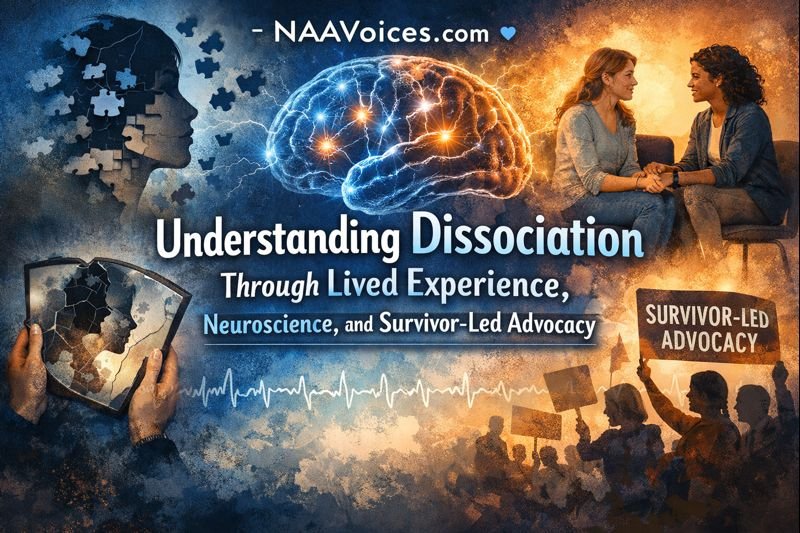
  • Understanding Dissociation Through Lived Experience, Neuroscience, and Survivor-Led Advocacy 💙

    Understanding Dissociation Through Lived Experience, Neuroscience, and Survivor-Led Advocacy 💙

    ⚠️ Content Note: This post discusses trauma and dissociation. Please prioritise your wellbeing whilst reading. Take breaks as needed.

    Quick Self-Check Before We Begin ❓

    Do You Experience Dissociation? Quick Assessment:

    • □ Feel like you’re watching yourself from outside your body
    • □ The world seems unreal or dreamlike
    • □ Can’t remember parts of your day
    • □ Feel emotionally numb during stressful situations
    • □ Hear people talking but can’t process the words
    • □ Feel disconnected from your emotions
    • □ Time seems to speed up or slow down unusually
    • □ Feel like you’re on autopilot

    If you tick 3+, consider speaking with a trauma-informed professional 💜


    Earlier this year, I was sitting in the middle of my clinic. A patient I’d been supporting for months used a word that stopped me cold: dissociation. They described the sensation of watching life unfold around them without truly being part of it. As they spoke, something shifted in my understanding of my own PTSD journey.

    For months, I’d struggled to name that automatic shutdown, the moment when the world becomes too much. It isn’t dramatic or visible. One moment I’m present and engaged. Next, I’m observing my own life from a distance, as though it’s happening behind frosted glass. My body continues the motions, but I am not there.

    In those moments, silence becomes essential. Music, once comforting, becomes unbearable. After nights of relentless triggers and flashbacks that loop like a broken record, my mind craves quiet. It’s exhausted by constant vigilance and the fear of what might come next.


    The tangled complexities of ongoing abuse leave no room for recovery. My nervous system remains trapped in survival mode. It cannot process trauma, and it cannot meet the demands of a mind now burdened with PTSD. Eventually, it simply says: “Enough. I’m taking you somewhere else for a while.”

    I understand now, this was never a weakness. It wasn’t me, “not coping well enough.” It was my brain’s extraordinary attempt to protect me from pain that threatened to overwhelm every defence I had.

    But understanding doesn’t make it easier to live with.


    💙 Remember, you’re learning about your brain’s protective mechanisms. This is self-compassion, not self-criticism.

    Structured trauma care helps. Programmes such as Finding Solid Ground have been shown to reduce symptoms and improve emotional regulation. (Oxford University Press)

    The majority of trauma survivors experience dissociative symptoms. This is particularly common in PTSD and prolonged abuse cases. (NHS England)

    Dissociation is a survival response. Brain imaging research confirms it is an adaptive mechanism, not a flaw. (Study by Reinders et al., University of Groningen)


    👩‍⚕️ Through a Nurse’s Eyes: Reflection and Recognition

    Through my postgraduate study, and as a nurse, I was trained to recognise dissociation. But it was my patients — and my own survival — that taught me what it truly looks like.

    There’s a particular quality to it. A subtle disconnection. It isn’t dramatic. It’s quiet.

    It’s the patient who seems unusually calm whilst describing horrific experiences. The assault survivor who recounts their story as though they’re reading someone else’s diary. The domestic abuse victim who appears “checked out” during safety planning.


    An illustration featuring two young women, one seemingly floating above the other in a serene, blue-toned background. Accompanying text discusses the emotional disconnection experienced by trauma survivors, emphasizing the feeling of being outside one's body.

    People often say, “I don’t know how you’re still standing.” Truthfully? Neither do I.

    For over two years, 90% of my life was spent surviving. I wasn’t living — I was bracing. Managing the impact on my health, my wellbeing, and my children. I’ve never shared the full story of what I endured since leaving. Even the fragments I’ve had to disclose have brought others to tears. But I no longer could cry.

    And that’s dissociation. Because without it, I don’t believe I’d still be here.

    The Power of Quiet Support: My Workplace and PTSD

    An Extraordinary Workplace

    My workplace has been nothing short of extraordinary. They understood that dissociation isn’t a choice. If anything, it made me more focused on my patients — because I couldn’t stay in my own mind. I needed to protect others from feeling the same pain I was carrying.

    “I never had to quote the Equality Act. The few who knew supported me quietly, respectfully.”

    Small Acts, Big Impact

    My manager would take me for walks. Colleagues shielded me from triggers. They reminded me daily, through their actions, that the pain I was carrying wasn’t mine to own alone. I set up a music speaker on the wall. It was something to fill the silence when I needed it. I could mute it when I didn’t need it.

    They sat with me during phone calls I could barely comprehend. They listened in disbelief as the system, supposedly designed to protect, gave a platform for further harm. They read the statements. They saw the contradictions. They witnessed the emotional toll of being forced to relive what I was trying so desperately to escape.

    They called. They messaged. They left food. One even offered financial help. I declined, but the gesture stayed with me long after.

    Chosen Family

    These people became family. They didn’t demand explanations or force me to speak. They let me dissociate to survive and protected the part of me that couldn’t be taken. They stood back and stayed quiet. They let me do what I do best — give others the safety I couldn’t always find for myself.

    “They stood back, quietly, and let me give others what I couldn’t access for myself: safety.”

    Please know this: you are protected.

    PTSD is recognised as a disability under UK law. You have the right to reasonable adjustments. You don’t need to justify your survival, and you don’t need to explain your coping mechanisms.

    You just need to know, you are not alone.

    If You Don’t Have a Workplace Like Mine…

    Daily Living Strategies That Help 🏠


    Final Thoughts: From Survival to Living 🌅

    Dissociation saved many of our lives. 💙 It allowed us to endure the unendurable, to survive experiences that might have otherwise destroyed us. But there comes a point where what once protected us begins to limit us. The challenge is learning to honour that protection whilst gently expanding our capacity to stay present. 🌸

    For me, truly understanding dissociation — not just intellectually, but in my bones — has been transformative. 🦋 I no longer fight against it with shame and frustration. Instead, I recognise it as my brain’s misguided attempt at care. I thank it for keeping me alive, and then I gently remind myself: the danger has passed. I am safe now. I can stay. 🏡

    Some days I can. Some days I can’t. And that’s okay. 💚

    To my fellow survivors: Your dissociation tells a story of survival. It reflects a nervous system that loved you enough to take you somewhere else when reality became unbearable. That’s not weakness. That’s not pathology. That’s the fierce protection of a brain that refused to let trauma win.

    To the professionals: When you see dissociation, you’re witnessing resilience in action. Treat it with the respect it deserves.

    And to everyone else: Be gentle with those of us who sometimes seem far away. We’re not choosing to leave. We’re still learning how to stay.

    This was never a choice. But healing — that’s a choice we make every single day..


    Daily Living Strategies – Support Directory
    🏡

    Daily Living Strategies That Help

    You are not alone. The organisations below offer free, confidential support — whenever you need it, day or night.

    💜

    If you are in immediate danger, please call 999. If you are struggling right now, Samaritans are available 24 hours a day, 7 days a week — you don’t have to be in crisis to reach out.

    Crisis Support

    🆘
    Samaritans Available 24 hours a day, 7 days a week
    Crisis Text Line Text-based support
    NHS Crisis Team Mental health emergency support
    Via 111
    Emergency Services Immediate danger
    999

    Specialist Trauma Support

    💜
    Rape Crisis England & Wales
    Women’s Aid
    Refuge DV Helpline
    Mankind Initiative Support for male victims
    Galop LGBT+ abuse support
    NAPAC Childhood abuse survivors
    Combat Stress Veterans’ mental health

    Mental Health Organisations

    🌿
    Rethink Mental Illness
    Hub of Hope Search for local services by postcode

    Online Resources

    🌐
    PTSD UK Information, support & community
    The Survivors Trust Rape & sexual abuse support
    PODS Positive Outcomes for Dissociative Survivors
    ISSTD International Society for the Study of Trauma & Dissociation

    Therapy Directories

    🌼
    BACP British Association for Counselling & Psychotherapy
    UKCP UK Council for Psychotherapy
    EMDR Association UK Find a qualified EMDR therapist

    Children & Young People

    🌸
    The Mix Support for under 25s
    Young Minds UK Young people’s mental wellbeing
    Childline Free, confidential support for children

    #PTSD #Dissociation #TraumaRecovery #MentalHealthAwareness #NursingPerspective #SurvivorStories #Neuroscience #TraumaInformed #HealingJourney #MentalHealthMatters #PTSDAwareness #DomesticAbuseAwareness #ComplexPTSD #TraumaSurvivor #MentalHealthUK #NHSMentalHealth #DisabilityRights #WorkplaceWellbeing #GroundingTechn

    My Lived Experience: A Personal Journey Through Trauma and Recovery

  • Coercive Control and Family Court Lived Experience:  Part 8 of 8  — This time I Knew the Script

    Coercive Control and Family Court Lived Experience: Part 8 of 8 — This time I Knew the Script

    Compliance note: I don’t name private individuals. Everything here is anonymised and compliant with court orders and reporting restrictions.

    NAAVoices was not created from certainty, but from lived experience and professional insight. As I migrate earlier work from the original platform, this post has been reviewed and approved for transfer. It remains true to its original context, with only minor clarity edits where needed. Some moments do not require rewriting to remain honest.

    The paperwork landed and I recognised it within seconds. Same choreography, new date stamp. Deny, attack, reverse victim and offender. Procedure doing the talking while the truth is pushed to the side.

    The difference this time? I had my own words—and my record.

    I went to work. I ran clinic. Two colleagues knew, no one else needed to. I was told to go home; I didn’t. A GP I trust anchored me with one sentence: You know who you are and you’ve already done the work. Let the record speak. It snapped me back into myself.

    Before the Virtual hearing started, my body did what bodies do under pressure. I ended up on the floor in ny room with my legs up, breathing slow, music quietly in my ear to blunt the noise. My manager found me there and—without fuss. No questions. Just presence. .

    And then I spoke. Calmly. likely too much, trauma still evident, but it was To evidence, not theatre.

    The statement against me was full of neat certainties that didn’t survive contact with dates, emails, and basic logic. I didn’t need to perform. I just needed to answer what was asked and keep my boundaries. I did.

    What I saw—again—was textbook:

    • deny what doesn’t suit,
    • attack the person who raised it,
    • then flip the roles and claim harm.

    It’s not personal style. It’s a tactic. The aim is to control the narrative through process. Naming it early stops it stealing your energy.

    What worked for me:

    • Truth: contemporaneous notes and a clean chronology.
    • Documentation: short index, key exhibits, nothing excessive.
    • Boundaries: answer the question, decline the speculation.
    • Ordinary decency: colleagues who did the small, human things—water, tea, a calm sit on the floor—so I could do the big thing.

    I didn’t lose sleep this time. I didn’t pick apart every sentence. I recognised the pattern and refused to hand over my day. School still happened. Work still happened. Life still happened.

    Two years in, I finally got to say some truth out loud. I explained, I justified where needed, and I stood by my reality—steady, not scared. People with integrity don’t need every detail to recognise what’s in front of them. They see it.

    The platform remains. The work continues.

    No order, accusation, or tactic is going to take away the purpose I built from all of this.

  • Why I Write

    Why I Write

    Trigger warning

    Contains descriptions of domestic abuse, police failures, and trauma. Read only if you feel safe to do so.

    When Corruption and Abuse Collide, Children Pay the Price

    Sometimes I can’t write. The weight of what we lived through—what was ignored, what was twisted—can feel too heavy to put into words. I started writing for one reason: for my children.

    This isn’t just my story. It’s the story of countless survivors failed by abusers, by institutions, and by the systems meant to protect them. It’s about children caught in the fallout of coercive control and systemic neglect. I write because silence protects perpetrators. I write because my children deserve a record of the truth. I write because someone has to.

    When Police Fail, Victims Pay

    No victim should have five different investigating officers.
    No victim should have their personal information leaked to the defendant.
    No victim should have witnesses told they will be called to court, only to be dropped without explanation.

    And yet, that is what happened to me.

    I discovered corruption isn’t only in headlines. It exists in quiet offices where officers decide which stories get told and which are buried. My case wasn’t merely mishandled — it was manipulated. Statements were rehearsed. Timelines were twisted. Evidence was ignored. The focus wasn’t on protecting children; it was on protecting reputations.

    Child Impact

    • Safeguarding referrals ignored; children left unprotected.
    • Interviews were conducted poorly or not at all.
    • Rights under the Children Act and the Victims’ Code denied.

    The Timeline I Built

    After three years of the relationship I have more than 100 pages of notes. That’s before the police correspondence and management timeline. I never tried to “get him”; I tried to protect my children. That meant educating myself and documenting everything.

    What I have gathered and cross-referenced to CPS guidance and the Children Act:

    • WhatsApp messages spanning four and a half years.
    • Videos and photos I took to protect myself.
    • GP records documenting stress, cardiac problems, and time signed off sick.
    • Police logs that contradict officers’ own statements.
    • Every safeguarding failure: MARAC referrals ignored, child protection interviews mishandled, rights denied.

    Child Impact

    • Unsafe contact with a dangerous parent.
    • Psychological harm from instability.
    • Loss of trust in protective services.

    The Home Wasn’t Safe Either

    Domestic abuse is more than bruises. It’s coercion. It’s financial fraud. It’s rage in front of the children. It’s drink-driving with them in the car. It’s staged self-harm.

    I remember the day my ex took an overdose and stabbed himself in the arm while our child was present. I remember him drunk at the wheel at a known suicide spot, children within earshot of his rage. I remember cutting a fringe to cover a head injury before a family christening.

    And I remember my children’s fear — refusing to sleep alone, lashing out, developing tics, refusing food. Trauma etched into their bodies in fear of him returning to our home.

    Child Impact

    • Exposure to violence, drugs, and alcohol.
    • Emotional trauma and behavioural regression.
    • Long-term safety undermined by police inaction.

    What Matters Most The Children

    This blog isn’t about revenge. It isn’t even just about the police, though their failures run deep. It’s about children. Children who don’t get a voice when institutions silence their parents. Children labelled “resilient” when they’re actually terrified.

    Children forced to adapt to chaos when what they need is safety and stability. Every time domestic abuse is minimised, every time coercive control is brushed aside, every time safeguarding is ignored — children’s futures are gambled with. And that is unforgivable.

    My child saw things no child should ever see.

    Why I Keep Writing

    I don’t write because it’s easy. I don’t write because it makes me feel better. I write because my children deserve a record of the truth. I write because victims need to know they aren’t alone. I write because silence only protects perpetrators — whether that’s an abusive partner or institutions covering for their own.

    Children’s safety must always come first. Until it does, I will keep writing.

    Finding Small Freedoms

    Existing isn’t enough. Surviving isn’t enough. This week I reclaimed a small piece of myself: I brought home a bike. Something simple, but something that makes me feel alive.

    On that bike, for a short while, I feel freedom. I feel breath in my lungs that isn’t weighed down by fear, and I remember there is more to me than what they put me through.

    It isn’t the end of the fight. But it’s a reminder: I am still here.

    My Lived Experience: A Personal Journey Through Trauma and Recovery