Category: Founder’s Archive

This category contains posts automatically imported from the founder’s original blog, preserving the personal journey, reflections, and lived experiences that shaped the creation of NAAVoices.com.

  • When Rest Feels Unfamiliar: What a Quiet Evening Led Me to Learn About Polyvagal Theory

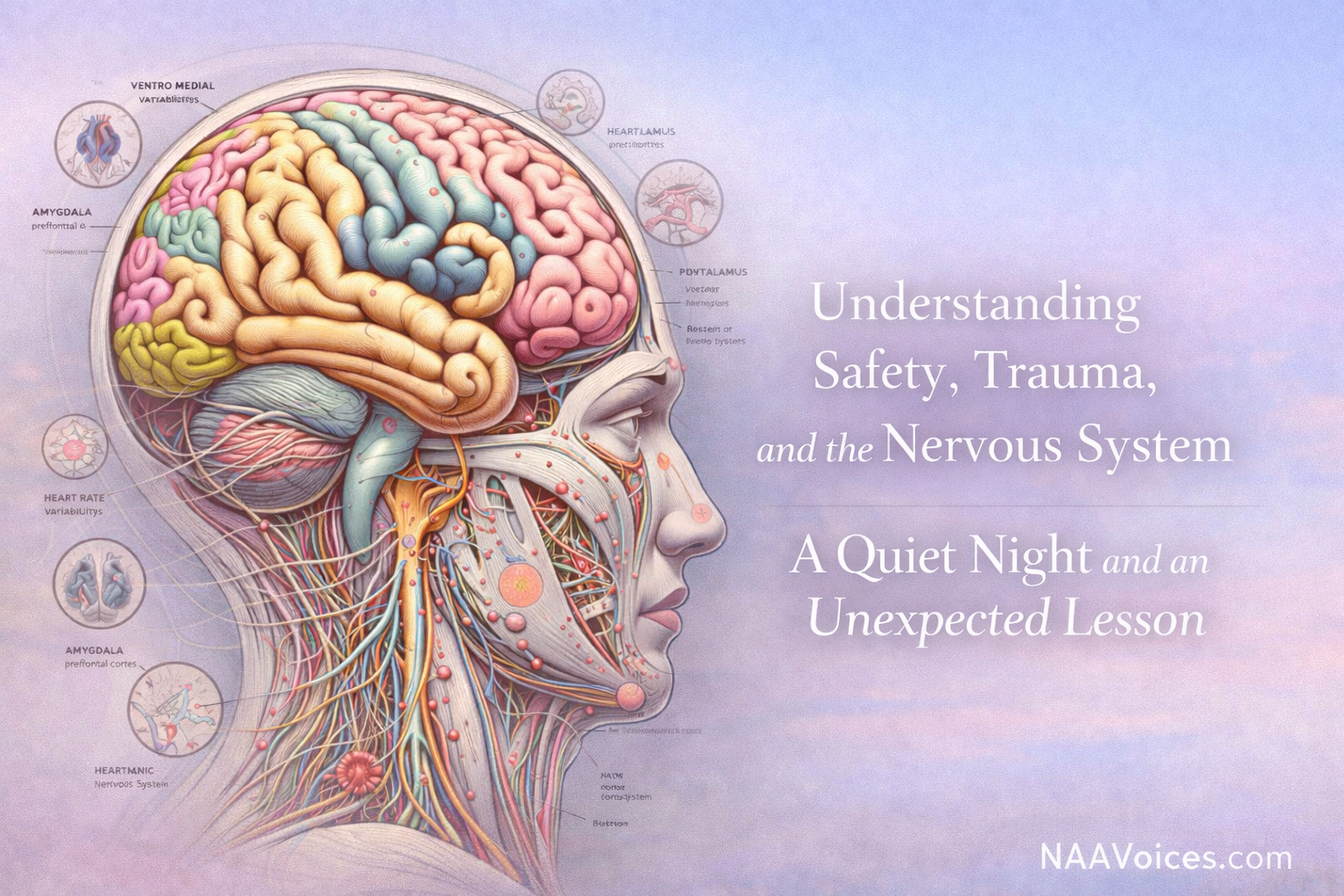
    When Rest Feels Unfamiliar: What a Quiet Evening Led Me to Learn About Polyvagal Theory

    A personal reflection on self-care, lived experience, and understanding the nervous system

    People say it all the time, don’t they?

    You need a hobby.
    You need to switch off.
    You need to rest.
    You need to look after yourself.

    I say it myself every single day at work. I talk to patients about self-care constantly. About slowing down, resting, listening to their bodies, giving themselves space, not pushing through the point of exhaustion. It is easy advice to give when you know how important it is.

    Actually doing it is something else entirely.

    Today, I got on with all the usual things that seem to fill a weekend. I packed things away, did some gardening, sorted out bits that needed doing, and got everything ready for the week ahead. Then I sat down.

    And I realised I had absolutely no idea what to do with myself.

    Everything that needed doing was done. The house was quiet. There was space. And instead of feeling peaceful, I felt a bit lost in it.

    That, in itself, says a lot.

    When “rest” turns into productivity

    So, instead of properly resting, I did what I often do when I don’t quite know how to stop: I found something useful to do.

    I logged on and started some training.

    I completed three courses that felt relevant to my role. One, the trust’s domestic abuse training, one on an update on the device we use for our patients currently on anticoagulation, and one on learning disabilities. I genuinely believe that in healthcare, we should never do things we are not competent or trained to do. Training matters. Competence matters. Safe practice matters.

    I write enough about those in roles who are far from competent at their jobs, and likely why I could never understand just how they could be allowed to cause so much harm in such a position of trust. I can’t and have never been that way.

    But as I worked through the modules, I found myself sitting with an unexpected feeling.

    A lot of the content felt familiar.

    Not because I think I know everything. Not because I think I am better than anyone else. And certainly not because I think there is anything wrong with the NHS including this content in training. Quite the opposite, actually.

    The truth is much more personal than that.

    Some of the content felt familiar because I have lived far more than what was covered in the modules.

    The domestic abuse training, in particular, was sobering. Not because it was poor training, but because it covered realities I understand not just professionally, but personally. As someone with lived experience of domestic abuse, there is something deeply unsettling about recognising your own reality in mandatory learning content. It is not a criticism of the training. It is simply the reality that some of us have lived beyond the points.

    The same was true of the learning disability training. Again, not because it was wrong or not useful, but because I have years of experience with learning disabilities, both in life and in practice. When something has been part of your world for a long time, the concepts can feel less like “new learning” and more like something you have been carrying, navigating, and understanding for years.

    If anything, that saddened me.

    Not because the training should be different, but because it was a reminder that some knowledge does not come from textbooks or e-learning packages. Sometimes it comes from surviving. Sometimes it comes from caring. Sometimes it comes from living through far more than anyone should ever have to.

    But alongside that sadness, I also felt something else.

    I felt proud that these subjects are incorporated into NHS training.

    I am genuinely glad that healthcare staff are being asked to think about domestic abuse. I am glad learning disability awareness is part of mandatory or role-relevant education. These are not optional extras. They matter. They affect how people are seen, how they are spoken to, how safe they feel, and the quality of care they receive.

    It also made me reflect on how I know that other organisations are provided with training in these areas, and that it’s individuals who let organisations and people down, not the lack of integration into professional practices expected of them.

    No training package can fully hold the depth, complexity, or emotional reality of lived experience. But it can lay foundations. It can raise awareness. It can get people thinking. And that is important.

    The promise I keep breaking

    As I sat there, I also had to be honest with myself.

    I have said so many times that I am going to stop doing work-related training at home. That this should be protected time during work hours. That we should not normalise doing professional development in our own time just because we are conscientious enough to do it.

    And yet there I was, doing exactly that.

    To be fair, my manager knows me well enough to know I do this. He would give me time back if I needed it, and I could do them at work. So this is not really about blame or pressure. It is about a pattern.

    I do it because I get bored.
    I do it because I am wired to keep moving.
    I do it because being productive often feels easier than being still.

    But eventually, I stopped after three courses.

    And then I decided to do something that wasn’t for work.

    At least, that is what I told myself.

    The course that was “not for work”

    I opened a course on Polyvagal Therapy.

    Technically, it is not part of my current role. But the minute I started reading, I found myself thinking exactly what I always do with anything related to mental health, trauma, behaviour, and human functioning:

    This absolutely overlaps with work.

    The reality is that physical and mental health are not separate. Trauma affects the body. Stress affects the body. Relationships affect the body. Safety affects the body. The way a person feels in themselves can shape everything from pain to sleep to behaviour to engagement with healthcare.

    Despite having postgraduate training in the neuroscience of psychology and mental health, there are always areas that deserve deeper exploration. Formal qualifications provide a strong foundation, but they do not cover every framework, model, or therapy in depth. Over the last few months, I have found myself increasingly drawn to therapy-based training. Part of that is professional curiosity. Part of it is personal interest. And part of it is knowing that, when life allows, I may want to build on some of this further.

    I already hold training as a narcissistic recovery coach, a trauma practitioner coach, and a neurodiversity coach. I can already see how these areas interconnect. But timing matters. Capacity matters. Mental well-being matters too. There is no point pursuing something deeply trauma-related if it comes at the cost of retraumatising yourself.

    Still, tonight, I found myself going down the polyvagal route.

    And before I knew it, I was already into Module 2 of 13.

    So, if you are curious too, come along with me while I break down some of what I learned tonight in plain English.


    What is Polyvagal Theory?

    Polyvagal Theory was developed by Dr Stephen Porges. In simple terms, it is a way of understanding how the body responds to safety, stress, danger, and connection.

    At the centre of it is the autonomic nervous system. This is the part of the nervous system that controls things we do not consciously have to think about, such as heart rate, breathing, digestion, and stress responses.

    Polyvagal Theory suggests that our nervous system is constantly scanning our environment and asking one basic question:

    Am I safe?

    And depending on the answer, the body responds in different ways.

    This does not happen only through conscious thought. In fact, it often happens before we have had time to think anything through logically.


    The body has different survival states

    One of the core ideas in Polyvagal Theory is that the nervous system can move through different states.

    1. Safe and connected

    This is the state where we feel calm enough to think clearly, talk, engage, and connect with other people.

    When someone feels safe, they are more likely to:

    • feel settled
    • communicate better
    • regulate emotions more easily
    • think more clearly
    • feel present rather than threatened

    This is where learning, healing, and connection happen best.

    2. Fight or flight

    When the nervous system senses danger, it can shift into a more activated state.

    This might look like:

    • anxiety
    • panic
    • racing thoughts
    • irritability
    • restlessness
    • muscle tension
    • feeling on edge
    • needing to do something immediately

    This is not a person being dramatic or difficult. It is the body preparing to protect itself.

    3. Freeze or shut down

    If something feels too overwhelming, the body can go the other way and begin to shut down.

    This can look like:

    • numbness
    • dissociation
    • emotional flatness
    • exhaustion
    • going blank
    • withdrawal
    • feeling stuck
    • loss of energy or collapse

    Again, this is not a weakness. It is another survival response.


    Neuroception: when the body decides before the mind

    One of the most interesting ideas in Polyvagal Theory is neuroception.

    This means the body is constantly scanning for signs of safety, danger, or threat without us consciously realising it.

    A warm tone of voice can signal safety.
    A harsh expression can signal danger.
    A sudden noise can make the body jump into alert.
    An unpredictable environment can keep the nervous system on edge.

    This helps explain why, sometimes, we can logically know we are safe, yet our bodies still react as though we are not.

    The nervous system has already made its assessment.


    Why this matters in real life

    This theory matters because it helps explain why people do not always respond to stress, fear, trauma, or relationships in neat or rational ways.

    It helps us understand that many behaviours are not simply choices or personality flaws. They are often body-based survival responses.

    Instead of asking,
    “What is wrong with this person?”
    it encourages us to ask,
    “What has this person’s nervous system learned to expect?”

    That is a very different question.

    And, frankly, a much more compassionate one.


    How polyvagal theory links to trauma and mental health

    Polyvagal Theory has been used to help explain a range of difficulties, especially in trauma and mental health.

    Trauma

    Trauma can leave the nervous system stuck in survival mode. Some people become hyper-alert, anxious, and reactive. Others shut down, dissociate, or feel emotionally disconnected. Some move between both.

    Anxiety

    From this perspective, anxiety is not just “worrying too much.” It can also be understood as the body being chronically mobilised and scanning for threat.

    Attachment and relationships

    If someone has grown up around unpredictability, neglect, fear, or instability, their body may learn that connection itself is not always safe. That can shape relationships for years.

    Neurodiversity

    There are also discussions around polyvagal-informed perspectives on sensory regulation, overwhelm, and social engagement in autistic individuals. Not as a full explanation, but as one possible framework for understanding regulation and safety.

    Dissociation

    Shutdown, disconnection, and dissociation can be understood as the body’s way of coping when something feels too much to bear.


    What I found useful about it

    What I like about this framework is that it joins the dots between body and mind.

    It does not treat emotions as if they exist in isolation from the nervous system. It recognises that what happens physically in the body influences how people think, feel, behave, connect, and cope.

    It is also compassionate.

    It reframes reactions that are often judged harshly. Fight, flight, freeze, withdrawal, panic, irritability, numbness, social shutdown — these stop looking like character flaws and start making sense as nervous system responses.

    That matters.


    But it is not beyond criticism

    At the same time, I think it is important to stay balanced.

    Polyvagal Theory is useful, but it is not a magic answer to everything. Some of its concepts are difficult to measure precisely, and some critics argue that parts of the theory are easier to describe than to validate scientifically in a consistent way.

    Human experience is also far more complex than any one theory can fully explain. Culture, identity, trauma, health, relationships, personality, social context, and lived experience all shape how people respond to the world around them.

    So for me, this is best seen as a helpful framework, not a complete explanation for all human behaviour.


    Why this connects so strongly with practice

    Even though I did not start this course “for work,” I can already see how much it overlaps with practice.

    In healthcare, and particularly in roles involving emotional well-being, safeguarding, neurodiversity, trauma, communication, and behaviour, this way of thinking is highly relevant.

    It affects:

    • how we understand distress
    • how we respond to fear
    • how we support regulation
    • how we communicate safety
    • how we avoid retraumatising people
    • how we interpret behaviours that may otherwise be misunderstood

    It also reinforces something that should sit at the heart of good care anyway: people need to feel safe before they can engage fully.


    Tonight started with something very simple: I was trying to stop.

    Trying to pause.
    Trying to rest.
    Trying not to fill every spare moment with tasks.

    And instead, I found myself learning.

    Tonight reminded me of something simple but powerful.

    Our bodies remember what our minds try to forget.

    Polyvagal Theory helps explain why people react the way they do to stress, trauma, and connection. Why some people become anxious. Why others shut down. Why safety matters more than we often realise.

    Understanding the nervous system does not solve everything.

    But it does something important.

    It reminds us that many reactions we judge as weakness or overreaction are actually survival responses.

    And when we begin to see people through that lens, we respond differently.

    Sometimes the most healing thing we can offer someone is not advice, not solutions, and not judgment.

    Sometimes it is simply helping them feel safe enough to exist without fear.

    NAAVoices.com
  • Looking Back: How Acceptance Changed Everything

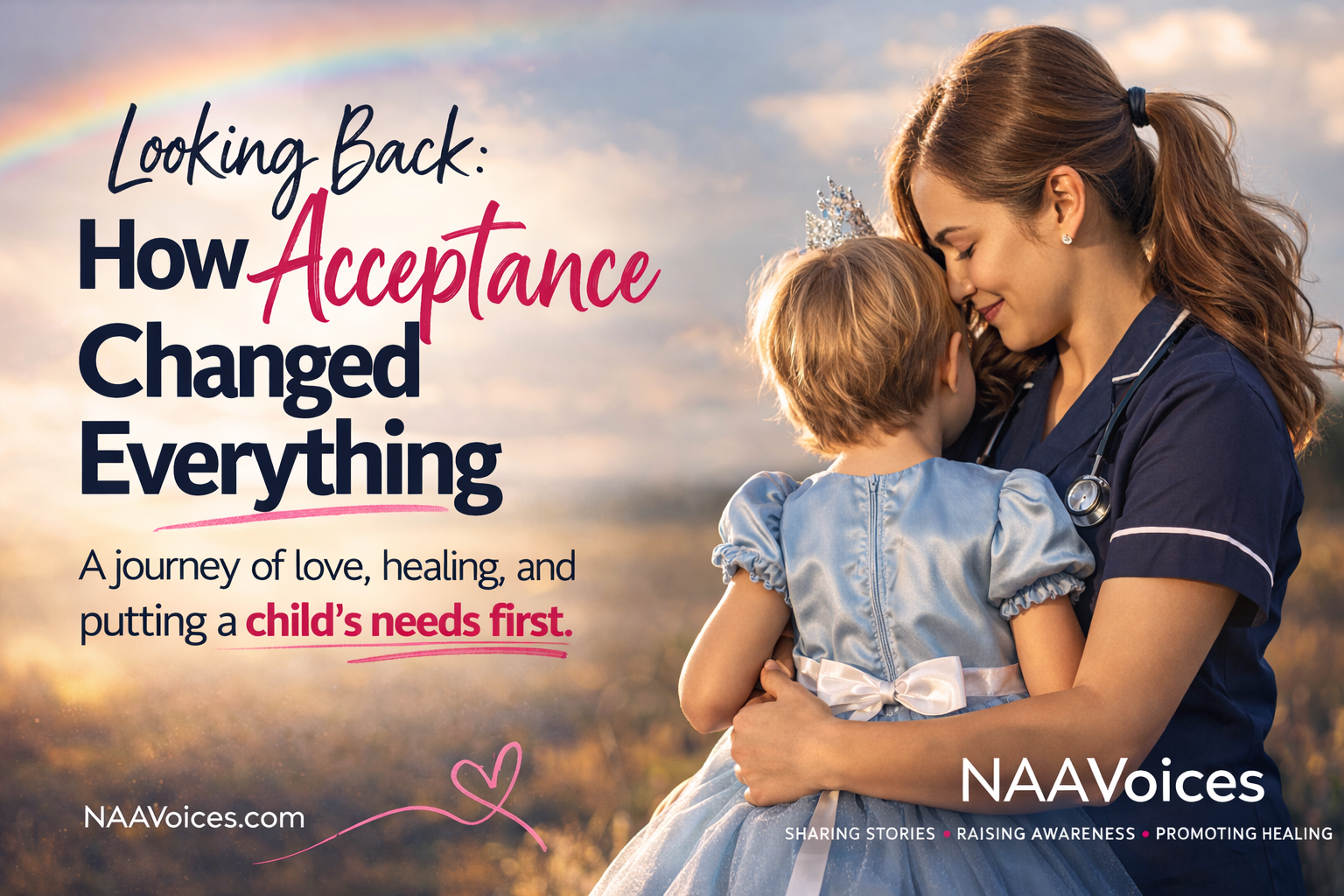
    Looking Back: How Acceptance Changed Everything

    NAAVoices was not created from certainty, but from lived experience and professional insight. As I migrate earlier work from the original platform, this post has been reviewed and approved for transfer. It remains true to its original context, with only minor clarity edits where needed. Some moments do not require rewriting to remain honest.

    27 February 2025

    It is only when I look back over the past six months that I realise just how different our reality could have been without acceptance, love, and a willingness to put a child’s needs first.

    This post is rooted in reflection, personal growth, and the quiet clarity that sometimes only comes with time. Looking back has brought me a little peace. It has also helped me join the dots.

    Although I remember many of the moments that led to my child identifying as female from such a young age, I sometimes wish I had written more down. But in another sense, perhaps what mattered most was not documenting every detail, but allowing freedom, expression, and acceptance to lead the way. That is what allowed her to shine.

    I have kept the heart of this post true to how it was originally written. Since then, those around us have worked hard to use the correct pronouns, and we continue to do our best to support her in every way we can. I wrote the original draft four months before my four-year-old was able to fully express the depth of how she felt. It has been a journey. It has not been perfect. At times, I have wondered whether I should have noticed sooner.

    To my beautiful little one — you are the brightest star I have ever seen, now that you are free to be yourself.

    Draft originally written on 10 August 2024

    The post I was too scared of judgement to share

    I have a four-year-old who, from quite early on, loved playing with dolls and adored Princess Poppy, just like her older brother once did. What began with small interests gradually became more consistent. It turned into a Frozen dress, and for 18 months she asked for one.

    Growing up, there were three of us. I am the middle child, with an older sister and a younger sibling who does not use pronouns. We refer to them as “auncle”.

    I have always believed that people should be free to be themselves. I have always recognised that stereotypes around gender, sexuality, and social roles can be restrictive, harmful, and deeply unfair.

    As a parent, I have always tried to raise my children with the belief that everyone is equal, that no one is “better” than anyone else, and that kindness costs nothing.

    I have never believed boys should only like blue, girls should only like pink, or that children should be boxed into certain toys, clothes, or interests.

    That had already been clear with my older son, who once loved Princess Poppy costumes, dance classes, and hairdressing toys.

    Although my ex-husband initially found some of it unusual, he never allowed his own views to shape or limit our son. That little boy is now 12 years old, over 5 foot 7, and would be mortified if he knew I had written this about him.

    Now he is into rugby, the gym, running, and Xbox. I am incredibly proud of him for being exactly who he is, regardless of anyone’s expectations about gender or interests. He is funny, compassionate, and accepting of everyone.

    This weekend, the older two were with their dad, and I took my youngest to a toy sale. Like most four-year-olds, she was full of excitement, pointing at everything she liked. Since she had been allowed to choose her own toys more freely, the house had become increasingly sparkly and pink. We had already bought a Barbie campervan and some Barbies, and that had not bothered me at all.

    But when she asked for the Barbie Dreamhouse, I hesitated.

    That hesitation was not about her. It was about what had been done to me.

    What I realised in that moment was that four years in a toxic relationship had not only affected my identity, but had also changed the way I saw myself as a parent. It had created a version of me I did not recognise — one shaped by anxiety, fear, and the constant pressure of anticipating judgement.

    For a split second, I questioned my own instincts. Was it okay to buy it? What would people think?

    That was not who I truly was. But the fact those thoughts appeared at all told me just how much damage had been done.

    Why should it be wrong for a four-year-old to want a doll’s house?

    The man running the stall was with his daughter, whose toys were all pink and glittery. He seemed to notice my discomfort, though it had nothing to do with him or his stock. I had simply frozen.

    At that point, I was off work. I had finally admitted I needed help for what I had been through and was trying to learn how to live with PTSD.

    I had never had an issue with dolls, dresses, babies, or Frozen. But over time, I had been made to feel that these things were wrong if they did not fit someone else’s beliefs.

    That same day, the gentleman at the stall spoke openly about how, when he was younger, he used to dress as a girl and how his family had questioned what that meant. It struck me deeply.

    I felt ashamed that I had allowed fear to creep into something that should have been simple.

    Just two weeks earlier, I had gone to a solicitor’s office to collect a parcel for my child. She wanted to wear her Elsa dress. Instead of simply letting her, I found myself trying to persuade her to wear “regular” clothes because I was frightened it would somehow be reported back to my ex.

    I was scared that allowing her to wear a dress would lead to more accusations, more scrutiny, more control.

    And that is what it always came back to: control.

    My ex had controlled my life for so long that even after I had left, I still panicked about what he might say, what he might do, and whether I would somehow be punished for allowing my child to be herself.

    I had spent so long living under someone else’s judgment that I had started to question my own values.

    For four years, I felt as though I had lived with two versions of myself. One was the woman constantly bracing for threats, fear, and fallout. The other was the version of me that still existed at work — the one who was grounded, compassionate, professional, and clear on what was right.

    Looking back now, I know that version was the real me all along.

    The fear was never my identity. It was the effect of abuse.

    When a patient walks through my door, I do not see labels first. I do not assess someone’s worth based on gender, identity, relationship status, work, or appearance. Every person is entitled to dignity, safety, and respect. Nobody has the right to strip that away.

    That day, my child and I left the sale with the Barbie Dreamhouse and the biggest smile I had seen in a very long time.

    On the way home, I said, “Yes, you are my beautiful little boy.”

    And she replied, “No mummy, I’m your beautiful little girl.”

    This time, I did not correct her. I did not shut it down. I did not try to control what she was expressing.

    Instead, I listened.

    I had fought so hard to get control out of my own life. She deserved the same freedom — the freedom to tell me who she was, without fear.

    So I said, “Yes, you are my beautiful little girl, if that is what you want to be.”

    At the time, neither of us fully understood what that moment would come to mean. We did not yet know that this was more than role-play. There were many moments before and after it, many small signs and snippets that only make sense now when I look back.

    Six months later, I had what felt like a completely different child — happier, more carefree, and more confident. She had begun wearing girls’ clothes to school and had been met with wonderful support from family and friends.

    We are still finding our way. We are still learning. We are still navigating this path together.

    But she is loved for who she is. She is wanted. She is accepted.

    And perhaps most importantly of all, she is now confident enough to correct anyone — including me — when we get her pronouns wrong.

    She is still finding her feet at school.

    But she is finding them as herself.

    February 27, 2025

    At the top a boy- bottom a Girl
    Parenting and Learning, Through a Gender Journey
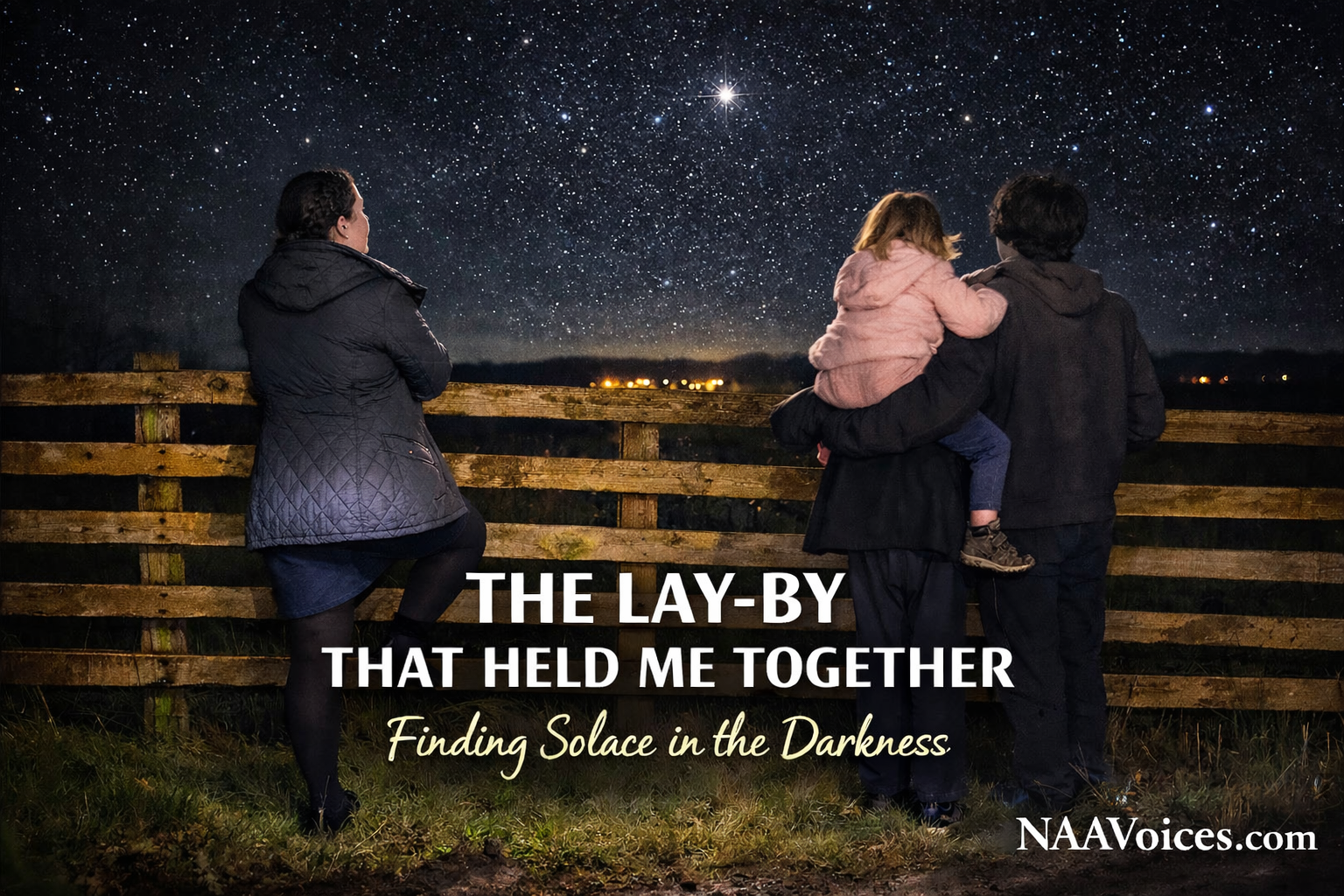
  • The Lay-By That Held Me Together

    The Lay-By That Held Me Together

    Seven days ago, I finished work carrying the kind of weight you don’t always have words for. I’d received difficult news about a patient, the kind of news that shifts the tone of an entire day, even when you keep functioning on the outside.

    In my own private language, I call people stars when they’re gone. It’s how I hold grief without letting it swallow everything else. It’s how I file loss in my mind when I still need to drive home, feed children, answer questions, and keep moving.

    The Place I Didn’t Know Was Saving Me

    For over a year, I used to escape. I’d get in the car and drive to a lay‑by I always ended up at. Not because it was on the way to anything. Not because it fixed anything. But because it gave me a pocket of stillness, a place where my body could downshift when my life couldn’t.

    Back then, I didn’t understand the language of nervous systems, grounding, or trauma responses. I just knew I was living under sustained pressure, in a situation that was eroding me, and I needed somewhere that I could breathe. Somewhere I could be safe.

    That lay‑by became my therapy before I even knew what therapy was supposed to look like.

    I slept there many times. My little girl slept there overnight many, many times. We’d sit and look at the stars. She grew up believing that when someone leaves, they become a star. It gave her something gentle to hold onto, and in truth, it gave me something too.

    Returning to the Road That Once Held My Fear

    I hadn’t been there for a while.

    But last Thursday, after receiving that difficult news, I left work carrying more than tiredness. When I collected my daughter, she asked what was wrong. I told her I felt sad because there was a new star in the sky.

    Then we collected my eldest and my middle one, the teenagers who have lived through more than most people will ever understand. One of them was struggling and asked if we were going to drive. And because of the conversation in the car, my five‑year‑old said, very simply:

    “Let’s take him to see our star’s.”

    So we did.

    I drove the hour‑and‑a‑half round trip.

    And this is what surprised me: it was different.

    A Body That Finally Knows It’s Safe

    Every time I’d driven that road before, it was in a state of activation: trigger, panic, dread, adrenaline, that constant internal noise that comes with prolonged stress. I learned that road in survival mode. I knew every bend, every stretch, every pull‑in point because I’d driven it while trying to keep myself together.

    But this time, it felt like shifting gears.

    My body relaxed.

    No palpitations. No urgency. No bracing for impact. No internal pleading for the night to end.

    Just calm.

    The memories were still there. The past was still the past. But my nervous system didn’t respond as if it were still trapped in that time. And that’s not a small thing. That’s not “positive thinking.” That’s physiological change. That’s recovery showing up quietly, without ceremony.

    I am a different person now.

    Not fully healed and not pretending to be. Life is still hard. Trauma leaves marks. I’m not the person I once was.

    Driving that road felt like an epiphany. It revealed something concrete to me. The place that once held my worst moments has also become evidence that I survived them.

    The Field, the Stars, and the Quiet Truth

    I know that lay‑by like the back of my hand. I’ve sat there in snow, ice, and rain. I’ve stood in that field. I’ve cried until my chest ached. I’ve lain under the stars trying to work out how I’d get through the next day.

    And for a long time, nobody knew.

    I’ve been there in uniform. I’ve been there in the middle of the night. I’ve been there when the world was sleeping, and I was wide awake, trying to stabilise myself enough to return to a life that didn’t feel safe.

    I have photos of my feet in the field because sometimes I had to sit in the grass just to feel something real. To feel the earth. To feel grounded. It wasn’t aesthetic. It wasn’t curated. It was a lifeline when I didn’t have words, support, or accessible options.

    This time, all three of my kids got out of the car.

    And they appreciated it.

    Not dramatically, quietly. In the way that says, we understand why this mattered. Because they’ve been through so much, too. They’re still healing. I’m still healing.

    Even this time last year, there were moments when we didn’t know what the future would look like. whether things would stabilise, whether I’d be okay, whether any of this would ever feel “over.” The year before that, there were people who didn’t believe I’d still be here.

    But I am.

    What the Lay‑By Really Represents

    I want to be clear about what that lay‑by represents, because it isn’t just a scenic stop.

    Sometimes the thing that keeps you going isn’t a big intervention. It isn’t a perfect plan or the right professional at the right time. Sometimes it’s the small escape you build quietly when you can’t say what’s happening, when you don’t feel believed, when you’re functioning publicly but unravelling privately.

    Sometimes it’s a lay‑by. Sometimes it’s the stars. Sometimes it’s a field where you can sit in the grass and let your body remember that the world is bigger than what you’re living through.

    And then, one day, that same place shifts.

    It flips.

    It becomes a positive. A source of comfort. A marker of survival rather than panic.

    Driving Home With a Different Kind of Grief

    On the drive home, I realised I’d driven there and back almost on autopilot, not in shutdown, not in fear, just steady. And the significance of that landed hard, because for so long, that road was associated with crisis.

    That night, I carried my new “star” quietly. The sadness was still there. The reflection was still there. But it wasn’t layered with the same terror, the same frantic need to escape the life I was living.

    This time, it was grief held in a body that has learned, slowly, that the emergency is not constant anymore.

    Life can get easier. Not neatly. Not quickly. Not without scars. But it can.

    When you’re living in continuous trauma, you can’t always see that. You can’t picture a future where your body isn’t braced for impact. And yet, here I am, driving that road differently, feeling that place differently, and showing my children the real truth:

    Even in the darkest periods, something can hold you.

    And later, when you’re ready, that same place can become proof that you made it through.

  • Subtle Pattern Recognition, ADHD Strengths and Psychological Safety

    Subtle Pattern Recognition, ADHD Strengths and Psychological Safety

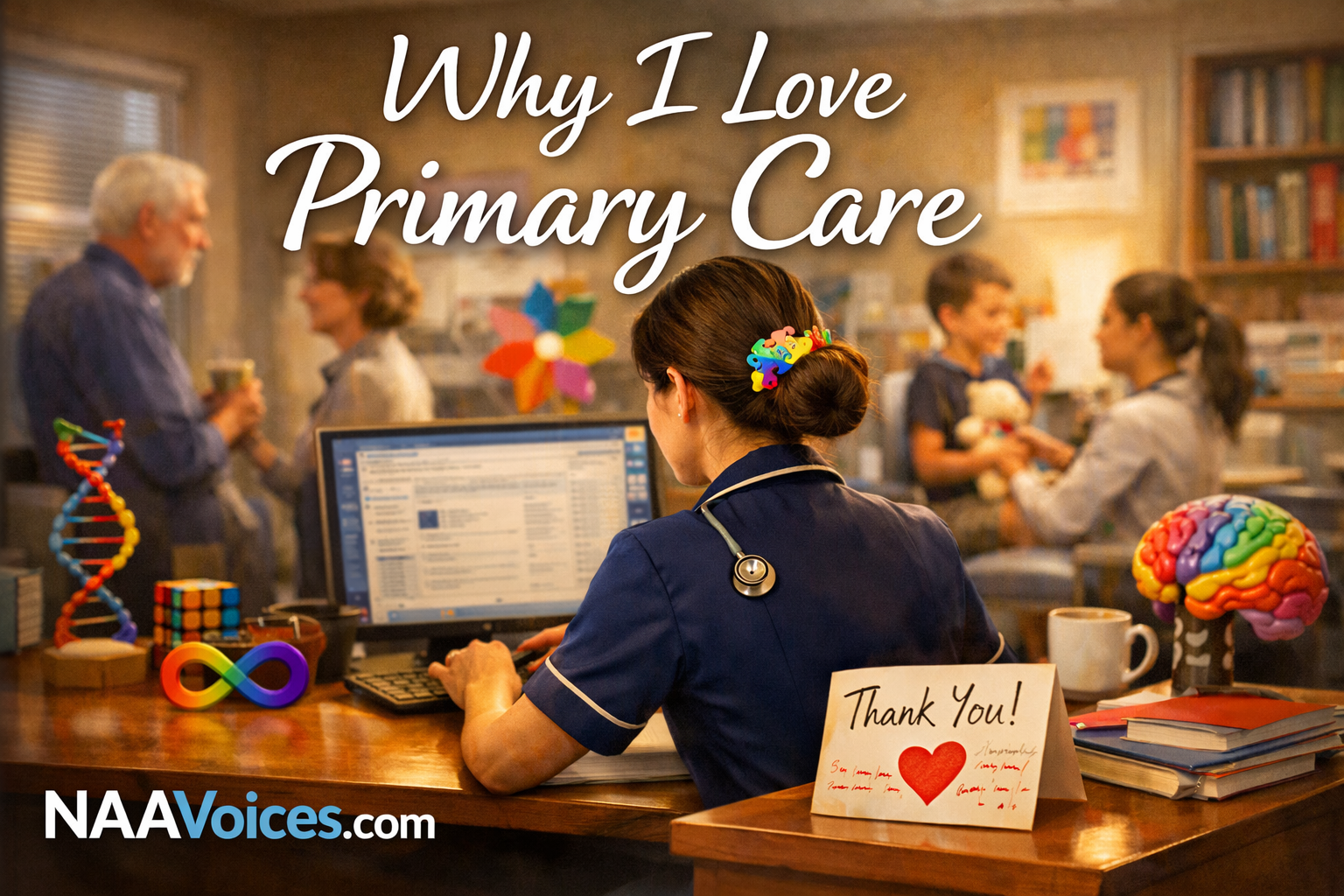
    Why I Love Primary Care

    I haven’t written in a while. Today reminded me why I need to.

    It was one of those days when the list never ends. Morning clinic ran until 14:35. Afternoon clinic started at 14:30. Lunch was eaten between patients and finished as I walked out of the building late. That isn’t unusual in primary care. It’s the pace. It’s the reality. It’s the job.

    People imagine primary care as calm. It isn’t. It’s constant movement, constant switching, constant recalibration. It’s holding ten things in your head while someone tells you the eleventh. It’s safeguarding, chronic disease, acute presentations, mental health, admin, and the unexpected—often all in the same hour.

    And in the middle of that, you still have to notice.

    It isn’t dramatic. Today reminded me that although, on occasion, a patient’s description of a symptom may seem like nothing, it is obviously unsafe. But something didn’t sit right. A detail that didn’t match the story. A symptom that didn’t fit the pattern. A feeling that the “clinically justified” option wasn’t the right one.

    Not because I was unsure. Not because I was anxious. But because I trust myself. I trust the part of me that notices when something is off, even when I’m already stretched. I trust the instinct that comes from lived experience, trauma, training, and thousands of consultations.

    People call it a gut feeling. It isn’t. It’s pattern recognition running at speed.

    ADHD is often framed as a distraction, but in practice, it becomes parallel processing, constant scanning, rapid synthesis, and the ability to hold multiple threads at once. What looks like restlessness on the outside is vigilance on the inside. It’s why I pick up the things that don’t quite fit.

    And trauma? It sharpens you. It teaches you not to ignore what feels wrong. It teaches you that silence doesn’t mean safety. It teaches you to listen to the discomfort.

    Today, that mattered.

    I knew I couldn’t just agree, even though it would have been quicker. Even though it would have been the path of least resistance.

    The NMC Code is clear: practise effectively, preserve safety, act without delay. Sometimes that means acting on the thing you can’t yet articulate, the thing that doesn’t feel right, even when everything looks fine on paper.

    By the end of the day, I felt peace, knowing I had done all I could. Not overwhelmed. Not fragmented. Not taking the worry home with me of what might happen, knowing we had all done what we could. My safe place was always work when home wasnt, and i like to think that our patients feel that their safe place is with us, even if they disagree with us. work.

    I properly debriefed with my manager, although “manager” is too formal a term, and the debrief was more my built-up mind, full of the day’s events, coming out, and how I wish we all had more time. That conversation mattered. Psychological safety in healthcare isn’t a luxury; it’s a patient‑safety mechanism. Being able to say, “I knew something was off and I’m glad I trusted it,” without judgment, protects patients.

    There was also a thank‑you card waiting for me as I walked back to my room, a different patient, same day. No drama. No performance. Just an acknowledgement. We don’t practise for recognition, but being seen reinforces that careful, attentive care makes a difference.

    Primary care has been many things for me: structure, stability, purpose. There were times when the predictability of my clinical room anchored me while other parts of life were being torn apart. I’m not embarrassed by that. Lived experience trauma, neurodivergence, all of it has given me a clinical instinct I trust completely.

    The art of primary care isn’t grand intervention. It’s disciplined attention. It’s refusing to dismiss something just because others have. It’s trusting your professional judgement even when others may think you’re being too cautious, or making yourself do extra work.

    It all clicked for me over a year ago. I finally understood why I feel such a deep pull toward the way I work. Yes, we have targets. Yes, appointments are timed. Yes, the system is built around slots, templates and throughput, although not medical; from another organisation supposedly there to protect me when I needed help, no one gave it. Not to me, not to my children. We weren’t treated with dignity, respect, or humanity. We were treated as an inconvenience, something to move on from, something to minimise, something to get out of the way, something to silence.

    That will never be the case for anyone who walks through my door.

    I remember last year saying to my manager, I’d figured it out, why injustice was getting to me and comparing it to my practice. Patients aren’t an appointment. They aren’t a time slot or a chronic disease code. They’re a person. A life. A family.

    And that truth has never left me.

    I ran 90 minutes late today. Not because I’m disorganised. Not because I’m slow. But because I refuse to treat people the way we were treated. I refuse to rush past the thing that doesn’t feel right. I refuse to reduce a human being to a slot on a screen.

    Today was busy. I left late.

    But today I noticed. I acted. I reflected. I debriefed.

    And I felt proud that it remains true: I will never allow how the children and I were treated to impact how I treat others, how I care, or what I do and will always do to protect another human.

    I AM shaped by everything I survived, sharpened by everything I learned, and grounded in the promise that no one in my care will ever feel like an inconvenience.

    That matters.

  • Accountability Doesn’t Vanish Simply Because a System Looks Away

    Accountability Doesn’t Vanish Simply Because a System Looks Away

    Learning to Live a Life I Never Understood

    For the past two and a half years, I’ve been living a life I never expected to face. People often say that after two years, things should feel different, that healing should have taken root by now. And in some ways, it has. There are days when I can breathe again. Days when the world feels less sharp.

    But in other ways, the impact remains, still shaping how I move through my life. This isn’t a story I ever expected to tell publicly, but silence only protects the systems that failed us. I never imagined I would have to learn how to live a life I didn’t understand. I never understood the weight of victim‑blaming or the reality of institutional corruption. I didn’t believe those things could happen to any genuine human being who simply asked for help, yet they did, and they continue to happen to others just like me. The harm has been profound, affecting me, my children, and countless victims who were left unprotected within the very systems that were supposed to keep us safe.

    The Timeline No One Should Ever Have to Build

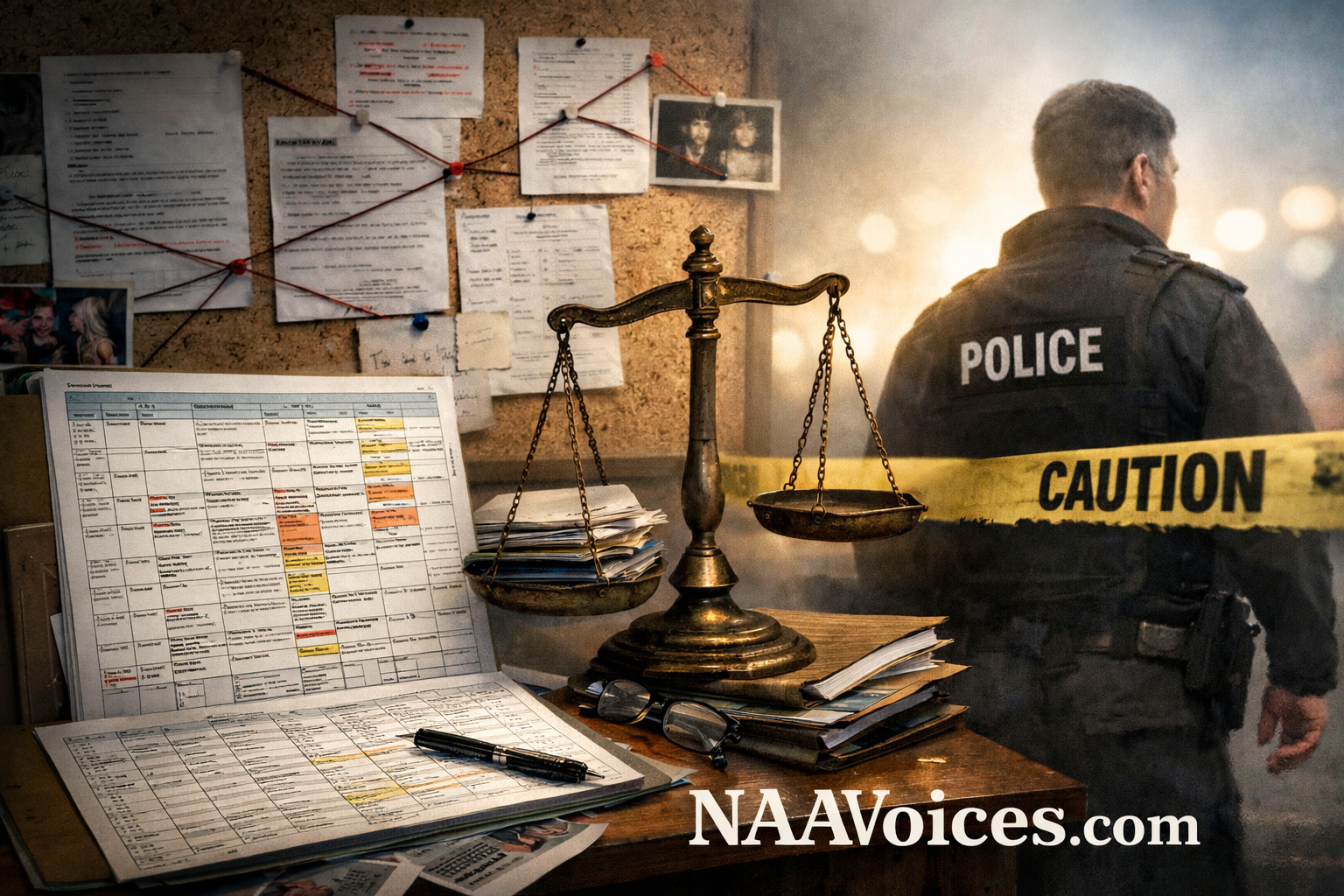
    For a long time, I’ve been creating a comprehensive, chronologically ordered database for West Mercia Police, long before AI existed to help with data extraction. It consumed me. Years have now been taken from me by trauma, and nothing gets easier when there has been no closure. Life slows down. Everything takes longer. You work at your own pace, in the quiet hours when the house is still, and the kids are finally asleep.

    Every entry came with a cost, because documenting trauma means reliving it. But I’ve now reached a point where every piece of correspondence, interaction, audio recording, document between myself and the police, between outside agencies, and nearly everything that shaped court proceedings and my children’s lives is compiled. It is factual, organised, and complete.

    This wasn’t just paperwork. It was stepping back into an alternate universe and doing the kind of processing that counselling and EMDR couldn’t reach. I couldn’t cope with EMDR; not at someone else’s pace, not with the impact of being retraumatised week after week. It left me unable to function. So instead, I processed in the only way I could: slowly, deliberately, and on my own terms

    A Note From the Book

    There is a paragraph from the opening of Book Two that captures the foundation of what this stage of the story represents:

    “Every date in this book is real. Every email is real. Every diary entry, every phone call, every timestamp. The correspondence quoted throughout has been preserved exactly as it was written, sent, and received. Names have been changed to protect the identities of those involved, with the exception of professionals acting in their official capacity whose conduct is a matter of public record. Among those professionals, there are a small number of officers for whom I have chosen to use pseudonyms not to obscure the truth, but out of respect for who they were as people, and for how they treated me and my children during a time when compassion was rare.”

    That paragraph sits at the front of Book Two for a reason. It sets the tone for what follows — not fiction, not interpretation, but documented reality.

    When New Correspondence Raises Old Questions

    As I continued building the database, I thought I had reached a point where nothing could surprise me anymore. But recently, I received a significant amount of additional correspondence, not written by me or to me, but directly connected to me and any cross-over in my case. It added context to events I had already documented and raised questions that only make sense within the wider chronology I’ve built.

    What matters is this: the new information didn’t contradict my documentation. It strengthened it. It confirmed patterns I had already identified. And it showed, with even more clarity, that from the moment I raised a complaint about PC Rolls and Sgt Smith walked into my home, my children and I never stood a chance.

    When Accountability Becomes Impossible

    There was a time when I considered submitting the entire database, every document, every contradiction, every timestamp, back to West Mercia’s legal team or the IOPC. But when you have written evidence showing both departments contradicting themselves, it becomes difficult to believe that another submission would achieve anything meaningful.

    It is becoming painfully clear that, no matter the truth, they can write and do as they please. And when a system can rewrite reality on paper, accountability becomes almost impossible.

    When Risk Is Created — Not Prevented

    What happened to my children wasn’t just unacceptable; it was dangerous. Decisions were made that placed them at risk, and time proved that risk to be real. Over the summer, the same pattern of behaviour returned, almost identically, and the consequences could have been far worse.

    Thankfully, my child is safe. But the fact remains: a five‑year‑old should never have been placed in that position in the first place. The system that was supposed to protect them instead created the conditions for further harm.

    Stories like mine aren’t rare — they’re simply rarely acknowledged.

    Living Without Fear — But Not Without Impact

    I am no longer afraid of what comes next from the man who abused me. I don’t hold fear for him, or for anything else in that sense. But the truth is, I wasn’t free when I thought I was. The abuse didn’t end when I left him; it continued because of the police. And as someone recently said to me, the retraumatisation I’ve lived through is likely the reason I now exist in a state of dissociation most of the time.

    It’s not fear. It’s distance.

    And every time I put on my uniform, I feel a layer of protection. It acts as a shield in my own life and enables me to protect others from harm. There’s something almost comical about that, because it was a uniform that caused so much harm to me and mine. Yet somehow, wearing my own gives me back a sense of purpose that trauma tried to take.

    The Person I Was Is Gone — But My Voice Isn’t

    I know I will never be the person I once was. My children won’t be the same either. But we are still here. And we still have voices.

    There is no rush to finish this work. It will be done at my pace. It has to be. I shut down socially because of the trauma. This is the database I work on when the kids are asleep. One day, all of this will come out.

    Choosing Whether to Publish Under My Own Name

    I questioned whether I should publish under my own name; whether I should own it publicly. That decision was made for me by my two teenagers, who are still receiving support for the trauma they endured. Their voices matter. Their safety matters. Their truth matters.

    What the Database Shows

    Reading through the database, now 87 sheets long with over 3,617 entries — one thing is painfully clear:

    The continuation of trauma and the lack of healing were fuelled by the absence of justice.
    By the refusal to acknowledge the abuse my children suffered.
    By the consequences that rippled through our home, including having a mum who is no longer the parent she once was.

    This is the reality so many survivors face. Not just the abuse itself, but the systems that fail them afterwards.

    And this is why NAAVoices exists — to document, to educate, to expose, and to ensure that no one feels alone in a life they never asked to live.

    And As for Accountability…

    I don’t know yet what form accountability will take.
    I don’t know when, or how, or through which route.

    What I do know is this:

    I have the evidence.
    I have the chronology.
    I have the contradictions in writing.
    I have the names, the departments, the policies, the breaches.
    And I have a database that can be used again if and when the time is right.

    I’m not done, I’m simply choosing not to fight a system on its terms while I’m still rebuilding my own life. For now, the truth is documented, and that alone is a form of accountability.

    Because accountability doesn’t disappear just because a system refuses to see it.
    Sometimes it simply waits for the right moment to be used.

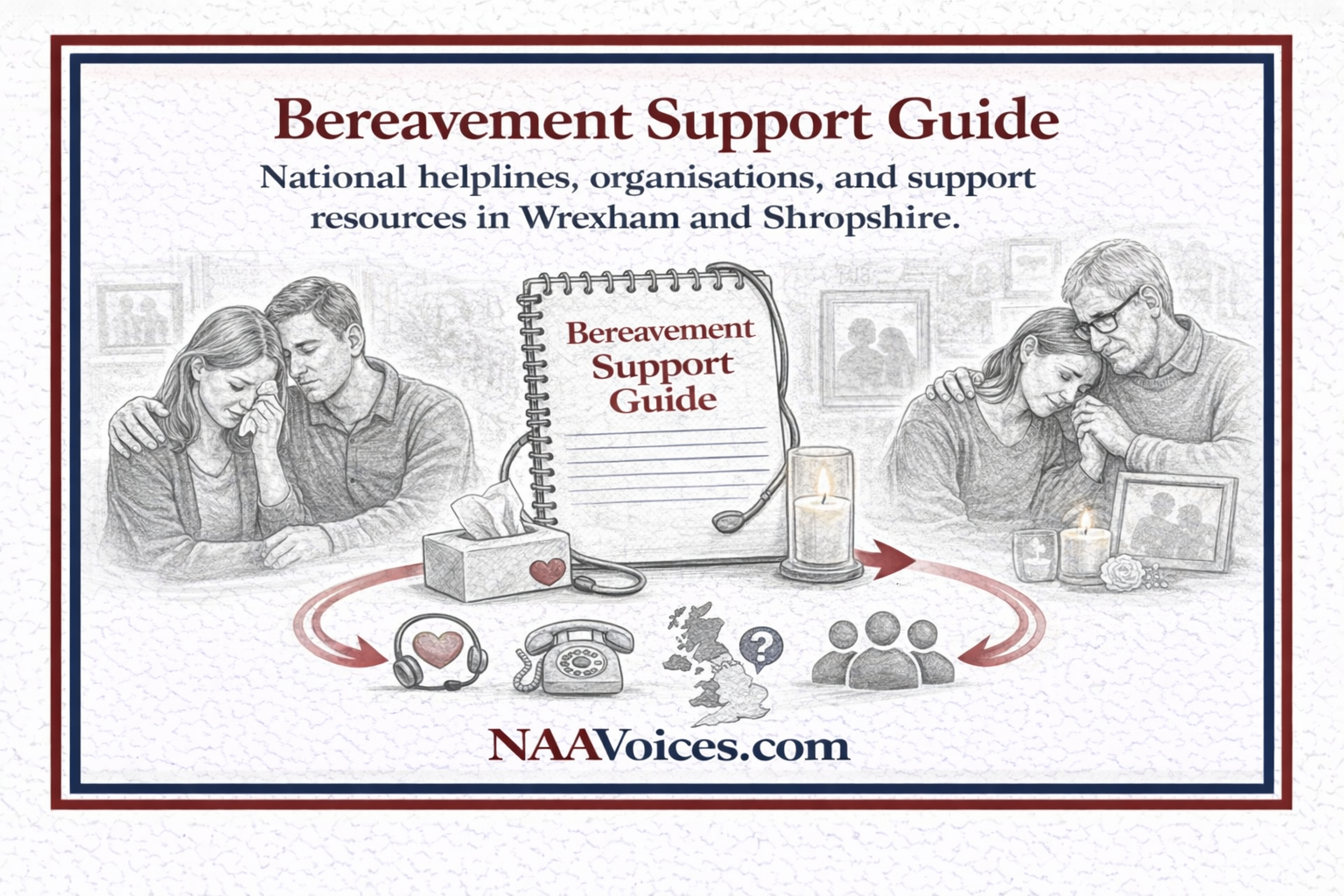
  • Bereavement Support Guide (UK): National Helplines and Local Services in Wrexham & Shropshire | NAAVoices

    Bereavement Support Guide (UK): National Helplines and Local Services in Wrexham & Shropshire | NAAVoices

    Bereavement Support Guide | Finding Help Through Grief

    Bereavement Support Guide

    Understanding Grief and Finding Help

    Grief is a natural response to loss, but it can be one of the most challenging experiences anyone faces. Whether you’ve lost a partner, child, parent, sibling, friend, or other loved one, the pain can feel overwhelming. Seeking support is not a sign of weakness—it’s a vital step toward healing.

    The Importance of Seeking Support After Loss

    Why Support Matters

    Bereavement affects everyone differently, but reaching out for help can:

    • Provide a safe space to express feelings without judgment
    • Reduce isolation by connecting you with others who understand
    • Help process complex emotions like guilt, anger, numbness, or despair
    • Offer practical guidance during a confusing and difficult time
    • Support your mental and physical health through the grieving process
    • Help children and young people understand and cope with their loss

    The Medical and Health Impact of Unresolved Grief

    Grief is not just an emotional experience—it has profound effects on your physical and mental health. Understanding these impacts can help you recognize when additional support may be needed.

    Physical Health Effects

    Bereavement can affect your body in significant ways:

    • Weakened immune system – making you more susceptible to illness
    • Sleep disturbances – insomnia, nightmares, or excessive sleeping
    • Appetite changes – loss of appetite or comfort eating
    • Fatigue and exhaustion – persistent tiredness even after rest
    • Physical pain – headaches, chest tightness, muscle tension
    • Increased risk of heart problems – studies show grief can increase cardiovascular stress
    • Digestive issues – nausea, stomach pain, changes in bowel habits

    Mental Health Considerations

    Grief can also significantly impact your mental wellbeing:

    • Depression – persistent sadness, hopelessness, loss of interest in life
    • Anxiety – excessive worry, panic attacks, fear of more loss
    • Post-traumatic stress – especially after sudden, traumatic, or violent death
    • Complicated grief – when grief becomes prolonged and debilitating
    • Suicidal thoughts – grief can trigger thoughts of self-harm or suicide
    • Substance misuse – using alcohol or drugs to numb emotional pain

    When Grief Becomes Complicated

    Most people gradually adjust to loss over time, but some experience complicated grief (also called prolonged grief disorder), which may include:

    • Intense yearning or longing that doesn’t diminish
    • Difficulty accepting the death months or years later
    • Preoccupation with the deceased or circumstances of death
    • Inability to resume daily activities or relationships
    • Feeling that life has no meaning or purpose

    If you recognize these symptoms, professional support can make a profound difference.

    Impact on Families and Relationships

    Grief affects not just individuals but entire family systems:

    Children and Young People

    • May show grief through behavior changes, school problems, or regression
    • Need age-appropriate explanations and consistent support
    • Benefit from specialized children’s bereavement services
    • May grieve differently than adults—in waves rather than continuously

    Partners and Spouses

    • May grieve differently from each other, causing relationship strain
    • Face practical challenges alongside emotional ones
    • May need support for “ambiguous loss” if relationship was complex
    • Benefit from peer support with others who’ve experienced similar loss

    Siblings

    • Often called “forgotten mourners”—their grief may be overlooked
    • May feel they need to be strong for parents
    • Need recognition of their unique relationship with the deceased
    • Benefit from sibling-specific support groups

    Parents Losing a Child

    • Experience one of the most devastating forms of loss
    • May face guilt, “what-ifs,” and profound identity shifts
    • Need long-term support from those who understand
    • Benefit from parent-specific bereavement groups

    Taking Care of Yourself While Grieving

    While grief is unavoidable, there are ways to support yourself through it:

    Practical Self-Care

    • Allow yourself to grieve – there’s no “right” way or timeline
    • Maintain routines where possible – regular meals, sleep, gentle exercise
    • Limit major decisions – avoid big life changes in early grief if possible
    • Accept practical help – let others cook, clean, or handle tasks
    • Be patient with yourself – grief comes in waves; bad days don’t mean you’re failing

    Emotional Self-Care

    • Talk about your loved one – sharing memories can be healing
    • Express emotions – through talking, writing, art, or physical activity
    • Connect with others – isolation can deepen grief
    • Honor your loved one – in ways that feel meaningful to you
    • Seek professional help if grief feels unmanageable

    For Children

    • Maintain stability – keep familiar routines and environments
    • Be honest – use clear, age-appropriate language (avoid euphemisms)
    • Encourage expression – through play, drawing, or conversation
    • Watch for changes – in behavior, school performance, or mood
    • Access specialized support – children’s bereavement services are invaluable

    If You’re in Crisis

    Samaritans: 116 123 (24/7, free)

    Text SHOUT: 85258 (24/7 crisis text line)

    Emergency: Call 999 or go to A&E if you’re in immediate danger

    National Support Services

    These services are available throughout the UK, regardless of where you live:

    CRUSE Bereavement Support

    The UK’s largest bereavement charity, offering support to anyone grieving.

    Phone: 0808 808 1677

    Website: www.cruse.org.uk

    Services: One-to-one support, group sessions, phone and online help, Hope Again for young people

    Child Bereavement UK

    Supporting families when a child dies or when a child is bereaved.

    Phone: 0800 02 888 40

    Website: www.childbereavementuk.org

    Services: Support for families, resources for professionals, training

    Winston’s Wish

    Free support for children, young people, and families after someone dies.

    Phone: 08088 020 021

    Text: 07860 062 176

    Website: www.winstonswish.org

    Services: Live chat, WhatsApp support, practical resources (ages 0–25)

    The Good Grief Trust

    UK-wide signposting to over 1,000 local and specialist bereavement services.

    Website: www.thegoodgrieftrust.org

    Services: Comprehensive directory, help finding the right support

    The Compassionate Friends

    Supporting bereaved parents, siblings, and grandparents after a child dies (any age).

    Helpline: 0345 123 2304

    Website: www.tcf.org.uk

    Services: Peer support groups, sibling support, retreats, online forum

    Survivors of Bereavement by Suicide (SOBS)

    For anyone over 18 affected by suicide.

    Helpline: 0300 111 5065

    Website: uksobs.org

    Services: Peer support groups, phone support, email support

    Widowed and Young (WAY)

    Peer support for anyone widowed under age 51.

    Website: www.widowedandyoung.org.uk

    Services: Online community, local groups, events

    Sands (Stillbirth and Neonatal Death Charity)

    Supporting anyone affected by pregnancy loss or baby death.

    Helpline: 0808 164 3332

    Website: www.sands.org.uk

    Services: Support groups, online forum, befriending

    ANDYSMANCLUB

    Men’s peer support groups (18+) meeting weekly for those struggling with grief, mental health, or life challenges.

    Website: andysmanclub.co.uk

    Meetings: Mondays at 7pm (groups in Oswestry, Telford, Shrewsbury, and nationwide)

    AtaLoss

    National signposting website helping you find bereavement support.

    🔵 SHROPSHIRE

    Shropshire – Bereavement Services (All Ages)

    Shropshire Mental Health Support – Bereavement Services

    Comprehensive bereavement support including suicide bereavement, crime-related death, accidents, disasters, peer groups for widows/widowers, and child loss support.

    Website: www.shropshiremhs.com

    Services: Support groups, virtual groups, helpline, specialized trauma support, Jolly Dollies, WAY-Up (widows/widowers support)

    Shropshire Council – Bereavement Support

    Local signposting, emotional support, and help with practical matters after a death.

    Phone: 0345 678 9028 (First Point of Contact)

    Website: next.shropshire.gov.uk/bereavement-support

    Services: All-ages support, suicide bereavement service, telephone triage

    Shropshire Council – Bereavement Services (Practical)

    Guidance for funerals, burials, cremation, registering deaths, and legal processes.

    Website: www.shropshire.gov.uk/bereavement-services

    Services: Practical information, registrar services, coroner information

    Shropshire Grief Tending CIC

    Community-based grief support across multiple Shropshire locations.

    Website: www.shropshiregrieftending.com

    Locations: Shrewsbury, Wem, Telford, Ludlow

    Services: Weekly grief cafés, grief tending walks, suicide-specific support groups, family sessions, one-to-one sessions

    2026 expansion: “Holding Grief, Growing Hope” – new cafés opening across Shropshire

    Shrewsbury Bereavement Group (CIC)

    Monthly peer support meetings across Shropshire.

    Phone: 07932 513880

    Website: shropshirebereavement.group

    Meeting locations: Shrewsbury Castlefields, Emstrey Crematorium, Telford Lawley Hub, Oswestry Memorial Hall

    Services: All-ages welcome, peer support, monthly gatherings

    Qube Oswestry

    Community signposting for mental health and bereavement support.

    Website: qube-oca.org.uk/mental-health-and-bereavement-support

    Services: Local resource directory, helpline information

    Caritas Shrewsbury

    Therapeutic bereavement support for adults experiencing complex grief.

    Website: dojustice.co.uk/caritas-shrewsbury

    Services: Therapeutic groups, mindfulness groups, participant-led sessions

    Hope House Children’s Hospice / Tŷ Gobaith

    Specialist bereavement support for families after the death of a baby, child, or young person (under 25).

    Website: www.hopehouse.org.uk

    Coverage: Shropshire, Cheshire, Mid & North Wales

    Services: Specialist counselling for parents, siblings, and extended family, bereavement support groups, memory making, ongoing emotional support

    Cruse Bereavement Support – Shropshire, Telford & Wrekin

    Local branch of the national charity.

    Website: www.cruse.org.uk

    Services: One-to-one support, group sessions, children’s services (Hope Again), telephone and online support

    2 Wish Cymru (now serving Shropshire)

    Specialist support after the sudden death of a child or young person (ages 0–25).

    Website: 2wish.org.uk

    Who they support: Parents, siblings, grandparents, partners, witnesses, professionals

    Services: Crisis support, memory boxes, counselling, community peer support groups, practical guidance

    New in 2024: Expanded services into Shropshire

    Telford & Wrekin Community Support Groups

    Directory of local support groups including bereavement-specific groups.

    🔵 NORTH WALES

    Betsi Cadwaladr (North Wales) – Bereavement Services

    BCUHB Bereavement Information for Adults, Children & Young People

    Main NHS portal for bereavement support across North Wales.

    Website: bcuhb.nhs.wales/bereavement-information

    Services: Adult bereavement guidance, child and young person resources, practical information (registering deaths, funeral directors), signposting to local and national services

    BCUHB Palliative, End-of-Life & Bereavement Care

    Comprehensive palliative and bereavement pathways for adults and children.

    Website: bcuhb.nhs.wales/palliative-end-of-life-and-bereavement-care

    Services: Care planning, end-of-life support, bereavement follow-up

    BCUHB Baby Loss & Snowdrop Bereavement Team

    Specialist service for pregnancy and neonatal loss (up to 28 days).

    Website: bcuhb.nhs.wales/baby-bereavement-service

    Hours: Monday–Friday, 9am–5pm

    Services: Midwife-led support, home visits, memory making (photos, handprints, memory boxes), funeral guidance, referrals to counselling, charity links

    Coverage: All North Wales hospitals

    BCUHB Hospital Bereavement Offices

    Based at major hospitals across North Wales.

    Locations: Wrexham Maelor Hospital, Glan Clwyd Hospital, Ysbyty Gwynedd

    Website: bcuhb.nhs.wales/bereavement-services

    Services: Viewing arrangements, certificates, practical guidance, referrals

    Marie Curie Wales – Bereavement Information & Support Service

    Free bereavement support available across North Wales.

    Website: www.mariecurie.org.uk/wales-bereavement-support

    Services: Free counselling, support groups, one-to-one telephone support, information resources

    The Rainbow Foundation – Wrexham

    Community bereavement support groups.

    Website: therainbowfoundation.org.uk/bereavement-support

    Meeting locations: Wellbeing Hub (Wrexham), Piercy Hall (Marchwiel), Gwersyllt Resource Centre

    Services: Peer support groups, community connections

    Tom Owen & Son – Conwy / Llandudno

    Funeral directors offering bereavement support services.

    Website: tomowenandson.com/bereavement-help

    Services: “Coffee Connection” bereavement meetups (Colwyn Bay, Llandudno), free grief counselling (via North Wales Reflections)

    Cruse Wales

    Welsh branches of national bereavement charity.

    Website: www.cruse.org.uk

    Services: Group support, one-to-one counselling, Hope Again (children’s support)

    2 Wish Cymru

    Specialist support after sudden death of a child or young person (0–25).

    Website: 2wish.org.uk

    Coverage: All of Wales including North Wales

    Services: Crisis support, counselling, peer groups, memory boxes, practical help

    Sands – Wales Groups

    Support after miscarriage, stillbirth, or neonatal death.

    Website: www.sands.org.uk

    Services: Local support groups, online forum, helpline, befriending

    S4C Bereavement Directory

    Wales-wide signposting resource.

    Website: www.s4c.cymru/loss-and-bereavement

    Services: Links to Dying Matters, The Compassionate Friends, Rosie Crane Trust, Cruse Wales

    Finding the Right Support for You

    For Parents Who Have Lost a Child

    • Hope House Children’s Hospice (Shropshire & North Wales)
    • 2 Wish Cymru (sudden death, ages 0–25)
    • The Compassionate Friends (national)
    • Child Bereavement UK (national)
    • Sands (pregnancy and baby loss)

    For Children and Young People

    • Winston’s Wish (ages 0–25, national)
    • Hope House Children’s Hospice (under 25)
    • 2 Wish Cymru (siblings, ages 0–25)
    • Child Bereavement UK
    • Cruse Hope Again (children’s service)

    For Siblings

    • The Compassionate Friends (sibling support)
    • 2 Wish Cymru
    • Hope House Children’s Hospice

    After Suicide

    • Shropshire Mental Health Support – Suicide Bereavement
    • Shropshire Grief Tending CIC (suicide-specific groups)
    • Survivors of Bereavement by Suicide (SOBS, national)
    • Shropshire Council Suicide Bereavement Service

    For Widows and Widowers

    • Widowed and Young (under 51, national)
    • Shropshire Mental Health Support (Jolly Dollies, WAY-Up groups)
    • Cruse (all ages)

    After Pregnancy or Baby Loss

    • BCUHB Snowdrop Bereavement Team (North Wales)
    • Sands (national and Wales groups)
    • Hope House Children’s Hospice

    For Men

    • ANDYSMANCLUB (men’s peer support, Mondays 7pm)
    • Cruse (all genders)
    • Shropshire Grief Tending CIC

    For Community and Peer Support

    • Shropshire Grief Tending CIC (grief cafés and walks)
    • Shrewsbury Bereavement Group (monthly meetings)
    • The Rainbow Foundation (Wrexham area)
    • Tom Owen & Son Coffee Connection (Conwy/Llandudno)

    Important Reminders

    You Are Not Alone

    Thousands of people across Shropshire, North Wales, and the UK are grieving right now. Support is available, and reaching out is a sign of strength.

    There’s No “Right” Way to Grieve

    Everyone’s grief journey is unique. Don’t compare yourself to others or worry about doing it “wrong.”

    It’s Never Too Late to Seek Support

    Whether your loss was recent or years ago, support services are available whenever you’re ready.

    You Don’t Have to Do This Alone

    Professional support, peer groups, and counselling can provide the space and understanding you need to process your grief.

    How to Use This Guide

    1. Identify your needs: Are you looking for peer support, professional counselling, practical help, or children’s services?
    2. Choose services that fit: Local groups offer community connection; national helplines offer immediate support; specialist services support specific types of loss
    3. Contact multiple services if needed: You can access several types of support at once
    4. Be patient: Finding the right fit may take time, and that’s okay
    5. Keep this information: Share it with family members, friends, or healthcare providers who can help you access support
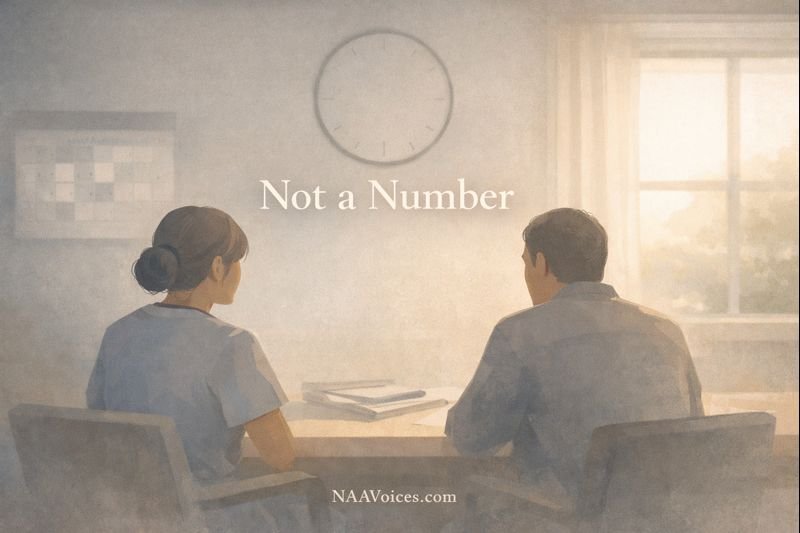
  • Not a Number

    Not a Number

    Not a Number

    They are not a case to file away,
    not a name, not a code, not just a day.
    Not a diagnosis typed in haste,
    not a number timed, recorded, or placed.

    They are a person: breath, small jokes, a bruise,
    a life that moves, that thinks, that rues.
    I meet them there, without disguise,
    human first, before my eyes.

    Primary care is built on time,
    the patient who returns, the cough that climbs.
    The quiet change that slips between notes,
    the thing you feel before the proof.

    Sometimes instinct speaks: a paused pen,
    a message left unread, a look that won’t fit the file.
    No drama, no alarm to shout,
    just a small insistence to look about.

    Continuity teaches how to see
    what’s always been and what’s newly free.
    What’s usual, what’s shifted late,
    what waits to find its voice and state.

    I listen not to claim control,
    not to promise cures I do not hold.
    Because attention, steady and plain,
    is one small way that care remains.

    What life has shaped in those who care
    does not announce itself with flair.
    It tunes the ear, it slows the pace,
    it reads the pain that keeps a neutral face.

    Time moves on; rooms change shape; days pass.
    Later, I return and find that pause mattered
    early, timely, a small, decisive act.
    Relief is measured; the weight remains intact.

    The tears come later, when I’m alone,
    for them, not me, for what is shown.
    How the world can let good people bend
    and how small kindnesses must extend.

    No pride.
    No guilt.
    No claim to save.
    Just the work: to notice, stay, and brave.
    The quiet hours where presence keeps
    a life from being only numbers, only sheets.

    I will keep listening, steady, true,
    seeing the person all the way through.
    Because their life, in all its worth,
    is never less than what it’s worth.

    And that in clinic light, with time and care,
    is the work I do, the work I bear.

    Sr Amy 2026

  • The Hidden Face of ADHD in Women: What I Learned Through Diagnosis, Research, and Real Support

    The Hidden Face of ADHD in Women: What I Learned Through Diagnosis, Research, and Real Support

    Part of the “Two Years On” reflection series

    When I first began writing publicly, I was writing from survival. I knew something was deeply wrong, but I didn’t yet have the language for it — not the link between ADHD, trauma bonds, or Rejection Sensitive Dysphoria. All I had were my experiences, raw and unfiltered. I could describe what was happening, but I couldn’t yet understand the mechanisms beneath it. At the time, that was all I had the capacity to do.

    I realised the trauma bond had finally broken just ten days after my diagnosis. I phoned Samaritans that day. From July 2023 until the day I left, I fought hard not to be pulled back into the narcissistic cycle. And as anyone who has lived it knows, things got much worse before they got better.

    Two years on, I understand so much more — not only about myself, but about why ADHD in women is so consistently overlooked by systems, professionals, and often by women themselves.

    This post is not about reopening old wounds. It is about articulating what I could not see then, and why that lack of language matters.

    Why ADHD in Women Is So Often Missed

    ADHD in women rarely matches the stereotype most people are taught to recognise. We are not always disruptive or visibly hyperactive. More often, we are capable, empathetic, articulate, and quietly overwhelmed.

    In women, ADHD commonly presents as:

    • internal restlessness
    • emotional intensity
    • chronic overwhelm
    • perfectionism masking chaos
    • people-pleasing
    • hyper-responsibility
    • burnout disguised as competence

    Looking back, I can see how easily this was misinterpreted. Functioning became evidence that nothing was wrong. Coping became proof that support was not needed. Distress was reframed as anxiety, sensitivity, or personality, rather than recognised as neurodevelopmental.

    This misinterpretation is one of the primary reasons women are missed.

    Masking: When Coping Looks Like Capability

    For much of my life, I believed I was simply managing. What I now understand is that I was masking.

    Masking in women is rarely a conscious performance. It is a survival response shaped by social conditioning. Girls learn early to adapt, to accommodate, and to regulate others’ emotions before their own. Instead of acting out, we internalise.

    Masking can look like:

    • over-preparing
    • rehearsing conversations
    • suppressing overwhelm
    • pushing through exhaustion
    • appearing calm while internally dysregulated

    When masking is effective, it is invisible, even to the person doing it. You believe you are coping. This is precisely why ADHD in women remains unseen for so long.

    When ADHD Traits Are Misunderstood and Used Against You

    Certain ADHD traits in women are frequently mislabelled. These include emotional openness and deep empathy. Other traits are oversharing, difficulty with boundaries, and fear of rejection.

    In isolation, these traits are often misunderstood. Within abusive or coercive dynamics, they can be exploited.

    In my case, qualities that were once strengths were gradually reframed as flaws. Openness became something to use against me. Fear of rejection became a tether. Empathy became a reason to excuse behaviour that should never have been excused.

    ADHD did not cause abuse.
    However, ADHD shaped how I responded and how difficult it was to leave.

    When neurodivergent traits are interpreted as emotional instability, the underlying ADHD becomes even harder to recognise.

    Rejection Sensitive Dysphoria: The Language I Did Not Have Then

    One of the most significant insights I have gained since writing my first blog is Rejection Sensitive Dysphoria. It is often referred to as RSD.

    At first, it was suggested to me. It gave language to experiences I had lived with for years. I could not explain them. These included the physical pain of rejection. There was also the intensity of emotional responses. It involved the fear of disappointing others and the difficulty letting go of harmful relationships.

    Two years ago, I wrote about heartbreak without understanding why it felt so overwhelming. I had the pain, but not the framework.

    RSD is not being overly sensitive. It is a neurological response linked to ADHD. In women, it is frequently mistaken for insecurity, dependency, or unresolved attachment. This is another reason women with ADHD are missed.

    The Science and the Gender Blind Spot

    ADHD is a neurodevelopmental condition involving differences in brain structure, connectivity, and neurochemistry. In women, these differences are often obscured by adaptation and expectation.

    Dopamine dysregulation affects motivation, reward, and emotional regulation, yet is often mislabelled as depression. Differences in the prefrontal cortex affect planning and impulse control, but many women compensate so effectively that impairment goes unnoticed. Oestrogen influences dopamine, meaning symptoms can fluctuate across the lifespan and are frequently misinterpreted as mood disorders. Trauma overlap further complicates presentation, and without trauma-informed assessment, ADHD is often overlooked.

    With this understanding, I can now see how clear the signs were, and how consistently they were misinterpreted.

    Facing the Truth, Two Years On

    I revisited the blog i wrote in august 2024. The words were honest and unfiltered, and the impact surprised me.

    “Today, I asked a close friend to repeat a truth I’ve been avoiding — a simple statement I’d asked them to say out loud because I needed to hear it clearly, without softening or reassurance. It’s a truth that has haunted me for months. Hearing it wasn’t easy, but it was necessary. That moment marked a turning point: a step towards understanding and, hopefully, eventually, healing.

    Because accessing mental health support has been so difficult, I’ve often relied on email as a way to process my thoughts. Recently, I stumbled across a message I’d written at the start of the month — a raw, honest attempt to explain how I was feeling. I hadn’t expected the emotional weight it would carry when I read it back. The truth, as they say, hurts. And for someone with ADHD — or anyone wired with deep empathy — it takes immense strength not to react defensively or spiral.

    I have to remind myself that I spent years ignoring the truth. Every word Gabriel spoke was a lie, and yet I believed him. I never imagined he could lie to me. That betrayal still stings. But knowing the truth now is vital. It’s the foundation for every decision I need to make moving forward.

    What I didn’t expect was the physical toll. After months free from cardiac pain, dizziness, and discomfort, it all came rushing back. I know this reckoning had to happen — but the old cliché, ‘things happen for a reason,’ feels hollow when I’m once again left picking up the pieces.”

    Two years ago, that destabilised me. Now, I understand it as integration, painful but necessary.

    Why Diagnosis Matters, Even Later in Life

    Diagnosis did not change who I am. It changed how I understand myself.

    It explained why I pushed myself to breaking point. It also explained why certain relationships felt impossible to leave. It showed why emotional pain felt disproportionate yet real. It clarified why I coped outwardly while struggling internally.

    More importantly, it removed shame.

    Two years on, I no longer see sensitivity as weakness or intensity as instability. I understand the wiring behind it, and why helping others was never a phase, but a responsibility born of insight.

    Two Years Forward

    Women with ADHD are not diagnosed late because they do not struggle.
    They are diagnosed late because they struggle quietly, competently, and alone.

    Two years ago, I was writing from survival.
    Now, I am writing from understanding.

    And understanding of ADHD, trauma, and RSD has not silenced me. It has clarified why advocacy, support, and speaking out were never optional.

    This is who I am now, with language I did not have then.

    Women with ADHD are not diagnosed late because they do not struggle. They are diagnosed late because they struggle quietly, competently, and alone.

    Understanding did not silence me. It clarified why helping was never optional.

    If You’re Struggling

    If anything in this post resonates with you and you’re finding things difficult, please reach out for support. You don’t have to navigate ADHD, emotional overwhelm, or rejection sensitivity on your own.

    If you’d like to explore more guidance, tools, and lived‑experience insights, you can also visit our Neurodiversity Home Page or browse the Neurodiversity Hub for further information and support.

    You can find reliable information, guidance, and community support through ADHD UK – Homepage – ADHD UK

    Reaching out is not a weakness — it’s the first step towards understanding yourself with compassion.

  • Protected: 🏥 HRT Prescribing GuideFor Betsi Cadwaladr University Health Board | Aligned with NICE NG23 (2024)

    Protected: 🏥 HRT Prescribing GuideFor Betsi Cadwaladr University Health Board | Aligned with NICE NG23 (2024)

    This content is password-protected. To view it, please enter the password below.

  • Two Years On: From Survival to Strength

    Two Years On: From Survival to Strength

    2 years later 📆⏳👣

    Two years ago today, I walked back into work after seven weeks away, having lost four stone.

    At the time, no one saw what that actually meant: the trauma, the pressure, the systems failing quietly in the background. I didn’t yet understand what had been done to my nervous system, my health, or my life.

    I barely recognise that woman now.
    And that’s not a loss, it’s progress.

    What hasn’t changed is why I kept going.
    That smile from my little one still cuts through everything. It always has.

    I didn’t survive that period just to endure it.


    I survived it to build something better, for my children, and for people who are still being silenced by broken systems.

    Two years on, I’m still here. 6 stone lighter.
    Stronger. Clearer.

    And no longer willing to disappear to make others comfortable.