Category: Personal Blog

  • NAAVoices.com I Need Support With… Neurodiversity A plain-English guide for England & Wales

    NAAVoices.com I Need Support With… Neurodiversity A plain-English guide for England & Wales

    I Need Support With… Neurodiversity (England & Wales) | NAAVoices.com

    I Need Support With… Neurodiversity

    A plain-English guide for England & Wales

    Prepared: 03 January 2026

    Section 1 — I Think I’m Autistic

    What that means (plain English)

    Autism is a neurodevelopmental difference that affects how people process information, communicate, and experience sensory input. It is not a defect; it is a different way of thinking and sensing. The goal is access, not “fixing”.

    💡 Good to know

    Many autistic people are diagnosed later in life, particularly women and those who have learnt to mask their differences. There is no “wrong” time to seek understanding.

    Communication & social interaction

    • Preferring clear, literal language; missing hints or sarcasm
    • Finding small talk draining; enjoying deep, specific topics
    • Needing longer processing time before responding

    Sensory & environment

    • Over- or under-sensitivity to sound, light, touch, or smell
    • Needing predictable routines; distress with sudden change
    • Regulation through stimming (movement, fidgets, repetition)

    Thinking style & interests

    • Focused interests/hyperfocus; detail-oriented thinking
    • Difficulty switching tasks; fatigue after social demands

    Key resources

    Steps to follow

    1. Book a GP appointment and request an autism assessment.
    2. Bring a one-page impact summary with 3–5 everyday examples.
    3. Children: referral to community paediatrics or neurodevelopmental services.
    4. Adults: referral to local adult autism service.
    5. England: ask about current Right to Choose options.
    6. Wales: schools use ALN/IDP; healthcare referrals via GP.
    • One-page symptom impact summary
    • 2–4 week diary of challenges and patterns
    • School/college notes or workplace observations
    • Any developmental history (if available)

    Communication

    • Ask for written instructions or agendas in advance
    • Request extra processing time in meetings
    • Use email for complex topics rather than impromptu discussions

    Sensory needs

    • Use noise-cancelling headphones or ear defenders
    • Request a desk away from bright lights or high-traffic areas
    • Take regular sensory breaks

    School/college

    • Request a quiet space for exams or study
    • Ask for advance notice of changes to timetables
    • Use visual schedules and reminders

    Workplace

    • Request flexible working patterns
    • Ask for clear, written expectations
    • Use calendar reminders and task lists

    Self-Reflection Quiz

    This is for self-understanding only — it is not a diagnostic tool.

    1. Do you prefer clear, direct communication over hints or implied meanings?

    2. Do you experience strong reactions to sensory input (sounds, lights, textures)?

    3. Do you have specific interests that you focus on deeply?

    Your Reflection

    These responses are for your own self-understanding. If several of these experiences resonate strongly with you, it may be worth exploring further through the assessment pathway above.

    Remember: self-identification is valid, and seeking formal assessment is a personal choice.

    ➡️ Next Steps

    • Review the evidence checklist in the Evidence Pack section
    • Use the GP referral template in the Templates section
    • Start a 2-week diary of your experiences
    • Connect with autistic-led communities for peer support

    Section 2 — I Think I Have ADHD

    What that means

    ADHD (Attention Deficit Hyperactivity Disorder) affects attention regulation, impulse control, and activation. It is a difference in how the brain prioritises and moves between tasks. ADHD is not about lacking attention—it’s about regulating attention.

    ℹ️ Note

    ADHD presents differently across people. Some experience primarily inattentive symptoms, others hyperactive-impulsive symptoms, and many a combination of both.

    Inattention

    • Difficulty sustaining focus on tasks that don’t interest you
    • Frequently losing items or forgetting appointments
    • Being easily distracted by external stimuli or internal thoughts
    • Making careless mistakes in work or daily tasks
    • Difficulty following through on instructions or finishing tasks

    Hyperactivity & impulsivity

    • Feeling restless or needing to move frequently
    • Talking excessively or interrupting others
    • Difficulty waiting your turn
    • Acting on impulse without considering consequences
    • Fidgeting or feeling internal restlessness

    Executive function

    • Difficulty starting tasks (task initiation)
    • Poor sense of time passing (time blindness)
    • Challenges with organisation and planning
    • Working memory difficulties
    • Emotional dysregulation

    Key resources

    Steps to follow

    1. Request an ADHD assessment via your GP.
    2. Bring an impact diary and school/work evidence.
    3. Children: referral to paediatrics or CAMHS/ND services.
    4. Adults: referral to adult ADHD service.
    5. England: ask about Right to Choose options.
    6. Wales: GP referral + ALN/IDP support in education.

    Activation strategies

    • Body doubling (working alongside others, even virtually)
    • Breaking tasks into tiny, concrete steps
    • Using external motivation (deadlines, accountability partners)
    • Starting with the easiest part of a task

    Time management

    • Visual timers and alarms
    • Time-blocking with buffer periods
    • Using “now, not now” systems rather than complex scheduling

    Workplace adjustments

    • Flexible working hours
    • Regular check-ins rather than end-of-project reviews
    • Permission to use headphones
    • Standing desk or opportunity to move

    Self-Reflection Quiz

    This is for self-understanding only — it is not a diagnostic tool.

    1. Do you often struggle to start tasks, even ones you want to do?

    2. Do you frequently lose track of time or underestimate how long things take?

    3. Do you experience intense focus on interesting activities but struggle with less engaging ones?

    Your Reflection

    These responses are for your own self-understanding. If several of these experiences significantly impact your daily life, it may be worth discussing with your GP.

    ADHD assessment considers how symptoms affect you across different areas of life.

    ➡️ Next Steps

    • Start an impact diary tracking challenges over 2–4 weeks
    • Gather any school reports mentioning concentration
    • Use the GP referral template in the Templates section
    • Try some of the “what helps” strategies while waiting

    Section 3 — Learning Differences

    Dyslexia, Dyspraxia/DCD, Dyscalculia

    Dyslexia primarily affects reading, writing, and spelling. It is not related to intelligence. People with dyslexia may process written language differently, often showing strengths in verbal reasoning and creative thinking.

    Indicators

    • Reading slowly or with effort
    • Spelling inconsistently
    • Difficulty copying accurately
    • Strong verbal skills but written work doesn’t reflect ability

    Dyspraxia (also called DCD) affects motor coordination and planning. It can impact fine motor skills, gross motor skills, and motor planning.

    Indicators

    • Difficulty with handwriting, often slow or illegible
    • Challenges with physical coordination and balance
    • Trouble learning new motor skills
    • Challenges with organisation and planning sequences

    Dyscalculia affects numerical understanding and mathematical reasoning. Like dyslexia, it is not related to intelligence.

    Indicators

    • Difficulty understanding number concepts
    • Trouble with mental arithmetic
    • Challenges remembering mathematical procedures
    • Difficulty with time, money, and measurement

    Key resources

    School/College (England)

    1. Speak to the school SENCO.
    2. Request assessment through school or educational psychologist.
    3. School should provide SEN Support without formal diagnosis.
    4. For significant needs, request EHCP assessment.

    Adults & Higher Education

    1. Contact your university’s disability service for assessment.
    2. Apply for Disabled Students’ Allowance (DSA).
    3. DSA can fund specialist equipment and study support.

    Assistive technology

    • Text-to-speech software
    • Speech-to-text for writing
    • Reading rulers and coloured overlays
    • Mind-mapping software

    Assessment adjustments

    • Extra time in exams (usually 25%)
    • Use of a reader or scribe
    • Alternative assessment formats
    • Coloured paper or screen backgrounds

    ➡️ Next Steps

    • Contact your school’s SENCO/ALNCo or university disability service
    • Explore DSA if you’re in higher education
    • Try assistive technology — many options are free
    • Use the school/college request template

    Section 4 — Templates (Copy-Ready)

    These templates can be adapted to your situation. Replace the bracketed text with your specific details.

    📋 GP Referral Request
    Dear [GP Name/Practice],I am writing to request a referral for [autism/ADHD/neurodevelopmental] assessment.I have been experiencing difficulties with [brief summary — e.g., focus and organisation / social communication and sensory processing] that significantly impact my daily life.Key areas of difficulty include: • [Example 1 — e.g., I struggle to maintain focus on tasks] • [Example 2 — e.g., I find it very difficult to start tasks] • [Example 3 — e.g., I feel overwhelmed in busy environments]These difficulties have been present [since childhood / for as long as I can remember] and affect my [work/education/relationships/daily functioning].I have attached a summary of my experiences. I would also like to discuss Right to Choose options if available.Yours sincerely, [Your Name] [Date of Birth] [NHS Number if known]
    📋 School/College Adjustments Request
    Dear [SENCO/ALNCo/Tutor Name],I am writing to discuss support for [my child, Name / myself] who [is awaiting assessment for / has characteristics of] [autism/ADHD/dyslexia/other].Current difficulties include: • [Example 1 — e.g., difficulty concentrating in busy environments] • [Example 2 — e.g., challenges with written work] • [Example 3 — e.g., need for routine and advance notice of changes]We would like to request a meeting to discuss: • What support can be put in place now • How needs can be monitored and reviewed • What the assessment pathway looks likeAdjustments that would help include: • [Suggestion 1 — e.g., seating at the front] • [Suggestion 2 — e.g., written instructions alongside verbal] • [Suggestion 3 — e.g., extra time for processing]Yours sincerely, [Parent/Carer Name or Student Name] [Date]
    📋 Workplace Adjustments Request
    Dear [Manager/HR Contact],I am writing to discuss reasonable adjustments that would help me work effectively. I [have been diagnosed with / am awaiting assessment for / identify as having] [autism/ADHD/dyslexia/other].This affects me in the following ways at work: • [Example 1 — e.g., difficulty filtering background noise] • [Example 2 — e.g., challenges with task prioritisation] • [Example 3 — e.g., need for clear, written instructions]Adjustments that would help me perform at my best include: • [Adjustment 1 — e.g., permission to use headphones] • [Adjustment 2 — e.g., written agendas before meetings] • [Adjustment 3 — e.g., flexible working hours]I would welcome a conversation about how we can work together.Yours sincerely, [Your Name] [Date]
    💡 Tip

    Keep a copy of all correspondence. Follow up verbal conversations with an email summarising what was discussed.

    Section 5 — Evidence Pack (Checklist)

    Gathering evidence strengthens your case for assessment and support. Not everything will apply — collect what’s relevant.

    Personal documentation

    • One-page impact summary (3–5 concrete examples)
    • 2–4 week diary of difficulties and patterns
    • Timeline of when you first noticed difficulties
    • List of strategies you’ve tried

    Childhood/developmental history

    • School reports (comments about behaviour, concentration)
    • Any previous assessments or reports
    • Parent/carer observations (written statement)
    • Developmental milestones if known

    Current impact

    • Examples of impact on work or education
    • Examples of impact on relationships
    • Examples of impact on daily living
    • Partner/family/colleague observations

    Professional evidence

    • Letters from previous healthcare providers
    • Occupational health reports
    • Educational psychology assessments

    Section 6 — Important Notes

    ⚠️ Please read

    This resource is for information and self-understanding only. It does not constitute medical advice, diagnosis, or treatment.

    About this resource

    • This is educational, not diagnostic. The quizzes here are designed to help you understand yourself better — they cannot replace professional assessment.
    • Self-identification is valid. Many neurodivergent people find understanding without or before formal diagnosis.
    • Pathways vary. Assessment availability and processes differ across England and Wales, and change over time.

    Your rights

    • You have the right to request assessment and to be taken seriously
    • You can ask for reasonable adjustments without a formal diagnosis
    • In England, you have the Right to Choose for some mental health assessments
    • You can request copies of your medical records and reports

    If you’re struggling

    • Take breaks — this doesn’t have to be done all at once
    • Ask someone you trust to help with paperwork
    • Connect with neurodivergent communities for peer support
    • Remember that your experiences are valid regardless of diagnosis
    💡 Remember

    You are not broken. You are not “too much” or “not enough”. Neurodivergent brains work differently, and understanding how yours works is a form of self-care.

    You’ve taken an important step

    Seeking understanding about how your brain works takes courage. Whether you’re at the beginning of this journey or well along the path, know that you deserve support, accommodations, and acceptance.

    This resource was created to make navigating these systems a little easier. You don’t have to do this alone.

  • Supporting Neurodivergent Individuals: Multi‑Agency Guidance and Pathways for Health, Education and Social Care

    Supporting Neurodivergent Individuals: Multi‑Agency Guidance and Pathways for Health, Education and Social Care

    NAAVoices – Neurodiversity-Affirming Guidance & UK Support Pathways

    Choose Your Path

    Neurodiversity-Affirming Guidance for Real Life

    UK pathways, evidence-based strategies, and ready-to-use templates — built to help you communicate needs, access support, and reduce harm from misunderstandings.

    About the Creator

    Built from Professional & Lived Experience

    I’m neurodivergent (ADHD, dyspraxia, dyslexia) and a Specialist Nurse Practitioner with a PGCert in Psychology & Neuroscience of Mental Health. This hub translates complexity into practical, respectful steps, enabling people to communicate their needs, access support, and reduce harm from misunderstandings.

    Privacy commitment: Names and identifying details are never shared.

    Choose Your Path

    Select your role for tailored guidance

    For Parents & Carers

    Navigate school support, healthcare pathways, and your child’s rights

    England: Getting School Support (SEND)

    Step-by-Step Process

    1. Ask for SEN Support now — You don’t need a diagnosis. Put your request in writing to the SENCO (Special Educational Needs Coordinator).
    2. Agree on reasonable adjustments — The school must make changes to remove barriers (e.g., visual timetables, movement breaks, quiet spaces).
    3. Get a written plan — Request an SEN Support Plan or provision map detailing what support will be provided, by whom, and when.
    4. If needs are significant/long-term, request an EHC needs assessment — This formal assessment can lead to an Education, Health and Care Plan with legally binding provision.
    5. Review termly — Insist on regular reviews with measurable outcomes.
    Key Legislation (England)

    Get help: IPSEA provides free legal advice for parents.

    Wales: Getting School Support (ALN)

    Step-by-Step Process

    1. Request an ALN assessment — Contact the school’s Additional Learning Needs Coordinator (ALNCo) in writing.
    2. Agree on an Individual Development Plan (IDP) — This must include specific adjustments, provision, and outcomes.
    3. Review frequently — IDPs must be reviewed regularly and updated as needs change.
    Key Legislation (Wales)

    Get help: SNAP Cymru provides free support for Welsh families.

    Getting a Healthcare Assessment

    ADHD & Autism Referrals

    1. Book a GP appointment — Request a referral to your local neurodevelopmental assessment service.
    2. Prepare your evidence — Keep an impact diary showing how differences affect daily life. Use the One-Page Symptom Impact Summary template below.
    3. England: Consider Right to Choose — You can choose an NHS-funded private provider for faster assessment.
    4. Expect waiting times — NHS pathways can have long waits. Private assessment costs £500-£2000.

    Your Legal Rights

    You Do NOT Need a Diagnosis

    The Equality Act 2010 protects anyone with a substantial, long-term impairment affecting day-to-day activities. Schools must make reasonable adjustments immediately, based on identified need.

    If school says “wait for assessment”: Politely remind them that reasonable adjustments are required now, and waiting for diagnosis breaches the Equality Act.

    Sensory & Eating: Practical Support

    Restricted diets and sensory sensitivities can impact constipation, growth, and dental health. These aren’t “fussy eating” — they’re neurological responses requiring practical support.

    Portion Prompts Visual guides and portion control tools to support consistent intake
    Safe-Food Rotations Systematically expand accepted foods whilst respecting sensory needs
    Texture Ladders Gradual exposure to new textures at the child’s pace
    Hydration Reminders Scheduled prompts and preferred containers to support fluid intake
    School Lunch Notes Written agreements that respect safe foods whilst gently expanding choice
    Toothbrushing Scaffolds Visual steps, hand-over-hand support, and sensory modifications

    What is Neurodiversity?

    Neurodiversity recognises that differences such as autism, ADHD, dyslexia, and dyspraxia are natural variations, not defects. The aim isn’t to ‘fix’ individuals but to reduce barriers so everyone can thrive.

    What is Neurodiversity?

    Neurodiversity recognises that differences such as autism, ADHD, dyslexia, and dyspraxia are natural variations, not defects. The aim isn’t to ‘fix’ individuals but to reduce barriers so everyone can thrive.

    For Healthcare Professionals

    Clinical pathways, NICE guidance, and referral frameworks

    ADHD Assessment Pathway

    Clinical Standards

    NICE Guideline: NG87 – Attention deficit hyperactivity disorder: diagnosis and management

    Key Criteria
    • Symptoms present before age 12
    • Pervasive across multiple settings (home, school, work)
    • Functional impairment in social, academic, or occupational functioning
    • Not better explained by another condition
    Referral Pathway
    1. GP/Primary Care — Initial screening, developmental history, impact assessment
    2. Specialist Assessment — Psychiatrist or paediatrician conducts full diagnostic evaluation
    3. Multi-informant approach — Gather evidence from parents, teachers, and self-report
    4. Post-diagnosis support — Medication titration if indicated, psychoeducation, signposting

    Autism Assessment Pathway

    Clinical Standards

    NICE Guidelines:

    Core Features
    • Persistent difficulties in social communication and social interaction
    • Restricted, repetitive patterns of behaviour, interests, or activities
    • Symptoms present from early developmental period
    • Functional impairment across settings
    Assessment Process
    1. Developmental history — Early childhood development, social-communication milestones
    2. Multidisciplinary team assessment — Psychiatrist, psychologist, SALT, OT as appropriate
    3. Standardised tools — ADOS-2, ADI-R, or equivalent gold-standard instruments
    4. Differential diagnosis — Rule out social anxiety, attachment difficulties, trauma responses

    Reasonable Adjustments in Healthcare Settings

    Equality Act 2010 compliance: Healthcare settings must make reasonable adjustments for neurodivergent patients.

    Environment
    • Quiet waiting areas
    • First/last appointments
    • Reduced sensory stimulation
    • Clear signage
    Communication
    • Written appointment confirmations
    • Literal, concrete language
    • Visual aids and summaries
    • Allow extra processing time
    Consultation
    • Allow supporter present
    • Provide written aftercare instructions
    • Longer appointment slots
    • Avoid unnecessary waiting

    For Schools & Educators

    SEND/ALN statutory duties, classroom adjustments, and inclusive practice

    England: SEND Framework & Statutory Duties

    Legal Requirements

    Legislation: Children and Families Act 2014 | SEND Code of Practice 2015

    Graduated Approach
    1. Assess — Identify needs through observation, assessment, and consultation with parents and pupil
    2. Plan — Agree on adjustments, interventions, and expected outcomes in a written SEN Support Plan
    3. Do — Implement agreed provision; class teacher retains responsibility with SENCO support
    4. Review — Evaluate impact termly; adjust provision as needed
    When to Request an EHC Needs Assessment
    • Needs are significant and long-term
    • Multiple cycles of SEN Support have not led to adequate progress
    • Specialist provision or input required
    • Parent or young person requests assessment
    Key Principle

    You must not wait for a diagnosis to provide SEN Support. Provision should be based on identified need and functional impact, not diagnostic labels.

    Wales: ALN Framework & Statutory Duties

    Legal Requirements

    Legislation: Additional Learning Needs and Education Tribunal (Wales) Act 2018 | ALN Code 2021

    Individual Development Plan (IDP)
    1. Identify ALN — Determine whether learner has additional learning needs
    2. Decide on ALP — Identify additional learning provision required
    3. Prepare IDP — Document needs, provision, outcomes, and review arrangements
    4. Review and revise — Minimum annual review; more frequent if needs change
    Person-Centred Approach
    • Learner’s views must be sought and considered
    • Parents/carers must be involved in decision-making
    • Provision must prepare learners for adulthood
    • Collaborative multi-agency working

    Practical Classroom Adjustments

    Attention & Executive Function
    • Short, concrete instructions (one step at a time)
    • Visual now-next boards
    • Timers and visual schedules
    • Chunked tasks with clear success criteria
    • Movement breaks between activities
    Sensory
    • Ear defenders or quiet workspace option
    • Reduced visual clutter
    • Predictable routines and transitions
    • Fidget tools or movement opportunities
    • Flexible seating arrangements
    Communication
    • Literal, concrete language (avoid idioms)
    • Written instructions alongside verbal
    • Extra processing time for responses
    • Visual supports (symbols, photos, diagrams)
    • Pre-teaching of new vocabulary
    Recording & Assessment
    • Alternative recording (scribe, voice-to-text)
    • Reduced copying from board
    • Assistive technology (laptop, spell-checker)
    • Extra time or rest breaks in assessments
    • Alternative formats for demonstrating knowledge

    Equality Act 2010: Schools’ Duties

    Equality Act 2010 — Schools must make reasonable adjustments for disabled pupils

    Three Requirements
    1. Changing provisions, criteria, or practices — e.g., allowing extra time, reducing written work
    2. Providing auxiliary aids — e.g., visual timetables, fidget tools, assistive technology
    3. Making physical alterations — e.g., quiet spaces, sensory-friendly environments

    Critical: Reasonable adjustments duty is anticipatory. Schools must not wait for a request or diagnosis — they should identify and remove barriers proactively.

    UK Legislation & Rights

    Understanding your legal rights is essential for accessing support. Here’s what protects neurodivergent people across the UK.

    England: Education Framework

    Wales: Education Framework

    UK-Wide: Equality & Work

    Healthcare & Assessment

    Key Principle Across All Frameworks

    You do not need a diagnosis to request reasonable adjustments. Support should be based on identified need and functional impact, not diagnostic labels. The Equality Act 2010 protects anyone with a physical or mental impairment that has a substantial and long-term adverse effect on their ability to carry out normal day-to-day activities.

    Key Support Organisations

    England:
    IPSEA (Independent Provider of Special Education Advice)
    Contact (for families with disabled children)
    SOS!SEN (Special Educational Needs advice)
    Wales:
    SNAP Cymru (Special Needs Advisory Project)
    PACEY Cymru (Professional Association for Childcare)
    Meic (Advocacy for children and young people)

    Sensory & Eating: Real-World Impact

    Restricted diets (such as dry, predictable foods) and sensory sensitivities can impact constipation, growth, and dental health. These aren’t “fussy eating” — they’re neurological responses that require practical support.

    Practical Levers

    Portion Prompts Visual guides and portion control tools to support consistent intake
    Safe-Food Rotations Systematically expand accepted foods while respecting sensory needs
    Texture Ladders Gradual exposure to new textures at the child’s pace
    Hydration Reminders Scheduled prompts and preferred containers to support fluid intake
    School Lunch Notes Written agreements that respect safe foods while gently expanding choice
    Toothbrushing Scaffolds Visual steps, hand-over-hand support, and sensory modifications
    Dentist-Ready Summaries One-page profiles explaining sensory needs and successful strategies

    Learning Differences

    Dyslexia, dyspraxia, and dyscalculia

    Support isn’t about lowering expectations

    It’s about changing the access route so neurodivergent learners can demonstrate their full capability.

    Assistive Technology Text-to-speech, speech-to-text, screen readers, mind-mapping software
    Alternative Formats Audio materials, visual organizers, simplified instructions, colour-coding
    Reduced Time Pressure Extended deadlines, rest breaks, chunked assessments
    OT-Informed Strategies Handwriting alternatives, movement breaks, adapted equipment

    Official Resources & Support Services

    Direct links to UK legislation, guidance, and support organisations

    📋

    England: SEND Support

    Official guidance, legal frameworks, and parent resources

    ✓

    Wales: ALN Support

    Welsh framework, statutory guidance, and family resources

    📄

    UK-Wide Support

    Equality Act guidance, workplace support, and advocacy organisations

    🏥

    Healthcare Pathways

    NHS guidance, NICE standards, and diagnostic pathways

    💼

    Workplace & Legal

    Employment rights, tribunals, and advocacy support

    Frequently Asked Questions

    Do I need a diagnosis to get adjustments?
    No — adjustments should be made based on identified need and functional impact. The Equality Act 2010 protects anyone with a substantial, long-term impairment affecting day-to-day activities, regardless of diagnostic label.
    What’s the difference between England and Wales frameworks?
    England uses SEN Support and EHCPs (Education, Health and Care Plans); Wales uses ALN (Additional Learning Needs) and IDPs (Individual Development Plans). Both systems must provide reasonable adjustments, but the terminology and processes differ.
    What if school says ‘wait for assessment’?
    Reasonable adjustments should start immediately based on current need. Assessment may clarify needs further, but waiting for diagnosis should never delay basic support. Reference the Equality Act 2010 duty to make adjustments.
    How do I evidence impact?
    Use the One-Page Symptom Impact Summary to document specific examples of how differences affect daily functioning. Keep logs of incidents, attendance patterns, work avoidance, meltdowns, or health impacts. Photographs of work samples can also demonstrate need.
    Can I request workplace adjustments without disclosing my diagnosis?
    Yes. You can request adjustments by describing functional needs without naming a diagnosis. However, disclosure may help access more comprehensive support and protection under the Equality Act 2010.
    What is Access to Work and who can apply?
    Access to Work is a UK government scheme providing practical support if your disability or health condition affects your work. It can fund specialist equipment, adaptations to premises, support workers, job coaches, and travel costs. Anyone employed or self-employed in England, Scotland, or Wales can apply.

    Glossary

    Reasonable Adjustments

    Practical changes to remove barriers for disabled people, required under the Equality Act 2010. Must be implemented unless they impose a disproportionate burden on the organisation.

    SEN (England)

    Special Educational Needs — the framework used in England for identifying and supporting children with learning differences or disabilities.

    ALN (Wales)

    Additional Learning Needs — Wales’s framework (replacing SEN) for supporting learners aged 0–25 who need additional provision to access education.

    EHCP (England)

    Education, Health and Care Plan — a legal document in England describing a child or young person’s needs and the provision required to meet them (ages 0–25).

    IDP (Wales)

    Individual Development Plan — Wales’s statutory plan outlining additional learning provision, targets, and review arrangements for learners with ALN.

    Right to Choose (England)

    NHS policy allowing patients in England to choose any qualified provider for NHS-funded treatment, including ADHD and autism assessments (subject to local ICB policies).

    Public Sector Equality Duty

    Legal obligation on public bodies to eliminate discrimination, advance equality of opportunity, and foster good relations. Applies to schools, NHS, local authorities, etc.

    Executive Function

    Mental skills for planning, organizing, focusing attention, managing time, and regulating behavior. Often affected in ADHD, autism, and dyspraxia.

    Sensory Processing

    How the nervous system receives and responds to sensory information (sight, sound, touch, taste, smell, movement). Differences are common in neurodivergent people.

    Reasonable Adjustments Request Template (UK)

    Use this template to request support at school, work, or healthcare settings under the Equality Act 2010. Copy the parts you need, add specifics, and attach any one-page summaries or evidence.

    1) Cover Line

    Subject: Request for Reasonable Adjustments – [Your Name] / [Child’s Name] – [Setting]

    2) Quick Summary

    I am requesting reasonable adjustments for [me/my child] due to [diagnosed/suspected] neurodivergence (e.g., ADHD, autism, dyslexia, dyspraxia). These adjustments are needed to remove barriers to access and participation.

    3) Needs in Brief

    • Attention/processing: short, concrete instructions; extra processing time
    • Sensory: reduced noise/lighting; ear defenders; predictable routines
    • Executive function: visual now–next; timers; chunked tasks; prompts
    • Communication: written follow-up; literal language; avoid idiom
    • Environment: quiet space option; seating away from high-traffic areas

    4) Adjustments Requested

    School/College: visual timetable; movement breaks; reduced copying; alternative recording; toilet/changing privacy plan; flexible transitions

    Workplace: written instructions; flexible deadlines; reduced meetings; quiet workspace; noise-cancelling; clear priorities; meeting agendas in advance

    Healthcare: quiet waiting; first/last appointment; written after-care; allow supporter present

    5) Legal Footing (Plain English)

    Under the Equality Act 2010, organisations must make reasonable adjustments to avoid substantial disadvantages arising from disability. Public bodies also have a Public Sector Equality Duty.

    6) Close

    Please confirm in writing which adjustments will be implemented and when. I’m happy to discuss workable options.

    Kind regards,
    [Name] | [Role/Relationship] | [Contact]

    School/SEND Meeting Checklist (UK)

    A one-page prompt sheet for parents and professionals. Adapt for EHCP (England) or ALN IDP (Wales).

    Before the Meeting

    • Confirm purpose (review, new support, escalation) and attendees
    • Send a one-page profile and recent symptom-impact summary
    • Request data: attendance, progress, behaviour/incident logs, current support
    • List top 3 barriers to access; bring examples
    • Agree time limits and desired outcomes in advance

    During the Meeting

    • Start with the child’s profile: communication preferences and sensory needs
    • Agree measurable outcomes (what will change in 12 weeks)
    • Specify provision: frequency, duration, who, where (be concrete)
    • Record reasonable adjustments (classroom, transitions, unstructured times)
    • Plan reviews; name a lead and dates

    After the Meeting

    • Receive written notes/plan (SEN Support / IDP / IEP) and check accuracy
    • Share with child in accessible language/visuals
    • Set calendar reminders for review points
    • Collect evidence: work samples, incident notes, attendance/health impacts
    • Escalate if plan isn’t implemented (follow local policy)

    One-Page Symptom Impact Summary

    Name: ____________
    DOB: ____________
    Date: ____________
    Setting: ____________
    Prepared by: ____________

    Main Differences (tick/add):

    ☐ Attention/organisation
    ☐ Sensory (seek/avoid)
    ☐ Communication/pragmatics
    ☐ Social interaction
    ☐ Motor/dyspraxia
    ☐ Sleep/energy

    How This Shows Up (2–4 examples):

    • Loses track of multi-step instructions; needs one thing at a time
    • Distressed by hand dryers; uses ear defenders
    • Eats only dry/predictable foods; needs prompting and portion monitoring
    • Bolts near roads; requires hand-held guidance when outside

    What Helps (reasonable adjustments):

    • Visual now–next, written instructions, extra processing time
    • Movement breaks; reduced noise/lighting; predictable routines
    • Alternative recording of work; reduced copying; quiet space when needed
    • Meal structure, safe foods list, hydration prompts; toothbrushing scaffold

    Agreed Actions (who/what/when):

    1) _________________________ by __________ (name) by ______ (date)
    2) _________________________ by __________ (name) by ______ (date)
    3) _________________________ by __________ (name) by ______ (date)

    Review Date & Metrics:

    Review on: ________
    Success looks like: ____________________________

    NAAVoices.com | Neurodiversity-Affirming Advocacy

    Created by NAAVoices

    Resource created by pseudonym Laura Prince, founder of NAAVoices.com

    Privacy Commitment: Names and identifying details are never shared | © 2025

  • Protected: 🏥 HRT Prescribing GuideFor Betsi Cadwaladr University Health Board | Aligned with NICE NG23 (2024)

    Protected: 🏥 HRT Prescribing GuideFor Betsi Cadwaladr University Health Board | Aligned with NICE NG23 (2024)

    This content is password-protected. To view it, please enter the password below.

  • LGBTQI+ Helplines and Support Services – Shropshire, Wrexham and Nationwide

    LGBTQI+ Helplines and Support Services – Shropshire, Wrexham and Nationwide

    LGBTQI+ Resource Hub | Support for Children, Adults & Families
    🏳️‍🌈 🏳️‍⚧️

    LGBTQI+ Resource Hub

    Support, information, and resources for children, adults, and families. You are not alone — help is available.

    “No matter where you are on this journey, support is available. Whether you’re a parent trying to understand, a young person finding your voice, or a family member seeking guidance — you deserve support, understanding, and compassion.”

    In an Emergency

    Emergency Services
    999
    Immediate danger
    Samaritans
    116 123
    24/7 emotional support
    Childline
    0800 1111
    Under 19s, 24/7

    Created with love for the LGBTQI+ community 🌈

    If you’re struggling, please reach out. You deserve support.

  • Two Years On: From Survival to Strength

    Two Years On: From Survival to Strength

    2 years later 📆⏳👣

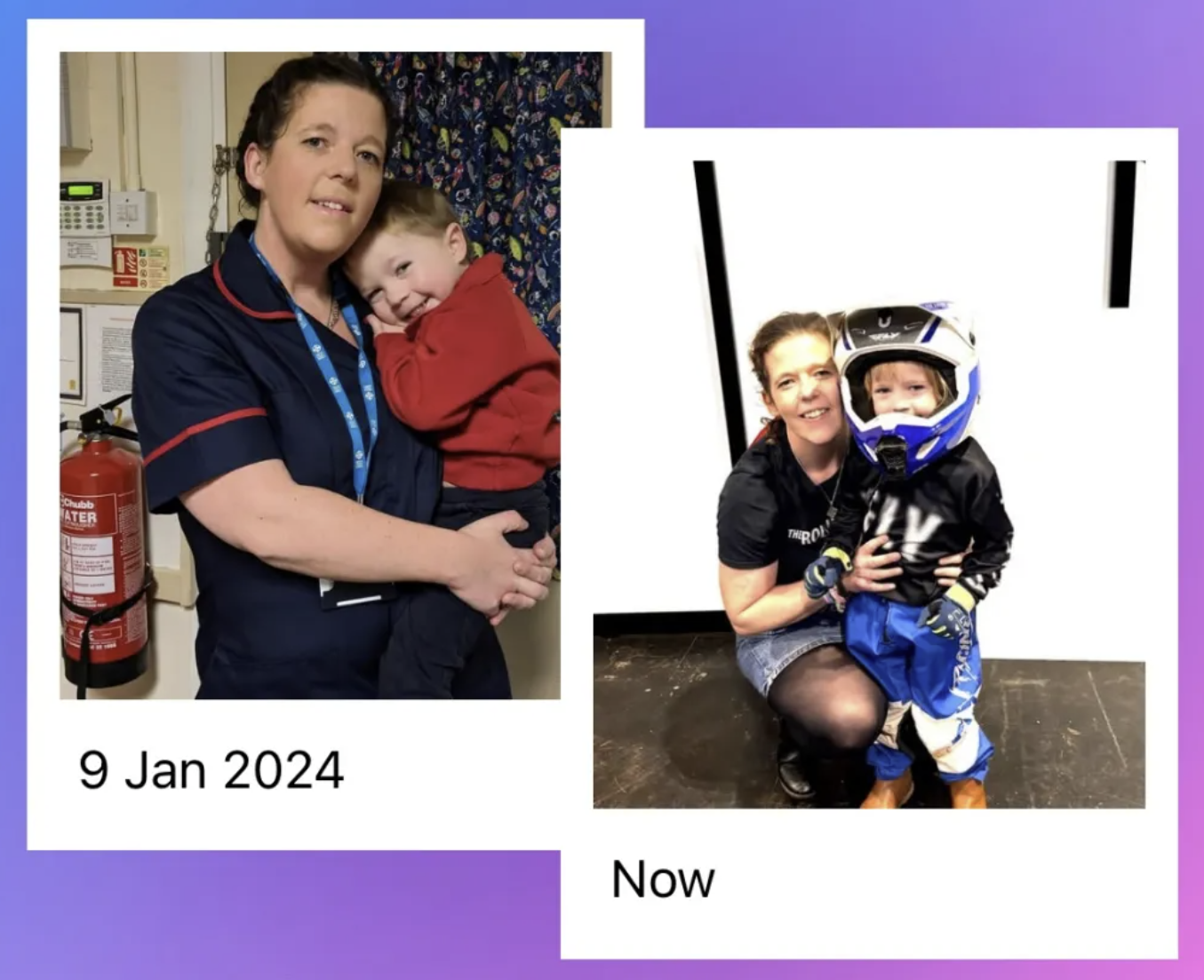
    Two years ago today, I walked back into work after seven weeks away, having lost four stone.

    At the time, no one saw what that actually meant: the trauma, the pressure, the systems failing quietly in the background. I didn’t yet understand what had been done to my nervous system, my health, or my life.

    I barely recognise that woman now.
    And that’s not a loss, it’s progress.

    What hasn’t changed is why I kept going.
    That smile from my little one still cuts through everything. It always has.

    I didn’t survive that period just to endure it.


    I survived it to build something better, for my children, and for people who are still being silenced by broken systems.

    Two years on, I’m still here. 6 stone lighter.
    Stronger. Clearer.

    And no longer willing to disappear to make others comfortable.

  • When ADHD Met PTSD: How Trauma Rewired My Brain and How Understanding That Saved Me

    When ADHD Met PTSD: How Trauma Rewired My Brain and How Understanding That Saved Me

    Content note: This piece discusses suicidal ideation and trauma. If you’re struggling, please don’t hesitate to reach out. Resources are at the end.

    For 34 years, I lived with ADHD, and never once needed mental health services.

    I’d worked through the front line during COVID, wards, diabetes clinics, and mental health services. Thirty-hour weeks, raising three children, advocacy work on the side, a mortgage, a routine that worked. No medication. No therapy. No “management plans.”


    I exhibited all the familiar traits, including constant energy, rapid processing, big emotions, and the usual executive-function challenges, but I’d built systems that worked for me. Hyperfocus helped me manage multiple critically unwell patients in acute medicine, keep the children organised, and continually take in new information while noticing details others missed. My ability to process information quickly meant I performed at my best in emergencies, where a calmness always settled over me, and my emotional intensity helped patients feel genuinely seen. ADHD wasn’t a weakness; it was often the thing that set me apart.

    Then trauma arrived, and everything changed.

    It didn’t just add stress. It felt like my brain had been rewired overnight. The mechanisms that sustained me for decades suddenly stopped working, and I had no idea why.

    The Day My Superpower Became My Kryptonite

    My brain had always processed quickly, scanned constantly, thrived on stimulation. But introduce PTSD into that system, and it accelerated into something I didn’t recognise.

    My productive energy turned into agitation, and I couldn’t settle. My hyperfocus became locked onto legal papers and perceived threats, rather than the work I loved. My rapid thinking spiralled into intrusive loops I couldn’t escape. The emotional depth that made me a good nurse now overwhelmed me.

    I wasn’t overreacting. My brain was in neurological overload, and I felt utterly destabilised by it.

    When Everything I Knew Stopped Working

    I’d built a toolkit over 34 years, honing my structure, movement, and ability to thrive in high-pressure environments, where empathy guided me. It had served me well.

    Trauma dismantled all of it.

    Leaving the house felt unsafe. My routines collapsed under flashbacks that came from nowhere. My hyperfocus became a prison, locking me onto court documents and risk assessments. The empathy that once guided me now overwhelmed my nervous system, leaving me unable to function.

    I kept thinking: Why can’t I just cope like I always have?

    But this wasn’t about resilience. My brain was prioritising survival at any cost. And my three children were watching me disappear in real time. They didn’t understand why. How could they, when the system couldn’t either?

    They watched me lose the ability to live, to take them out, to walk into a shop, to function, even to eat without vomiting. They slowly had to learn what PTSD meant and why I was no longer the person I once was. They saw me retreat, pull down walls, teach myself DIY, and avoid driving the routes we used to sing along. They learned why I needed to stop suddenly, why certain songs grounded me while others didn’t, why I would drop to my knees to stop myself from fainting, why I constantly looked over my shoulder, and why I withdrew from family and friends. I needed the house, them, and work; anything more overwhelmed me.

    The worry they tried to hide, the questions they didn’t know how to ask, I saw all of it, and I felt powerless to stop what they were witnessing.


    When My Neurodiversity Became a Weapon

    The psychological fallout wasn’t the only battle to be fought. The systems around me made everything worse.

    In family court, my ADHD, the same neurotype I’d successfully lived with for 34 years, was suddenly reframed as evidence that I was “violent and aggressive because she has ADHD.”

    That allegation came from someone with a lengthy criminal history. Yet his behaviour was never questioned. Never scrutinised.

    I wasn’t given the chance to respond. My neurodiversity became their weapon. His history became invisible.

    At the same time, I lost four stone in seven weeks. I was vomiting constantly, barely eating, and my body was in physiological shock. I could see myself disappearing. Clothes hanging off me. The faces of my children when they looked at me, the worry they tried to hide, the questions they didn’t know how to ask. But instead of recognising trauma, I was told, “It’s mediation stress.”

    I had to prove otherwise, while being retraumatised in real time.

    ADHD didn’t harm me; it never had in 34 years, and it wasn’t about to start now. What harmed me was bias, ignorance, and procedural failures that couldn’t tell the difference between a neurotype and a threat.

    And the emotional cost was devastating.


    Watching DARVO Play Out in Real Time

    I finally found a name for what I was experiencing: DARVO — Deny, Attack, Reverse Victim and Offender.

    He denied. He attacked my credibility. He recast himself as the victim — and me as the risk.

    And instead of identifying the pattern, the agencies reinforced it. I watched it happen in real time — and felt utterly powerless to stop it.

    Over and over, I was told: “Focus on your mental health.”

    But at that stage, I didn’t have a mental health history. I had ADHD — and a system that couldn’t tell the difference between neurodiversity and pathology.

    The cruel irony? It was the retraumatisation — the system’s response to me — that created the PTSD I now live with.

    That distinction matters to me.


    Shutdown: When Survival Looks Like Withdrawal

    When the overload became too much, my life narrowed in ways I’d never experienced.

    Messages went unread. Noise became physically intolerable. Engaging with anyone felt unsafe.

    From the outside, I know it looked like I was withdrawing. Avoiding. Giving up.

    But inside, it felt like my brain had thrown a circuit breaker to prevent complete collapse. I wasn’t checking out, I was trying to survive.

    I had to learn to recognise the early signals, because by the time I hit shutdown, it was too late: my thoughts became too loud, sensory overload creeping in, and I avoided my phone and people, experiencing irritability that felt foreign to me, fatigue, and headaches, along with a desperate urge to disappear and decompress.

    I learned: respond early, or collapse entirely.

    This wasn’t a weakness. It was my brain trying to protect itself.


    The Day I Almost Didn’t Survive

    April 17th, 2024.

    That’s the day my three children almost lost me.

    I had planned it in silence, convinced that my pain was too much to share, that my children deserved better than a mother who couldn’t hold herself together under the weight of a system that kept failing us. No one knew. No one saw the signs because I’d become an expert at hiding them. I gave away everything of value, belongings, keepsakes, pieces of myself that meant something. I disguised it as decluttering, but it was actually a form of generosity. No one questioned it because I made it look intentional.

    What pulled me back wasn’t strength or sudden clarity. It was someone telling me that in their 38‑year career, they had never met anyone who had done what I had to protect my children, even in the circumstances I was facing. Hearing that forced me to see the reality of what I’d already survived. I booked an urgent GP appointment that day and asked for help. For a few months, I found a small space to begin processing the abuse.

    My youngest, an old soul even before turning four, seemed to sense everything. At the strangest moments, when the outside world was being shielded, and my mind felt tortured, she would say something that reminded me why I had fought so hard to keep them safe.

    I used to believe that suicide was selfish, and I still understand why people feel that way when they’re the ones left behind. But living inside a mind with no respite, in a world that no longer makes sense, carrying pain no one else can see, can push a person to a place where they feel they can’t survive anymore.

    That level of mental pain affects every part of the body and feels endless. People in that state don’t need judgment.

    They need reminders of who they are, what they’ve survived, and that they matter. And we all need to check in on the friends who suddenly withdraw, give away belongings, or seem “lighter” in a way that doesn’t match their reality.

    I’ve never written about this in such detail before. For a long time, I couldn’t even think about it. I had been threatened with suicide as a form of control for so many years, but I’m not that person anymore. Something shifted. I lost the fear that had ruled me. I let go of a phobia I’d carried for more than twenty years. I became a different person.

    When you’re facing someone who has harmed you and your children, and the people meant to protect you don’t, it demands a strength you never knew you had.

    I realised that my silence and everything I had been forced to endure could become my children’s future if I didn’t break the cycle.

    The system’s failure to protect me couldn’t become my failure to protect them from further harm or from the grief that would follow.

    After that, survival became minute‑by‑minute. Getting out of bed. Making breakfast for three children who needed me.

    Going to work was the only thing that gave me some living, because it was there that I didn’t have to be the victim, tortured by the life she was being forced to live; I could be the nurse protecting others from feeling the pain.

    So I was putting one foot in front of the other, not because I felt strong, but because I had passed the point of survival; I was merely existing.

    My children lost part of their mum over the past two years.

    But things are better now. Not perfect, I still have hard days, days when the circuit breaker threatens to flip, but I have language for it now. I have strategies that work for an injured brain, not just a neurodivergent one. And my children are getting a mum back who understands that vulnerability isn’t weakness, that asking for help is a sign of strength, and that healing is possible.

    They got a different version of me: a stronger one.

    Silence almost cost me everything. It nearly took me from my children. I thank the stars not through death, but through a system that couldn’t see the injury for what it was, and through my belief that I had to carry it alone.


    Rebuilding Function From Scratch

    Living with this meant redesigning everything:

    Lower sensory environments. Adjusting to being triggered, Clear boundaries. Simplified routines I could actually maintain. Structured pauses before I hit the breaking point. Learning trauma-informed self-regulation. Knowing when to escalate to support.

    It’s disciplined. Pragmatic. Protective.

    And it’s kept me functioning, for myself, and for my three children who needed me to survive.


    The Moment Everything Shifted

    For a long time, I genuinely feared admitting I was suffering to close my eyes at night, that the reliving and symptoms had become so severe, the problem was me. My worry was that I would be viewed differently if others knew I had ptsd, whether it was friends, family, or my colleagues.

    Then I attended a lecture on neuroimaging.

    They showed scans side-by-side, PTSD compared to traumatic brain injury. Disrupted pathways. Altered regulation systems. Structural stress patterns.

    What I’d been experiencing wasn’t weakness. It wasn’t instability. It was a neurological injury.

    And in that moment, something clicked: This isn’t my fault. My brain is functioning exactly as a brain with an injury would.

    I felt anger. Relief. Grief for the years I’d spent apologising. But mostly — validation.

    Understanding the neuroscience gave me language. It gave me dignity. It gave me the confidence to return to work.


    The Conversation That Changed Everything

    Returning to work after a two-month absence, the longest of my career, was awful. My desk, once a safe space, now held the imprint of police visits and ongoing abuse. Very few people knew what I’d been living through, and I walked back into the surgery carrying all of it, unseen.

    I wasn’t meant to be seeing patients that day, but in reception I bumped into one of my regulars trying to book an urgent appointment. I offered to see them the next day.

    That night, I spiralled. I worried that everything I’d endured had taken something vital from me. If every system meant to protect my children and me had failed, would it have changed me? Had it damaged the part of me that cared for others? I stayed up late with my neuroscience module, printing brain-scan images and staring at the affected areas, desperate to know whether my compassion, my ability to connect, was still intact.

    The next day proved it was.

    The patient had been struggling with her Alzheimer’s diagnosis, so I sat with her and her family and explained the neuroscience behind it. I showed them the scans, talked through what was happening in her brain, and what it meant for her memory and future. Her daughter and son, whom I knew well, watched closely. She knew I wasn’t just teaching; I was working something out inside myself.

    Then something shifted.

    I asked her, with her cardiology background, to talk me through how she’d treat a heart attack. She explained the protocols, interventions, monitoring, and rehabilitation. And then I asked: Why is the brain any different from the heart?

    She looked at me and said, “There isn’t one.”

    We talked about illness, prevention, acceptance, and the parallels between the organs. And it hit me:
    We would never expect a heart to heal solely through willpower. We shouldn’t expect a brain to, either.
    A heart attack needs intervention, monitoring, and rehabilitation. A brain injury, PTSD, deserves the same.

    That conversation brought me back. Not just to work, but to myself.

    After the appointment, they came back in with gifts, small, thoughtful things they’d chosen with such care. One of them was from a learning‑disability charity, something so specific and meaningful that it stopped me in my tracks.

    I hadn’t expected anything; I certainly hadn’t expected to feel seen in that moment.

    The kindness of it, the intention behind it, broke through everything I’d been carrying.

    I cried, not out of sadness, but because for the first time in a long time, someone’s gesture reminded me that what I do still matters, and that I hadn’t lost the part of me that connects with people.

    Why I Refuse to Be Ashamed of Needing Help

    I functioned independently for 34 years, and I still needed mental health support after trauma.

    That’s not a weakness. That’s an injury that requires treatment.

    We wouldn’t tell someone with spinal trauma to “push through.” We wouldn’t tell someone recovering from a heart attack to just “focus on staying positive.”

    Brains deserve the same standard.


    Where the System Failed Me

    Police guidance on supporting neurodivergent victims exists. Across my entire case, one officer seemed aware of it, and that officer’s understanding stood in stark contrast to every other interaction I had. They inquired about my processing style and sensory needs. They didn’t treat my ADHD as evidence; they treated it as context.

    One person who recognised neurodivergence for what it actually is.

    That’s not a training gap. That’s a safeguarding failure.

    My ADHD didn’t cause the harm I experienced. The stigma around it did.

    My neurodiversity strengthened my analytical thinking. It accelerated my learning. It heightened my risk awareness. It improved my advocacy.

    I thrived with ADHD for 34 years.

    The last two years, I’ve had to survive while living with PTSD created by repeated retraumatisation.

    ADHD shaped how I process the world. Systemic failures shaped how the world treated me.

    Both truths matter.


    What I Know Now

    Neurodiversity is not pathology. It’s not evidence of risk. And it should never be weaponised in courtrooms or policing.

    The harm I experienced wasn’t created by ADHD. It was created by bias, DARVO, and institutional failure to understand neurodivergence.

    Yet despite everything, my neurodiversity remains my strength.

    It fuels my learning. It drives my purpose. It keeps me engaged, analytical, and compassionate.

    I thrived with ADHD for 34 years. For over two years, I’ve lived alongside PTSD, and I’m rebuilding.

    Both realities coexist. Neither excuses abuse. And neither should ever be used as a weapon against survivors.

    Now I see the pain in others that I felt then, in the families I work with through NAAVoices, in the survivor stories that mirror my own. I recognise it immediately. And I refuse to let them drown in silence the way I nearly did.


    What I’d Tell Myself Two Years Ago

    If I could go back to before April 17th, 2024, I’d tell myself: This will break you open, but it won’t break you.

    You’ll lose six stone, teeth from the stress-induced vomiting. Your hair will fall out. You’ll lose your sense of safety. You’ll temporarily lose yourself. Your children will watch you disappear, and that will be the hardest part to forgive yourself for.

    But your ADHD isn’t the problem. The system’s response to it is.

    And you’ll survive this, not despite your neurodiversity, but in many ways, because of it.

    Your brain isn’t broken. It’s injured. And just like that, a heart you know how to treat can heal.

    Your three children will get more of you back. Not the same version, but a stronger one. Someone who spent 34 years believing she understood mental health, only to realise she knew nothing until she survived PTSD and learned how to live openly with a mental health condition. Someone who now knows that honesty isn’t weakness; it’s strength, especially in a world where stigma still exists.

    Through lived experience, I see the pain in others’ eyes, the pain no one recognised in mine. And because of that, I ask the questions. I advocate. I remind people that their lives matter, because they do. I know now that the brain deserves the same care, compassion, and rehabilitation as any other organ.

    I became someone who survived.


    For 34 years, I never needed support for my mental health. For the past two years, I’ve learned to live with PTSD. My therapy came through training, courses, and a deep need to understand my own brain. Everyone heals differently, and for me, giving back to others was the beginning of my healing journey, and there’s no shame in that. My brain, like any other organ, deserved treatment when it was injured. And now, slowly, with the right support, it’s healing.


    If you’re in crisis:

    • Samaritans: 116 123 (UK) – Available 24/7
    • Crisis text line: Text SHOUT to 85258
    • NHS 111 (select mental health option)

    For neurodivergent survivors: Visit NAAVoices.com for trauma-informed, evidence-based resources created by and for families navigating complex systems.

  • When Your Nervous System Remembers: Understanding Polyvagal Theory After Narcissistic Abuse

    When Your Nervous System Remembers: Understanding Polyvagal Theory After Narcissistic Abuse

    When Your Nervous System Remembers: Understanding Polyvagal Theory After Narcissistic Abuse

    A personal reflection on the neuroscience of surviving and healing


    I’m currently working through a coaching certificate in post-narcissistic abuse recovery, and something struck me as I read through the materials: I already knew almost everything they were teaching. Not from textbooks or lectures, but from living it. Every pattern, every response, every survival mechanism, I’d experienced it firsthand.

    That realisation hit hard. It’s a strange kind of grief, recognising that your trauma was severe enough to serve as your own education in abuse dynamics.

    However, I then came across material on Applied Polyvagal Theory, and for the first time in this course, I found something that didn’t just validate my experience—it provided me with language for what my body had been trying to convey all along.

    The Three States: A Map of Survival

    Stephen Porges’ Polyvagal Theory reveals something the old “fight or flight” model never captured: our nervous system actually operates through three distinct circuits, not two. Understanding these has transformed how I view my own recovery journey and the work I do supporting others.

    The Ventral Vagal State: When Safety Feels Real

    This is our optimal state—the one where we can genuinely connect with others, where our face is naturally expressive, our voice has melody, and eye contact feels comfortable rather than threatening. In this state, we access empathy, creativity, and complex thought. We can be present.

    For those of us emerging from narcissistic relationships, this state can feel like a distant memory. A version of ourselves we lost somewhere in the chaos, wondering if she’ll ever return.

    The Sympathetic State: Constant Alert

    This is mobilisation—fight or flight. Heart racing, shallow breathing, muscles tensed and ready. Cortisol floods the system. Energy is redirected to survival.

    If you’ve lived for months or years under the constant threat of devaluation, rage, or silent treatment, this system doesn’t know how to turn off. Six months after leaving, you still jump when your phone vibrates, your body instantly preparing for the venomous message that might arrive—even though it won’t. The threat is gone, but your nervous system hasn’t received the memo.

    The Dorsal Vagal State: Shutdown

    This is the oldest evolutionary response immobilisation. When neither fight nor flight is possible, the system simply… stops. Heart rate plummets, breathing becomes barely perceptible, and a profound disconnection floods in. This is dissociation. Numbness. Complete shutdown.

    I recognise this state intimately—those final months of my relationship when I became a ghost in my own life. Frozen on the sofa for hours, unable to move, think, or feel, while criticism poured over me like background noise I could no longer process.

    The Hierarchy of Survival: How We Try to Cope

    What makes this theory so powerful is understanding that our nervous system follows a predictable sequence when faced with a threat. It’s called neuroception—an unconscious, automatic detection of safety or danger that happens before our rational mind can even process what’s occurring.

    The sequence goes like this:

    First: Can I communicate to resolve this? (Ventral vagal—social engagement)

    If that fails: Can I fight or flee? (Sympathetic—mobilisation)

    If that’s impossible, I must freeze to survive. (Dorsal vagal—immobilisation)

    This progression became my life pattern during the abuse. I tried to communicate, to explain, to reason. But gaslighting and constant invalidation made social engagement impossible. Then I entered fight mode—confronting the behaviours—and flight mode—planning to leave. But trauma bonding, fear, and manipulation blocked those exits.

    Eventually, my nervous system had no choice but to. Freeze. Dissociate. Numb. It was the last remaining survival strategy.

    Mixed States: The Chaos Inside

    Here’s what complicates recovery: these states aren’t always pure. After prolonged trauma, the nervous system can become stuck in mixed states—the most common being simultaneous activation of sympathetic and dorsal vagal pathways.

    Imagine pressing the accelerator and the brake at the same time.

    Outwardly, you appear frozen, lethargic, and depressed (dorsal vagal). But internally, your system is in complete hyperactivation (sympathetic)—racing thoughts, overwhelming anxiety, constant hypervigilance. Exhausted but unable to sleep. Wanting to move but paralysed. Mind in turmoil in a body of lead.

    This is anxious depression, and it’s devastatingly common after narcissistic abuse.

    There’s another mixed state as well: dorsal vagal and ventral vagal, creating what’s called “functional dissociation.” You seem socially engaged, smiling, conversing, but you’re deeply disconnected from your internal experience. The social mask so many of us wear, functioning on autopilot whilst internally absent.

    I lived in this state for longer than I care to admit.

    Recognising the Signals: Learning Your Body’s Language

    Part of my healing has been learning to identify which state I’m in at any given moment. Each produces distinct signals:

    Ventral vagal: Relaxed, expressive face. Comfortable eye contact. Voice with natural melody. Smooth, diaphragmatic breathing. Access to nuanced emotions. Ability to think complexly and be curious. “I feel good today.” “I noticed something interesting.”

    Sympathetic: Visible tension; shoulders, jaw, fists clenched. Vigilant, scrutinising gaze. Rapid, shallow breathing. Agitation. Can’t sit still. Checking phone compulsively. Knee bouncing. Words tumbling out too fast. Anxiety, irritability, anger, panic, all swirling together.

    Dorsal vagal: Expressionless, masked face. Blank or glassy stare. Monotone, flat voice. Collapsed posture. Shallow, barely perceptible breathing. Long pauses. Struggling to find words. “I don’t know.” “I don’t feel anything.” “Everything is blurry.”

    Learning to recognise these states in myself and in my children has been transformative.

    What Helps: Interventions for Each State

    The crucial insight is this: what helps in one state might be harmful in another.

    When sympathetic (activated, anxious):

    • Discharge the mobilised energy through movement, shake your arms and legs, press your feet firmly into the ground
    • Practise extended exhales (inhale for 4, exhale for 6)
    • Slow everything down deliberately
    • Use soft, intermittent eye contact rather than sustained
    • Remember: purely cognitive interventions don’t work here; the thinking brain is partially offline

    When dorsal vagal (shutdown, frozen):

    • Start small; wiggle toes, gently roll shoulders
    • Use sensory stimulation hold something warm, smell something pleasant
    • Move your eyes slowly around the room, naming what you see
    • Do NOT push for deep emotional work that deepens dissociation
    • Gently reintroduce mobilisation without overwhelming the system

    When ventral vagal (regulated, safe):

    • This is the window where real healing work happens
    • Practise conscious connection with safe others
    • Notice and savour positive experiences
    • Try vocal self-soothing—humming, singing, speaking in a soothing tone
    • Build your “safety database” through present-moment awareness

    The Dysregulated Safety System

    Here’s one of the cruellest aftereffects of narcissistic abuse: your neuroception—your unconscious safety detection system—becomes profoundly dysregulated.

    After months of gaslighting, where the environment was objectively dangerous but presented as safe, your safety/threat detector stops working correctly. You feel endangered in safe situations (normal conversation triggers hypervigilance, comfortable silence feels like the silent treatment, and genuine compliments are scrutinised for hidden sarcasm).

    Worse, you might miss real danger signals. Your nervous system, conditioned to constant activation, interprets intensity as passion, unpredictability as excitement, and chaos as familiarity.

    Re-educating neuroception is slow work. It means creating new experiences of authentic safety and consciously noticing them. When you’re with someone who makes you feel safe, what do you notice in your body? What’s the quality of your breathing? How does your stomach feel?

    It means practising present-moment orientation: “Look around this room. Is there immediate danger here, right now? Name three things that indicate you’re safe in this moment.”

    Session by session, experience by experience, your nervous system begins to learn: This is what safety actually feels like.

    Why This Matters

    Polyvagal theory isn’t just academic; it’s deeply practical. It’s given me:

    • Self-compassion: Understanding that my body’s responses were protective, not pathological
    • Agency: Knowing which interventions might help in which state
    • Language: Words to describe what was happening when I had none
    • Hope: Evidence that regulation is possible, that healing happens through the body, not just the mind

    It’s also transformed how I support others. Whether in my healthcare work or my advocacy, I now understand that people can’t access complex thinking or emotional processing when their nervous system is in survival mode. We have to address the state first.

    The Wisdom of Lived Experience

    Coming back to where I started: yes, it’s grief-inducing to realise I already knew the course content from lived experience. But there’s also power in it.

    I have pattern recognition developed through survival. Emotional intelligence forged through navigating manipulation. Practical understanding of what actually helps versus what sounds good in theory. And the credibility that comes from truly “getting it.”

    This combination —professional healthcare background, formal training, and lived experience—positions me (and others like me) to offer something unique: evidence-based support delivered with the empathy of someone who has been in the depths and found a way forward.

    Polyvagal theory gave me the missing piece: the neuroscience behind what I already knew in my bones.

    And now, as I continue this work, I carry both the hard-won wisdom of survival and the structured understanding of how nervous systems heal.


    If you’re reading this and recognising yourself in these patterns, please know: your body’s responses make perfect sense. They were protective. With understanding, patience, and the right support, regulation is achievable. Your nervous system can relearn safety.

    One breath, one moment, one small movement at a time.

    My Lived Experience: A Personal Journey Through Trauma and Recovery
  • When the Training Becomes Personal

    When the Training Becomes Personal

    When the Training Becomes Personal

    December 28, 2025

    I’ve just completed the Narcissistic Abuse Recovery training, and it was tougher than expected.

    I began to deepen my understanding of supporting others through this. Facing how deeply it resonated with my own experiences required absolute honesty, humility, and resilience.

    This process reinforced a critical point: recovery isn’t theoretical. It’s lived, layered, and often confronting, but it’s also where meaningful transformation happens.

    If you’re navigating this kind of healing, you’re not “behind.” You’re doing complex work with courage and accountability. And that matters.

    Screenshot

    #NarcissisticAbuseRecovery

    #TraumaInformedHealing

    #SurvivorStrong

    #HealingJourney

    #DomesticAbuseAwareness

    #TraumaRecovery

    #EmotionalAbuse

    #MentalHealthMatters

    #BoundariesMatter

    #FromSurvivingToThriving

  • Three Christmases: From Nothing to Everything That Matters

    Three Christmases: From Nothing to Everything That Matters

    Three Christmases: From Nothing to Everything That Matters

    December 27, 2025

    When Others’ Journeys Aren’t Ours to Judge

    Content note: This post discusses domestic abuse, coercive control, child trauma, financial abuse, and Christmas‑related triggers.


    A Facebook Post That Hit Hard

    Recently, I saw someone post on Facebook about how hard they’d worked to get their kids’ Christmas presents. They were proud, as they should be. But the comments were brutal. People judged them, mocked them, accused them of showing off.

    Nobody knew their circumstances. Nobody understood that their version of “going over and above” might look completely different from someone else’s.

    It’s hard being a single parent. But do you know what’s harder?

    Being judged by someone who has no understanding of the path you’ve had to walk.


    We All Walk Different Paths

    I’m a single parent to three children. I work full‑time as a Specialist Nurse Practitioner. I receive no child maintenance from my youngest’s dad in months, after a 6 month period of late payments. My kids have been through absolute hell, but not one day do I wish to go back.

    Does that make me better than someone who still struggles with their past?
    No.

    Does it make me stronger than someone who misses what they left behind?
    Absolutely not.

    Some parents feel they’ve failed. Some don’t.
    Some spoil their kids. Some can’t.
    Some are surviving day by day, doing the very best they can with what they have.

    Every single one of those experiences is valid.

    None of us has the right to judge another parent’s choices, spending, or what they give, or don’t give, their children.


    December 2023: Fleeing With Three Kids and Nothing but Debt

    We returned to this house on 2nd December after the council’s homeless team placed us in a refuge. I was financially crippled by someone who contributed nothing yet insisted he’d given everything. Looking back at what I spent over those 4½ years, I could have paid off a quarter of my mortgage. My spending didn’t change for the kids, it changed for him.

    Two years ago, in December 2023, I fled with my three children. The abuse was no longer just directed at me, it had begun affecting them too. I’d spent months trying to leave, but finances were weaponised against me.

    Domestic abuse and coercive control bled me dry. I’d never had debt before. When I came home, I was paying rent at the refuge, the mortgage here, and every other bill, whilst he contributed nothing.

    We separated in 2022. I set up the Child Maintenance Service, but only two payments were ever made. Each time, I was accused of “leaving him desolate” and “taking everything,” so I sent them back.

    There were endless lies, about his finances, his past, his supposed hardships. I believed them. I even paid off thousands of pounds of his debt because we were applying for a mortgage and he claimed it wasn’t his fault.

    By the end of 2023, I was selling my children’s toys and everything I owned just to cover his debts in preperation to leave, as he refused to leave the home.


    Our First Christmas in Crisis

    Financial abuse continued after I left and had persisted throughout 2023 and spirraled into 2024..

    Christmas 2023 was the hardest of my life.

    I was so unwell, vomiting constantly, exhausted, traumatised. I’d been in court twice for non‑molestation orders before Christmas. I was barely functioning.

    But it was Christmas Day when I realised how little fight I had left.

    My eldest, 13 and autistic, said:
    “It’s fine now because the police know, so they know he can’t do anything.”

    He believed abusive behaviour would lead to consequences. He had no idea how limited the police response could be — and neither did I.

    My middle son said:
    “If you ever go back to him, I’ll go and live with my dad.”

    I told him:
    “If I ever take him back, I want you to promise me you WILL go and live with your dad.”

    By then, something catastrophic would have had to happen to force me back into a room with that man, let alone a house.


    The Reality of That Day

    Christmas Day was hell.

    My kids had nothing close to what I believed they deserved. But what I hoped for, desperately was safety.

    They were still sleeping with baseball bats and hammers under their beds in case their stepdad came back.

    I collapsed that day. I physically couldn’t keep my eyes open. I hadn’t slept in days. In the photos, my 13‑year‑old refused to take his coat off. He looked pale, distressed, traumatised but didn’t complain once.

    A few weeks later, my 11‑year‑old met me at the bottom of the stairs with a knife. He’s now under CAMHS. His first words were:
    “I thought you were him.”

    He was petrified.

    The year went on. More happened. Life was horrible.


    December 2024: Still Hard, But Healing

    Then came the next Christmas. Still hard. Still trauma. But financially, things were a little better.

    Why?

    Because when you remove someone who bleeds you dry financially, who punishes you with silent treatment, alcohol, drugs, affairs, guilt trips; you suddenly don’t spend half as much.

    The financial situation began to improve. My kids had what they wanted, not everything, but what we could afford; because the financial abuse had stopped.

    Of course, the lies continued. He used the court system again. Told them about his “important job” and how he was going to pay child maintenance. A few months of payments. Then nothing.

    I never wanted a penny from him anyway. But some parents do, and they need it, especially at Christmas.


    December 2025: A Different Kind of Christmas

    This Christmas was different.

    I know the court will come again; one of his recent orders even states he has already submitted another application.

    It is likely yet another fictitious claim, accusing me of things that are untrue and attempting to weaponise the court system after being caught out by his own contradictions. It has been a long journey, but I’m ready now.

    This week, I’ll put all my files in the attic. Everything I worked on before I even involved the police. Every message from the last 4½ years. All the hell I went through for two years, documented, evidenced, chronological.

    Now it’s going in the attic.

    Because this is a new year.

    The court will come again. But I’m not the person I was two years ago. And this Christmas, neither were my kids.

    From September onwards, they finally had some respite. People told me for years, “Don’t worry, he’ll mess up again.” But when you’re living in it, you never believe it.


    I’ve Changed — And That’s the Difference

    People ask, “Will he change?”

    That’s not what matters.

    He messed up again. He blamed me again.

    He hasn’t changed. He never will.

    But I have changed. And that is the difference.


    Two Years Later: The Same Story, Different Chapters

    Two years ago, I was homeless in a refuge. I wrapped donated items for my kids. I couldn’t afford food. The debt he left me with was overwhelming — thousands in finance on products he took with him. I had proof, but the police didn’t care.

    Two years later, I didn’t blink when I bought my son a guitar. I didn’t think twice about Foo Fighters tickets for my middle son. My youngest? The entire living room floor was covered in presents.

    Does that make others uncomfortable? Maybe.
    Does it make them feel they’re not doing enough? Possibly.

    But they ARE doing enough.

    Money means nothing.
    Safety does.

    I’m not sharing this to brag. I’m sharing it because I want people to know that change is possible. Circumstances can shift. What looks one way today might look completely different in two years.

    Two years ago, my kids had nothing. They didn’t ask for anything. They wanted safety far more than gifts.

    They didn’t care about presents.
    They cared about being safe.


    Why Comparison Hurts More Than It Helps

    When we judge other people’s journeys, we:

    • assume we know their circumstances — we don’t
    • impose our values onto their reality
    • create shame where there should be none
    • make people feel they must justify their choices

    A parent buying one small gift might be giving everything they have.
    A parent buying something expensive might be celebrating their first year of financial stability.
    A parent buying nothing might be giving their child something far more valuable — safety, peace, freedom.

    We simply don’t know.

    Someone could look at my old photos and judge me for not providing enough.
    Someone could look at this year’s photos and judge me for providing too much.

    Neither judgement would be fair.
    Neither would be accurate.
    Neither would know the full story.


    Yes, We Faced Hard Times — And It Was Worth It

    Please don’t stay in your house because of financial fear. Life is tough — really tough. I won’t pretend it gets easier quickly.

    But this Christmas was different.

    I still had my afternoon nap, but this time, it wasn’t from collapse. It was from relaxing, watching films, and feeling safe. Surrounded by three kids who are healing, who are close, who are a family again.

    Yes, something more will come.

    That’s the pattern. But I’m not the same person.


    Please Don’t Stay Because of Money

    Your kids deserve more than financial fear keeping you trapped.

    This year, I’ll share photos and I’m not embarrassed that you couldn’t see the floor for the presents. Because do you know what I used to hear?

    Threats about how little I’d get in child maintenance if I dared to leave.
    Reminders that I’d have nothing.
    That I couldn’t survive.
    That the kids would suffer.

    I work hard. My wage was earned through years of graft. It should always have been for my children, never a means of buying him things.

    Next year won’t look like this. But this year? They finally had the Christmas they deserved.

    Because we are safe, happy, healing, and together.

    And now, two years later?

    We really do have everything.

    Because we’re safe.


    The Real Message

    If you’re struggling this Christmas, you’re doing enough.
    If you gave your kids very little, you’re doing enough.
    If you spoiled them, you’re doing enough.
    If you’re somewhere in between, you’re doing enough.

    If you left abuse and your kids had nothing, you gave them everything that mattered.
    If you stayed because you genuinely couldn’t leave yet, you’re surviving — and that takes strength.

    We don’t walk in each other’s shoes.
    We don’t live each other’s nightmares.
    We don’t carry each other’s trauma.


    My Only Ask

    Please don’t judge other parents.
    Not their spending.
    Not their choices.
    Not their pride.
    Not their survival.

    You don’t know what they fled from.
    You don’t know what they’re building towards.
    You don’t know what their version of “enough” looks like.

    That Facebook post hurt my heart. Someone was proud, and people tore them down.

    They deserved celebration, not criticism.


    Where I Am Now

    Yes, I’m proud of how far we’ve come. Not because having more makes us better, but because we survived. Because we’re healing. Because my kids are learning that safety and love matter more than anything money can buy.

    I work hard. I’m a full‑time mum like many. Some days are still incredibly difficult.

    But I’m not the person I was two years ago.
    My kids aren’t either.

    Neither version of me was better or worse.
    Neither Christmas was more or less valid.

    What changed wasn’t my worth as a parent.
    It was our circumstances.
    Our safety.
    Our healing.


    If You’re Reading This and You’re Scared

    If you’re in that house right now, scared to leave because you don’t know how you’ll manage financially, I’m telling you: you will manage.

    It won’t be easy.
    There will be days when trauma knocks you flat.
    There will be moments of doubt.
    There will be times when your kids eat donated food and play with second‑hand toys.

    But they will be safe.
    And that is everything.

    Two years from now, you could be where I am.
    Your kids could be healing.
    You could be sleeping without hammers under the bed.
    You could be buying what they need without checking your bank balance in fear.

    You deserve that.
    Your children deserve that.

    The hardest part is the first step.
    But on the other side of that fear is freedom.


    The Bottom Line

    No one has the right to judge another person’s journey, not their past, not their present, not their choices.

    We’re all doing the best we can with what we have, where we are, with the circumstances we’re navigating.

    Every journey is valid.
    Every parent deserves compassion, not judgement.

    Whether you gave your kids everything or nothing.
    Whether you’re healing or still trapped.
    Whether you’re celebrating or surviving.

    You’re doing enough.
    You are enough.

    Don’t let anyone’s judgement, including your own, tell you otherwise.

    We’re all just trying to do right by our kids in whatever way we can.
    And that looks different for every single one of us.

    That’s not something to judge.
    That’s something to respect.


    If You’re Experiencing Domestic Abuse

    You are not alone. There is help. There is hope.

    National Domestic Abuse Helpline: 0808 2000 247 (24/7)
    Refuge: www.refuge.org.uk
    Women’s Aid: www.womensaid.org.uk

    Your journey, whatever it looks like, deserves compassion.


  • Why Do I Do It to Myself?

    Why Do I Do It to Myself?

    Why Do I Do It to Myself?

    21 December 2025

    The Kitchen Floor

    I collapsed on the kitchen floor, crying while washing up.

    Not a tidy cry. Not a “have a minute and pull yourself together” cry.
    The kind where your body gives up because it’s held too much for too long.

    And what triggered it wasn’t a siren or a court letter.

    It was a parcel.

    Two parcels, actually, two moments, two versions of me.

    The first arrived two weeks ago and broke me.
    The second came on Friday, opened on Saturday morning — and that’s the one where something finally shifted.


    Why Do I Do It to Myself?

    I know I’m the one who keeps stepping back into the minefield.
    I know I shouldn’t care.

    But I do.

    This is raw, personal, and unfiltered.
    It’s not about police, paperwork, or proving reality to people who weren’t there.
    It’s about being exhausted from holding everything together to protect the very people who caused the harm.


    Two Weeks Ago

    The knock came.

    I was asked why I didn’t refuse the delivery. But that wouldn’t have been fair to my child.

    Two weeks on, I’m wondering if that advice might have saved her some sleepless nights.

    I recognised the handwriting instantly. I’d anticipated it, but I still believed she deserved more — a call, a message, an effort. Something real.

    I took the parcel as if it were harmless.

    A present.
    For my child.
    From his side.

    But it wasn’t harmless. It carried history, absence, and grief that doesn’t fit in a parcel.

    There was someone on that side I once trusted deeply — someone who felt like family. Leaving didn’t just end a relationship; it ended the safety I thought came with that wider family.

    I wanted to believe love for an innocent child would cut through everything.

    It didn’t.

    Over the course of six months of contact, they saw her only once or twice. No consistency. No relationship.
    Yet for years I tried to build one.

    Children don’t bond with absence.


    The Wrong Name

    Then I saw the card.

    The name was wrong.

    My child clocked it instantly. Her face dropped.
    It wasn’t a typo; it was a message. A reminder of why she was so distressed over the summer.

    And what did I do?

    I made it okay.
    I softened it.
    I buffered the impact.

    Because that’s what I’ve always done.


    The Video I Talked Her Into

    Then came the video.

    She didn’t want to send one.
    It wasn’t dramatic — just a quiet, firm no.

    And she’s five.

    Five.

    Already learning that adults expect children to bend to make adults feel better.

    Still, I encouraged her.
    Not for her — for them.
    For the memories they chose not to be part of.

    I went back to the sink like nothing had happened.

    And then my body gave out.

    I slid onto the tiles and sobbed, my nervous system finally dropping the pretence.

    And then I did what I always do: I blamed myself for being triggered.

    I manage triggers well — until one gets through the armour.


    The Truth He Tried to Twist

    I built a blog to survive.

    A few months ago, my ex tried to take that too.

    One video. No face. No name. No identifying details.
    But it showed abuse.

    Instead of accountability, he tried to silence me.

    Then came the absurd part:
    He blamed my blog for his admission to a mental health unit.

    Before he even knew the blog existed.

    His timeline didn’t match reality.

    That’s not truth — that’s strategy.
    Narrative control.
    Rewrite cause and effect.
    Make me the problem.
    Make him the victim.

    Meanwhile, I have two teenagers who have been supported for trauma for two years.

    That’s what matters.

    I want nothing to do with him ever again.

    What I fear every day is what he will do to our child.

    And so does she.


    Why I Keep Timelines

    Because reality gets rewritten.
    Details “go missing.”
    People suddenly don’t recall.
    Records get vague.

    And the person holding the truth gets painted as unstable for remembering.

    But the hardest part isn’t the adult stuff.

    It’s my child.

    The fear in her body.
    The night terrors.
    The way trauma shows up in sleep, panic, and clinging.

    Some details I won’t share here — not because they didn’t happen, but because they need to be preserved for future DARVO attempts.


    The Second Parcel

    Then it happened again.

    Another parcel.
    Another wrong name.

    This time, I followed professional advice:

    Stop protecting other people. Protect your child.

    I thought I was shielding her by making excuses.

    I wasn’t.

    I was shielding adults from consequences.

    This one was from her dad.
    Again, the card centred him — his feelings, his narrative, his self‑pity.

    And the hook:

    “I don’t know if you will even get this.”

    A sentence designed to plant a story.


    “Do I Have Two Dads?”

    She asked me this out of nowhere.

    Not because she doesn’t know the truth — she does.
    But because children sometimes rewrite safety in their minds.

    It wasn’t about romance.
    It was about reassurance.


    This Time, I Didn’t Make It Okay

    I asked if she wanted to send a video.

    She said no.

    I’m not raising children who feel obligated to perform gratitude for adults who haven’t shown up.

    She worked it out herself.

    And I honoured it.

    The teddy replaced an old one she no longer plays with. She didn’t want them to be “friends.”
    That’s how trauma lives in children — in objects, associations, tiny rules their nervous system creates to stay safe.

    And again, the card wasn’t written for her.
    It was written for him.

    This time, I didn’t smooth it over.
    I didn’t hide the words.
    I read them as written.


    The Night Terrors Returned

    Months without one, and then suddenly, they were back.

    The fear that I might die.
    That I might leave her.
    That she’ll be alone.

    We know where that fear came from.

    Triggers aren’t always loud.
    Sometimes they’re a parcel.
    A wrong name.
    A sentence designed to paint me as the villain.

    But here’s the difference:

    I didn’t lose sleep this time.

    I offloaded to my mum.
    I let someone else hold it for a moment.
    And then I let it go.

    Because my child is happy.
    She is confident.
    She is allowed to be herself.

    And I didn’t force her to perform a video for adults who haven’t shown up.


    The Sad Reality

    Adults should own their behaviour.
    No one is perfect.
    She is five — safety is paramount.

    With every week that passes, she knows his family less.
    That’s not cruelty, that’s time.

    I can’t carry guilt that isn’t mine.

    A professional told me something I needed to hear:

    I was confusing protecting my child with protecting adults from consequences.

    Making excuses wasn’t shielding her.
    It was teaching her to tolerate minimising.

    So I’m stopping.

    I will protect my child — not other people’s comfort, image, or narrative.

    Her wishes will always be respected.
    Her voice will always be heard.

    If those who stood by and supported the abuse wanted a place in her life, they had their own voice.

    Time is passing either way, and I’m done apologising for refusing to waste it.


    If You’re a Victim Reading This

    • Triggers don’t always look like chaos.
    • You don’t have to make it okay for adults.
    • Children say “no” with their faces long before their mouths.
    • Watch for victim-positioning lines — phrases like “I don’t know if you’ll get this” are narrative planting.
    • Document privately.
    • Offload to safe people.
    • Boundaries are safeguarding, not bitterness.

    What I Know Now

    Maybe growth isn’t “I never get triggered.”

    Maybe growth is:

    I got triggered.
    I collapsed.
    I cried on the kitchen floor.
    I hated myself for it.

    And then I changed what I did next.

    I stopped translating harm into something polite.
    I stopped making excuses.
    I stopped managing other people’s feelings at the expense of my child’s safety.

    No more performances.
    No more persuading my child to make adults feel better.

    If anyone wants a place in her life, they earn it with consistency, effort, and respect — including her name.

    Protecting her is the job.
    And I’m done apologising for doing it.