Tag: mental health

  • When ADHD Met PTSD: How Trauma Rewired My Brain and How Understanding That Saved Me

    When ADHD Met PTSD: How Trauma Rewired My Brain and How Understanding That Saved Me

    Content note: This piece discusses suicidal ideation and trauma. If you’re struggling, please don’t hesitate to reach out. Resources are at the end.

    For 34 years, I lived with ADHD, and never once needed mental health services.

    I’d worked through the front line during COVID, wards, diabetes clinics, and mental health services. Thirty-hour weeks, raising three children, advocacy work on the side, a mortgage, a routine that worked. No medication. No therapy. No “management plans.”


    I exhibited all the familiar traits, including constant energy, rapid processing, big emotions, and the usual executive-function challenges, but I’d built systems that worked for me. Hyperfocus helped me manage multiple critically unwell patients in acute medicine, keep the children organised, and continually take in new information while noticing details others missed. My ability to process information quickly meant I performed at my best in emergencies, where a calmness always settled over me, and my emotional intensity helped patients feel genuinely seen. ADHD wasn’t a weakness; it was often the thing that set me apart.

    Then trauma arrived, and everything changed.

    It didn’t just add stress. It felt like my brain had been rewired overnight. The mechanisms that sustained me for decades suddenly stopped working, and I had no idea why.

    The Day My Superpower Became My Kryptonite

    My brain had always processed quickly, scanned constantly, thrived on stimulation. But introduce PTSD into that system, and it accelerated into something I didn’t recognise.

    My productive energy turned into agitation, and I couldn’t settle. My hyperfocus became locked onto legal papers and perceived threats, rather than the work I loved. My rapid thinking spiralled into intrusive loops I couldn’t escape. The emotional depth that made me a good nurse now overwhelmed me.

    I wasn’t overreacting. My brain was in neurological overload, and I felt utterly destabilised by it.

    When Everything I Knew Stopped Working

    I’d built a toolkit over 34 years, honing my structure, movement, and ability to thrive in high-pressure environments, where empathy guided me. It had served me well.

    Trauma dismantled all of it.

    Leaving the house felt unsafe. My routines collapsed under flashbacks that came from nowhere. My hyperfocus became a prison, locking me onto court documents and risk assessments. The empathy that once guided me now overwhelmed my nervous system, leaving me unable to function.

    I kept thinking: Why can’t I just cope like I always have?

    But this wasn’t about resilience. My brain was prioritising survival at any cost. And my three children were watching me disappear in real time. They didn’t understand why. How could they, when the system couldn’t either?

    They watched me lose the ability to live, to take them out, to walk into a shop, to function, even to eat without vomiting. They slowly had to learn what PTSD meant and why I was no longer the person I once was. They saw me retreat, pull down walls, teach myself DIY, and avoid driving the routes we used to sing along. They learned why I needed to stop suddenly, why certain songs grounded me while others didn’t, why I would drop to my knees to stop myself from fainting, why I constantly looked over my shoulder, and why I withdrew from family and friends. I needed the house, them, and work; anything more overwhelmed me.

    The worry they tried to hide, the questions they didn’t know how to ask, I saw all of it, and I felt powerless to stop what they were witnessing.


    When My Neurodiversity Became a Weapon

    The psychological fallout wasn’t the only battle to be fought. The systems around me made everything worse.

    In family court, my ADHD, the same neurotype I’d successfully lived with for 34 years, was suddenly reframed as evidence that I was “violent and aggressive because she has ADHD.”

    That allegation came from someone with a lengthy criminal history. Yet his behaviour was never questioned. Never scrutinised.

    I wasn’t given the chance to respond. My neurodiversity became their weapon. His history became invisible.

    At the same time, I lost four stone in seven weeks. I was vomiting constantly, barely eating, and my body was in physiological shock. I could see myself disappearing. Clothes hanging off me. The faces of my children when they looked at me, the worry they tried to hide, the questions they didn’t know how to ask. But instead of recognising trauma, I was told, “It’s mediation stress.”

    I had to prove otherwise, while being retraumatised in real time.

    ADHD didn’t harm me; it never had in 34 years, and it wasn’t about to start now. What harmed me was bias, ignorance, and procedural failures that couldn’t tell the difference between a neurotype and a threat.

    And the emotional cost was devastating.


    Watching DARVO Play Out in Real Time

    I finally found a name for what I was experiencing: DARVO — Deny, Attack, Reverse Victim and Offender.

    He denied. He attacked my credibility. He recast himself as the victim — and me as the risk.

    And instead of identifying the pattern, the agencies reinforced it. I watched it happen in real time — and felt utterly powerless to stop it.

    Over and over, I was told: “Focus on your mental health.”

    But at that stage, I didn’t have a mental health history. I had ADHD — and a system that couldn’t tell the difference between neurodiversity and pathology.

    The cruel irony? It was the retraumatisation — the system’s response to me — that created the PTSD I now live with.

    That distinction matters to me.


    Shutdown: When Survival Looks Like Withdrawal

    When the overload became too much, my life narrowed in ways I’d never experienced.

    Messages went unread. Noise became physically intolerable. Engaging with anyone felt unsafe.

    From the outside, I know it looked like I was withdrawing. Avoiding. Giving up.

    But inside, it felt like my brain had thrown a circuit breaker to prevent complete collapse. I wasn’t checking out, I was trying to survive.

    I had to learn to recognise the early signals, because by the time I hit shutdown, it was too late: my thoughts became too loud, sensory overload creeping in, and I avoided my phone and people, experiencing irritability that felt foreign to me, fatigue, and headaches, along with a desperate urge to disappear and decompress.

    I learned: respond early, or collapse entirely.

    This wasn’t a weakness. It was my brain trying to protect itself.


    The Day I Almost Didn’t Survive

    April 17th, 2024.

    That’s the day my three children almost lost me.

    I had planned it in silence, convinced that my pain was too much to share, that my children deserved better than a mother who couldn’t hold herself together under the weight of a system that kept failing us. No one knew. No one saw the signs because I’d become an expert at hiding them. I gave away everything of value, belongings, keepsakes, pieces of myself that meant something. I disguised it as decluttering, but it was actually a form of generosity. No one questioned it because I made it look intentional.

    What pulled me back wasn’t strength or sudden clarity. It was someone telling me that in their 38‑year career, they had never met anyone who had done what I had to protect my children, even in the circumstances I was facing. Hearing that forced me to see the reality of what I’d already survived. I booked an urgent GP appointment that day and asked for help. For a few months, I found a small space to begin processing the abuse.

    My youngest, an old soul even before turning four, seemed to sense everything. At the strangest moments, when the outside world was being shielded, and my mind felt tortured, she would say something that reminded me why I had fought so hard to keep them safe.

    I used to believe that suicide was selfish, and I still understand why people feel that way when they’re the ones left behind. But living inside a mind with no respite, in a world that no longer makes sense, carrying pain no one else can see, can push a person to a place where they feel they can’t survive anymore.

    That level of mental pain affects every part of the body and feels endless. People in that state don’t need judgment.

    They need reminders of who they are, what they’ve survived, and that they matter. And we all need to check in on the friends who suddenly withdraw, give away belongings, or seem “lighter” in a way that doesn’t match their reality.

    I’ve never written about this in such detail before. For a long time, I couldn’t even think about it. I had been threatened with suicide as a form of control for so many years, but I’m not that person anymore. Something shifted. I lost the fear that had ruled me. I let go of a phobia I’d carried for more than twenty years. I became a different person.

    When you’re facing someone who has harmed you and your children, and the people meant to protect you don’t, it demands a strength you never knew you had.

    I realised that my silence and everything I had been forced to endure could become my children’s future if I didn’t break the cycle.

    The system’s failure to protect me couldn’t become my failure to protect them from further harm or from the grief that would follow.

    After that, survival became minute‑by‑minute. Getting out of bed. Making breakfast for three children who needed me.

    Going to work was the only thing that gave me some living, because it was there that I didn’t have to be the victim, tortured by the life she was being forced to live; I could be the nurse protecting others from feeling the pain.

    So I was putting one foot in front of the other, not because I felt strong, but because I had passed the point of survival; I was merely existing.

    My children lost part of their mum over the past two years.

    But things are better now. Not perfect, I still have hard days, days when the circuit breaker threatens to flip, but I have language for it now. I have strategies that work for an injured brain, not just a neurodivergent one. And my children are getting a mum back who understands that vulnerability isn’t weakness, that asking for help is a sign of strength, and that healing is possible.

    They got a different version of me: a stronger one.

    Silence almost cost me everything. It nearly took me from my children. I thank the stars not through death, but through a system that couldn’t see the injury for what it was, and through my belief that I had to carry it alone.


    Rebuilding Function From Scratch

    Living with this meant redesigning everything:

    Lower sensory environments. Adjusting to being triggered, Clear boundaries. Simplified routines I could actually maintain. Structured pauses before I hit the breaking point. Learning trauma-informed self-regulation. Knowing when to escalate to support.

    It’s disciplined. Pragmatic. Protective.

    And it’s kept me functioning, for myself, and for my three children who needed me to survive.


    The Moment Everything Shifted

    For a long time, I genuinely feared admitting I was suffering to close my eyes at night, that the reliving and symptoms had become so severe, the problem was me. My worry was that I would be viewed differently if others knew I had ptsd, whether it was friends, family, or my colleagues.

    Then I attended a lecture on neuroimaging.

    They showed scans side-by-side, PTSD compared to traumatic brain injury. Disrupted pathways. Altered regulation systems. Structural stress patterns.

    What I’d been experiencing wasn’t weakness. It wasn’t instability. It was a neurological injury.

    And in that moment, something clicked: This isn’t my fault. My brain is functioning exactly as a brain with an injury would.

    I felt anger. Relief. Grief for the years I’d spent apologising. But mostly — validation.

    Understanding the neuroscience gave me language. It gave me dignity. It gave me the confidence to return to work.


    The Conversation That Changed Everything

    Returning to work after a two-month absence, the longest of my career, was awful. My desk, once a safe space, now held the imprint of police visits and ongoing abuse. Very few people knew what I’d been living through, and I walked back into the surgery carrying all of it, unseen.

    I wasn’t meant to be seeing patients that day, but in reception I bumped into one of my regulars trying to book an urgent appointment. I offered to see them the next day.

    That night, I spiralled. I worried that everything I’d endured had taken something vital from me. If every system meant to protect my children and me had failed, would it have changed me? Had it damaged the part of me that cared for others? I stayed up late with my neuroscience module, printing brain-scan images and staring at the affected areas, desperate to know whether my compassion, my ability to connect, was still intact.

    The next day proved it was.

    The patient had been struggling with her Alzheimer’s diagnosis, so I sat with her and her family and explained the neuroscience behind it. I showed them the scans, talked through what was happening in her brain, and what it meant for her memory and future. Her daughter and son, whom I knew well, watched closely. She knew I wasn’t just teaching; I was working something out inside myself.

    Then something shifted.

    I asked her, with her cardiology background, to talk me through how she’d treat a heart attack. She explained the protocols, interventions, monitoring, and rehabilitation. And then I asked: Why is the brain any different from the heart?

    She looked at me and said, “There isn’t one.”

    We talked about illness, prevention, acceptance, and the parallels between the organs. And it hit me:
    We would never expect a heart to heal solely through willpower. We shouldn’t expect a brain to, either.
    A heart attack needs intervention, monitoring, and rehabilitation. A brain injury, PTSD, deserves the same.

    That conversation brought me back. Not just to work, but to myself.

    After the appointment, they came back in with gifts, small, thoughtful things they’d chosen with such care. One of them was from a learning‑disability charity, something so specific and meaningful that it stopped me in my tracks.

    I hadn’t expected anything; I certainly hadn’t expected to feel seen in that moment.

    The kindness of it, the intention behind it, broke through everything I’d been carrying.

    I cried, not out of sadness, but because for the first time in a long time, someone’s gesture reminded me that what I do still matters, and that I hadn’t lost the part of me that connects with people.

    Why I Refuse to Be Ashamed of Needing Help

    I functioned independently for 34 years, and I still needed mental health support after trauma.

    That’s not a weakness. That’s an injury that requires treatment.

    We wouldn’t tell someone with spinal trauma to “push through.” We wouldn’t tell someone recovering from a heart attack to just “focus on staying positive.”

    Brains deserve the same standard.


    Where the System Failed Me

    Police guidance on supporting neurodivergent victims exists. Across my entire case, one officer seemed aware of it, and that officer’s understanding stood in stark contrast to every other interaction I had. They inquired about my processing style and sensory needs. They didn’t treat my ADHD as evidence; they treated it as context.

    One person who recognised neurodivergence for what it actually is.

    That’s not a training gap. That’s a safeguarding failure.

    My ADHD didn’t cause the harm I experienced. The stigma around it did.

    My neurodiversity strengthened my analytical thinking. It accelerated my learning. It heightened my risk awareness. It improved my advocacy.

    I thrived with ADHD for 34 years.

    The last two years, I’ve had to survive while living with PTSD created by repeated retraumatisation.

    ADHD shaped how I process the world. Systemic failures shaped how the world treated me.

    Both truths matter.


    What I Know Now

    Neurodiversity is not pathology. It’s not evidence of risk. And it should never be weaponised in courtrooms or policing.

    The harm I experienced wasn’t created by ADHD. It was created by bias, DARVO, and institutional failure to understand neurodivergence.

    Yet despite everything, my neurodiversity remains my strength.

    It fuels my learning. It drives my purpose. It keeps me engaged, analytical, and compassionate.

    I thrived with ADHD for 34 years. For over two years, I’ve lived alongside PTSD, and I’m rebuilding.

    Both realities coexist. Neither excuses abuse. And neither should ever be used as a weapon against survivors.

    Now I see the pain in others that I felt then, in the families I work with through NAAVoices, in the survivor stories that mirror my own. I recognise it immediately. And I refuse to let them drown in silence the way I nearly did.


    What I’d Tell Myself Two Years Ago

    If I could go back to before April 17th, 2024, I’d tell myself: This will break you open, but it won’t break you.

    You’ll lose six stone, teeth from the stress-induced vomiting. Your hair will fall out. You’ll lose your sense of safety. You’ll temporarily lose yourself. Your children will watch you disappear, and that will be the hardest part to forgive yourself for.

    But your ADHD isn’t the problem. The system’s response to it is.

    And you’ll survive this, not despite your neurodiversity, but in many ways, because of it.

    Your brain isn’t broken. It’s injured. And just like that, a heart you know how to treat can heal.

    Your three children will get more of you back. Not the same version, but a stronger one. Someone who spent 34 years believing she understood mental health, only to realise she knew nothing until she survived PTSD and learned how to live openly with a mental health condition. Someone who now knows that honesty isn’t weakness; it’s strength, especially in a world where stigma still exists.

    Through lived experience, I see the pain in others’ eyes, the pain no one recognised in mine. And because of that, I ask the questions. I advocate. I remind people that their lives matter, because they do. I know now that the brain deserves the same care, compassion, and rehabilitation as any other organ.

    I became someone who survived.


    For 34 years, I never needed support for my mental health. For the past two years, I’ve learned to live with PTSD. My therapy came through training, courses, and a deep need to understand my own brain. Everyone heals differently, and for me, giving back to others was the beginning of my healing journey, and there’s no shame in that. My brain, like any other organ, deserved treatment when it was injured. And now, slowly, with the right support, it’s healing.


    If you’re in crisis:

    • Samaritans: 116 123 (UK) – Available 24/7
    • Crisis text line: Text SHOUT to 85258
    • NHS 111 (select mental health option)

    For neurodivergent survivors: Visit NAAVoices.com for trauma-informed, evidence-based resources created by and for families navigating complex systems.

  • When the Training Becomes Personal

    When the Training Becomes Personal

    When the Training Becomes Personal

    December 28, 2025

    I’ve just completed the Narcissistic Abuse Recovery training, and it was tougher than expected.

    I began to deepen my understanding of supporting others through this. Facing how deeply it resonated with my own experiences required absolute honesty, humility, and resilience.

    This process reinforced a critical point: recovery isn’t theoretical. It’s lived, layered, and often confronting, but it’s also where meaningful transformation happens.

    If you’re navigating this kind of healing, you’re not “behind.” You’re doing complex work with courage and accountability. And that matters.

    Screenshot

    #NarcissisticAbuseRecovery

    #TraumaInformedHealing

    #SurvivorStrong

    #HealingJourney

    #DomesticAbuseAwareness

    #TraumaRecovery

    #EmotionalAbuse

    #MentalHealthMatters

    #BoundariesMatter

    #FromSurvivingToThriving

  • Mental Health and Neurodiversity – Understanding the Link

    Mental Health and Neurodiversity – Understanding the Link

    A detailed, evidence-informed blog for survivors, families, and professionals

    By Laura Prince | NAAVoices.com

    Why This Conversation Matters

    Neurodiversity and mental health are deeply interconnected — not because neurodivergent people are ‘predisposed’ to mental illness, but because society has historically failed to recognise, support, and accommodate different neurotypes. Research consistently shows that autistic, ADHD, and otherwise neurodivergent individuals experience higher rates of anxiety, depression, burnout, trauma responses, and chronic stress. These outcomes are shaped by unmet needs, stigma, late or missed diagnosis, and environments that demand constant masking.

    This is not a story of inherent deficit. It is a story of environmental mismatch, systemic barriers, and the profound cost of being misunderstood.

    In December 2025, the UK Government launched an independent review into mental health, ADHD and autism services, acknowledging that demand has risen significantly and that many people who are autistic or have ADHD are struggling to access the right services and support. This blog explores the evidence behind these struggles — and points towards a more compassionate, trauma-informed approach.

    The Scale of the Challenge: Key Statistics

    • 15% of the global population is estimated to be neurodivergent, often experiencing multiple conditions simultaneously
    • 13 times more people were waiting for an autism assessment in September 2025 compared to April 2019 (UK Government data)
    • 22.6% of 16-64 year olds in the UK had a common mental health condition in 2023-24, compared to 15.5% in 1993
    • 40% prevalence of ADHD is estimated among autistic people — demonstrating significant overlap between conditions
    • 7 million neurodivergent individuals are estimated to live in the UK — roughly 1 in 10 of the population
    • Autistic adults are significantly more likely to experience poor mental health, contributing to a greater risk for suicidal ideation, self-harm, and death by suicide

    What the Research Tells Us

    Beyond Labels: A New Framework

    A groundbreaking 2024 article published in World Psychiatry by Dr Giorgia Michelini (Queen Mary University of London) challenges the traditional approach to diagnosing neurodivergent conditions. The research introduces a transdiagnostic framework that views autism, ADHD, and learning disabilities as points on a spectrum rather than distinct categories — and recognises their frequent overlap with mental health challenges.

    Current diagnostic systems, such as the DSM-5 and ICD-11, separate these conditions into distinct categories, overlooking their shared characteristics and complex interplay. Dr Michelini’s work proposes a more holistic approach, acknowledging that mental health difficulties often arise not from the neurotype itself, but from the interaction between a person’s traits and the world around them.

    Understanding Neurodiversity Across the UK Population

    Research from the University of Birmingham (2024) — the largest examination of neurodiversity among UK adults to date — surveyed 1,000 people aged 18-70 about their experiences of characteristics associated with neurodevelopmental conditions.

    The findings revealed significant overlap: people with higher levels of characteristics associated with one condition (e.g., ADHD) are also more likely to have higher levels of the characteristics related to other neurodevelopmental conditions (e.g., autism, dyslexia, dyspraxia). Professor Ian Apperly explains: “People’s experiences of neurodevelopmental conditions are highly variable, and it is common for people to have more than one condition.”

    Crucially, the research also showed that different underlying causes can explain the same traits — some people exhibited high levels of autistic traits without showing high overall neurodivergent characteristics. In contrast, others showed autistic traits alongside traits associated with other conditions.

    The Mental Health Impact: Evidence Summary

    FindingResearch Evidence
    Higher rates of anxiety and depressionFrontiers in Psychology (2025) found that neurodivergent individuals experience significantly higher levels shaped by the interaction between neurodivergence and other identity factors, such as gender and sexuality.
    Masking linked to burnoutMultiple studies confirm masking is consistently one of the highest predictors of autistic burnout — a distinct, recurring condition with severe consequences for functioning and wellbeing.
    Suicidality riskGrowing evidence suggests masking to hide autistic traits is strongly associated with poor mental health and suicidality in autistic adults (PMC research).
    Environmental mismatchPLOS Mental Health (2025) stresses that neurodivergence and mental health are ‘distinct but too often intertwined’ — calling for systems that recognise lived experience and reduce stigma.
    Gender disparitiesWomen are diagnosed later, more likely to display internalised symptoms, and experience greater masking burden. Quinn (2005) calls ADHD the ‘hidden disorder’ in females.

    A Generation Left Behind: The Impact of Late or Missed Diagnosis

    Across the UK, there is a whole generation of adults — particularly women, AFAB (assigned female at birth) people, and those from marginalised backgrounds — who were never identified as neurodivergent in childhood. Many were labelled ‘difficult’, ‘sensitive’, ‘lazy’, or ‘too much’, internalising shame and self-blame instead of receiving understanding and support.

    What Late-Diagnosed Adults Often Describe:

    • Lifelong masking to fit into school, work, and relationships — suppressing natural behaviours and mimicking neurotypical social cues
    • Chronic anxiety and burnout from constantly compensating for difficulties that others couldn’t see
    • Misdiagnosis with conditions like borderline personality disorder, bipolar disorder, or depression — without recognition of underlying neurodivergence
    • Trauma responses shaped by years of unmet needs, invalidation, and discrimination
    • Identity confusion — feeling disconnected from who they truly are beneath the mask
    • Barriers to accessing care — especially for women, people of colour, and those from lower socioeconomic backgrounds

    Research published in 2024 on women with combined autism and ADHD (AuDHD) confirms this lived experience. The study found that the combination of ADHD and autism contributed to women being missed and dismissed, as they didn’t fit gendered stereotypes and didn’t fit neatly within one diagnostic box.

    For many adults, receiving a diagnosis later in life brings both relief and grief — relief at finally understanding themselves, and grief for the decades spent unsupported and misunderstood.

    Understanding Masking: A Survival Mechanism With Serious Costs

    Masking is when neurodivergent individuals conceal their authentic selves to conform to societal expectations or avoid judgment. It involves suppressing natural behaviours (like stimming), forcing uncomfortable eye contact, mentally rehearsing conversations, and performing neurotypically — often from a very young age.

    Masking is not a conscious choice or a form of deception. It’s a deeply ingrained survival mechanism that enables individuals to navigate a neurotypical world. For women especially, societal pressures to be agreeable, empathetic, and socially graceful intensify the pressure to mask.

    The Consequences of Long-Term Masking:

    • Chronic fatigue — constant physical and mental exhaustion from the non-stop effort of performing
    • Autistic/ADHD burnout — a distinct state of profound exhaustion where even basic daily functioning becomes difficult
    • Anxiety and depression — from constant self-monitoring and fear of social missteps
    • Loss of identity — feeling disconnected from who you are beneath the mask
    • Delayed diagnosis — masking can hide neurodivergent traits so effectively that professionals don’t recognise them
    • Increased suicidality risk — research links masking to higher rates of suicidal ideation in autistic adults

    Research confirms that masking is a ‘no win’ situation — while it facilitates access to opportunities and social inclusion, it is consistently described as exhausting and ultimately leads to burnout. One participant in research described it as: “Masking is a skill, but can feel like a curse.”

    The Legal Framework: Rights and Protections in UK Law

    UK legislation recognises the connection between neurodiversity, mental health, and vulnerability — even if the term ‘neurodiversity’ itself is not explicitly used in the law.

    The Equality Act 2010

    Under the Equality Act 2010, a person is considered to have a disability if they have a ‘physical or mental impairment that has a substantial and long-term adverse effect on their ability to carry out normal day-to-day activities’.

    This includes mental health conditions such as anxiety, depression, OCD, and bipolar disorder — all of which are more common among neurodivergent people due to chronic stress, discrimination, and unmet needs.

    Key Legal Points:

    • No diagnosis required: A worker does not need a formal diagnosis to be considered disabled under the Equality Act 2010 (ACAS guidance)
    • Reasonable adjustments: Employers have a legal duty to make reasonable adjustments to prevent disabled employees from being put at a substantial disadvantage
    • Anticipatory duty: Organisations must think and plan to make sure disabled people can access their services
    • Protection from discrimination: Direct discrimination, indirect discrimination, and discrimination arising from a disability are all prohibited
    • Constructive knowledge: Case law has repeatedly shown that tribunals may deem employers could have gained reasonable knowledge of an employee’s neurological differences, even without disclosure

    Public Sector Equality Duty

    Public bodies, including the NHS, police, schools, and local authorities, must comply with the Public Sector Equality Duty, requiring them to:

    • Eliminate discrimination
    • Advance equality of opportunity
    • Make reasonable adjustments
    • Consider the needs of disabled and neurodivergent people in all decisions

    What Compassionate Support Looks Like

    Understanding the connection between neurodiversity and mental health is not about pathologising neurodivergent people — it is about recognising the harm caused by systems that were never designed for them.

    A Trauma-Informed, Neurodiversity-Affirming Approach:

    1. Recognise environmental mismatch: Mental health difficulties arise from the interaction between neurodivergent traits and unsupportive environments — not inherent deficit
    2. Consider intersectionality: Gender, sexuality, race, and socioeconomic status all shape mental health outcomes for neurodivergent people
    3. Acknowledge masking: Support people to unmask safely rather than rewarding ‘passing’ as neurotypical
    4. Avoid behavioural activation pitfalls: Standard depression treatments may worsen burnout unless adapted for autistic/ADHD individuals
    5. Respect late diagnosis: Diagnosis in adulthood brings validation but also grief — both need space
    6. Create safe spaces: Where neurodivergent people can be their authentic selves without judgment or penalty

    Practical Strategies for Preventing and Recovering from Burnout

    Burnout varies greatly from person to person, and often looks different for neurodivergent people compared to neurotypicals. Here are evidence-informed strategies:

    Prevention:

    • Spend time unmasked — masking is consistently one of the highest predictors of burnout
    • Ensure appropriate accommodations are in place at work, school, and other settings
    • Practice boundaries — neurodivergent people often have fewer ‘spoons’ (energy reserves)
    • Engage in special interests — activities that are enlivening and restorative
    • Prioritise sensory needs — manage sensory overload proactively
    • Support healthy rhythms — sleep hygiene, routines, and predictability

    Recovery:

    • Rest without guilt — recovery takes months or years, not days
    • Reduce demands — strip back obligations to essentials
    • Seek neurodiversity-affirming therapy — approaches like CBT, ACT, or IFS adapted for neurodivergent needs
    • Connect with the neurodivergent community — peer support is consistently identified as essential
    • Avoid ‘exposure’ approaches — unlike anxiety, autistic burnout often worsens with exposure; avoidance can be protective

    Towards a More Compassionate System

    The research is clear:

    • Neurodivergent people experience higher rates of mental health difficulties due to environmental mismatch, not inherent deficit
    • Intersectional factors — gender, sexuality, race — further shape mental health outcomes
    • Late or missed diagnosis contributes to lifelong distress, burnout, and trauma
    • UK legislation recognises the need for protection, reasonable adjustments, and anti-discrimination measures
    • Masking — while a survival skill — comes at a profound cost

    A compassionate, trauma-informed approach acknowledges that neurodivergent people are not ‘broken’ — the systems around them are. When society adapts, mental health outcomes improve. When people are understood, supported, and allowed to be their authentic selves, they thrive.

    The goal is not just for neurodivergent people to unmask — it’s to create a world where they don’t have to.

    UK Support Resources

    OrganisationSupport OfferedContact
    National Autistic SocietyInformation, advice, and support for autistic people and familiesautism.org.uk
    ADHD UKAdvocacy, resources, and reasonable adjustments guidanceadhduk.co.uk
    MindMental health support, legal rights guidancemind.org.uk
    ACASWorkplace neurodiversity and reasonable adjustmentsacas.org.uk
    Samaritans24/7 emotional support116 123

    ━━━━━━━━━━━━━━━━━━━━━━━━━━━━━━━━━━━━━━━━━━━━━━━━━

    This resource was created for NAAVoices.com.

    Evidence reviewed January 2026. For educational purposes only — not a substitute for professional advice.

    Author: Laura Prince | www.naavoices.com

  • When Emergency Calm Hides a Different Kind of Crisis

    When Emergency Calm Hides a Different Kind of Crisis

    When Emergency Calm Hides a Different Kind of Crisis

    25 November 202

    Content note: This post discusses domestic abuse, child trauma, safeguarding concerns, and emergency medical situations.


    Two Years On — And Still Learning

    Two years after leaving domestic abuse, people tell me how strong I am. They see how I keep going, how I deal with whatever comes next. They are beginning to understand that control does not end when you leave.

    What many people still do not realise is how much children continue to carry their experiences with them.

    It is not just in their memories. It shows in their bodies, their behaviour, and the way they move through the world.

    This weekend in A&E brought that into sharp focus.

    It reminded me why I respond the way I do in a crisis, and it highlighted the weight of what my children have already lived through.

    It also explains why I created the accompanying resource for this blog.

    A practical tool available on NAAVoices.com to help parents and professionals recognise signs of child abuse and domestic abuse in real children, not textbook examples.


    The Calm That Comes With Crisis

    It is strange how my brain works in an emergency.

    On Friday, I ran out of work because there was an emergency with my eldest. Colleagues worried I would be too upset to drive, too panicked, too emotional.

    But that is never the problem for me.

    It is not “Can I drive?”
    It is “Can I get there fast enough?”

    Once I am on my way, the calm comes. It always has — professionally and personally. Whether that is ADHD, trauma, or the result of starting my nursing career on the frontline during the COVID‑19 pandemic, I do not know. But in an emergency, my anxiety switches off, and my focus switches on.

    I thought it would be different when it was my own child.

    It wasn’t.

    Above all, it is my children whom I protect beyond all measure.

    Hours in the Emergency Department at the Princess Royal Hospital in Telford: assessments, bloods, observations, treatment plan, follow‑up arranged. The A&E team were excellent. We were in and out in around six hours.

    Most A&Es get a bad press. People see the waits and the crowded corridors. They rarely see the pressures underneath — the conveyor belt of acuity, the constant risk‑balancing, the impossible demand.

    I thought that was our crisis for the weekend.

    It wasn’t.


    When the “Never Ill” Child Goes Down

    The next day, we had a PJ day. We relaxed and got ready for Christmas.

    The calm did not last long.

    In the middle of the night, my second child went down.

    This is the child who never gets ill. The one who wants to be out with his mates from dawn till dusk. The one who shakes things off, never complains, and hates being stuck at home.

    The nurse in me always waits. Kids bounce back. Headaches, sore throats, coughs, colds — you learn not to overreact. Being the child of a nurse or doctor must be challenging. You get Paracetamol and sleep, and then they see if you’ve bounced back.

    If it is not hanging off, crack on.

    But this time, it wasn’t right.

    He couldn’t look at the light.
    He couldn’t bend his neck.
    He couldn’t stay awake.
    And I couldn’t keep his temperature down.

    The calm was still there, but it sharpened.

    Bag packed.
    111 called.
    Triage: he needed to be seen within the hour.

    The nearest A&E? No. Because I knew that would likely mean a transfer. That is the bit call handlers cannot always see; the system logic you learn from working inside it. So I drove the extra ten minutes to Telford, because they can admit children.


    Eleven Ambulances and a Burning Forehead

    We pulled up to a wall of blue lights.

    More than eleven ambulances were queued outside. Inside, the waiting room was overflowing. Parents compared waiting times. Frustration simmered. One said, “We’ve been here six hours and still haven’t seen a doctor.”

    It was the familiar chaos of a Sunday night in A&E. Beds full. Demand high. Staff stretched across multiple areas. People do not see the ambulance offloads or the crash bell that pulls staff away without warning.

    My son — now taller than me — was burning beside me. I hovered my hand over his back and felt the heat through his clothes. He had a scarf over his head to block the light. I kept fetching cold flannels; they warmed within a minute.

    I know what that means.

    The calm stayed, but the edges hardened.

    I did not storm the desk. I did not make a scene. I know what it is like on the other side of that glass. Those nurses and doctors were managing what we could see — and what we could not.

    So I asked politely for a thermometer.

    Within minutes, a nurse checked him.
    Despite regular pain relief, his temperature was unbearable.

    Within 30 minutes, he had a cannula in.
    He had been fully reviewed.
    Bloods, observations, and a clear plan were in place.


    Being “Just Mum” on the Other Side of the Curtain

    I have spent more time in Telford Hospital this weekend than I have since my daughter was born five years ago. It is a strange feeling, being on the other side.

    On Friday, the staff knew I worked in healthcare. I had run out of work in uniform. There is always a slight shift when staff realise you are “one of them.”

    On Sunday, they knew none of that.

    I arrived in pyjamas. No uniform. No badge. No mention of my job. Just a mum with a very unwell child.

    The care did not change.

    They were unaware of my clinical background. They simply saw a child who needed prompt assessment and a parent who needed reassurance.

    This blog is, in part, a tribute to that team:

    • Triage nurses juggling a full waiting room
    • Junior doctors making complex decisions in ten‑minute windows
    • HCAs quietly fetch blankets and water

    From my side of the curtain, I was “just mum”. And I saw what I already knew: the staff are exhausted, under relentless pressure, and still turning up to care.

    But that is only half the story.


    What My Son’s Behaviour Really Told Me

    The clinical side was one thing. What struck me most was my son’s behaviour around different professionals.

    My 13‑year‑old was clearly unwell. Yet he refused to show pain in front of male doctors.

    He minimised everything.
    Brushed off symptoms.
    Tried to appear fine.

    Thankfully, the doctor noticed the flinches he could not hide.

    Then the female nurses and the female doctor stepped in, and everything changed. His posture softened. His answers became honest. He reached for my hand during his blood test — the first time in years.

    To an outsider, it might appear to be teenage stoicism.

    To me, it was a trauma response:

    Do not show weakness in front of men.

    This is not the first time I have seen it.

    A few months ago, he thought he saw my ex while out walking. He insisted he “wasn’t bothered”.

    Then he didn’t sleep for a week.
    He phoned me every time he had to walk alone.

    On the surface: “I’m fine, Mum.”
    Underneath: hyper‑vigilance, exhaustion, a nervous system braced for threat.


    What My Children Lived Through

    There were signs at school, too. A compassionate teacher emailed me about both boys. Coincidentally — or not — both emails came within a month of an “event” with my ex.

    Friends noticed changes in the boys and in me as I prepared to leave. Like most victims of covert abuse, the scars are not easy to see.

    Minimising is a survival strategy — for adults and children.

    This Christmas marks the first time all three of my children are heading into the holidays with a mum who is far stronger than she believed she could be two years ago.

    I no longer fear his retaliation.
    I no longer lie awake rehearsing what he might do next.

    He has already done more to me — and to these children — than most people could imagine. The trauma almost cost them everything. But it also gave them something he will never have: depth, empathy, and courage forged in reality.

    When I left, both boys were shorter than me. Within six months, they towered over me. Whether it was nutrition, safety, or simply being allowed to grow, the difference was stark.

    He once said:

    “Ask me anything, I’ll tell you how I can do it better.”

    Growing wasn’t part of his plan.

    Now they are 5ft 11 in and 5ft 8 in.

    Little boys turn into men.
    The difference is this: these two will never inflict the harm they lived through.

    Last summer, they watched their sister be retraumatised through contact. They were the ones there during night terrors. They were the ones helping her find her words again when she developed a stutter.

    She told them “Daddy hadn’t done” the things he did to them — things she had never known about until she went back.

    That is manipulation.
    That is grooming.
    And they do not hold it against her.

    Children are not “witnesses” to domestic abuse. They are victims in their own right.


    Why I Built This Resource

    This weekend in A&E brought two parts of my life together:

    • The clinician who stays calm in an emergency
    • The mum whose children have lived through domestic abuse

    That combination is why I created the resource that sits alongside this blog.

    It exists because children like mine should not have to reach breaking point before someone joins the dots.


    The Resource: Recognising the Signs in Real Children

    It is designed for:

    • Parents who feel something is wrong
    • Teachers who see changes but cannot name them
    • Health professionals who sense risk but fear “overreacting”
    • Anyone who suspects abuse but lacks a clear framework

    It brings together what I have seen as:

    • A nurse inside the system
    • A mother in A&E in her pyjamas
    • A survivor watching her children navigate trauma

    It focuses on:

    • Behavioural signs
    • Physical and health clues
    • School and social changes
    • Interaction with professionals
    • The impact of contact with an abusive parent

    It is not about turning every bad day into a safeguarding alert. It is about recognising child victims of domestic abuse earlier — and responding in a way that protects, believes, and supports them.

    My children deserve to be seen, believed, and protected the first time.

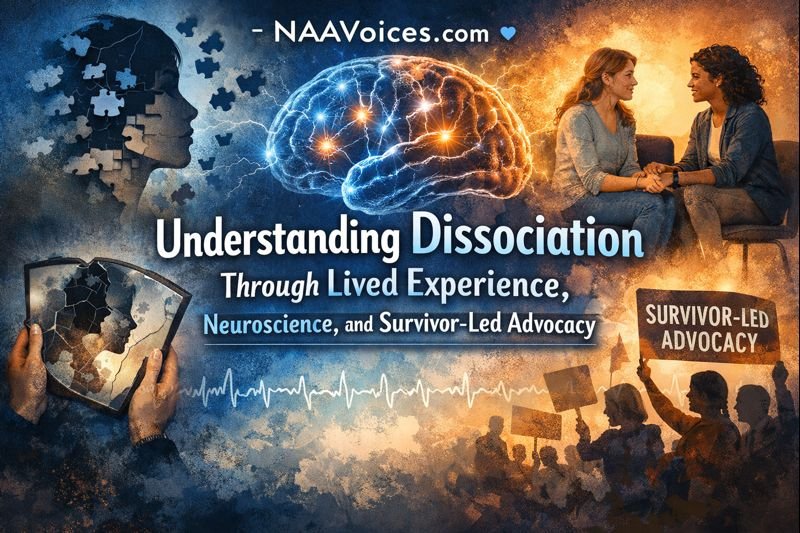
  • Understanding Dissociation Through Lived Experience, Neuroscience, and Survivor-Led Advocacy 💙

    Understanding Dissociation Through Lived Experience, Neuroscience, and Survivor-Led Advocacy 💙

    ⚠️ Content Note: This post discusses trauma and dissociation. Please prioritise your wellbeing whilst reading. Take breaks as needed.

    Quick Self-Check Before We Begin ❓

    Do You Experience Dissociation? Quick Assessment:

    • □ Feel like you’re watching yourself from outside your body
    • □ The world seems unreal or dreamlike
    • □ Can’t remember parts of your day
    • □ Feel emotionally numb during stressful situations
    • □ Hear people talking but can’t process the words
    • □ Feel disconnected from your emotions
    • □ Time seems to speed up or slow down unusually
    • □ Feel like you’re on autopilot

    If you tick 3+, consider speaking with a trauma-informed professional 💜


    Earlier this year, I was sitting in the middle of my clinic. A patient I’d been supporting for months used a word that stopped me cold: dissociation. They described the sensation of watching life unfold around them without truly being part of it. As they spoke, something shifted in my understanding of my own PTSD journey.

    For months, I’d struggled to name that automatic shutdown, the moment when the world becomes too much. It isn’t dramatic or visible. One moment I’m present and engaged. Next, I’m observing my own life from a distance, as though it’s happening behind frosted glass. My body continues the motions, but I am not there.

    In those moments, silence becomes essential. Music, once comforting, becomes unbearable. After nights of relentless triggers and flashbacks that loop like a broken record, my mind craves quiet. It’s exhausted by constant vigilance and the fear of what might come next.


    The tangled complexities of ongoing abuse leave no room for recovery. My nervous system remains trapped in survival mode. It cannot process trauma, and it cannot meet the demands of a mind now burdened with PTSD. Eventually, it simply says: “Enough. I’m taking you somewhere else for a while.”

    I understand now, this was never a weakness. It wasn’t me, “not coping well enough.” It was my brain’s extraordinary attempt to protect me from pain that threatened to overwhelm every defence I had.

    But understanding doesn’t make it easier to live with.


    💙 Remember, you’re learning about your brain’s protective mechanisms. This is self-compassion, not self-criticism.

    Structured trauma care helps. Programmes such as Finding Solid Ground have been shown to reduce symptoms and improve emotional regulation. (Oxford University Press)

    The majority of trauma survivors experience dissociative symptoms. This is particularly common in PTSD and prolonged abuse cases. (NHS England)

    Dissociation is a survival response. Brain imaging research confirms it is an adaptive mechanism, not a flaw. (Study by Reinders et al., University of Groningen)


    👩‍⚕️ Through a Nurse’s Eyes: Reflection and Recognition

    Through my postgraduate study, and as a nurse, I was trained to recognise dissociation. But it was my patients — and my own survival — that taught me what it truly looks like.

    There’s a particular quality to it. A subtle disconnection. It isn’t dramatic. It’s quiet.

    It’s the patient who seems unusually calm whilst describing horrific experiences. The assault survivor who recounts their story as though they’re reading someone else’s diary. The domestic abuse victim who appears “checked out” during safety planning.


    An illustration featuring two young women, one seemingly floating above the other in a serene, blue-toned background. Accompanying text discusses the emotional disconnection experienced by trauma survivors, emphasizing the feeling of being outside one's body.

    People often say, “I don’t know how you’re still standing.” Truthfully? Neither do I.

    For over two years, 90% of my life was spent surviving. I wasn’t living — I was bracing. Managing the impact on my health, my wellbeing, and my children. I’ve never shared the full story of what I endured since leaving. Even the fragments I’ve had to disclose have brought others to tears. But I no longer could cry.

    And that’s dissociation. Because without it, I don’t believe I’d still be here.

    The Power of Quiet Support: My Workplace and PTSD

    An Extraordinary Workplace

    My workplace has been nothing short of extraordinary. They understood that dissociation isn’t a choice. If anything, it made me more focused on my patients — because I couldn’t stay in my own mind. I needed to protect others from feeling the same pain I was carrying.

    “I never had to quote the Equality Act. The few who knew supported me quietly, respectfully.”

    Small Acts, Big Impact

    My manager would take me for walks. Colleagues shielded me from triggers. They reminded me daily, through their actions, that the pain I was carrying wasn’t mine to own alone. I set up a music speaker on the wall. It was something to fill the silence when I needed it. I could mute it when I didn’t need it.

    They sat with me during phone calls I could barely comprehend. They listened in disbelief as the system, supposedly designed to protect, gave a platform for further harm. They read the statements. They saw the contradictions. They witnessed the emotional toll of being forced to relive what I was trying so desperately to escape.

    They called. They messaged. They left food. One even offered financial help. I declined, but the gesture stayed with me long after.

    Chosen Family

    These people became family. They didn’t demand explanations or force me to speak. They let me dissociate to survive and protected the part of me that couldn’t be taken. They stood back and stayed quiet. They let me do what I do best — give others the safety I couldn’t always find for myself.

    “They stood back, quietly, and let me give others what I couldn’t access for myself: safety.”

    Please know this: you are protected.

    PTSD is recognised as a disability under UK law. You have the right to reasonable adjustments. You don’t need to justify your survival, and you don’t need to explain your coping mechanisms.

    You just need to know, you are not alone.

    If You Don’t Have a Workplace Like Mine…

    Daily Living Strategies That Help 🏠


    Final Thoughts: From Survival to Living 🌅

    Dissociation saved many of our lives. 💙 It allowed us to endure the unendurable, to survive experiences that might have otherwise destroyed us. But there comes a point where what once protected us begins to limit us. The challenge is learning to honour that protection whilst gently expanding our capacity to stay present. 🌸

    For me, truly understanding dissociation — not just intellectually, but in my bones — has been transformative. 🦋 I no longer fight against it with shame and frustration. Instead, I recognise it as my brain’s misguided attempt at care. I thank it for keeping me alive, and then I gently remind myself: the danger has passed. I am safe now. I can stay. 🏡

    Some days I can. Some days I can’t. And that’s okay. 💚

    To my fellow survivors: Your dissociation tells a story of survival. It reflects a nervous system that loved you enough to take you somewhere else when reality became unbearable. That’s not weakness. That’s not pathology. That’s the fierce protection of a brain that refused to let trauma win.

    To the professionals: When you see dissociation, you’re witnessing resilience in action. Treat it with the respect it deserves.

    And to everyone else: Be gentle with those of us who sometimes seem far away. We’re not choosing to leave. We’re still learning how to stay.

    This was never a choice. But healing — that’s a choice we make every single day..


    Daily Living Strategies – Support Directory
    🏡

    Daily Living Strategies That Help

    You are not alone. The organisations below offer free, confidential support — whenever you need it, day or night.

    💜

    If you are in immediate danger, please call 999. If you are struggling right now, Samaritans are available 24 hours a day, 7 days a week — you don’t have to be in crisis to reach out.

    Crisis Support

    🆘
    Samaritans Available 24 hours a day, 7 days a week
    Crisis Text Line Text-based support
    NHS Crisis Team Mental health emergency support
    Via 111
    Emergency Services Immediate danger
    999

    Specialist Trauma Support

    💜
    Rape Crisis England & Wales
    Women’s Aid
    Refuge DV Helpline
    Mankind Initiative Support for male victims
    Galop LGBT+ abuse support
    NAPAC Childhood abuse survivors
    Combat Stress Veterans’ mental health

    Mental Health Organisations

    🌿
    Rethink Mental Illness
    Hub of Hope Search for local services by postcode

    Online Resources

    🌐
    PTSD UK Information, support & community
    The Survivors Trust Rape & sexual abuse support
    PODS Positive Outcomes for Dissociative Survivors
    ISSTD International Society for the Study of Trauma & Dissociation

    Therapy Directories

    🌼
    BACP British Association for Counselling & Psychotherapy
    UKCP UK Council for Psychotherapy
    EMDR Association UK Find a qualified EMDR therapist

    Children & Young People

    🌸
    The Mix Support for under 25s
    Young Minds UK Young people’s mental wellbeing
    Childline Free, confidential support for children

    #PTSD #Dissociation #TraumaRecovery #MentalHealthAwareness #NursingPerspective #SurvivorStories #Neuroscience #TraumaInformed #HealingJourney #MentalHealthMatters #PTSDAwareness #DomesticAbuseAwareness #ComplexPTSD #TraumaSurvivor #MentalHealthUK #NHSMentalHealth #DisabilityRights #WorkplaceWellbeing #GroundingTechn

    My Lived Experience: A Personal Journey Through Trauma and Recovery

  • The Healing Power of Connection: Lessons From My Grandmother’s Journey

    The Healing Power of Connection: Lessons From My Grandmother’s Journey

    NAAVoices was not created from certainty, but from lived experience and professional insight. As I migrate earlier work from the original platform, this post has been reviewed and approved for transfer. It remains true to its original context, with only minor clarity edits where needed. Some moments do not require rewriting to remain honest.

    Loneliness is one of the most profound and overlooked experiences a person can face, especially after losing a partner. Last week, I was reminded of this again when I met another widow still navigating the quiet ache of life after loss. Many people mourn not only the person they loved, but the life they once shared — the routines, the companionship, the sense of belonging.

    As I wrote in the original version of this blog, “More than 40% of widows and widowers report feeling isolated after the loss of their partner.” That statistic is more than a number. It represents real people living with a silence that can feel suffocating.

    My grandmother knew that silence intimately.

    Her First Experience of Loss

    My grandfather passed away when my grandmother was just under 60. She had to navigate the complexities of grief alone, at a time when support services didn’t fully understand the emotional and practical realities of widowhood. She felt isolated, unseen, and misunderstood — a feeling many widows and widowers still experience today.

    But instead of letting grief consume her, she transformed it into something extraordinary.

    A Legacy Born From Compassion

    In the years that followed, my grandmother founded a support group for widows and widowers — a group that has now been running for 25 years. What began with a single act of courage — “a letter to the local newspaper, reaching out to those who were living in similar situations” — became a lifeline for more than 200 people.

    She created a space where those grieving could come together, share their stories, and rediscover connection. A place where loneliness was met with understanding, and silence was replaced with companionship.

    I grew up watching her pour her heart into this work. I remember the open‑house sessions vividly: the smell of freshly baked cakes, the furniture rearranged to make room for everyone, the warmth that filled the room as people gathered. My baby boy was passed around like a tiny spark of hope. For some members, it was the only human interaction they had all week.

    Some found love again. Others found lifelong friends. Many simply found a reason to keep going.

    The Power of Shared Experience

    Working in primary care, I’ve seen firsthand how loneliness affects health — emotionally, mentally, and physically. I’ve often wished I had the time and resources to create a group like hers for my own patients. I can empathise deeply, but I haven’t walked in their shoes. That’s why her work matters so much: it came from lived experience, compassion, and courage.

    Even now, at over 80 years old, she still takes calls from those who need her. She doesn’t realise the magnitude of what she’s built. She never sought recognition, yet her legacy is undeniable. She has healed hearts, restored hope, and created a community that continues to thrive because she refused to let others feel the loneliness she once felt.

    Connection as a Lifeline

    Her story is a reminder that healing doesn’t always begin with grand gestures. Sometimes it starts with one letter, one conversation, one act of kindness. She proved that one person’s courage to reach out can transform hundreds of lives.

    Her legacy teaches us that connection is not a luxury — it is a lifeline. Loneliness affects the body, the mind, and the will to keep going. When we create spaces for people to be seen and heard, we offer them more than support. We offer them a way back to themselves.

    I carry her lessons with me every day:

    • No effort is too small.
    • Compassion creates ripples we may never fully see.
    • Community can grow from the simplest act of reaching out.

    Her strength, her love, and her quiet determination continue to guide me.

    Moving Forward: A Call to Connection

    Reflecting on her journey, I wish more services recognised the true impact of loneliness on widows and widowers. If the NHS had the capacity to support community‑led groups like hers, countless people could benefit from the healing power of shared experience.

    Her story is not just a testament to resilience — it is a blueprint for what compassionate community support can look like.

    A Year Later

    Nearly a year after writing this blog, I’ve created a dedicated bereavement support resource offering guidance, practical help, and most importantly, contact details for organisations that truly understand loss and provide meaningful support. It feels like a small way to honour her legacy and continue the work she began.

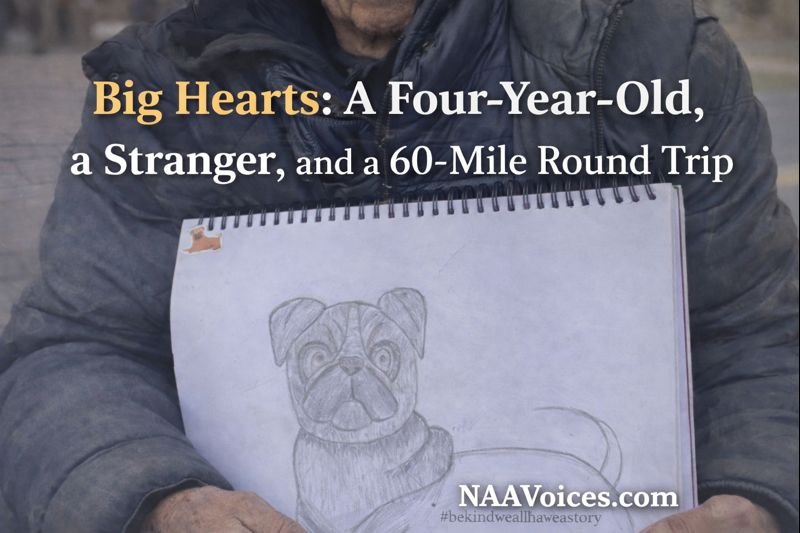
  • Big Hearts: A Four-Year-Old, a Stranger, and a 60-Mile Round Trip

    Big Hearts: A Four-Year-Old, a Stranger, and a 60-Mile Round Trip

    Today, my youngest and I ventured into Telford shopping centre for a bit of shopping. As we made our way to the car park pay station near Primark, we encountered a gentleman sitting on the floor, drawing with a tin out for donations.

    I rarely carry cash — only my card — but seeing him there, I immediately checked. My little one asked about his drawings. Children have a unique way of seeing the world, and my son sees no harm in others.

    Over the past year, I’ve realised that despite what others may project about who I am, he has been shielded from the true events and the behaviours of others. He has always been my priority, and I have protected him from the harsh reality that not everyone is kind, considerate of others’ wellbeing, or capable of causing harm.

    This year has truly highlighted how hard life can be, and what I would have given to change even one aspect of what was happening. Life can take unexpected turns, making it difficult for some to find a way out of their circumstances.

    We met ‘Sketch,’ who shared a bit of his story with us. He had been through a lot, especially during COVID when he ended up in intensive care. His life took a downward turn from there. He had even written his experiences in a book but felt his handwriting wasn’t good enough to share.

    That hit close to home. When I wrote over 40,000 words about the abuse I had endured, no one listened or cared. A police officer told me I didn’t even need to provide a statement. Journaling became the thing that helped me find closure and process what had happened. Sitting there with Sketch, I realised how many of us feel that our lives and experiences simply don’t matter to others.

    It’s something I’ve made it a point to change — at work and in my daily life. I let people know that they do matter, that their stories matter. That need to affirm others perhaps stems from my intense desire to protect my children and fight for them, despite my ex manipulating others the way he had manipulated me for years.

    Listening to people’s stories is vital, because so many endure hardships in silence.

    It’s not realistic to help every person you come across, especially financially, but I felt for him. He had commented on his handwriting, and I knew that converting it into text was something I could do without much effort — something that might actually help him. I offered to do it if he ever decided to share his story and gave him my website email address.

    Sketch shared his journey of finding solace in drawing, a heartfelt way he copes with his challenges. As my little one carefully looked through Sketch’s pictures, he eagerly searched his bag for a drawing he wanted to share with him.

    I felt compelled to ask Sketch if I could write about him in my blog, highlighting the importance of instilling kindness and empathy in my children. To my joy, he agreed to a photo.

    Initially, he appeared a bit reserved, but by the time we left, a warm smile lit up his face. It was a beautiful reminder of the connection we can create through understanding and compassion.

    On the way back to the car, my son said something that melted my heart: “Mummy, I have a big heart, like you.” This brought tears to my eyes, especially after a teacher recently told me he was like his older brothers. I was incredibly proud to hear that.

    Before the youngest’s dad came into my life, my older boys were amazing kids who saw no harm in others and cared unconditionally about the people around them. Ten years ago, my middle son, at the same age my little one is now, had asked to buy water for a homeless man we encountered on the street. Sadly, they have since witnessed and experienced the harm that others can cause, and that is something I will never forgive myself for.

    Just a year ago, my little one was struggling with his emotions while living in an environment I wouldn’t wish on anyone. He rarely showed me much empathy. One of his ‘long’ memories with his dad is of him shouting at me because he wanted to play with his toys in the room I was cleaning. For a three-year-old to have that as a ‘happy long’ memory speaks volumes about the kind of behaviour he saw as acceptable. But today, he demonstrated profound empathy and understanding, showing how far he’s come.

    Once back in the car, I rummaged through our belongings to find something for Sketch. I found an old jumper of my teenage son’s and my little one’s drawing pad. I turned around, and my little one eagerly grabbed a toy train to give as well.

    As we returned to find Sketch, my son expressed his pride in being kind, suggesting we give him his pennies from his bag. It’s unsettling what he remembers — like how an act of kindness wasn’t the norm. He said, “Daddy has a bad heart. I don’t want to shout at you.” I reassured him that he indeed has a big heart, one capable of kindness and love.

    When we found Sketch again, my son proudly showed him the elephant he had drawn in the sketch pad, declaring it was for him. He also playfully pointed out his “dirty hands” — a charming reminder that, at four years old, such things are just part of life. The train was a gift for Sketch to play with while he wasn’t drawing.

    We chatted on our way back to the car, and just as we were leaving, Sketch ran after us with stickers he had found, eager to share them with my son. It was a little reminder that those who have so little often give what they can — not just in material possessions, but in time, energy, and effort, often to their own detriment.

    In the car, my little one suggested we get Sketch a house and some dinner.

    We returned after running our errands, only to find that he had left the car park.

    Today, I felt a swell of pride for my young man, but also for myself. I’ve chosen not to let the actions of others deter my desire to help those in need. Life may throw challenges our way, but moments like these remind us of the power of kindness and the importance of teaching our children to care for others.

    Since arriving home, my little one has put together a bag of things all on his own: popcorn, which he insisted on cooking himself, baby wipes for Sketch’s dirty hands after drawing, and snacks. But the most beautiful part is that he has drawn and cut out about a million hearts, colouring them in for Sketch.

    It looks like we’ll be making another 60-mile round trip tomorrow. Because I want this boy to know that even if we can’t find Sketch in the same spot, the effort, care, and compassion he has shown at the age of four is beyond anything many others would or could show. And I am unbelievably proud of him.


    Shout out to Sketch: Your resilience and creativity are truly inspiring. Despite all you’ve been through, you’ve shown that there is still room for kindness and generosity. It’s a powerful reminder for us all to care for one another and not judge others, because we never know where life might take us.

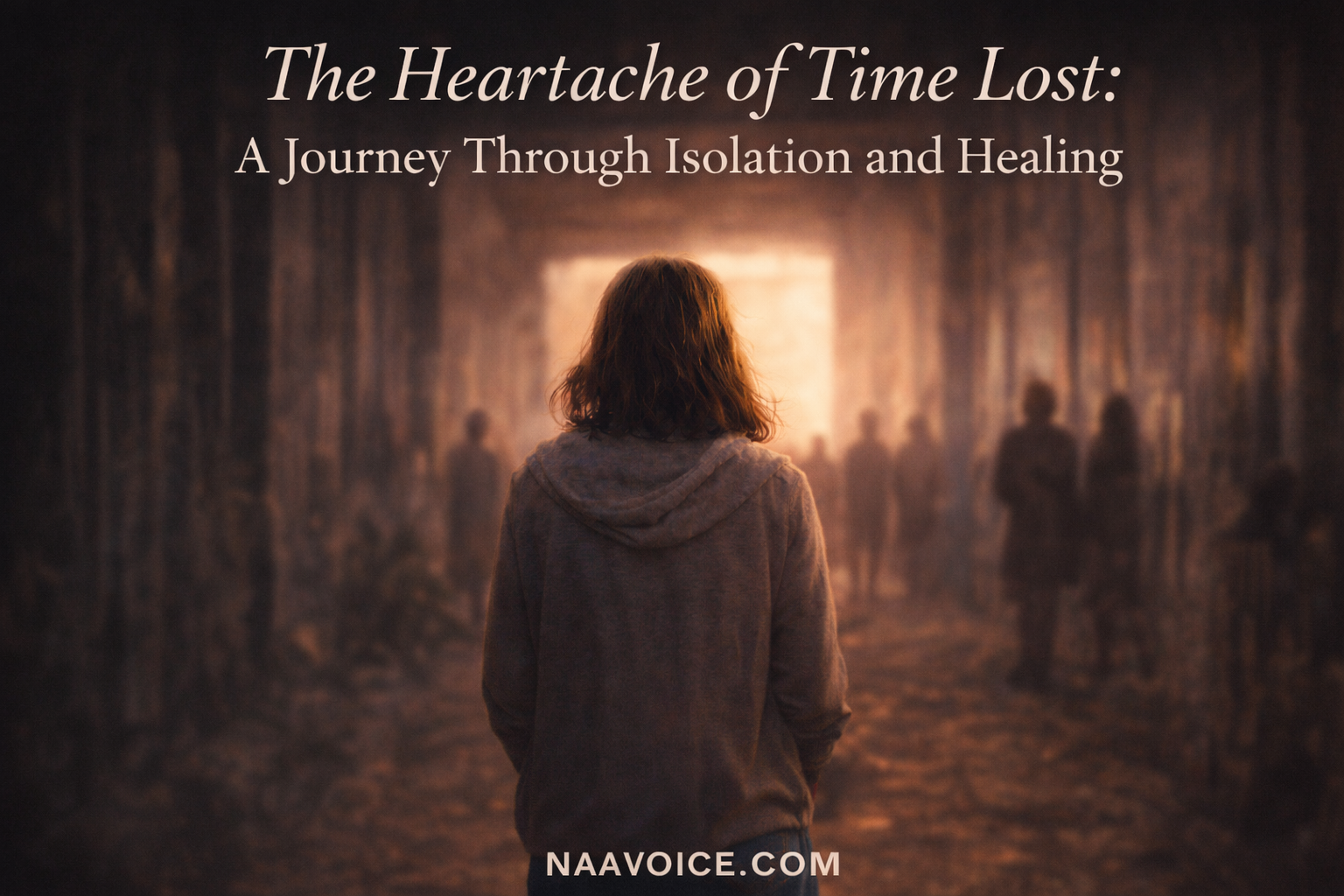
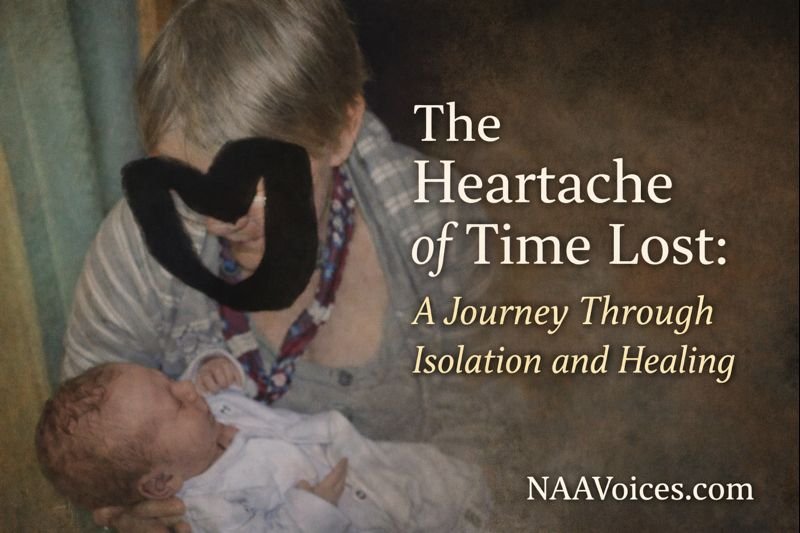
  • The Heartache of Time Lost: A Journey Through Isolation and Healing

    The Heartache of Time Lost: A Journey Through Isolation and Healing

    NAAVoices was not created from certainty, but from lived experience and professional insight. As I migrate earlier work from the original platform, this post has been reviewed and approved for transfer. It remains true to its original context, with only minor clarity edits where needed. Some moments do not require rewriting to remain honest.

    The Heartache of Time Lost: A Journey Through Isolation and Healing

    One of the deepest sources of sadness in my life has been reflecting on the years I lost—years stolen by isolation, coercion, and fear. The distance that grew between the people who meant the most to me and me felt like a chasm I could never cross. Slowly, I withdrew from those I loved, terrified of what might be said or done in their presence. Terrified of the consequences. Terrified that the blame would always land on me.

    Among all the losses, the separation from my grandmother has been the most painful. Losing those years with her feels like losing something irreplaceable. She wasn’t just my grandma; she was one of my closest friends.

    Before my relationship with my ex, I chose to live with her for a year so she wouldn’t be alone after my step‑granddad passed away—a truly remarkable man. We had cared for him together during his final year, watching his pain slowly fade. It was her second time losing a partner, having been widowed in her 50s by my beloved granddad. I couldn’t leave her alone when my older children’s father was posted hundreds of miles away. He understood, and he supported that decision just weeks before our eldest was born.

    When I eventually moved to be with my ex‑husband, I didn’t go a single day without speaking to her—often more than once—for nine years. I visited monthly despite the distance. The bond she shared with my older children was something I treasured deeply.

    Her connection with my eldest was especially beautiful. He didn’t always want to be around people, but if I said the word “Grandma,” he’d be in the car before I’d even grabbed my keys. The joy on his face when they were together was unmistakable.

    But everything changed when doubt was planted early in my relationship. My ex accused both her and me of being unreasonable simply because I asked him not to smoke around her due to her respiratory issues.

    Caught in a cycle of narcissistic abuse, he only contacted her when he wanted something. He exaggerated his abilities, worked cash‑in‑hand, and pretended he was “on top of everything.” He offered to help with her house renovations, but when she tried to pay him for the work he’d been so eager to do, everything shifted.

    He ruined her home. He couldn’t deliver on the promises he’d made or the expertise he claimed to have. As soon as she paid him, he bought himself a £400 coat instead of contributing to her bills. He accused her of having “too high standards” and insisted he was doing her a favour. That “favour” cost her over a thousand pounds—and thousands more to fix the damage. Eventually, she told him she needed someone else to help because she was worried about being away from the baby and me for too long.

    I didn’t learn the truth until my aunt contacted me. She sent photos of the shoddy work—nothing like the staged images he’d been sending me of himself “working hard.” And the problems didn’t stop there. His “rolls” smelled suspicious, and I later understood why.

    My bank card was being used without my consent. He spent far more on coffee than anyone reasonably could. The smell of alcohol on him when he came home was another red flag. Yet he insisted it was all in my head. He claimed my grandmother was “too demanding” and that she was “using him,” just like he said my family had used me.

    A divide formed. I could only call her in private because he’d make cruel comments whenever I spoke to her.

    The punishment for visiting her became unbearable. For four years, every visit ended with anger, accusations, and abuse—fuelled by alcohol and later drugs. By 2023, I felt completely trapped. I couldn’t visit anyone or go anywhere without being accused of “snatching his child.”

    The last visit before I left him was a nightmare. He harassed me relentlessly, demanding I return home because he was intoxicated and convinced I was “taking his son.” I pulled over to call my GP, but he wanted me to give up my own appointment—one I’d booked for cardiac symptoms, so he could seek help again. I couldn’t sacrifice my health. I was barely coping.

    The isolation didn’t end when I left. I’m not the same person I once was. The grief and guilt of the time lost still weigh heavily, especially knowing my youngest barely knew her.

    Today, as we left her house, I had a moment of weakness. I cried on the drive home, overwhelmed by memories of everything we lost. But a year on, something has shifted. The boys smiled again. Their spirit is returning. Their bond with her is healing.

    We played dominoes together, and for the first time in years, no one punished me for wanting to reconnect with my own family.

    He may have dragged me into darkness, but I am free now—free from the fear of walking into a home not knowing who I’d meet. Free from the punishment. Free from the silence.

    I’m finding my way back to myself, one day at a time.

  • The Heartache of Time Lost: A Journey Through Isolation and Healing

    The Heartache of Time Lost: A Journey Through Isolation and Healing

    NAAVoices was not created from certainty, but from lived experience and professional insight. As I migrate earlier work from the original platform, this post has been reviewed and approved for transfer. It remains true to its original context, with only minor clarity edits where needed. Some moments do not require rewriting to remain honest.

    One of the deepest sorrows I carry is the sense of time lost.

    Years that slipped away while I was cut off from the people who mattered most. Isolation didn’t arrive all at once. It crept in, a quiet narrowing of my world until the people I loved were on the other side of a chasm I felt powerless to cross.

    I began to pull away because I was afraid. Afraid of what might be said or done in front of my family, afraid of the blame that would always land on me when something went wrong. I stopped visiting, stopped calling as often, and watched relationships fray while I tried to keep everyone safe.

    The Loss That Hurts Most

    The hardest loss has been my grandmother. Losing those years with her feels like a theft of something irreplaceable. She was more than a relative — she was one of my closest friends. I chose to live with her for a year after my step-granddad died so she wouldn’t be alone. We had shared the last months of his life together; we understood grief and the quiet work of care.

    For nine years after that, I spoke to her almost every day and visited monthly despite the distance. She had a special bond with my eldest — the kind of connection that lit up both their faces. Those moments are what I miss most.

    How Things Changed

    Everything shifted after I met my ex. Small tensions became wedges. When I asked him not to smoke around my grandmother because of her breathing problems, he framed it as unreasonable. He reached out to her only when it suited him, offered help he never followed through on, and presented himself as more capable than he was.

    When she paid him to do work on her home, he failed to deliver. He spent money on himself instead of contributing to her bills. The work was shoddy; the cost ballooned. Photos my aunt later sent showed the truth — the mess he’d made. I discovered my bank card had been used without my consent. I noticed the smell of alcohol and, later, the signs of drug use. Each discovery was met with gaslighting: it was all in my head, she was too demanding, I was the problem.

    He controlled contact. I could only call my grandmother in private because he would make cutting remarks whenever I spoke to her. Visiting her became a punishment; every return home risked his anger and abuse. Over four years I never visited without coming back to confrontation, and by 2023 I felt trapped — unable to see anyone without being accused of “snatching his child.”

    The Breaking Point

    The last visit before I left was the worst. I was harassed and pressured to come home because he claimed I’d taken his son. I pulled over to call my GP about cardiac symptoms, and he demanded I cancel the appointment so he could get help. I couldn’t give up my health. I couldn’t keep sacrificing myself.

    Leaving was terrifying and necessary. The isolation has lingered since I left. I am not the same person I was. The guilt of missed time — especially with my youngest, who barely knew her grandmother — is heavy.

    Small Freedoms and Slow Repair

    There are moments of light now. A year on, the boys are smiling again. We played dominoes together; for the first time in a long time, no one punished me for wanting to reconnect with my family. Those small, ordinary joys feel enormous after so much fear.

    He may have pushed me into darkness, but I am free. I will never again walk into a home wondering who I will meet or what I will have to endure. I am finding my way back to myself, slowly, one day at a time.

    Time stolen is still time mourned. But time reclaimed — even in small pieces — becomes the work of healing.

    The loss of years with the people I love is a grief I carry, but it does not define the whole of me. I am rebuilding connection, protecting my health, and choosing presence over fear. If you recognise this story in your own life, know that reclaiming small freedoms matters. You do not have to stay where you are unsafe.

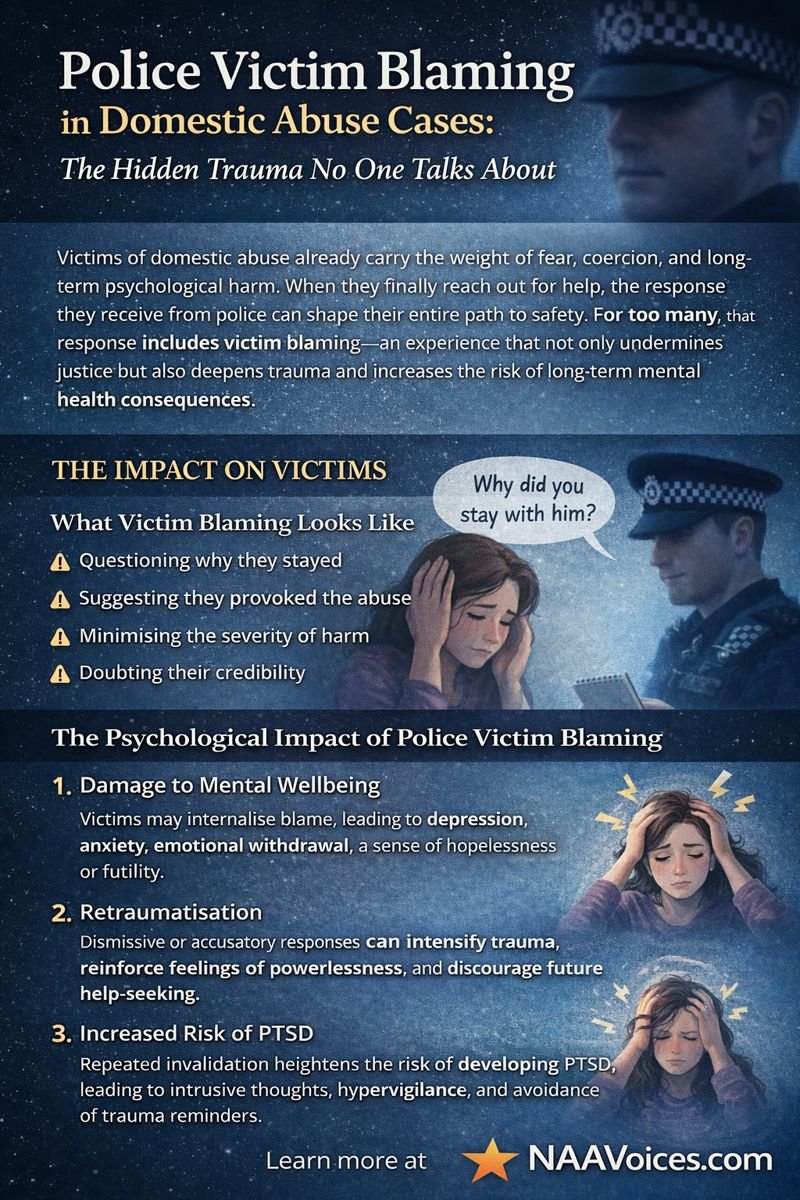
  • Police Victim Blaming in Domestic Abuse Cases: The Hidden Trauma No One Talks About

    Police Victim Blaming in Domestic Abuse Cases: The Hidden Trauma No One Talks About

    NAAVoices was not created from certainty, but from lived experience and professional insight. As I migrate earlier work from the original platform, this post has been reviewed and approved for transfer. It remains true to its original context, with only minor clarity edits where needed. Some moments do not require rewriting to remain honest.

    When Victims Are Blamed by the Systems Meant to Protect Them

    Victims of domestic abuse already carry enough.

    Fear. Shame. Confusion. Hypervigilance. The constant work of surviving someone else’s control while trying to make sense of what has happened to them.

    So when someone finally reaches out for help, the response matters.

    It can be the beginning of safety.

    Or it can become another wound.

    One of the most damaging responses a victim can receive is victim-blaming, especially from police. It does not always sound obvious. Sometimes it is subtle. Sometimes it comes dressed as professional questioning. Sometimes it appears in what is not recorded, what is minimised, or what is treated as less important than the perpetrator’s version of events.

    But the impact is real.

    And for victims of domestic abuse, it can be devastating.

    What Victim-Blaming Looks Like

    Victim-blaming happens when responsibility for abuse is shifted away from the person causing harm and placed, directly or indirectly, onto the person who has been harmed.

    In domestic abuse cases, this can sound like:

    Why did you stay?
    Why did you go back?
    Why did you not report it sooner?
    Why did you let the children see it?
    Are you sure it was that bad?
    Could this just be a relationship breakdown?
    Is this really about contact?

    These questions may be framed as fact-finding, but when asked without an understanding of coercive control, they can reinforce the exact messages the abuser has spent years embedding.

    That it was your fault.

    That you should have stopped it.

    That you are exaggerating.

    That you are the problem.

    For someone already conditioned by abuse, those messages do not land lightly.

    They go straight into the wound.

    Why It Causes So Much Harm

    Domestic abuse is rarely a single incident. It is often a pattern of control, fear, manipulation, degradation and psychological harm.

    By the time many victims speak to police, they may already be exhausted. They may doubt themselves. They may struggle to explain events in a neat, chronological order. They may appear calm when they are traumatised, or emotional when they are being honest.

    None of that means they are unreliable.

    It means they are human.

    When police respond with disbelief, minimisation or blame, the victim is forced to relive the abuse while also defending their right to be believed.

    That is retraumatisation.

    And it is not a minor side effect of poor communication.

    It can change the course of someone’s recovery.

    Retraumatisation Is Not Just Emotional

    People often talk about trauma as if it is only distress.

    It is not.

    Trauma lives in the body.

    It can look like panic, shaking, dizziness, nausea, chest pain, insomnia, flashbacks, dissociation, intrusive thoughts, memory fragmentation, emotional shutdown or complete collapse after appearing calm.

    A victim may sit through a police interview, answer questions, sign statements and look composed.

    Then fall apart afterwards.

    That does not mean they were fine.

    It means they were surviving the interaction.

    When police victim-blame, dismiss or mishandle disclosures, they can deepen that trauma. They can make the victim less likely to seek help again. They can also make the victim feel less safe than they did before they reported.

    That is institutional harm.

    The Link With PTSD

    Repeatedly having to disclose abuse, defend your credibility and correct inaccurate records can contribute to long-term psychological harm.

    For some victims, this becomes part of the trauma itself.

    PTSD can involve flashbacks, nightmares, hypervigilance, avoidance, intrusive thoughts, panic, emotional numbness and a constant sense of threat.

    For victims of domestic abuse, these symptoms can be intensified when the systems meant to protect them become another source of fear.

    It is not only what the perpetrator did.

    It is what happens afterwards.

    The disbelief.
    The poor recording.
    The minimisation.
    The handovers.
    The repeated retelling.
    The feeling that your own life is being interpreted by people who have not understood it.

    That is why police responses matter so much.

    What the Law and Guidance Already Recognise

    The Domestic Abuse Act 2021 gives a statutory definition of domestic abuse and recognises that abuse can include emotional, controlling, coercive and economic abuse.

    That matters because domestic abuse is not limited to physical violence.

    The NPCC and CPS Joint Justice Plan set out the need to improve the criminal justice response to domestic abuse, including better training, stronger accountability and improved support for victims.

    The Independent Office for Police Conduct has also issued guidance on ending victim-blaming, recognising that language, assumptions and professional attitudes can cause real harm.

    So the issue is not that nobody knows victim-blaming exists.

    The issue is whether those principles are being applied in practice.

    Because guidance means very little if victims are still leaving police interactions feeling blamed, disbelieved, unsafe or responsible for the abuse committed against them.

    What Needs to Change

    Police officers need proper trauma-informed training.

    Not tick-box training.

    Not a short online module that gets forgotten.

    Real training on coercive control, post-separation abuse, trauma responses, child safeguarding, perpetrator tactics and the harm caused by victim-blaming language.

    They need to understand that victims do not always present in the way people expect.

    Some cry.
    Some freeze.
    Some talk too much.
    Some cannot speak at all.
    Some sound detached.
    Some arrive with folders, timelines and evidence because they have already learned that if they do not create the record themselves, no one else will.

    None of those responses should be used against them.

    Police forces also need stronger accountability when officers fail to record crimes properly, minimise disclosures, or allow personal bias to influence safeguarding decisions.

    A victim should not have to become their own investigator just to prove they told the truth.

    Belief Is Not Bias

    Believing victims does not mean abandoning evidence.

    It does not mean ignoring due process.

    It means starting from a place of professional curiosity rather than suspicion.

    It means asking better questions.

    What has made it hard to leave?
    What control is still continuing?
    What are the children seeing, hearing or experiencing?
    What does the perpetrator gain from this version of events?
    What risks increase now the relationship has ended?
    What has already been disclosed, and has it been properly recorded?

    That is not bias.

    That is competent safeguarding.

    The Cost of Getting It Wrong

    When police blame victims, minimise abuse or fail to act, the harm does not end with that interaction.

    It follows the victim into family court.
    Into safeguarding meetings.
    Into mental health appointments.
    Into work.
    Into parenting.
    Into sleep.
    Into every attempt to rebuild a life.

    Poor police responses can strengthen the perpetrator’s position and weaken the victim’s credibility. They can leave children exposed to further harm. They can make the victim feel that telling the truth was not only pointless, but dangerous.

    That should concern everyone.

    Because domestic abuse victims do not need perfect systems.

    They need systems that do not make the abuse worse.

    A Survivor-Centred Response

    A survivor-centred response does not require grand gestures.

    It requires officers to listen properly.
    Record accurately.
    Avoid assumptions.
    Understand coercive control.
    Recognise trauma.
    Take children’s experiences seriously.
    Challenge perpetrator narratives.
    And remember that the person in front of them may have used every last bit of strength they had just to speak.

    Victim-blaming is not harmless.

    It is not just poor wording.

    It is not just a difficult conversation handled badly.

    It can retraumatise victims, damage mental health, obstruct justice and reinforce the control they were trying to escape.

    Victims of domestic abuse deserve to be met with dignity, belief and professional competence.

    Not blame.

    Not disbelief.

    Not another system they have to survive.

    Further Support

    If you are navigating police misconduct, victim-blaming, negligence or failures in duty of care, I have created a dedicated NAAVoices resource to help explain the process and your options:

    Police Misconduct Guide – NAAVoices.com

    You are not the problem for needing protection.

    You are not difficult for asking to be heard.

    And you are not responsible for the abuse someone else chose to inflict.

    Further Support

    For guidance on recognising and reporting police misconduct, refer to my dedicated resource. It covers topics such as victim-blaming, negligence, and breaches of duty of care. Police Misconduct Guide – NAAVoices.com

    My Lived Experience: A Personal Journey Through Trauma and Recovery