Category: Mental Health Journey

  • Heart of the Beast (2026): Why Brad Pitt’s New Film Gets PTSD Right

    Heart of the Beast (2026): Why Brad Pitt’s New Film Gets PTSD Right

    The best portrayal of PTSD I have ever seen in a film

    I thought I was going to watch a survival film. I didn’t expect to recognise survival itself.

    Spoiler warning: This piece discusses themes and events from Heart of the Beast.
    Content note: PTSD, combat trauma, grief, and animals in distress. No graphic personal account of abuse. If you need support while reading, skip to the directory at the end.

    9–14 minutes

    I went in expecting Brad Pitt, the Alaskan wilderness, a dog, and a physical fight to stay alive. Heart of the Beast, directed by David Ayer and written by Cameron Alexander, delivers all of that on the surface. Pitt plays James Belmont, a former Special Forces soldier stranded in the Alaskan wilderness with his combat dog, Odin. Released by Paramount, it’s an adventure thriller about endurance and the bond between man and dog, while early reviews have already noted the quiet thread of combat trauma running underneath.

    The setup is simple: a seaplane crash leaves James and Odin alone in terrain that would kill most people and most dogs. A trek of around 50 miles through brutal weather, wildlife, injury, and exhaustion. The film gives you the survival story you came for, but it also gives you something else, something quieter, something that doesn’t announce itself.

    It gives you recognition.

    Home, in this film, isn’t comfort. It’s recognition. James isn’t surrounded by people; he’s pulled into the wild with Odin, doing the next necessary thing. It’s a hard kind of belonging, not safety, but familiarity. The body knowing the work.

    Before the film even started, there was an armed forces recruitment advert. In it, a soldier turns, sees a dog on the floor, and doesn’t shoot. I didn’t know then how much that moment would echo.

    By the time the credits rolled, I could barely speak.

    I didn’t cry, though my friend did. Largely over the dog, I suspect. What I felt wasn’t sadness; it was something deeper. Under the adventure narrative sits a portrayal of trauma that doesn’t declare itself. Not the loud, familiar version of PTSD that films often highlight. The quiet kind. The one most people never notice.

    It doesn’t oversell it

    That is the most striking thing about the film. It refuses to oversell trauma.

    There are no endless explanations of what is happening inside James’s head. No speeches that tell the audience he is traumatised. It lives in the subtleties. The withdrawal. Standing back from people. The distance. The way the past can suddenly sit beside the present. The instinct to protect. The exhaustion. And then the ability to keep going anyway.

    Films often get this wrong because PTSD is not always someone visibly falling apart. Sometimes it gets up in the morning. Sometimes it works. Sometimes it looks after everyone else. Sometimes it laughs. Sometimes it looks completely composed. Sometimes it becomes exceptionally capable because being capable was once necessary for survival. Sometimes it simply says “I’m fine,” and people believe it. They see someone still standing and assume the battle must be over. They do not see how much effort standing takes.

    They do not see how much effort standing takes.

    That is what Heart of the Beast shows. Not a man constantly collapsing. A man repeatedly putting himself back together.

    The military context matters. James is a former Special Forces soldier. Odin is a former combat dog with the physical scars to match. Titanium teeth, a prosthetic leg, nightmares. Many years ago, long before my nursing degree, I worked in acute mental health, and some of the people I met there were veterans. I will never forget them. I fully respect just how difficult it is for veterans. Support written for that world exists too, including Combat Stress and PTSD Resolution.

    But PTSD does not solely sit with military veterans. Trauma after war, violence, loss, accidents, childhood experiences, or repeated exposure through work is not interchangeable. The events are not identical. Some of what follows can still be frighteningly recognisable. Hypervigilance. Withdrawal. Protectiveness. The habit of functioning at a cost no one else can see. PTSD UK explains that wider picture clearly. What this film does is make that relatable to anybody who lives with post-traumatic stress disorder.

    For some people, “home” is the first room where those things do not have to be performed away. For James, that room is the wilderness, and the only other heartbeat in it is Odin’s.

    Just get back up

    There are so many points where James could have stopped. Physically. Emotionally. Psychologically. Enough had already happened. He keeps getting back up. Another obstacle, another reserve, another reason, another way through.

    Every time he got there, the trauma would come back, and he would just keep fighting. He would find a way through. Yes, it was for the dog, and for himself. But it was his trauma, the flashbacks, the haunting, that kept him going. His trauma made him push through. I got it. I really got it.

    That lands hard because trauma is not only the thing that knocks you down. Sometimes the survival mechanisms created by it become the things that make you get back up. Not because you are fearless or particularly positive or some inspirational version of “strong.” Sometimes you are absolutely exhausted. You just know how to survive. There is a difference.

    When a nervous system has spent long enough treating the world as dangerous, it learns how to function in circumstances other people might find impossible. Another crisis. Another hurdle. Something inside simply goes: Right. What now? You deal with it. Then the next thing. Every hurdle becomes another battle in a war you never volunteered to fight. A never-ending battle. It feels relentless. There’s no end to it. People look at you and say they don’t know how you do it. Sometimes neither do you. You just keep getting back up.

    This should never be romanticised. There is nothing beautiful about PTSD. There is nothing desirable about intrusive memories, avoidance, emotional numbing, or a nervous system shaped by something that should never have happened. Home should not have to mean danger you already know how to walk through.

    Human beings are still complicated. Trauma can injure someone profoundly while the survival responses developed because of it become extraordinarily difficult to switch off. Fight. Protect. Keep moving. Get everyone else safe. Deal with yourself later. That last one especially. Later does not always come.

    The person who keeps functioning can become very good at hiding how much functioning costs.

    Even when everything is falling apart, the instinct to protect remains. Protect the dog. Protect the people who matter. Keep going. Get them through it. You can be depleted and still notice everyone else. You can be drowning and still check whether the person beside you can swim. From the outside that looks like strength. Inside it can feel completely different.

    Towards the end the film itself seems to change. Towards the end the film itself seems to change. The light. The colour. The pace. Everything quieter. That strange stillness when you know you might be about to leave someone you love, or lose them. There are not always words big enough. Sometimes there are no words at all. And even then the instinct remains. Are they going to be okay? Still protecting. Still thinking about everybody else. Even when there is almost nothing left to give.

    Odin is so much more than “the dog”

    The relationship between James and Odin sits at the centre of the film. Loyalty. Dependence. Mutual protectiveness. If anywhere on that map feels like home, it is that bond. Not the landscape. The other living thing that already knows the cost.

    The film also shows, without over-explaining, that trauma does not look one way, in humans or in animals. Fear does not always look like fear. Distress does not always look like distress. It can look like withdrawal, avoidance, aggression, hypervigilance, silence, restlessness, attachment, protectiveness, shutting down, or simply behaving differently because something inside no longer feels safe. I highly respect the film for raising awareness that dogs experience these symptoms too, and display them in their own ways.

    The film lets you observe rather than lecture. That restraint is what makes it powerful.

    Why I didn’t cry and why I couldn’t speak

    There is a kind of emotional overload where tears don’t come. Everything just goes quiet. That is where I was. I couldn’t really speak. Not through tears. Through overwhelm. Through overload.

    Not because I had watched a sad film about a man and his dog. Because I had watched something that put a complicated experience on screen without constantly explaining it. The withdrawal. The isolation. The memories. The distance. The protectiveness. The exhaustion. The moments where giving up would almost have been understandable. And then getting back up. Again. Again. Again.

    My dissociation means that anything emotional that relates too closely to PTSD is something my nervous system often protects itself from. During those times I write. Or I dictate. To get it out. For processing. That is what this is.

    So todays blog prompt asked for a place that felt like home.. The honest answer is awkward. It was a dark room full of strangers, and a story that did not flinch from the silent version of a fight most people never see. Recognition can feel like home even when it is not gentle.

    The battle nobody sees

    What stays with me most is this. There are people walking around every day fighting battles nobody else can see. They do not necessarily look traumatised. They do not always cry. They do not collapse in front of you. They might be the person everybody else depends on. Working. Parenting. Laughing. Helping other people. Making plans. Getting things done. Surviving.

    Because they are functioning, people assume they are okay. Functioning and being okay are not the same thing. Sometimes functioning is simply what survival looks like. Sometimes the person everyone thinks is incredibly strong is someone who learned a very long time ago that when something knocks them down, they have to get back up.

    Functioning and being okay are not the same thing.

    I keep coming back to the title. Different people will take different things from Heart of the Beast. For me the beast was not only the wilderness, the physical danger, everything waiting outside. It was also the thing carried within. The part of trauma that can pull you backwards without warning. The memories you cannot simply decide to forget. The instinct to withdraw. The exhaustion of fighting something other people cannot see. And also that relentless survival instinct. Get up. Keep moving. Protect them. One more step.

    I didn’t leave the cinema crying. I left silent. Because for once I didn’t feel as though I had watched somebody acting out the textbook version of PTSD. I felt as though I had watched somebody understand the silent one. The one people don’t see. That is to the credit of Brad Pitt, and of David Ayer’s direction.

    It was probably the best portrayal of post-traumatic stress disorder I have ever seen in a film.

    I felt it.


    🎬 Heart of the Beast (2026)
    Directed by David Ayer. Written by Cameron Alexander. Starring Brad Pitt, J.K. Simmons, Anna Lambe, and Uber as Odin. In UK/US cinemas from 25 September 2026.

    Sources

    Heart of the Beast official site: heartofthebeastmovie.com
    Mind, Post-traumatic stress disorder (PTSD) and Trauma: mind.org.uk
    PTSD UK: ptsduk.org
    Combat Stress: combatstress.org.uk
    PTSD Resolution: ptsdresolution.org

    Deadline, Heart of the Beast review (distributor and release date): deadline.com/2026/09/heart-of-the-beast-review-brad-pitt-german-shepherd-survive-1237109761
    Empire, Heart of the Beast review: empireonline.com/movies/reviews/heart-of-the-beast
    Flickering Myth, Heart of the Beast review: flickeringmyth.com/movie-review-heart-of-the-beast-2026

    If this film, or this piece, has stirred something up

    You do not have to sit with it alone. If you are in immediate danger, call emergency services (999 in the UK, 911 in the US and Canada, 000 in Australia).

    UK and Ireland

    Samaritans: 116 123 (24/7) · samaritans.org
    Combat Stress (veterans, serving personnel and families): 0800 138 1619 · text 07537 173 683 · combatstress.org.uk
    Mind: 0300 123 3393 · mind.org.uk
    PTSD UK: ptsduk.org
    PTSD Resolution (veterans, reservists and families): 0300 302 0551 · ptsdresolution.org
    NHS 111 (England, Scotland, Wales): 111 · in Wales, press 2 for 24/7 mental health support
    Op COURAGE (NHS veterans’ mental health, England): ask your GP or search NHS Op COURAGE
    Veterans’ NHS Wales (VNHSW): ask your GP or search Veterans NHS Wales

    United States

    988 Suicide & Crisis Lifeline: call or text 988 · 988lifeline.org
    Veterans Crisis Line: 988 then press 1 · text 838255 · veteranscrisisline.net
    NAMI HelpLine: 1-800-950-NAMI (6264) · nami.org
    National Center for PTSD (VA): ptsd.va.gov

    Canada

    988 Suicide Crisis Helpline: call or text 988 · 988.ca
    Canadian Mental Health Association: cmha.ca

    Australia and New Zealand

    Lifeline Australia: 13 11 14 · lifeline.org.au
    Beyond Blue: 1300 22 4636 · beyondblue.org.au
    Lifeline New Zealand: 0800 543 354 · lifeline.org.nz

    International directory

    IASP local crisis centres: iasp.info/suicidalthoughts

    If you are supporting someone else, those same numbers are for you too.

    Comments are welcome. Please do not share graphic detail about other people’s trauma, and do not use the comments as a crisis service. If you need help now, please use the numbers above.

    This is a personal reflection on a film and not clinical advice.

  • Home Is Not Always an Address

    Home Is Not Always an Address

    Home Is Not Always an Address

    Where is home?

    It sounds like such a simple question.

    An address. A town. The place your post gets delivered. The place you return to at the end of the day.

    But I’m not sure that is what home means to me anymore.

    Last night, after a ten-hour shift, I collected my daughter, got into the car and set off.

    140 miles. That was the countdown on the sat nav.

    It should have felt like a long drive after a long day. Instead, as the miles started disappearing behind us, I noticed something else.

    My shoulders dropped.

    I did not consciously decide to relax; my body seemed to do it before my mind caught up. Not because I had finished work. Not because I had a weekend off. Not even because we were getting away for a couple of days.

    Somewhere inside me, I knew where we were going.

    We were going home.

    Except we weren’t driving towards the house where we live. We were driving towards a person.

    140 miles

    There are 140 miles between us.

    Neither of us can simply move closer. Our older children are settled. Between us there are nine children whose lives, schools, friendships and futures matter more than making our geography convenient.

    So 140 miles it is.

    And somehow, across those miles, something has grown that feels far bigger than friendship.

    One of her daughters once referred to my child as her sister. It stayed with me.

    We talked afterwards about that phrase people use so easily: friends are the family you choose. Except sometimes I think it goes further than that.

    Nobody held a family meeting and assigned titles. Somewhere along the way, “my mum’s best friend” simply became “Auntie”, and children who were not born as siblings began referring to one another as family.

    It just became true.

    Sometimes family is not created by blood. It is created by consistency.

    It is created by showing up, by trust, by being safe, and by knowing someone is there without needing to ask whether they will be.

    When home becomes a feeling

    About two hours into the journey, my daughter asked me to put Country Roads on.

    So I did. And we sang. Probably too loudly. Definitely not particularly well.

    And somewhere in the middle of it, a feeling flooded over me so suddenly that I recognised it before I could explain it.

    Home.

    Not an address or a postcode, but people. Somewhere I don’t have to explain every silence, every reaction, or every part of the history that made me who I am. Somewhere I can arrive tired, overwhelmed, distracted or completely myself, and still belong.

    Somewhere my daughter can simply be herself too.

    Then she said it

    A while later, she told me she wanted to go home.

    I automatically thought she meant our house. I told her we were still about three hours from home, and that we weren’t far from where we were going.

    She corrected me straight away. She didn’t mean our house at all. She meant home at Auntie’s.

    And there it was again.

    I hadn’t told her what I’d been thinking about earlier in the journey. I hadn’t said any of it aloud. Yet she had arrived at exactly the same word, and made exactly the same distinction.

    Maybe children don’t need us to define belonging for them. They may not have the language for nervous systems, emotional security or psychological safety, but they know where their body settles. Where they can be loud. Where they can be quiet. Where they don’t have to monitor the room.

    Maybe they understand that home can be more than one place.

    And maybe, sometimes, home is not really a place at all.

    Home after trauma

    For anyone whose experience of home has been shaped by trauma, the idea of safety can become complicated.

    We are often told that home should be the safest place in the world. For some people, it was not.

    A house can be familiar without ever truly feeling safe. You can know where every cupboard is, where the light switches are, what the floorboards sound like at night, and still never feel completely at ease.

    Sometimes, only after you leave, do you realise your body knew the difference all along.

    Healing is not always dramatic. Sometimes it is simply noticing that your jaw is no longer clenched, that your shoulders have dropped, and that you are no longer preparing for something you cannot yet see.

    Not the place where you survived, but the places where you started living again.

    That safety does exist. That trust can be rebuilt. That family can be found. That belonging can exist 140 miles away.

    And that eventually, home can become a word that feels good again.

    So, where is home?

    Last night there were still miles left on the sat nav. Technically, we had driven away from home hours earlier.

    But somewhere on that dark road, with the music far too loud and my daughter singing beside me, I realised the opposite was true.

    We were going home.

    And a little later, without knowing a single word of what had been going through my head, she told me the same thing in her own way.

    Perhaps that was the clearest answer I could have been given.

    So I’d genuinely like to know: what does home mean to you?

    Is it an address? A person? The family you were born into, or the family you found?

    Or is home simply wherever your shoulders drop a little when you know you’re nearly there?

  • The Therapy Nature Gives Me

    The Therapy Nature Gives Me

    Therapy doesn’t always happen in a counselling room.

    Life is often a million miles an hour, and I’m regularly asked how I keep going or how I never seem to stop. The truth is, that’s the reality of living with ADHD and PTSD. Keeping busy is often how I cope. Silence leaves space for memories, and with PTSD, silence isn’t always peaceful.

    But when I need to reset, this is where I come. Somewhere natural. Somewhere that helps me ground myself.

    I’ve said it many times: the body remembers what the mind forgets. In reality, the mind doesn’t forget the events; it just loses track of time. The dates blur, the anniversaries become less obvious, and the conscious reminders fade. But the body still knows. It remembers long before the mind catches up.

    So for a few hours today, I’m choosing to appreciate life. To recognise everything we’ve survived, to be grateful for how far I’ve come, and simply to be present.

    I’m still here.

    The truth is, far too many people never get that chance.

  • When the Battery Dies at 11PM: The Things That Keep Us Alive

    When the Battery Dies at 11PM: The Things That Keep Us Alive

    Sometimes healing does not look like meditation apps, neat routines, or doing everything the “right” way.

    Sometimes it looks like sitting on the floor at 11 o’clock at night beside a motorbike with the seat off, staring at a fuse box because your mind will not settle until you know whether it is the battery, the fuse, or just another thing that has fallen onto your shoulders to sort out alone.

    Tonight was hard.

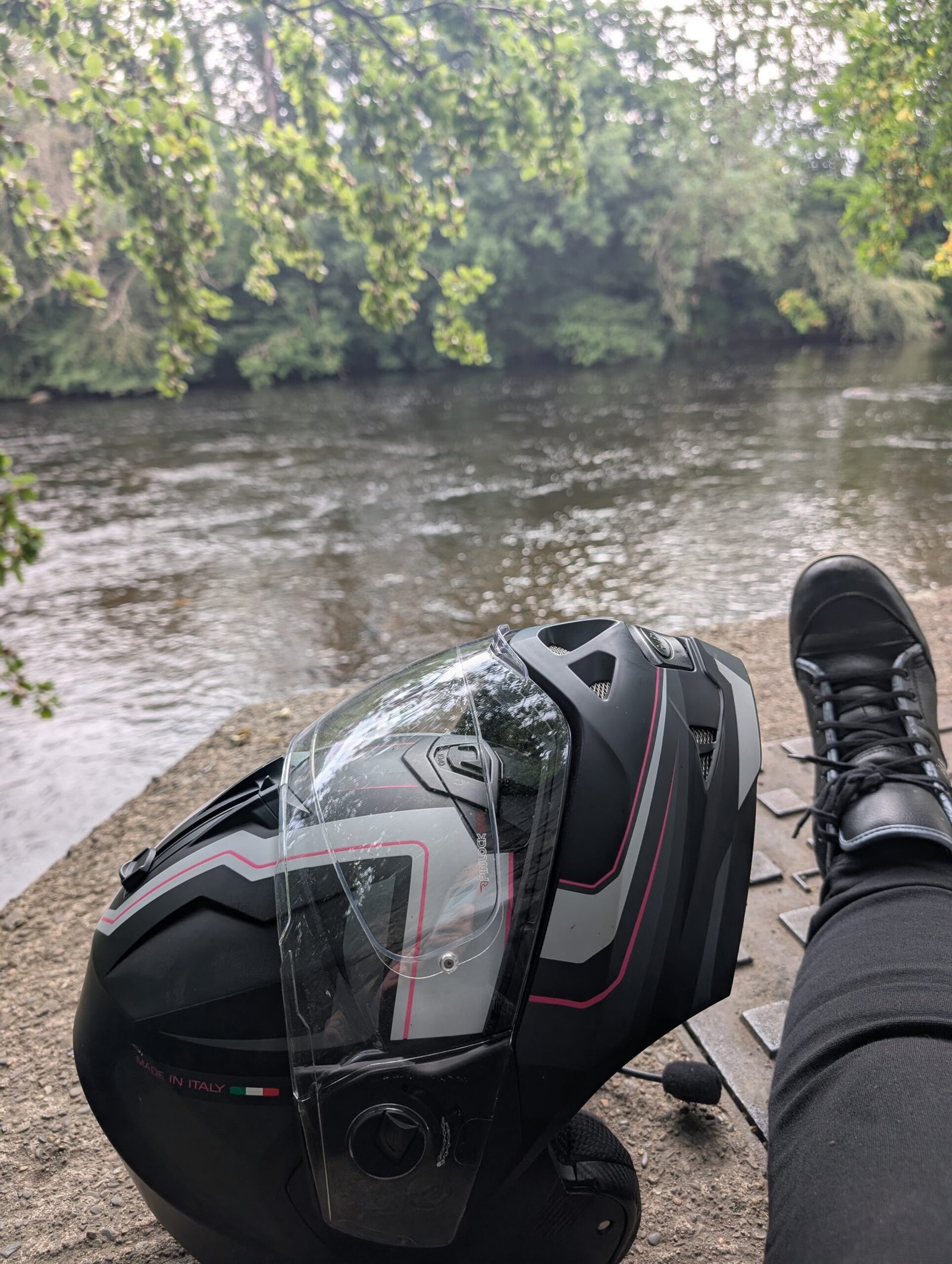
    I had already spent time riding earlier because I needed to clear my head. Riding has always done that for me. I grew up on the back of a bike. I have ridden on and off for over ten years now.

    Almost two years ago, I completed my CBT for the third time. This time, I knew I was not going to let anyone take that part of me away again.

    Friends, family, and colleagues could not always understand why I would choose to ride. What they did not realise was that, at that time, I was living through things I could barely articulate. Much of it was happening in silence.

    They also did not realise that riding was one of the only things that made my whole body relax.

    At the time, I did not understand dissociation. I did not have the words for it. I only knew that I had shut down so hard in order to survive that feeling anything at all had become difficult.

    But on a bike, I could feel.

    It was never about chasing danger. It was about finding a place where my body finally stopped bracing for it. For a while, the bike was the only place where I was not waiting for the next thing to happen.

    I was just there.

    Present.

    Awake.

    Alive.

    I drove to Manchester for my test, and one of the instructors that day spoke openly about his own PTSD after serving in the army, and how riding helped him. I heard him then, but I did not fully understand it.

    It took me a year.

    Now I do.

    He had no idea what I was living through. He had no idea that six months later, I would be diagnosed with PTSD too. But his honesty stayed with me. If I ever saw him again, I would want to thank him, because sometimes people say things without realising they have given someone else language for their own survival.

    For some people, motorbikes will never make sense. In healthcare especially, there can be blunt assumptions about riders and risk. But the reality is more complicated than that.

    Risk is subjective.

    People drive cars recklessly every day. People drink. People use drugs. Chronic stress damages bodies quietly over years. Trauma changes the way people react to uncertainty, silence, fear, and pressure.

    For me, a few hours on a bike can help calm the stress responses that build up over time.

    That matters.

    Self-care matters. Feeling free matters. Sometimes freedom is simply a helmet, an engine, and a stretch of road where nobody is asking anything of you for a little while.

    When the battery was flat tonight, it threw me more than it probably should have.

    Not just because my plans for tomorrow changed, but because it triggered that familiar feeling that everything ultimately falls back onto me. So when a colleague messaged, I sent her a photo of the fuse box I was sat tinkering with, trying to rule out every possibility before the replacement battery arrives in the morning.

    Logically, I knew it could wait.

    Emotionally, I could not switch off until I had checked everything.

    Trauma can do that. When you have spent years anticipating the next crisis, the next escalation, or the next consequence, it changes how you process your own needs.

    You stop asking for help.

    You stop explaining pain.

    You just keep functioning.

    My best friend lives miles away, but she always knows when something is wrong because I go quiet. I shut off. I disappear into doing. Into fixing. Into surviving. Into movement.

    That was me tonight.

    The reality is that there has never really been anyone coming to save me. I learned that a long time ago.

    There is no emergency contact for emotional exhaustion. In reality, I do not even have an emergency contact listed anywhere. No obvious person to name. No automatic safety net. No rescue team arriving when life becomes too heavy.

    Most of the time, I am the person people call when they need help.

    And honestly, I do not resent that.

    Caring for others is part of who I am. It is woven into both my personal life and my professional identity. Supporting people matters to me deeply.

    But some nights I understand why others want to be in a relationship, and why they need that side of life. Not to be rescued. Not because they are weak. But because steady, practical, human support matters. Someone safe to call. Someone who notices when you go quiet. Someone who understands that even capable people get tired.

    For me, that still feels complicated. When you have been through enough, closeness can feel less like comfort and more like risk. But I understand why people still want that connection. It is not about needing to be saved. Sometimes it is simply about not having to carry everything alone.

    Social media is full of messages about independence. About not needing anyone. About strength meaning self-sufficiency.

    But I do not think most people genuinely want to do life entirely alone.

    I think many of us simply adapt to the absence of reliable support. We become resilient because we had no alternative. We become independent because dependence was unsafe. We learn to survive because survival was required.

    And eventually people mistake survival for not needing connection.

    Tonight reminded me that healing is rarely neat.

    Sometimes it is deep conversations and therapy sessions.

    Sometimes it is practical problem-solving.

    Sometimes it is a fuse box under a motorbike seat at 11PM because your mind needs certainty before it can rest.

    Maybe that is why we need to talk more honestly about what coping really looks like. Not the polished version. Not the inspirational quote version. The real version. The late-night, practical, messy, human version.

    Because sometimes the people who look the most capable are the ones quietly holding everything together with no emergency contact, no safety net, and no room to fall apart.

    And maybe that deserves a little more understanding too.

    NAAVoices.com

  • Finding the Stars: Why Not Broken Had to Be Written

    Finding the Stars: Why Not Broken Had to Be Written

    Some books begin with a plan.
    Not Broken did not.

    It began at a kitchen table, in the middle of a life that felt too dark, too loud, and too fractured for easy answers. It began in conversations with my children, in moments when I needed words that did not seem to exist anywhere else. Words honest enough for pain, but gentle enough to carry hope.

    I am a Specialist Nurse Practitioner with postgraduate study in the psychology and neuroscience of mental health. I know the evidence. I know the therapies. I know the clinical frameworks that support healing. But the truth is this: while I was still living through sustained trauma, none of that knowledge could fully reach me.

    That is not because those therapies do not work. They do. I believe in them, and I recommend them with confidence. But when the body is still trapped in survival, healing does not always begin with structured processing. Sometimes it begins somewhere quieter. Somewhere instinctive. Somewhere outside language.

    For me, one of those places was a lay-by.

    For over a year, I returned to the same place again and again. Not because it fixed anything. Not because it was magical. But because it gave me a pocket of stillness when everything else felt unbearable. It gave my body a chance to breathe.

    At the time, I did not know the language of grounding, sensory regulation, trauma responses, or nervous system overload. I only knew that something about that space helped me stay here.

    Sometimes I slept there. Many times, my little girl slept there with me. We would look up at the stars. She grew up believing that when someone leaves, they become a star. It was her way of holding loss. In time, it became mine too.

    That lay-by held more than silence. It held grief, fear, exhaustion, and the desperate effort of trying to stay functional in public while quietly unravelling in private. I have stood in that field in rain, ice, and darkness. I have sat in the grass just to feel something real beneath me. I have gone there in uniform, in the middle of the night, trying to regulate myself enough to return to a life that did not feel safe.

    At the time, nobody knew.

    It was only later, after more study, training, and reflection, that I understood what I had already been doing. I had been grounding myself. I had been using nature as regulation. I had been using the cold air, the silence, the openness of the sky, and the feel of the earth beneath me to stabilise a body that had been pushed too far for too long.

    The body often finds ways to survive before the mind has language for what it is doing.

    That truth sits at the heart of Not Broken.

    This is not a book built on platitudes or polished clichés. It is not about pretending pain becomes beautiful. It is not about bypassing trauma with positivity. It is about survival, grief, family upheaval, and the slow process of finding words for experiences that once lived only in the body.

    Not Broken began as a therapeutic story for children — a way of speaking gently into the confusion trauma leaves behind. Over time, it became something wider: a collection of stories and reflective tools for those trying to make sense of darkness without being consumed by it.

    The title itself carries the message I needed most.

    The stars do not disappear during the day.
    They are always there.
    You just cannot see them until it is dark enough.

    That is not a slogan. It is not false comfort. It is the simplest truth I know about recovery. In the darkest periods of life, there are often strengths, capacities, and forms of hope that remain hidden until we need them most.

    Almost two years later, I drove that same road again.

    This time, I was not driving in panic. I was not bracing for impact. I was not trying to outrun a life that felt unsafe. The place had not changed, but I had. My body no longer responded as if I were still trapped in the same emergency.

    That is what recovery can look like.

    Not dramatic. Not neat. Not a perfect before-and-after. Just a quiet physiological shift. The road is still the road. The memories are still the memories. But your body no longer believes it is still living there.

    That night, all three of my children got out of the car and stood beneath the stars. Quietly. Gently. With the kind of understanding that does not need much explanation. They knew why that place mattered. They had lived through enough to understand.

    And that is why this book exists.

    It exists for the people who are functioning outwardly while falling apart inwardly.
    It exists for those who feel frustrated that healing has not yet “worked,” when the truth may be that they are still in survival mode.
    It exists for anyone who needs language that is compassionate, grounded, and real.

    I chose to publish this book under my own name for a reason. I am a nurse, a mother, and a survivor. Trauma does not discriminate. It reaches professionals, carers, clinicians, parents, and people who look as though they are coping from the outside. I believe honesty matters. Not for performance. Not for sympathy. But because silence protects stigma, and truth dismantles it.

    Not Broken is not the story of everything that happened to me.
    It is the story of what I built from it.

    If something brought you here, then perhaps this book is meant for you. If you are searching for words, for comfort, for understanding, or simply for proof that survival is possible, this book was written with that in mind.

    The stars are already there.
    Sometimes we just need help finding them.

    Not Broken is available now on Amazon:

  • When ADHD Met PTSD: How Trauma Rewired My Brain and How Understanding That Saved Me

    When ADHD Met PTSD: How Trauma Rewired My Brain and How Understanding That Saved Me

    Content note: This piece discusses suicidal ideation and trauma. If you’re struggling, please don’t hesitate to reach out. Resources are at the end.

    For 34 years, I lived with ADHD, and never once needed mental health services.

    I’d worked through the front line during COVID, wards, diabetes clinics, and mental health services. Thirty-hour weeks, raising three children, advocacy work on the side, a mortgage, a routine that worked. No medication. No therapy. No “management plans.”


    I exhibited all the familiar traits, including constant energy, rapid processing, big emotions, and the usual executive-function challenges, but I’d built systems that worked for me. Hyperfocus helped me manage multiple critically unwell patients in acute medicine, keep the children organised, and continually take in new information while noticing details others missed. My ability to process information quickly meant I performed at my best in emergencies, where a calmness always settled over me, and my emotional intensity helped patients feel genuinely seen. ADHD wasn’t a weakness; it was often the thing that set me apart.

    Then trauma arrived, and everything changed.

    It didn’t just add stress. It felt like my brain had been rewired overnight. The mechanisms that sustained me for decades suddenly stopped working, and I had no idea why.

    The Day My Superpower Became My Kryptonite

    My brain had always processed quickly, scanned constantly, thrived on stimulation. But introduce PTSD into that system, and it accelerated into something I didn’t recognise.

    My productive energy turned into agitation, and I couldn’t settle. My hyperfocus became locked onto legal papers and perceived threats, rather than the work I loved. My rapid thinking spiralled into intrusive loops I couldn’t escape. The emotional depth that made me a good nurse now overwhelmed me.

    I wasn’t overreacting. My brain was in neurological overload, and I felt utterly destabilised by it.

    When Everything I Knew Stopped Working

    I’d built a toolkit over 34 years, honing my structure, movement, and ability to thrive in high-pressure environments, where empathy guided me. It had served me well.

    Trauma dismantled all of it.

    Leaving the house felt unsafe. My routines collapsed under flashbacks that came from nowhere. My hyperfocus became a prison, locking me onto court documents and risk assessments. The empathy that once guided me now overwhelmed my nervous system, leaving me unable to function.

    I kept thinking: Why can’t I just cope like I always have?

    But this wasn’t about resilience. My brain was prioritising survival at any cost. And my three children were watching me disappear in real time. They didn’t understand why. How could they, when the system couldn’t either?

    They watched me lose the ability to live, to take them out, to walk into a shop, to function, even to eat without vomiting. They slowly had to learn what PTSD meant and why I was no longer the person I once was. They saw me retreat, pull down walls, teach myself DIY, and avoid driving the routes we used to sing along. They learned why I needed to stop suddenly, why certain songs grounded me while others didn’t, why I would drop to my knees to stop myself from fainting, why I constantly looked over my shoulder, and why I withdrew from family and friends. I needed the house, them, and work; anything more overwhelmed me.

    The worry they tried to hide, the questions they didn’t know how to ask, I saw all of it, and I felt powerless to stop what they were witnessing.


    When My Neurodiversity Became a Weapon

    The psychological fallout wasn’t the only battle to be fought. The systems around me made everything worse.

    In family court, my ADHD, the same neurotype I’d successfully lived with for 34 years, was suddenly reframed as evidence that I was “violent and aggressive because she has ADHD.”

    That allegation came from someone with a lengthy criminal history. Yet his behaviour was never questioned. Never scrutinised.

    I wasn’t given the chance to respond. My neurodiversity became their weapon. His history became invisible.

    At the same time, I lost four stone in seven weeks. I was vomiting constantly, barely eating, and my body was in physiological shock. I could see myself disappearing. Clothes hanging off me. The faces of my children when they looked at me, the worry they tried to hide, the questions they didn’t know how to ask. But instead of recognising trauma, I was told, “It’s mediation stress.”

    I had to prove otherwise, while being retraumatised in real time.

    ADHD didn’t harm me; it never had in 34 years, and it wasn’t about to start now. What harmed me was bias, ignorance, and procedural failures that couldn’t tell the difference between a neurotype and a threat.

    And the emotional cost was devastating.


    Watching DARVO Play Out in Real Time

    I finally found a name for what I was experiencing: DARVO — Deny, Attack, Reverse Victim and Offender.

    He denied. He attacked my credibility. He recast himself as the victim — and me as the risk.

    And instead of identifying the pattern, the agencies reinforced it. I watched it happen in real time — and felt utterly powerless to stop it.

    Over and over, I was told: “Focus on your mental health.”

    But at that stage, I didn’t have a mental health history. I had ADHD — and a system that couldn’t tell the difference between neurodiversity and pathology.

    The cruel irony? It was the retraumatisation — the system’s response to me — that created the PTSD I now live with.

    That distinction matters to me.


    Shutdown: When Survival Looks Like Withdrawal

    When the overload became too much, my life narrowed in ways I’d never experienced.

    Messages went unread. Noise became physically intolerable. Engaging with anyone felt unsafe.

    From the outside, I know it looked like I was withdrawing. Avoiding. Giving up.

    But inside, it felt like my brain had thrown a circuit breaker to prevent complete collapse. I wasn’t checking out, I was trying to survive.

    I had to learn to recognise the early signals, because by the time I hit shutdown, it was too late: my thoughts became too loud, sensory overload creeping in, and I avoided my phone and people, experiencing irritability that felt foreign to me, fatigue, and headaches, along with a desperate urge to disappear and decompress.

    I learned: respond early, or collapse entirely.

    This wasn’t a weakness. It was my brain trying to protect itself.


    The Day I Almost Didn’t Survive

    April 17th, 2024.

    That’s the day my three children almost lost me.

    I had planned it in silence, convinced that my pain was too much to share, that my children deserved better than a mother who couldn’t hold herself together under the weight of a system that kept failing us. No one knew. No one saw the signs because I’d become an expert at hiding them. I gave away everything of value, belongings, keepsakes, pieces of myself that meant something. I disguised it as decluttering, but it was actually a form of generosity. No one questioned it because I made it look intentional.

    What pulled me back wasn’t strength or sudden clarity. It was someone telling me that in their 38‑year career, they had never met anyone who had done what I had to protect my children, even in the circumstances I was facing. Hearing that forced me to see the reality of what I’d already survived. I booked an urgent GP appointment that day and asked for help. For a few months, I found a small space to begin processing the abuse.

    My youngest, an old soul even before turning four, seemed to sense everything. At the strangest moments, when the outside world was being shielded, and my mind felt tortured, she would say something that reminded me why I had fought so hard to keep them safe.

    I used to believe that suicide was selfish, and I still understand why people feel that way when they’re the ones left behind. But living inside a mind with no respite, in a world that no longer makes sense, carrying pain no one else can see, can push a person to a place where they feel they can’t survive anymore.

    That level of mental pain affects every part of the body and feels endless. People in that state don’t need judgment.

    They need reminders of who they are, what they’ve survived, and that they matter. And we all need to check in on the friends who suddenly withdraw, give away belongings, or seem “lighter” in a way that doesn’t match their reality.

    I’ve never written about this in such detail before. For a long time, I couldn’t even think about it. I had been threatened with suicide as a form of control for so many years, but I’m not that person anymore. Something shifted. I lost the fear that had ruled me. I let go of a phobia I’d carried for more than twenty years. I became a different person.

    When you’re facing someone who has harmed you and your children, and the people meant to protect you don’t, it demands a strength you never knew you had.

    I realised that my silence and everything I had been forced to endure could become my children’s future if I didn’t break the cycle.

    The system’s failure to protect me couldn’t become my failure to protect them from further harm or from the grief that would follow.

    After that, survival became minute‑by‑minute. Getting out of bed. Making breakfast for three children who needed me.

    Going to work was the only thing that gave me some living, because it was there that I didn’t have to be the victim, tortured by the life she was being forced to live; I could be the nurse protecting others from feeling the pain.

    So I was putting one foot in front of the other, not because I felt strong, but because I had passed the point of survival; I was merely existing.

    My children lost part of their mum over the past two years.

    But things are better now. Not perfect, I still have hard days, days when the circuit breaker threatens to flip, but I have language for it now. I have strategies that work for an injured brain, not just a neurodivergent one. And my children are getting a mum back who understands that vulnerability isn’t weakness, that asking for help is a sign of strength, and that healing is possible.

    They got a different version of me: a stronger one.

    Silence almost cost me everything. It nearly took me from my children. I thank the stars not through death, but through a system that couldn’t see the injury for what it was, and through my belief that I had to carry it alone.


    Rebuilding Function From Scratch

    Living with this meant redesigning everything:

    Lower sensory environments. Adjusting to being triggered, Clear boundaries. Simplified routines I could actually maintain. Structured pauses before I hit the breaking point. Learning trauma-informed self-regulation. Knowing when to escalate to support.

    It’s disciplined. Pragmatic. Protective.

    And it’s kept me functioning, for myself, and for my three children who needed me to survive.


    The Moment Everything Shifted

    For a long time, I genuinely feared admitting I was suffering to close my eyes at night, that the reliving and symptoms had become so severe, the problem was me. My worry was that I would be viewed differently if others knew I had ptsd, whether it was friends, family, or my colleagues.

    Then I attended a lecture on neuroimaging.

    They showed scans side-by-side, PTSD compared to traumatic brain injury. Disrupted pathways. Altered regulation systems. Structural stress patterns.

    What I’d been experiencing wasn’t weakness. It wasn’t instability. It was a neurological injury.

    And in that moment, something clicked: This isn’t my fault. My brain is functioning exactly as a brain with an injury would.

    I felt anger. Relief. Grief for the years I’d spent apologising. But mostly — validation.

    Understanding the neuroscience gave me language. It gave me dignity. It gave me the confidence to return to work.


    The Conversation That Changed Everything

    Returning to work after a two-month absence, the longest of my career, was awful. My desk, once a safe space, now held the imprint of police visits and ongoing abuse. Very few people knew what I’d been living through, and I walked back into the surgery carrying all of it, unseen.

    I wasn’t meant to be seeing patients that day, but in reception I bumped into one of my regulars trying to book an urgent appointment. I offered to see them the next day.

    That night, I spiralled. I worried that everything I’d endured had taken something vital from me. If every system meant to protect my children and me had failed, would it have changed me? Had it damaged the part of me that cared for others? I stayed up late with my neuroscience module, printing brain-scan images and staring at the affected areas, desperate to know whether my compassion, my ability to connect, was still intact.

    The next day proved it was.

    The patient had been struggling with her Alzheimer’s diagnosis, so I sat with her and her family and explained the neuroscience behind it. I showed them the scans, talked through what was happening in her brain, and what it meant for her memory and future. Her daughter and son, whom I knew well, watched closely. She knew I wasn’t just teaching; I was working something out inside myself.

    Then something shifted.

    I asked her, with her cardiology background, to talk me through how she’d treat a heart attack. She explained the protocols, interventions, monitoring, and rehabilitation. And then I asked: Why is the brain any different from the heart?

    She looked at me and said, “There isn’t one.”

    We talked about illness, prevention, acceptance, and the parallels between the organs. And it hit me:
    We would never expect a heart to heal solely through willpower. We shouldn’t expect a brain to, either.
    A heart attack needs intervention, monitoring, and rehabilitation. A brain injury, PTSD, deserves the same.

    That conversation brought me back. Not just to work, but to myself.

    After the appointment, they came back in with gifts, small, thoughtful things they’d chosen with such care. One of them was from a learning‑disability charity, something so specific and meaningful that it stopped me in my tracks.

    I hadn’t expected anything; I certainly hadn’t expected to feel seen in that moment.

    The kindness of it, the intention behind it, broke through everything I’d been carrying.

    I cried, not out of sadness, but because for the first time in a long time, someone’s gesture reminded me that what I do still matters, and that I hadn’t lost the part of me that connects with people.

    Why I Refuse to Be Ashamed of Needing Help

    I functioned independently for 34 years, and I still needed mental health support after trauma.

    That’s not a weakness. That’s an injury that requires treatment.

    We wouldn’t tell someone with spinal trauma to “push through.” We wouldn’t tell someone recovering from a heart attack to just “focus on staying positive.”

    Brains deserve the same standard.


    Where the System Failed Me

    Police guidance on supporting neurodivergent victims exists. Across my entire case, one officer seemed aware of it, and that officer’s understanding stood in stark contrast to every other interaction I had. They inquired about my processing style and sensory needs. They didn’t treat my ADHD as evidence; they treated it as context.

    One person who recognised neurodivergence for what it actually is.

    That’s not a training gap. That’s a safeguarding failure.

    My ADHD didn’t cause the harm I experienced. The stigma around it did.

    My neurodiversity strengthened my analytical thinking. It accelerated my learning. It heightened my risk awareness. It improved my advocacy.

    I thrived with ADHD for 34 years.

    The last two years, I’ve had to survive while living with PTSD created by repeated retraumatisation.

    ADHD shaped how I process the world. Systemic failures shaped how the world treated me.

    Both truths matter.


    What I Know Now

    Neurodiversity is not pathology. It’s not evidence of risk. And it should never be weaponised in courtrooms or policing.

    The harm I experienced wasn’t created by ADHD. It was created by bias, DARVO, and institutional failure to understand neurodivergence.

    Yet despite everything, my neurodiversity remains my strength.

    It fuels my learning. It drives my purpose. It keeps me engaged, analytical, and compassionate.

    I thrived with ADHD for 34 years. For over two years, I’ve lived alongside PTSD, and I’m rebuilding.

    Both realities coexist. Neither excuses abuse. And neither should ever be used as a weapon against survivors.

    Now I see the pain in others that I felt then, in the families I work with through NAAVoices, in the survivor stories that mirror my own. I recognise it immediately. And I refuse to let them drown in silence the way I nearly did.


    What I’d Tell Myself Two Years Ago

    If I could go back to before April 17th, 2024, I’d tell myself: This will break you open, but it won’t break you.

    You’ll lose six stone, teeth from the stress-induced vomiting. Your hair will fall out. You’ll lose your sense of safety. You’ll temporarily lose yourself. Your children will watch you disappear, and that will be the hardest part to forgive yourself for.

    But your ADHD isn’t the problem. The system’s response to it is.

    And you’ll survive this, not despite your neurodiversity, but in many ways, because of it.

    Your brain isn’t broken. It’s injured. And just like that, a heart you know how to treat can heal.

    Your three children will get more of you back. Not the same version, but a stronger one. Someone who spent 34 years believing she understood mental health, only to realise she knew nothing until she survived PTSD and learned how to live openly with a mental health condition. Someone who now knows that honesty isn’t weakness; it’s strength, especially in a world where stigma still exists.

    Through lived experience, I see the pain in others’ eyes, the pain no one recognised in mine. And because of that, I ask the questions. I advocate. I remind people that their lives matter, because they do. I know now that the brain deserves the same care, compassion, and rehabilitation as any other organ.

    I became someone who survived.


    For 34 years, I never needed support for my mental health. For the past two years, I’ve learned to live with PTSD. My therapy came through training, courses, and a deep need to understand my own brain. Everyone heals differently, and for me, giving back to others was the beginning of my healing journey, and there’s no shame in that. My brain, like any other organ, deserved treatment when it was injured. And now, slowly, with the right support, it’s healing.


    If you’re in crisis:

    • Samaritans: 116 123 (UK) – Available 24/7
    • Crisis text line: Text SHOUT to 85258
    • NHS 111 (select mental health option)

    For neurodivergent survivors: Visit NAAVoices.com for trauma-informed, evidence-based resources created by and for families navigating complex systems.

  • From Survival to Voice: The Journey Behind NAAvoices

    From Survival to Voice: The Journey Behind NAAvoices

    From Survival to Voice | NAAVoices.com
    NAAVoices.com

    From Survival
    to Voice

    The journey behind NAAVoices

    If you met me at work, you would see a primary care nurse getting on with the job. The clinic lists. The assessments. The routine pressures of general practice. You might notice that I take safeguarding seriously, that I ask different questions, that I pay attention when something doesn’t quite fit.

    What you would not see is the path that brought me here, or why I rebuilt my entire life, and this website, from scratch.

    This is that story.

    The Name on This Page

    I first wrote this story as Laura Prince.

    The pseudonym was protection, but it was also honesty about where I was when I started writing. The early pages were not produced from clarity; they were produced from inside the storm. I was still raw, still in active legal proceedings, still finding language for things I had no framework for. Laura Prince gave me a place to put words on the page when my own name could not yet hold them.

    I have since unpublished my first memoir, Everything Was Beautiful and Nothing Hurt. It was written in a season of trauma, before I had the channel or the capacity to properly articulate what I was processing. It was true. But it was raw.

    One day it will become part of a trilogy. When that trilogy arrives, it will not be a record of trauma. It will be a record of the healing that so many people walk through in silence. The slow, unspectacular work of coming back to yourself, over time. And it will arrive in my own name.

    I am no longer writing under Laura Prince. She was the name that held the words while I was still inside what had happened to me. Amy Royle is the name that will tell the story of what came after: the integration, the rebuilding, the return to a self that is no longer hiding. The trilogy has earned that name. So have I.

    This site is the same decision. NAAVoices is not memoir. It is advocacy, clinical reflection, and survivor work in real time, and it belongs to my own name from the start.

    My name is Amy.

    I am here under my own name now because the work has changed, and so have I. The healing has happened, and is still happening. My children have walked through every part of this with me, and they have come through their own years alongside mine. They have learned, as I have, that their lives matter. They have learned to speak the truth. They know their mum will do everything in her power to protect them. They are proud of what I have built.

    My daughter’s story is her own. Even at her age, her voice and her strength are extraordinary. Her name, like the names of her brothers, will be shielded until she is old enough to choose what she wants to do with it. Throughout the books, the blogs, and any future publication, my children appear under names they have chosen for themselves. They know they are written about. The choice of name is theirs.

    Their privacy is not silence. Their privacy is consent.

    So I sign this in my own name. I leave theirs for them.

    The Question That Sent Me Back to University

    By the time everything fell apart, I had already earned my BSc (Hons) in Nursing, completed multiple master’s-level modules, and gained advanced diplomas across general practice. Years of primary care experience, a foundation in acute medicine, and several years in mental health and child and adolescent services sat behind me.

    None of it protected me.

    After years of coercive control and abuse, I left. What followed was worse than I had imagined. The abuse continued through the very services meant to protect us, then through the family court, where professionals looked the other way and systems I had trusted were turned into weapons.

    I found myself asking a question I could not let go of:

    How can a human being choose to inflict that level of pain on the people closest to them and remain unmoved by it? How does deceit come so easily, as though truth were meaningless? How can someone act with deliberate cruelty and still rest at night?

    It was not an abstract interest in psychology. I was living with the aftermath of it. I needed to understand coercive control, psychopathy, and intentional harm because I needed to understand what kind of mind can cause that level of damage and still perform “normality” for professionals.

    That question sent me back to university. I self-funded a Postgraduate Certificate in Neuroscience and Psychology of Mental Health, completing it quietly alongside my job in primary care. Few colleagues even knew I was studying. It was not about promotion or another title. It was about survival and understanding.

    The reality is blunt: no amount of academic theory will ever make intentional cruelty make sense in human terms. But the course did something else important. It gave me language, evidence, and a framework for what I had lived through: trauma, attachment, adverse childhood experiences, personality structure, chronic stress, and the way the brain adapts in order to survive.

    I am qualified in mental health, but my day-to-day employed role remains in primary care, with different clinical priorities. The mental-health training sits behind the scenes. It informs how I think, how I listen, and how I have built this work. I am not employed as a specialist mental-health clinician, and that distinction matters.

    What also matters is what came next. The PGCert became a foundation. From there, my focus shifted from personal survival to a commitment to serve others standing where I once stood. That commitment led to further specialised training: Certified Trauma Healing Practitioner, Certified Narcissist Recovery Practitioner, and Certified Neurodiversity Coach, all through CMA- and IPHM-accredited providers.

    These qualifications are not credentials for their own sake. They represent a deliberate effort to turn lived experience and academic knowledge into structured, ethical, evidence-informed tools, so this work can extend beyond personal narrative into something practical for the people who need it.

    ADHD, Masking, and the Shape of “Resilience”

    At 34, I was finally diagnosed with ADHD. I had suspected it for years, but I had never prioritised it. I was too busy coping.

    Suddenly, a lot made sense: the ability to hyperfocus through chaos; the drive to fix complex problems that were not, technically, mine to fix; the tendency to keep going long after most people would stop, until I crashed.

    ADHD had quietly shaped both my career success and my personal vulnerability. It helped me advocate, absorb information quickly, and think laterally about systems. It also meant I masked distress and over-functioned for far too long, calling it resilience while my nervous system burned out beneath it.

    The combination of primary care nursing, postgraduate mental-health training, ADHD, and lived experience of abuse and institutional failure produced a particular kind of clarity. I could see the patterns. I could name the dynamics. I could track exactly how systems were failing: not only for me, but for my children.

    The Day the Music Told the Truth

    There was a point where the clinical knowledge, the qualifications, and the “I’m fine” façade all came apart.

    One night, I sat in a chair and listened to “I Am Not OK” on repeat for an hour. I was not writing. I was not coping. I was rocking, dissociating, and trying to keep my brain from breaking under the weight of what had happened, and what was still happening through the courts and the institutional response.

    Two months later, in September 2024, I was diagnosed with PTSD. The label did not shock me. It simply caught up with reality. Hypervigilance, flashbacks, sensory overload, the constant scanning for threat. Textbook trauma,, layered on chronic stress and unresolved safeguarding failures.

    At that point, writing stopped being a hobby.

    It became survival.

    When Your Children Show You the Cost

    Some memories do not fade, no matter how much time passes.

    I will never forget the day my eldest son cut his wrists.

    I will never forget my middle child hiding at the bottom of the stairs, convinced his stepdad had come back.

    Their fear was a mirror. It reflected my own internal state: the same dread, the same hyperawareness, the same sense that danger could reappear at any moment.

    These were not isolated incidents. They were symptoms of living in prolonged fear and then being failed by the very systems meant to protect us. Those moments changed the trajectory of my life. They moved advocacy from something I did around my job to something that sits at the centre of who I am.

    The Courtroom Where My Voice Did Not Count

    Leaving an abuser should mark the beginning of safety. Instead, I watched the family court become another arena for control.

    My ex played the system. Professionals stayed silent. I was never properly heard. Evidence that should have mattered was omitted from the narrative. At one point, the court even accepted the names of individuals presented as “police officers”, individuals who were not, in fact, officers at all.

    One person stood up and did his job: a police officer who tried to act with integrity. He paid a heavy price for it. His own investigating officer eventually became my point of contact, and her humanity ruffled the wrong feathers in the process. That told me everything I needed to know about where the priorities really sat.

    You can be a nurse, a mother, and a credible witness, and still be silenced the moment your truth threatens the wrong reputation.

    That level of institutional betrayal changes a person.

    The Moment NAAVoices Was Born

    The night after court, I was not okay. My daughter was upset that evening because she was not “the best” at something. I had been trying to explain that everyone is good at different things. She looked at me and said:

    “You are the best at looking after people.”

    When the systems around us refused to protect us, that one sentence became my compass. If I could not make institutions listen to me, I could at least build a space where others would not feel the same erasure. A space where they would not be left without a map.

    During a period of severe mental decline, triggered by further police leaks and ongoing court proceedings, I realised something uncomfortable but undeniable: if I kept trying to be heard in spaces designed not to listen, I was going to break.

    So I did the only thing that made sense to my ADHD brain, my nurse brain, and my traumatised brain all at once. I built something new.

    Nurse Against Abuse did not start as a brand. It started as a survival mechanism. It began with a nurse who had no idea how to build a website, documenting everything in real time. It was raw: a rolling account of disclosure failures, safeguarding concerns, and procedural anomalies as they accumulated.

    Over time, informed by my postgraduate mental-health training and my ongoing experience, it evolved. I rebuilt the blog. I turned loose posts into structured tools, timelines, and resources. Now, two years on, it is evolving again, into NAAVoices: a space built not only from my story, but for every voice that deserves to be heard.

    From Troubled Minds to Empowered Voices

    From Troubled Minds to Empowered Voices was never a branding exercise. It grew out of my own journey: traumatised, feeling voiceless, unable to find the words I so desperately needed.

    Traditional trauma therapies do not fit everyone living with PTSD. For me, speaking was impossible. Out of that silence, I developed a technique. It became a journal for myself first, then a tool for others who also struggled to speak but longed for help.

    The journals are available to purchase, but the honest truth is that I give away and donate far more than I ever sell.

    Not Broken

    Not Broken: A Nurse’s Guide to Understanding Loss, Trauma, Symptoms and Rebuilding Life is a different kind of book. It is not a memoir. It is not a workbook. It is the clinical companion to everything else I have written: a practical, evidence-informed guide for anyone trying to understand what is happening in their mind and body after bereavement, trauma, abuse, chronic stress, anxiety or depression, and what support might actually help.

    It is not false reassurance. It is the book I wish someone had handed me at the beginning.

    The story of why I had to write it is told in a separate piece on this site: Finding the Stars: Why Not Broken Had to Be Written →

    Work as Sanctuary

    Through all of this, work remained constant. I love primary care. I love my patients and my work family. Though it is a workplace, it has always been the place I turn to when I am struggling.

    A CAMHS worker asked me this week whether I had support in place, given that my children are still recovering from the abuse they endured. My answer was simple: I have work. There, I could just be myself. Not a victim. Not only the parent of traumatised children. Just someone able to give others the care they deserve. My therapy has been the ability to serve others. Work was where I could still be me.

    Work became my sanctuary when home was no longer safe. My mental-health qualification provides the theoretical foundation for what I share here. My lived experience ensures none of it drifts into abstract theory. Together, those threads underpin everything on this site: the blogs, the survivor tools, the professional resources, and the insistence that people deserve to be heard, believed, and properly safeguarded.

    Why This Story Is Here

    This page exists for one reason: context. When you read my work on coercive control, family court, ADHD, PTSD, child safeguarding, or institutional failure, I want you to know the perspective it is written from:

    A clinician with lived experience and the qualifications to support that knowledge. A mother whose children have lived through domestic abuse and systemic failure. A survivor who has seen what happens when institutions protect themselves instead of the vulnerable.

    I am not neutral.

    I am informed.

    And I am still here.

    If you are reading this because you are trying to make sense of your own situation, as a survivor, a parent, a professional, or all three at once, hear this clearly:

    You are not overreacting. You are not weak. You are not the problem. And you no longer have to walk through this without language, without tools, or without a voice.

    Founder, NAAVoices.com
    Registered Nurse (RN, NMC)  ·  Survivor  ·  Neurodivergent
    Trauma Healing Practitioner  ·  Neurodiversity Coach
    🎓 Qualifications
    🎓 PGCert Neuroscience & Psychology of Mental HealthDistinction, University of Warwick, self-funded
    🎓 BSc (Hons) Adult Nursing, RN NMC
    ★ Certified Excellence: Neurodiversity CoachingCMA & IPHM accredited
    ★ Certified Excellence: Trauma Healing
    ★ Certified Excellence: Narcissistic Abuse Recovery
    📋 128+ CPD courses, self-funded
    🧡 Lived experience
    ♡ Survivor of DA & coercive control
    🧠 Neurodivergent, ADHD (diagnosed age 34)
    👪 Parent, children with SEN
    🛡 PTSD, diagnosed September 2024
    📚 Published authorPublications →
    🏥 Primary care nurseGeneral practice, acute medicine and CAMHS
  • Understanding Dissociation Through Lived Experience, Neuroscience, and Survivor-Led Advocacy 💙

    Understanding Dissociation Through Lived Experience, Neuroscience, and Survivor-Led Advocacy 💙

    ⚠️ Content Note: This post discusses trauma and dissociation. Please prioritise your wellbeing whilst reading. Take breaks as needed.

    Quick Self-Check Before We Begin ❓

    Do You Experience Dissociation? Quick Assessment:

    • □ Feel like you’re watching yourself from outside your body
    • □ The world seems unreal or dreamlike
    • □ Can’t remember parts of your day
    • □ Feel emotionally numb during stressful situations
    • □ Hear people talking but can’t process the words
    • □ Feel disconnected from your emotions
    • □ Time seems to speed up or slow down unusually
    • □ Feel like you’re on autopilot

    If you tick 3+, consider speaking with a trauma-informed professional 💜


    Earlier this year, I was sitting in the middle of my clinic. A patient I’d been supporting for months used a word that stopped me cold: dissociation. They described the sensation of watching life unfold around them without truly being part of it. As they spoke, something shifted in my understanding of my own PTSD journey.

    For months, I’d struggled to name that automatic shutdown, the moment when the world becomes too much. It isn’t dramatic or visible. One moment I’m present and engaged. Next, I’m observing my own life from a distance, as though it’s happening behind frosted glass. My body continues the motions, but I am not there.

    In those moments, silence becomes essential. Music, once comforting, becomes unbearable. After nights of relentless triggers and flashbacks that loop like a broken record, my mind craves quiet. It’s exhausted by constant vigilance and the fear of what might come next.


    The tangled complexities of ongoing abuse leave no room for recovery. My nervous system remains trapped in survival mode. It cannot process trauma, and it cannot meet the demands of a mind now burdened with PTSD. Eventually, it simply says: “Enough. I’m taking you somewhere else for a while.”

    I understand now, this was never a weakness. It wasn’t me, “not coping well enough.” It was my brain’s extraordinary attempt to protect me from pain that threatened to overwhelm every defence I had.

    But understanding doesn’t make it easier to live with.


    💙 Remember, you’re learning about your brain’s protective mechanisms. This is self-compassion, not self-criticism.

    Structured trauma care helps. Programmes such as Finding Solid Ground have been shown to reduce symptoms and improve emotional regulation. (Oxford University Press)

    The majority of trauma survivors experience dissociative symptoms. This is particularly common in PTSD and prolonged abuse cases. (NHS England)

    Dissociation is a survival response. Brain imaging research confirms it is an adaptive mechanism, not a flaw. (Study by Reinders et al., University of Groningen)


    👩‍⚕️ Through a Nurse’s Eyes: Reflection and Recognition

    Through my postgraduate study, and as a nurse, I was trained to recognise dissociation. But it was my patients — and my own survival — that taught me what it truly looks like.

    There’s a particular quality to it. A subtle disconnection. It isn’t dramatic. It’s quiet.

    It’s the patient who seems unusually calm whilst describing horrific experiences. The assault survivor who recounts their story as though they’re reading someone else’s diary. The domestic abuse victim who appears “checked out” during safety planning.


    An illustration featuring two young women, one seemingly floating above the other in a serene, blue-toned background. Accompanying text discusses the emotional disconnection experienced by trauma survivors, emphasizing the feeling of being outside one's body.

    People often say, “I don’t know how you’re still standing.” Truthfully? Neither do I.

    For over two years, 90% of my life was spent surviving. I wasn’t living — I was bracing. Managing the impact on my health, my wellbeing, and my children. I’ve never shared the full story of what I endured since leaving. Even the fragments I’ve had to disclose have brought others to tears. But I no longer could cry.

    And that’s dissociation. Because without it, I don’t believe I’d still be here.

    The Power of Quiet Support: My Workplace and PTSD

    An Extraordinary Workplace

    My workplace has been nothing short of extraordinary. They understood that dissociation isn’t a choice. If anything, it made me more focused on my patients — because I couldn’t stay in my own mind. I needed to protect others from feeling the same pain I was carrying.

    “I never had to quote the Equality Act. The few who knew supported me quietly, respectfully.”

    Small Acts, Big Impact

    My manager would take me for walks. Colleagues shielded me from triggers. They reminded me daily, through their actions, that the pain I was carrying wasn’t mine to own alone. I set up a music speaker on the wall. It was something to fill the silence when I needed it. I could mute it when I didn’t need it.

    They sat with me during phone calls I could barely comprehend. They listened in disbelief as the system, supposedly designed to protect, gave a platform for further harm. They read the statements. They saw the contradictions. They witnessed the emotional toll of being forced to relive what I was trying so desperately to escape.

    They called. They messaged. They left food. One even offered financial help. I declined, but the gesture stayed with me long after.

    Chosen Family

    These people became family. They didn’t demand explanations or force me to speak. They let me dissociate to survive and protected the part of me that couldn’t be taken. They stood back and stayed quiet. They let me do what I do best — give others the safety I couldn’t always find for myself.

    “They stood back, quietly, and let me give others what I couldn’t access for myself: safety.”

    Please know this: you are protected.

    PTSD is recognised as a disability under UK law. You have the right to reasonable adjustments. You don’t need to justify your survival, and you don’t need to explain your coping mechanisms.

    You just need to know, you are not alone.

    If You Don’t Have a Workplace Like Mine…

    Daily Living Strategies That Help 🏠


    Final Thoughts: From Survival to Living 🌅

    Dissociation saved many of our lives. 💙 It allowed us to endure the unendurable, to survive experiences that might have otherwise destroyed us. But there comes a point where what once protected us begins to limit us. The challenge is learning to honour that protection whilst gently expanding our capacity to stay present. 🌸

    For me, truly understanding dissociation — not just intellectually, but in my bones — has been transformative. 🦋 I no longer fight against it with shame and frustration. Instead, I recognise it as my brain’s misguided attempt at care. I thank it for keeping me alive, and then I gently remind myself: the danger has passed. I am safe now. I can stay. 🏡

    Some days I can. Some days I can’t. And that’s okay. 💚

    To my fellow survivors: Your dissociation tells a story of survival. It reflects a nervous system that loved you enough to take you somewhere else when reality became unbearable. That’s not weakness. That’s not pathology. That’s the fierce protection of a brain that refused to let trauma win.

    To the professionals: When you see dissociation, you’re witnessing resilience in action. Treat it with the respect it deserves.

    And to everyone else: Be gentle with those of us who sometimes seem far away. We’re not choosing to leave. We’re still learning how to stay.

    This was never a choice. But healing — that’s a choice we make every single day..


    Daily Living Strategies – Support Directory
    🏡

    Daily Living Strategies That Help

    You are not alone. The organisations below offer free, confidential support — whenever you need it, day or night.

    💜

    If you are in immediate danger, please call 999. If you are struggling right now, Samaritans are available 24 hours a day, 7 days a week — you don’t have to be in crisis to reach out.

    Crisis Support

    🆘
    Samaritans Available 24 hours a day, 7 days a week
    Crisis Text Line Text-based support
    NHS Crisis Team Mental health emergency support
    Via 111
    Emergency Services Immediate danger
    999

    Specialist Trauma Support

    💜
    Rape Crisis England & Wales
    Women’s Aid
    Refuge DV Helpline
    Mankind Initiative Support for male victims
    Galop LGBT+ abuse support
    NAPAC Childhood abuse survivors
    Combat Stress Veterans’ mental health

    Mental Health Organisations

    🌿
    Rethink Mental Illness
    Hub of Hope Search for local services by postcode

    Online Resources

    🌐
    PTSD UK Information, support & community
    The Survivors Trust Rape & sexual abuse support
    PODS Positive Outcomes for Dissociative Survivors
    ISSTD International Society for the Study of Trauma & Dissociation

    Therapy Directories

    🌼
    BACP British Association for Counselling & Psychotherapy
    UKCP UK Council for Psychotherapy
    EMDR Association UK Find a qualified EMDR therapist

    Children & Young People

    🌸
    The Mix Support for under 25s
    Young Minds UK Young people’s mental wellbeing
    Childline Free, confidential support for children

    #PTSD #Dissociation #TraumaRecovery #MentalHealthAwareness #NursingPerspective #SurvivorStories #Neuroscience #TraumaInformed #HealingJourney #MentalHealthMatters #PTSDAwareness #DomesticAbuseAwareness #ComplexPTSD #TraumaSurvivor #MentalHealthUK #NHSMentalHealth #DisabilityRights #WorkplaceWellbeing #GroundingTechn

    My Lived Experience: A Personal Journey Through Trauma and Recovery

  • When Trauma Shatters Your Coping Strategies: How PTSD Changes Everything for the ADHD Brain

    When Trauma Shatters Your Coping Strategies: How PTSD Changes Everything for the ADHD Brain

    NAAVoices was not created from certainty, but from lived experience and professional insight. As I migrate earlier work from the original platform, this post has been reviewed and approved for transfer. It remains true to its original context, with only minor clarity edits where needed. Some moments do not require rewriting to remain honest.

    The Devastating Impact of PTSD on an ADHD Brain

    When Your Strengths Become Weaknesses

    Living with ADHD for decades without mental health intervention taught me to be resourceful. I’d found ways to channel my differences into strengths. The constant mental chatter became useful multitasking. The need for stimulation drove me to excel in high-pressure situations. The emotional intensity helped me connect deeply with patients and navigate complex medical scenarios.

    But trauma doesn’t just add another layer — it fundamentally rewires your brain. Suddenly, the very traits that had been my superpowers became sources of overwhelming distress.

    The Devastating Impact of PTSD on an ADHD Brain

    Hypervigilance Meets Hyperactivity Where I once had productive energy, I now had anxious restlessness. The hyperactivity that used to fuel my nursing shifts became agitation. It made it impossible to sit still, and equally impossible to focus that energy constructively.

    Intrusive Thoughts Amplify Racing Mind The ADHD brain already struggles with thought regulation. Add PTSD flashbacks and intrusive memories, and what was once a busy mind becomes a chaotic storm. The mental noise that I’d learned to navigate became deafening.

    Hyperfocus Becomes Trauma Fixation My ability to hyperfocus, which had served me well in my career, became trapped on traumatic events. I found myself obsessively analysing every interaction with the police, examining every court document, scrutinising every sign of ongoing danger.

    Emotional Dysregulation Intensifies ADHD already comes with emotional intensity, but I’d learned to channel that into empathy and passion for my work. PTSD shattered that regulation entirely. The emotional swings became unpredictable, overwhelming, and often paralysing.

    🧠 Neural Storm: When ADHD Meets PTSD

    That’s what it felt like. Here’s what was actually happening in the brain.

    Neural FeatureADHD FunctionPTSD ImpactSurvivor Impact
    ⚡ Chaotic Neural PathwaysFast, energetic signal flow enabling multitaskingOverstimulated circuits from trauma triggersRestlessness without direction; agitation replaces productivity
    🌪️ Cognitive TurbulenceRapid idea generation and sensory processingIntrusive memories and flashbacks flood cognitionThought storms; mental noise becomes deafening
    🔍 Hyperfocus LockDeep concentration on tasks or interestsFixation on traumatic stimuli and perceived threatsObsessive analysis of danger; loss of constructive focus
    💔 Fractured Emotional CentresEmotional intensity fuels empathy and passionDysregulation from trauma overwhelms affective controlEmotional swings become paralysing; empathy turns inward as a survival mechanism

    🔧Where does your energy go when trauma takes over? What strengths have been reshaped — or repurposed — by survival?

    Why Previous Coping Strategies Failed

    For over three decades, I’d developed a toolkit of strategies that worked: using physical activity to burn off excess energy, creating structured routines to manage executive function challenges, channelling hyperfocus into productive tasks, and using my natural empathy in patient care.

    When PTSD hit, none of these worked anymore. Exercise felt impossible when hypervigilance made me afraid to leave the house. Routines crumbled when flashbacks could strike at any moment. Hyperfocus became fixated on trauma rather than productivity. My empathy became overwhelming when I was drowning in my own emotions.

    The Shock of Needing Help

    Perhaps the most devastating realisation was that for the first time in my life, I couldn’t just “manage” my brain. I’d spent decades proud of my ability to thrive without medication, therapy, or mental health support. My ADHD was just part of who I was — challenging sometimes, but ultimately workable.

    PTSD changed that completely. Suddenly, I was taking anxiety medication, attending CMHT appointments, and struggling with basic daily functions. The independence I’d maintained my entire adult life had been stolen.

    When the World Becomes Too Much

    In a world that already moves at breakneck speed, adding PTSD to an ADHD brain creates perfect storm conditions. The influx of information, tasks, and social interactions that I’d once managed became completely overwhelming.

    In these moments of sensory and cognitive overload, I find myself needing to shut down. It’s not that I don’t want to engage or respond. My brain reaches a tipping point where the noise becomes too loud and the demands too pressing. I can no longer process everything at once.

    The neuroplasticity that had allowed me to adapt and excel with ADHD had been hijacked by trauma. Parts of my brain that once worked in my favour were now working against me.

    The Shutdown: When Your Brain Protects Itself

    When I step into this space of overwhelm, I find myself withdrawing from usual routines. Text messages go unanswered, calls are ignored, and social engagements become daunting. It can feel disappointing, both to myself and to others reaching out.

    But I’ve come to understand that this reclusiveness isn’t failure — it’s my brain’s attempt at survival. It’s trying to protect itself from further overwhelm when all my previous coping mechanisms have been shattered.

    The Guilt of Needing Support

    One of the hardest aspects is the guilt. Society expects constant availability, but when you disappear for days or weeks, people think you’re being rude or don’t care. For someone who prided themselves on never needing mental health support, requiring medication and therapy felt like failure.

    Practical Strategies for the New Reality

    Environmental Management Reducing sensory input through dimming lights and using noise-cancelling headphones. Creating calm, clutter-free spaces. Setting boundaries around social media and news consumption.

    Routine Adjustments Simplifying daily schedules. Batch-processing similar tasks. Building in regular breaks before they become necessary.

    Communication Strategies Auto-replies explaining slow responses. Being upfront about needs with friends and family. Having templates ready for cancelling plans without the guilt spiral.

    Self-Care Rituals Mindfulness practices adapted for traumatised ADHD brains. Physical activities that regulate the nervous system. Creative outlets that require no social interaction.

    The Strength in Accepting Help

    It has been difficult to realise that I need to embrace the full spectrum of my neurodiversity — and that this includes recognising when I need support. Overload feels daunting, but it serves as a reminder that self-care isn’t optional. It’s essential for maintaining any balance at all.

    Prioritising mental health is vital, especially when navigating both neurodiversity and trauma. Needing medication, therapy, and regular breaks isn’t something to be ashamed of. It’s the only rational response to a brain that has been fundamentally changed.

    Breaking the Stigma of Needing Support

    We need to normalise that people who’ve managed independently their entire lives might suddenly need extensive support after trauma. It’s not poor coping — it’s brain injury requiring treatment.

    We wouldn’t expect someone with a physical injury to function without medical care. Similarly, we shouldn’t expect trauma survivors to manage without mental health support. This is true regardless of how well they coped before.

    The Temporary Nature of Shutdown

    The positive aspect of the ADHD/trauma shutdown is that it’s temporary. After giving my brain the rest it needs, I usually return feeling more creative and focused — able to engage meaningfully with the world again.

    Recognising beauty in both vibrant engagement and necessary periods of solitude is key to a balanced life. Embracing this duality enhances self-understanding, strengthens connections with others, and allows us to share unique perspectives when we’re ready to shine again.

    The Journey Isn’t Linear

    The path from never needing mental health support to requiring extensive intervention is devastating. But it’s also a testament to the brain’s ability to adapt — even when that adaptation feels like everything is falling apart.

    Sometimes, the most compassionate thing we can offer is the space to simply exist without expectation. For someone newly confronting their mental health needs, that permission — to not perform, not push, not pretend — is a lifeline.

    It’s vital to recognise that trauma isn’t a choice. The neurological impact can mirror that of a traumatic brain injury, and it often results from harm inflicted by others. This isn’t a weakness. It’s survival. And no one would ever choose this path.

    So meet it with kindness, not judgment.

    For Those Supporting Someone with New Mental Health Needs

    If someone in your life has developed PTSD and occasionally goes quiet:

    • Don’t take it personally
    • Send low-pressure messages showing you’re thinking of them
    • Respect their need for space
    • Be patient — they’ll emerge when ready
    • Understand this is how their brain works now
    • Don’t compare them to who they were before trauma

    My Lived Experience: A Personal Journey Through Trauma and Recovery
  • Living Behind the Mask: My Journey with PTSD

    Living Behind the Mask: My Journey with PTSD

    NAAVoices was not created from certainty, but from lived experience and professional insight. As I migrate earlier work from the original platform, this post has been reviewed and approved for transfer. It remains true to its original context, with only minor clarity edits where needed. Some moments do not require rewriting to remain honest.

    There’s a particular kind of exhaustion that comes with surviving trauma — not just the initial impact, but the daily reality of living in a world that no longer feels safe.

    For me, trauma arrived in two devastating waves. The first was domestic abuse that shattered my sense of home. The second was police corruption that destroyed my trust in the systems meant to protect us.

    Both left marks that don’t fade.

    The Weight of PTSD

    Over the last nineteen months, I’ve watched my children reclaim joy and safety. They laugh again. They sleep. They play. They are healing.

    My own path is far less straightforward.

    Trauma doesn’t politely fade. It lingers. It demands to be processed, only to tear you open again. Some days, surviving means nothing more than showing up — carrying pain that no one else can see.

    PTSD has dragged me through depths I never imagined. My body buckled under the strain: weight loss, sickness, collapse. There was no pause to heal — only the relentless fight to protect my children. Help was out of reach. No one understood the betrayal or the scale of what I was living.

    I blasted loud music just to drown out the memories, but they still crept in from every angle. People saw me functioning — talking, working, pretending.

    Flashbacks began in 2022, long before I escaped. Memories of control, threats, and fear overwhelmed me. My pain was dismissed, mocked as “night-time problems,” when all I wanted was rest. Leaving should have been freedom, but West Mercia Police’s failures forced me to relive everything I had survived.

    Living Behind a Mask

    People miss the mask — the “I’m okay” that hides the chaos.

    Some days, I laugh and even connect. For a moment, I feel a fragment of the person I used to be. Not whole, but present. A tiny piece of me that still exists.

    But fear lurks beneath the surface. One unexpected call, one stray thought, and everything unravels.

    Other days, every smile is forced. Every word is exhausting.

    Night-time brings its own dread. I’m too worn from faking normality to fight the torment carved into me by others’ actions. The memories replay with a clarity no sleeping tablet can touch — vivid, real, alive behind my eyelids. Every detail. Every mannerism. Every email. Every date. Every police interaction.

    PTSD never rests.

    Triggers strike without warning — a scent, a voice, or nothing at all. Good days trick me into believing a future free from this torment might exist. I try to plan, but without hope, planning feels pointless.

    Bad days stretch endlessly. Nights loop his words and the police’s failures on repeat. Sleep evades me because my body still doesn’t believe it’s safe.

    Nineteen months later, it’s worse than when I left.

    Unless you’ve lived this, “moving on” sounds hollow. If people could see the injury to the brain — the neuroplasticity — the way they see a broken bone, maybe I wouldn’t feel guilty for hurting invisibly.

    Dissociation: A Mind Adrift

    A patient unknowingly gave me the missing puzzle piece. They don’t know what I’ve lived through, but their words helped me understand my own life more than they’ll ever realise.

    They described something they experienced and named it: dissociation. And suddenly, everything clicked.

    It’s more than triggers. It’s worse than triggers.

    I can recall every time it’s happened, but I never understood it until now. My mind checks out, leaving me hollow. I’m behind glass — present but detached. Emotionally numb. Watching life from the outside.

    I don’t feel.

    Music, once my lifeline, now overwhelms me. Anything emotionally charged feels impossible to let in. What once protected me has become a barrier I can’t lower.

    When the Brain Shuts Down

    I wrote three times more than this. But I can’t keep going.

    That’s the reality of PTSD: when my brain shuts down, everything shuts down — thoughts, words, feelings.

    And that’s the part no one sees.

    My Lived Experience: A Personal Journey Through Trauma and Recovery