Tag: Resilience

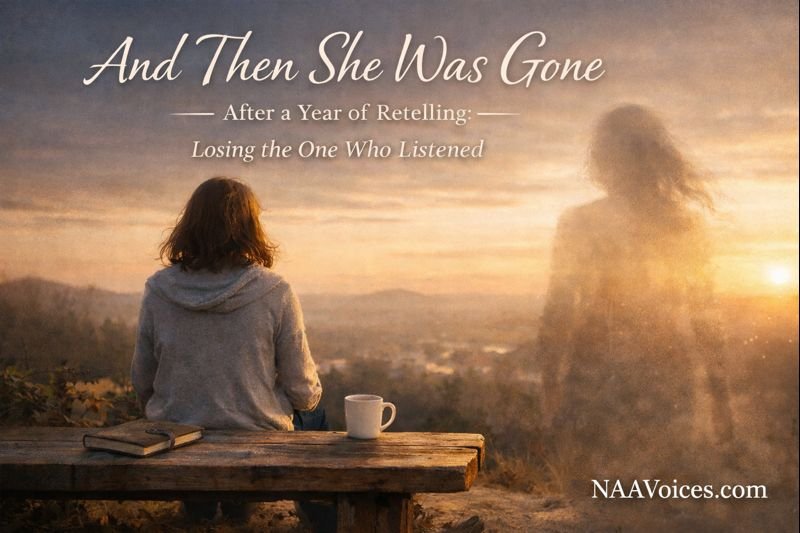
  • And Then She Was Gone

    And Then She Was Gone

    NAAVoices was not created from certainty, but from lived experience and professional insight. As I migrate earlier work from the original platform, this post has been reviewed and approved for transfer. It remains true to its original context, with only minor clarity edits where needed. Some moments do not require rewriting to remain honest.

    This post forms part of my Two Years Forward series

    After a Year of Retelling: Losing the One Who Listened

    After twelve months of reliving the abuse to nineteen different police officers, I lost the second one who didn’t lie to my face, send misleading emails, or cause further harm.

    Jackie from Professional Standards was that officer.

    She was a rare exception in a system that too often fails victims, someone who understood how harm is inflicted, how power is misused, and how easily people are broken by processes that claim to protect them.

    I will always be grateful to Jackie for raising concerns and speaking up, even when the organisation around her appeared indifferent to the impact on victims.

    It is heartbreaking that officers who genuinely understand coercive control, trauma, and accountability are the exception rather than the norm.

    The Exhaustion of Recounting Trauma

    When you are living inside trauma, isolation becomes suffocating. The emotions are relentless, the weight unmanageable. Confronting abuse is harrowing enough — but being required to retell it again and again to investigators becomes its own form of harm.

    That was my reality.

    I explained what had happened to my children and me to nineteen different officers in person. Nineteen retellings. Each one required reopening wounds that had never been allowed to close. It was exhausting, destabilising, and dehumanising.

    Very few appeared to understand coercive control. Even fewer understood the legislation designed to protect victims and children.

    Those rights were meant to protect me and my three children. If they had been applied properly, my children would have been safeguarded. Instead, protection felt like an afterthought.

    Incompetence, Bias, and the Cost of Negligence

    When I first sought help, I was met with a disheartening mix of incompetence and personal bias. I was given little more than signposting, while the officer who took my initial report failed to correctly record or act on the crimes I disclosed.

    That failure caused further harm.

    It compounded the trauma I was already carrying and set in motion a cascade of consequences that never should have occurred.

    *21/12/23 – PC R + PC ***********


    Competent Officer Number 1 Arrested

    Each retelling felt like reopening a fresh wound. After the police caused further harm through inaction, the system turned on the one officer who had tried to repair the damage left by a colleague’s failures. I often think about him now, and wonder whether he, too, has been deeply harmed by the same system.

    Finding a Haven — Then Losing It

    I endured six gruelling months before finding one other officer out of nineteen I could genuinely trust.

    Jackie came from an unexpected place: Professional Standards. She was investigating anonymous claims that I had been groomed; a misconduct-in-public-office inquiry. Her involvement felt like a lifeline at a time when everything else had collapsed.

    She didn’t pretend to have all the answers. She listened. She cared not just about the process, but also about the impact on the children and on me. For months, she offered a fragile sense of safety.

    But that refuge was never secure.

    The last officer who acted on what she and others uncovered now faces serious consequences for doing his job. That reality left me afraid, not just for Jackie, but for anyone within the system who dares to speak up, particularly when power and influence sit on the other side.

    I remain profoundly thankful to Jackie. Her integrity and humanity stood in stark contrast to so much of what I experienced elsewhere.

    Fear, Systemic Failure, and the Fight to Be Heard

    The failures I witnessed and lived through have permanently altered my understanding of safety and justice. The trust I once placed in institutions meant to protect victims has been deeply compromised.

    I live with the fear that these patterns continue unchecked.

    Some days I wonder whether I will ever feel safe again — in my home, the county I grew up in, or the town where my children attend school. That sense of threat does not fade easily.

    And yet, I hold onto this: I met two officers who genuinely cared. Two people within a broken system who tried to do the right thing.

    Sharing my story is not about revenge.
    It is about survival.

    It is an act of defiance against silence; against the systems that rely on victims becoming so exhausted they can no longer continue.

    This was never just about me.
    It has always been about protecting those who are lost, isolated, and vulnerable.

    You Are Not Alone

    Your voice matters.

    Even in the darkest moments, there are people who care; people who will listen, even when institutions will not. It is okay to seek help. It is okay to trust carefully. It is okay to lean on others when the weight becomes too much.

    I will always advocate for my children and for others navigating similar harm. My journey has been shaped by loss, fear, and injustice, but it also carries the possibility of healing, growth, and safety.

    If you are reading this and wondering whether anyone will hear you:
    you are not alone.

    — Sister Laura

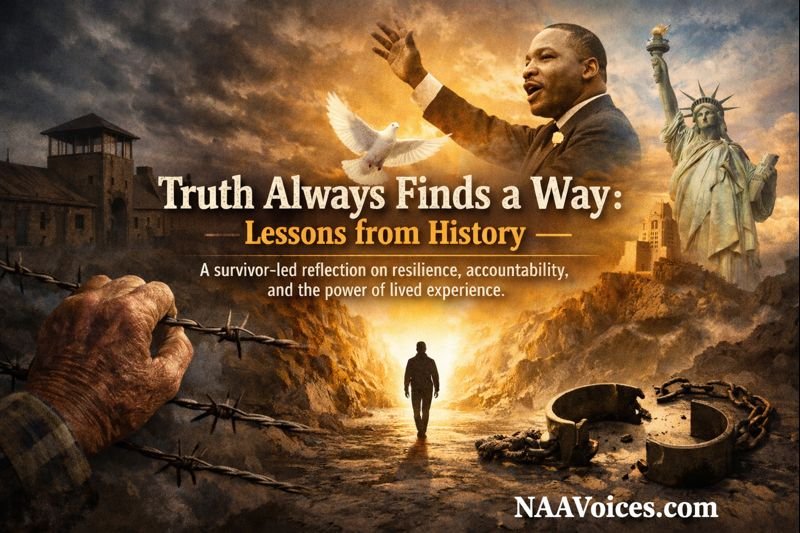
  • 🕊️ Truth Always Finds a Way: Lessons from History

    🕊️ Truth Always Finds a Way: Lessons from History

    Across every era, people in power have tried to bury truth beneath fear, manipulation, and carefully crafted narratives. Yet history shows us something steady and reassuring: truth is persistent. It resurfaces even when silenced. It outlives intimidation. It waits for the moment when people are ready — or brave enough — to hear it.

    These moments from history remind us that honesty is resilient, accountability matters, and the human spirit has a remarkable capacity to push back against deception.

    🔍 When Lies Collapse: Six Times Truth Broke Through

    Watergate (1972–1974)

    A break‑in at the Democratic National Committee headquarters spiralled into one of America’s most defining political scandals. The Nixon administration attempted to bury the truth under layers of denial and misinformation. Persistent investigative journalism — particularly from Bob Woodward and Carl Bernstein — and congressional scrutiny exposed the cover‑up. Nixon resigned. The press proved its power. The public’s right to know prevailed.

    The Trial of Galileo (1610s)

    Galileo Galilei challenged the Church’s authority by supporting the heliocentric model. Forced to recant under threat, he paid a personal price. Yet the truth of his discoveries outlived the institutions that tried to silence him. His work became a cornerstone of modern science and a reminder that evidence eventually outlasts dogma.

    The Emancipation Proclamation (1863)

    During the Civil War, Abraham Lincoln made a crucial declaration. It struck at the core of the falsehood of racial superiority. The Emancipation Proclamation didn’t end slavery overnight, but it reshaped the moral landscape of the conflict and paved the way for abolition. It remains a defining moment in the long, ongoing struggle for racial justice.

    The Fall of the Berlin Wall (1989)

    For decades, the Berlin Wall stood as a concrete symbol of division, oppression, and false promises. When it fell, it wasn’t just a political shift — it was a collective declaration that people will always push towards freedom. Its collapse reunited families, reshaped Europe, and became a global emblem of hope.

    Holocaust Revelations (1945 onwards)

    After the Second World War, the world confronted the full horror of the Holocaust. Nazi propaganda crumbled under the weight of undeniable evidence: testimonies, documents, and the liberation of concentration camps. These revelations reshaped global human rights efforts and underscored the catastrophic consequences of unchecked lies and hate.

    ✊ A More Recent Example: The #MeToo Movement (2017–present)

    For decades, survivors of sexual harassment and abuse were silenced by fear, power imbalances, and cultural norms that protected perpetrators. When the #MeToo movement surged globally, millions of people shared their experiences publicly.

    What had been hidden in plain sight became impossible to ignore.
    Institutions were forced to confront systemic abuse. High‑profile figures faced accountability. Policies changed. Conversations shifted.

    Most importantly, survivors realised they were not alone — and that collective truth‑telling can transform culture.

    🌐 The Misinformation Reckoning (2020s)

    The rise of social media created an environment where misinformation spreads faster than facts. From public health to politics to global events, false narratives have shaped public perception and influenced decision‑making.

    In recent years, researchers, journalists, and grassroots educators have pushed back.
    Fact‑checking initiatives, digital literacy campaigns, and public scrutiny have begun to shift the landscape.

    This moment reflects a wider truth: when people have access to accurate information, harmful narratives lose their power.

    💛 Why Truth Matters

    Truth isn’t just a philosophical ideal — it’s a foundation for justice, accountability, and human dignity.

    When truth is denied, people are harmed.
    When truth is acknowledged, people heal, societies learn, and progress becomes possible.

    History shows us that truth is not fragile. It is patient. It waits. And when the moment comes, it rises.

    📣 Digital Truth‑Telling: A New Frontier

    Today, truth spreads not only through institutions but through individuals.

    People sharing their stories.
    Communities challenging misinformation.
    Voices once ignored are now reaching millions.

    The internet has become a place where truth can travel further and faster than ever — especially when people speak openly and collectively.

    🧠 A Lesson in Restraint: Let Truth Speak

    In a world where manipulation can distort perception, restraint becomes a quiet form of strength. Those who twist reality often reveal themselves without intervention.

    Sometimes the wisest move is to step back, observe, and allow the truth to breathe.

    “Give someone enough rope and they’ll hang themselves.”

    Patience, clarity, and vigilance often expose what force or confrontation cannot.

    💬 Final Reflection: Truth Is Relentless

    History shows us that lies may obscure, delay, or distort — but they cannot endure. Truth has a way of resurfacing, reshaping, and restoring.

    If you’ve ever been silenced, doubted, or misrepresented, remember this: history is on the side of truth.
    It has outlived every attempt to bury it.
    And it will continue to rise — steady, undeniable, and stronger than the forces that tried to suppress it.

    Published with support from NAAVoices.

  • On Trust, Sanctuary, and Quiet Protection

    On Trust, Sanctuary, and Quiet Protection

    NAAVoices was not created from certainty, but from lived experience and professional insight. As I migrate earlier work from the original platform, this post has been reviewed and approved for transfer. It remains true to its original context, with only minor clarity edits where needed. Some moments do not require rewriting to remain honest.

    On Trust, Sanctuary, and Quiet Protection

    I believe in recognising the good in people. Not blindly, and not because life has always made trust easy, but because sometimes kindness still shows up when you least expect it.

    Today has been one of those days that tested that belief.

    Today Was Hard

    I struggled to get out of bed this morning. I slept far later than I should have and woke up feeling completely drained. I feel very alone at the moment. I saw a message from a friend late last night and couldn’t bring myself to open it. I have stepped back from messages in general. Not because I don’t care, but because when trauma is loud, even simple contact can feel too much.

    Writing is what I can manage today. It gives me a way to put words to things I can’t always say out loud.

    Trauma changes how you function. On the outside, you can look as though you are coping, while inside you are using every bit of energy just to stay upright.

    Even so, I got up. The children need stability. They have already seen too much. I cry behind sunglasses, even when there is no sun, so they do not have to see it again. They sit in the back of the car thinking it is for the youngest, but really it is another way of shielding them. Protection has become instinct.

    I contacted my GP today to try to speed up my CMHT referral. I can see where my mental health is heading if support does not come soon. Knowing that does not stop it, but it does mean I can act before things get worse.

    The control he has had over our lives has not simply disappeared, even now. What I can do is try to limit how much of me it reaches and protect what is left.

    Today I took the children to buy a hot tub and a trampoline. The hot tub did not work out, but the trampoline is bought and waiting to be built. Small things, maybe, but still something real. A reminder that life is still moving, even when I feel as though I am barely holding on.

    There is no strength in pretending you are fine when you are not. Real strength is knowing when you need help.

    Trust Is Built by What People Do

    A lot of what I write reflects distress, because that is the truth of where I have been. But that is not the whole picture. There are still people who show up with care, quietly and without making it about themselves.

    A message from Faith this evening reminded me of something important: trust is built by what people do, not by what they say.

    Boundaries matter. Consistency matters. Respect matters.

    I am very careful about what I share and with whom. I do not want my life becoming discussion or gossip. Only a very small number of people know what I am dealing with, and that is deliberate.

    Today, when I was in a state of acute distress, I shared only what I needed to. What I got back was not curiosity or intrusion. It was calm, discretion, and quiet support.

    The stress has affected me physically as well as emotionally. Chest pain. Palpitations. Dizziness. Moments where I have needed practical help without questions or attention. That help was given quietly, without fuss, and that mattered more than I can explain.

    Sanctuary Does Not Always Look the Way People Expect

    Earlier that year, in May, after my ex was arrested, I found myself unable to go home. I drove and ended up at work. It became a place of structure and safety at a time when everything else felt uncertain.

    Sanctuary does not always look like rest. Sometimes it looks like somewhere you can keep functioning when everything inside you feels unsteady.

    When I disclosed what had happened to a very small number of people, it was met with care and respect. Confidentiality was kept. Boundaries were understood. That kind of protection matters.

    Trust Can Be Immediate

    I have not known Faith long, which is exactly why this has stood out so clearly. Trust does not always take years. Sometimes you know because of how someone handles your vulnerability when they have no obligation to do so.

    It is not history that creates trust. It is behaviour. It is discretion. It is respect for what is not yours to share.

    That is what today reminded me of.

    Sometimes the safest people are the quiet ones. The ones who protect without performing it. The ones who do not push, do not pry, and do not turn your pain into something public.

    Today reminded me that trust can arrive quickly when your safety is treated as something that matters.

    That understanding sits at the heart of NAAVoices.

    NAAVoices exists because safety should not depend on power, proximity, or who is watching. It should be protected through boundaries, accountability, and respect. Quietly. Consistently. Without needing praise for it.

    That is what today has shown me.