The Harm of Misunderstanding Risk, Trauma and Neurodivergence
Originally written: 17 December 2024
Transferred to NAAVoices as part of the Two Years On series
This post was originally written on 17 December 2024, while I was still trying to understand why one sentence had caused such harm.
On 21 December 2023, after disclosing years of abuse and safeguarding concerns, I was told by an experienced police officer:
“Some relationships are just bad, not all are abusive.”
At the time, I knew that sentence was wrong. I knew it did not reflect what I had lived through. I knew it did not reflect what my children had lived through.
What I understand more clearly now is why it stayed with me.
It was not just an insensitive comment. It reflected a failure to recognise risk.
When coercive control is reduced to “relationship conflict”, professionals can miss the pattern. They can miss the imbalance of power. They can miss the fear. They can miss the children living inside that fear. They can miss the fact that a victim who looks articulate, organised, emotional, detached, overwhelmed or evidence-heavy may still be at serious risk.
This post is being transferred onto NAAVoices using its original date because the chronology matters. These posts are part of a wider timeline showing how my understanding developed over time, particularly around trauma, neurodivergence, coercive control and institutional response.
Some wording has been updated for clarity, safeguarding awareness, evidence and professional boundaries. The core reflection remains rooted in what I was trying to process at the time.
This is part of my Two Years On series because the language used around abuse matters. Professional responses matter. When coercive control is dismissed, victims can be left carrying not only the abuse itself, but the consequences of not being believed.
What I Understand Now
Two years on, I understand more than I did then.
I understand that coercive control is not just a set of incidents. It is a pattern of domination, restriction and psychological harm.
I understand that neurodivergence can affect how abuse is experienced, explained and misread by professionals.
I understand that trauma can make disclosure messy, fragmented, urgent, emotional or overly detailed, and none of that makes a victim unreliable.
I understand that people working in healthcare can still be victims, even when they are trained to recognise risk in others.
I understand that being capable does not mean being safe.
And I understand that a professional misunderstanding coercive control can cause real harm, because their interpretation may influence what gets recorded, what gets investigated and what gets minimised.
That is why I am writing this again with more context.
Not to correct the original feeling.
To explain it.
A Note on Earlier Writing
Some of my earlier writing about this period was shaped into a memoir, which I later unpublished.
Not because the experiences were untrue, and not because the writing did not matter, but because it had been written while I was still in active trauma. Writing was survival then. It was where I put the things I could not safely say anywhere else.
With time and distance, I can see that some of that writing deserves to be returned to carefully, from a place of greater stability, clarity and protection.
The question at the centre of that writing was the same question so many survivors face:
Why did I stay?
Why I Stayed
That question haunted me.
Not because I did not know the answer, but because I had been taught by the abuse to blame myself before anyone else even had to.
I thought I should have seen the signs.
I thought I should have left sooner.
I thought intelligence, motherhood, professional awareness and life experience should somehow have protected me from being controlled.
They did not.
Because coercive control does not rely on someone being weak.
It relies on erosion.
It works slowly. Through confusion, fear, threat, responsibility, shame, money, housing, children, hope and exhaustion. It narrows your world until your decisions are no longer made freely, but through constant risk assessment.
Leaving is not one simple decision.
It is often a calculation made under pressure.
What will happen if I go?
What will happen if I stay?
What will happen to the children?
Where will we live?
Will anyone believe me?
Will he get worse?
Will I be blamed?
Will the systems around us understand what has really happened?
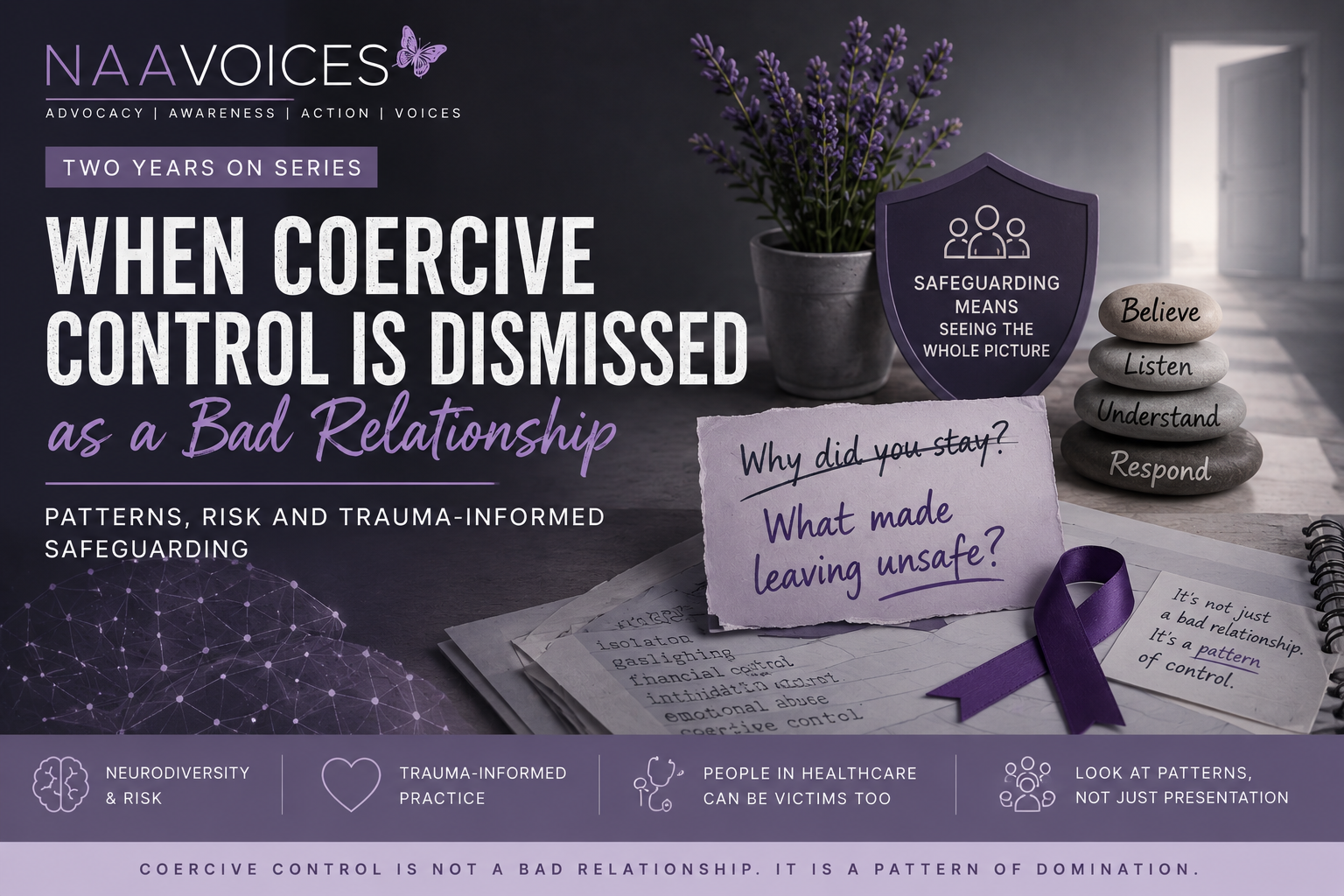
That is why “Why did you stay?” is the wrong question.
The better question is:
What made leaving unsafe?
Coercive Control Is Not a Bad Relationship
The Domestic Abuse Act 2021 recognises that domestic abuse can include physical or sexual abuse, violent or threatening behaviour, controlling or coercive behaviour, economic abuse, and psychological or emotional abuse. That legal framework matters because abuse is not limited to physical violence. It can be a course of conduct. It can be a pattern. It can be the gradual removal of someone’s freedom, confidence and sense of reality. (Legislation.gov.uk)
Coercive control is not simply arguing. It is not ordinary relationship breakdown. It is not two people failing to communicate.
It is a pattern of domination.
The Home Office statutory guidance explains that controlling or coercive behaviour can underpin economic, emotional, psychological, technology-facilitated abuse and threats, whether or not physical or sexual violence is also present. (GOV.UK)
It can look like sarcasm that chips away at you.
Dismissiveness that makes you doubt your own judgement.
Character attacks that make you feel impossible to love.
Accusations that keep you constantly defending yourself.
Rules that are never called rules, but still control your life.
Consequences that teach you it is easier to comply than resist.
It is the slow loss of self-trust.
You stop asking, “Is this normal?”
You start asking, “How do I stop this getting worse?”
That is not a bad relationship.
That is control.
Gaslighting and the Loss of Reality
Gaslighting is one of the most damaging tools of coercive control because it attacks your ability to trust your own reality.
It can include blatant lies, told with complete confidence.
It can include denial, even when you have proof.
It can include someone using what matters most to you as ammunition: your children, your work, your identity, your reputation, your health, your past, your future.
It can include small comments that wear you down over time.
A joke that is not a joke.
A criticism dressed as concern.
A lie you are too tired to challenge.
A compliment given just often enough to keep you confused.
It can include projection, where they accuse you of the very behaviour they are displaying.
It can include turning others against you, so you no longer know who is safe.
It can include being called unstable, dramatic, bitter, difficult or irrational until you start wondering whether your distress is the problem, rather than a response to what is being done to you.
Eventually, if it continues for long enough, you may stop asking, “Why are they doing this?”
You start asking, “What is wrong with me?”
That is the harm.
Neurodiversity, Masking and Being Misread
This is something I understand more clearly now than I did when I first wrote this.
My ADHD did not cause the abuse.
Neurodivergence does not make anyone responsible for being harmed.
The responsibility for abuse always sits with the person choosing to cause harm.
But neurodivergence can affect how abuse is experienced, recognised, disclosed and interpreted by others.
A 2023 systematic review and meta-analysis concluded:
“Individuals with ADHD are at an increased risk of being involved in cases of violence, namely IPV and SV, either as victims or perpetrators.” (PubMed)
That sentence has to be handled carefully. It does not mean ADHD causes abuse. It does not mean neurodivergent people are responsible for being harmed. It does not mean ADHD makes someone unreliable.
It means professionals need to understand risk, vulnerability and presentation with more care.
For me, ADHD meant I searched for patterns. I tried to understand every contradiction. I over-explained because I needed things to make sense. I gathered evidence because I could see the gaps and inconsistencies. I masked because I was used to functioning, even when things were difficult.
Those traits can be strengths.
But in the context of coercive control, they can also be used against you.
A neurodivergent victim may present with too much information, too much detail, too much emotion, too much urgency, or too much apparent competence. They may speak quickly, struggle to organise events chronologically, freeze, shut down, or appear detached.
They may arrive with folders, timelines and evidence, not because they are obsessive or unreliable, but because they have already learned that if they do not create the record themselves, it may not exist.
Risk is rarely about one factor in isolation. Neurodivergence, trauma, gender, parenting, financial dependence, professional identity and fear of not being believed can overlap in ways that make leaving and disclosing much harder.
That should not be mistaken for instability.
It should be understood as context.
It may be trauma.
It may be neurodivergence.
It may be both.
Either way, professionals need to look at the pattern, not just the presentation.
What Research Tells Us About Risk
Domestic abuse is common, but it is still often misunderstood.
The ONS estimated that, in the year ending March 2025:
“2.2 million females and 1.5 million males aged 16 years and over experienced domestic abuse in the last year.” (Women’s Aid)
The ONS also reported that, in the year ending March 2025:
“Domestic abuse related crimes represented 15.4% of all offences recorded by the police.” (Office for National Statistics)
Police-recorded data does not capture the full reality of domestic abuse. Many victims never report. Some report and are misunderstood. Some report and the quality of recording, investigation and safeguarding response becomes part of the harm.
Risk is not always visible.
A person may be working, parenting, studying and functioning while being controlled.
A person may have no obvious injuries and still be in danger.
A person may sound articulate and still be terrified.
That is why professionals need to understand coercive control as a pattern of behaviour, not a collection of isolated incidents.
People in Healthcare Can Still Be Victims
There is another layer that matters.
People working in healthcare can be very good at functioning while harmed.
We know how to show up.
We know how to care for others.
We know how to compartmentalise.
We know how to keep working under pressure.
We know how to present as capable, even when life outside work is falling apart.
That can make abuse harder for others to recognise.
Not because the harm is less serious, but because the presentation does not match what people expect.
Research has recognised that healthcare professionals’ own experiences of domestic violence and abuse are often overlooked, even though healthcare staff are expected to identify and respond to abuse in others. (PMC)
A systematic review and meta-analysis found:
“Healthcare professionals experience domestic violence and abuse at similar or higher rates than the general population.” (PMC)
So yes, healthcare workers can identify abuse in others and still be experiencing it themselves.
A nurse can safeguard others and still not be safeguarded herself.
A clinician can understand trauma professionally and still be traumatised personally.
A healthcare professional can look competent and still be living in fear.
A parent can keep turning up and still be breaking inside.
That is why assumptions are dangerous.
Victims do not all look the same.
They do not all sound the same.
They do not all disclose in the same way.
They do not all collapse in front of you.
Some keep going until their body gives way.
Why Professional Dismissal Causes Harm
When a victim discloses abuse, the response matters.
A professional does not need to understand every detail immediately, but they do need to understand risk, pattern and power.
When coercive control is dismissed as a bad relationship, that is not neutral.
It shifts the burden back onto the victim.
It suggests their fear may be excessive.
Their evidence may not be enough.
Their reality may still be up for debate.
For someone already conditioned to doubt themselves, that can be devastating.
It can also strengthen the perpetrator’s position.
Coercive control thrives when outsiders misunderstand it.
It thrives when people look for isolated incidents instead of patterns.
It thrives when emotional abuse is treated as conflict.
It thrives when children’s experiences are minimised.
It thrives when victims are expected to present in one acceptable way before they are believed.
That is why professional understanding matters.
It is not about taking sides.
It is about safeguarding.
What Professionals Need to Ask Instead
If a disclosure does not sound neat, that does not mean it is not credible.
If a victim brings too much evidence, that does not mean they are obsessive.
If they speak quickly, jump between events, cry, freeze, shut down or appear detached, that does not mean they are unreliable.
It may mean they are traumatised.
It may mean they are neurodivergent.
It may mean they have spent years trying to survive something that did not happen in a straight line.
The aim is not to abandon professional curiosity.
It is to use it properly.
Professionals need to ask better questions.
Not, “Why did you stay?”
But, “What made it unsafe to leave?”
Not, “Why did you not report sooner?”
But, “What stopped you from feeling safe enough to tell someone?”
Not, “Why are you only saying this now?”
But, “What has changed that means you can speak now?”
Not, “Is this just a relationship breakdown?”
But, “Is there a pattern of fear, control, intimidation, isolation or harm?”
Not, “Why are you so emotional?”
But, “What has this person been carrying, and for how long?”
That shift matters.
Because the right question can open a door.
The wrong one can close it completely.
Awareness Is Safeguarding
Understanding coercive control is not optional.
It is the difference between seeing someone as difficult and recognising someone who has been systematically worn down.
It is the difference between asking, “Why did you stay?” and asking, “What made leaving unsafe?”
It is the difference between treating abuse as conflict and recognising it as control.
Coercive control can happen to anyone.
Intelligence does not prevent it.
Professional knowledge does not prevent it.
Neurodivergence does not cause it.
Strength does not make someone immune to it.
Abuse is always the responsibility of the person choosing to harm.
Always.
If This Feels Familiar
You are not to blame for what someone else chose to do.
You are not weak because you stayed.
You are not foolish because you hoped things would change.
You are not difficult because you need help.
You are not unreliable because trauma changed how you explain things.
You are not responsible for making abuse easier for other people to understand.
If you recognise these patterns, please reach out to someone who understands domestic abuse and coercive control. Specialist support matters.
If you are in immediate danger, call 999. In the UK, you can contact the National Domestic Abuse Helpline on 0808 2000 247, or seek specialist local domestic abuse support.
You deserve safety, clarity and peace.
Not blame.
Not dismissal.
Not another person telling you it was just a bad relationship.
My Lived Experience: A Personal Journey Through Trauma and Recovery
- Back to reality. Two Days of Kindness Can’t Erase Months of Trauma 28/07/2024
- Still Standing- The Quiet Aftermath of Survival Life After Trauma: Motherhood, Exhaustion, and Carrying On Without a Safety Net 1/08/2024
- Learning to Recognise and Manage Triggers of Post-Traumatic Stress Disorder Resulting from Coercive Control 2/08/2024
- The Impact of Ignoring Domestic Abuse Reports 3/08/2024
- At the Starting Line, Again — The Cost of Being Passed from Officer to Officer 5/08/2024
- Professional Standards, Signed Statements, and the Aftermath You Do Not See 5/08/2024
- Returning to Work with PTSD: When a Place of Safety No Longer Feels Safe 10/09/2024
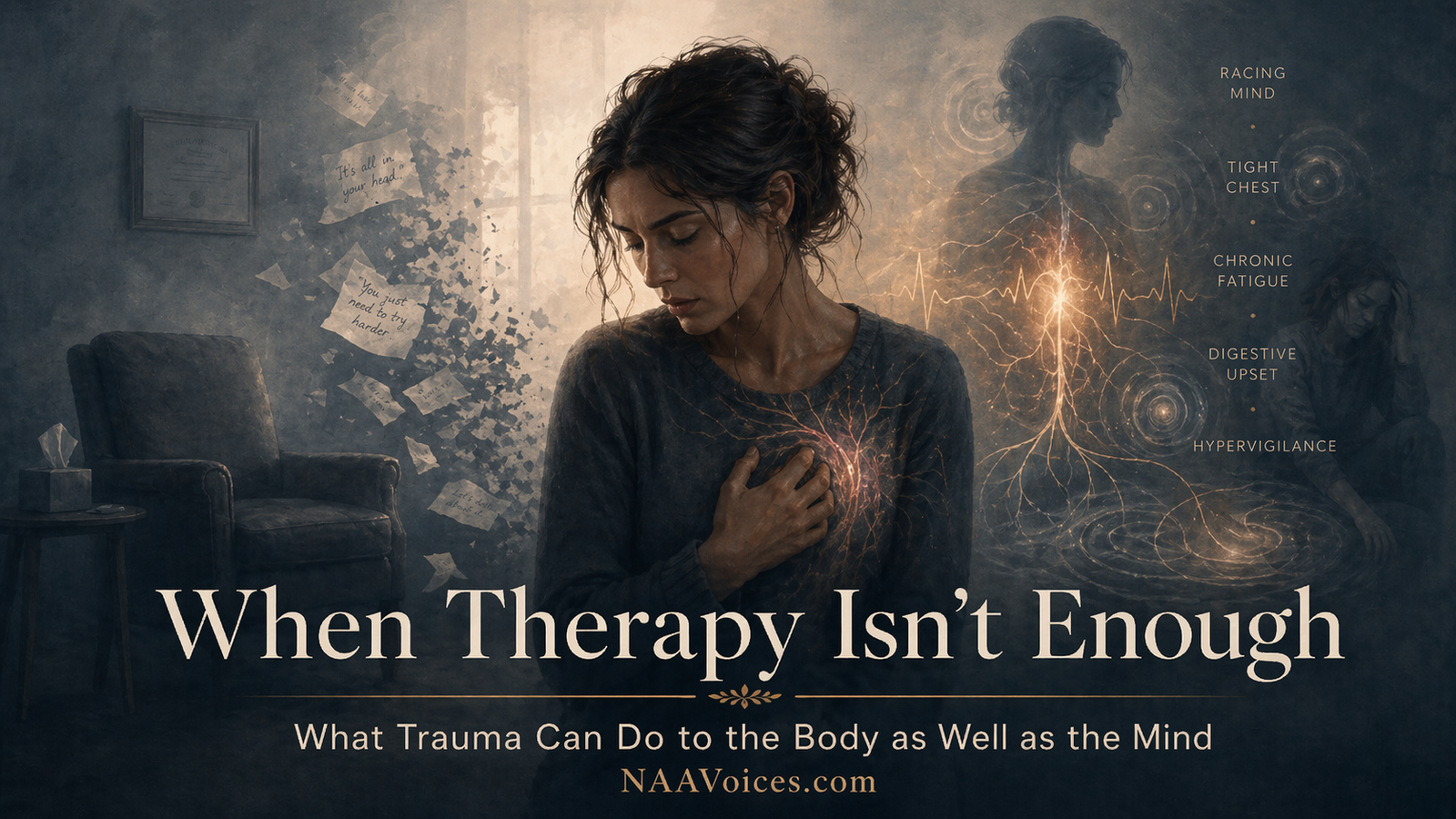
- 🧠 When Therapy Isn’t Enough: A Reflective Journey into Psychosomatics
- When Coercive Control Is Dismissed as a Bad Relationship 17/12/2024
- When the Police Came Knocking: A Personal Journey Through Fear and Recovery 29/12/2024
- Finding Silence in the Midst of Overload: Navigating Safety and Trauma 25/01/2025
- The Friday Everything Broke 06/02/2025
- Finding Strength Amidst Chaos and Control 11/03/2025
- The Power of Truth: Advocating Against Police Misconduct 18/04/2025
- Living Behind the Mask: My Journey with PTSD 22/05/2025
- When Trauma Shatters Your Coping Strategies: How PTSD Changes Everything for the ADHD Brain 09/09/2025
- Why I Write 03/10/2025
- Understanding Dissociation Through Lived Experience, Neuroscience, and Survivor-Led Advocacy 💙 16/10/2025
- Angel Numbers & Everyday Spirituality: Finding Light in Life’s Patterns 21/10/25
- When Your Nervous System Remembers: Understanding Polyvagal Theory After Narcissistic Abuse 28/12/2025
- Two Years On: What They Could Never Take 10/04/2026
- The Break in Me — Two Days That Made the Damage Impossible to Ignore 21/04/2026
Accountability & Experience: My West Mercia Police Story
- Back to reality. Two Days of Kindness Can’t Erase Months of Trauma 28/07/2024
- Two Years On: The Day I Met Jackie 29/07/2024
- The Impact of Ignoring Domestic Abuse Reports 3/08/2024
- At the Starting Line, Again — The Cost of Being Passed from Officer to Officer 5/08/2024
- Professional Standards, Signed Statements, and the Aftermath You Do Not See 5/08/2024
- When Coercive Control Is Dismissed as a Bad Relationship 17/12/2024
- The Cost of Speaking Truth: A Year That Changed Everything 27/12/2024
- When the Police Came Knocking: A Personal Journey Through Fear and Recovery 29/12/2024
- The Friday Everything Broke 06/02/2025
- The Power of Truth: Advocating Against Police Misconduct 18/04/2025
- The Accountability That Never Comes from West Mercia Police 28/05/2025
- Why I Write 03/10/2025
- Two Years On: A Survivor’s Account of Instatutianal Failure 20/11/2025
- Two Years On: What They Could Never Take 10/04/2026
- The Break in Me — Two Days That Made the Damage Impossible to Ignore 11/08/24 + 15/08/2024 Reflection 21/04/2026
- The Most Underrated People in History Are the Ones Who Told the Truth
This reflection is shared as lived experience to support domestic abuse awareness, neurodiversity-informed safeguarding, trauma-informed practice and the normalisation of mental health support. It includes selected research to support public understanding, but is not clinical or legal advice. Names, dates or details may be retained where relevant to accountability, while unnecessary identifying information has been limited to protect privacy and maintain professional boundaries. The purpose is advocacy, reflection and reducing stigma around domestic abuse, coercive control, neurodivergence and help-seeking.