Tag: self-care

  • When the Battery Dies at 11PM: The Things That Keep Us Alive

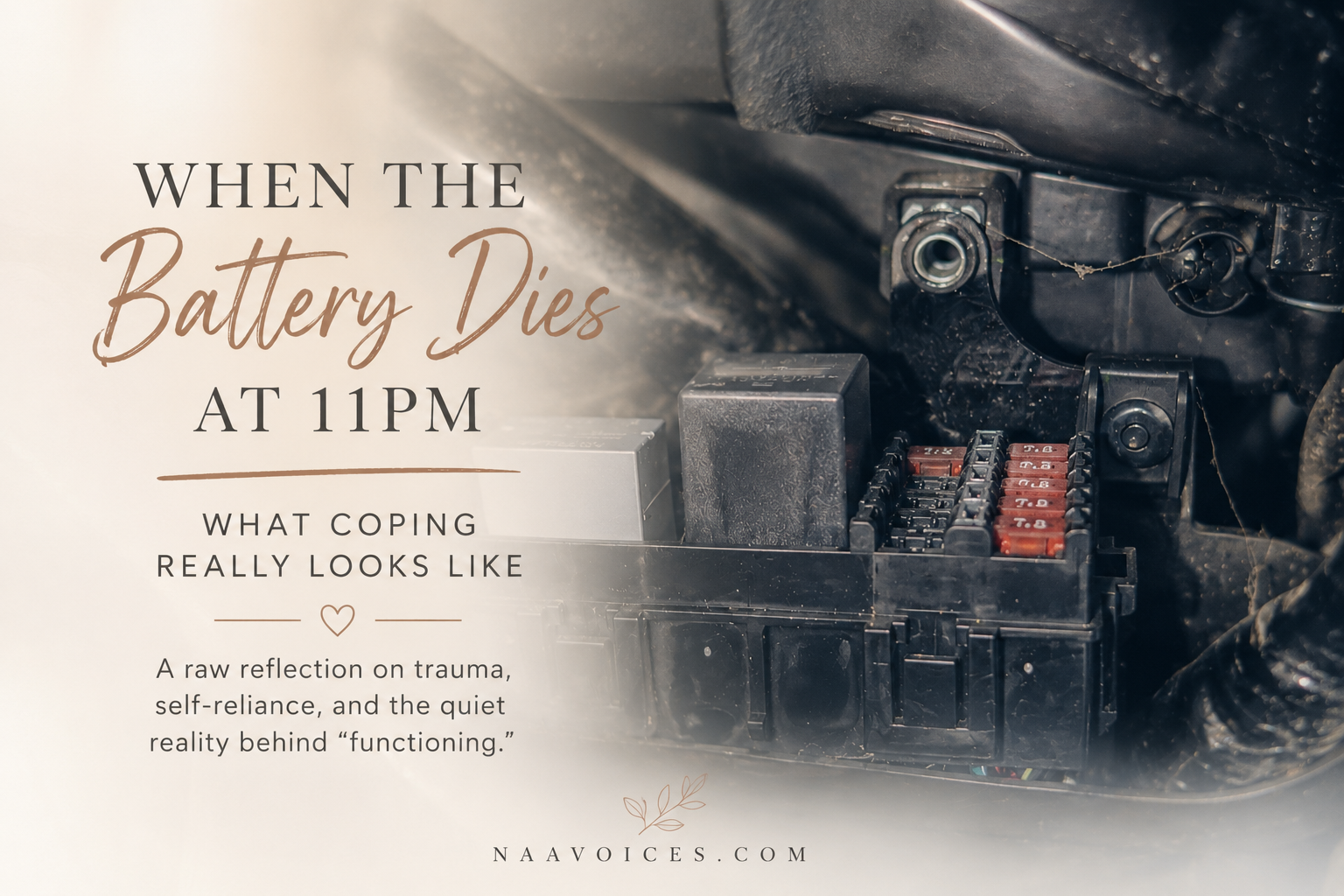
    When the Battery Dies at 11PM: The Things That Keep Us Alive

    Sometimes healing does not look like meditation apps, neat routines, or doing everything the “right” way.

    Sometimes it looks like sitting on the floor at 11 o’clock at night beside a motorbike with the seat off, staring at a fuse box because your mind will not settle until you know whether it is the battery, the fuse, or just another thing that has fallen onto your shoulders to sort out alone.

    Tonight was hard.

    I had already spent time riding earlier because I needed to clear my head. Riding has always done that for me. I grew up on the back of a bike. I have ridden on and off for over ten years now.

    Almost two years ago, I completed my CBT for the third time. This time, I knew I was not going to let anyone take that part of me away again.

    Friends, family, and colleagues could not always understand why I would choose to ride. What they did not realise was that, at that time, I was living through things I could barely articulate. Much of it was happening in silence.

    They also did not realise that riding was one of the only things that made my whole body relax.

    At the time, I did not understand dissociation. I did not have the words for it. I only knew that I had shut down so hard in order to survive that feeling anything at all had become difficult.

    But on a bike, I could feel.

    It was never about chasing danger. It was about finding a place where my body finally stopped bracing for it. For a while, the bike was the only place where I was not waiting for the next thing to happen.

    I was just there.

    Present.

    Awake.

    Alive.

    I drove to Manchester for my test, and one of the instructors that day spoke openly about his own PTSD after serving in the army, and how riding helped him. I heard him then, but I did not fully understand it.

    It took me a year.

    Now I do.

    He had no idea what I was living through. He had no idea that six months later, I would be diagnosed with PTSD too. But his honesty stayed with me. If I ever saw him again, I would want to thank him, because sometimes people say things without realising they have given someone else language for their own survival.

    For some people, motorbikes will never make sense. In healthcare especially, there can be blunt assumptions about riders and risk. But the reality is more complicated than that.

    Risk is subjective.

    People drive cars recklessly every day. People drink. People use drugs. Chronic stress damages bodies quietly over years. Trauma changes the way people react to uncertainty, silence, fear, and pressure.

    For me, a few hours on a bike can help calm the stress responses that build up over time.

    That matters.

    Self-care matters. Feeling free matters. Sometimes freedom is simply a helmet, an engine, and a stretch of road where nobody is asking anything of you for a little while.

    When the battery was flat tonight, it threw me more than it probably should have.

    Not just because my plans for tomorrow changed, but because it triggered that familiar feeling that everything ultimately falls back onto me. So when a colleague messaged, I sent her a photo of the fuse box I was sat tinkering with, trying to rule out every possibility before the replacement battery arrives in the morning.

    Logically, I knew it could wait.

    Emotionally, I could not switch off until I had checked everything.

    Trauma can do that. When you have spent years anticipating the next crisis, the next escalation, or the next consequence, it changes how you process your own needs.

    You stop asking for help.

    You stop explaining pain.

    You just keep functioning.

    My best friend lives miles away, but she always knows when something is wrong because I go quiet. I shut off. I disappear into doing. Into fixing. Into surviving. Into movement.

    That was me tonight.

    The reality is that there has never really been anyone coming to save me. I learned that a long time ago.

    There is no emergency contact for emotional exhaustion. In reality, I do not even have an emergency contact listed anywhere. No obvious person to name. No automatic safety net. No rescue team arriving when life becomes too heavy.

    Most of the time, I am the person people call when they need help.

    And honestly, I do not resent that.

    Caring for others is part of who I am. It is woven into both my personal life and my professional identity. Supporting people matters to me deeply.

    But some nights I understand why others want to be in a relationship, and why they need that side of life. Not to be rescued. Not because they are weak. But because steady, practical, human support matters. Someone safe to call. Someone who notices when you go quiet. Someone who understands that even capable people get tired.

    For me, that still feels complicated. When you have been through enough, closeness can feel less like comfort and more like risk. But I understand why people still want that connection. It is not about needing to be saved. Sometimes it is simply about not having to carry everything alone.

    Social media is full of messages about independence. About not needing anyone. About strength meaning self-sufficiency.

    But I do not think most people genuinely want to do life entirely alone.

    I think many of us simply adapt to the absence of reliable support. We become resilient because we had no alternative. We become independent because dependence was unsafe. We learn to survive because survival was required.

    And eventually people mistake survival for not needing connection.

    Tonight reminded me that healing is rarely neat.

    Sometimes it is deep conversations and therapy sessions.

    Sometimes it is practical problem-solving.

    Sometimes it is a fuse box under a motorbike seat at 11PM because your mind needs certainty before it can rest.

    Maybe that is why we need to talk more honestly about what coping really looks like. Not the polished version. Not the inspirational quote version. The real version. The late-night, practical, messy, human version.

    Because sometimes the people who look the most capable are the ones quietly holding everything together with no emergency contact, no safety net, and no room to fall apart.

    And maybe that deserves a little more understanding too.

    NAAVoices.com

  • When There Is No Safety Net Coming

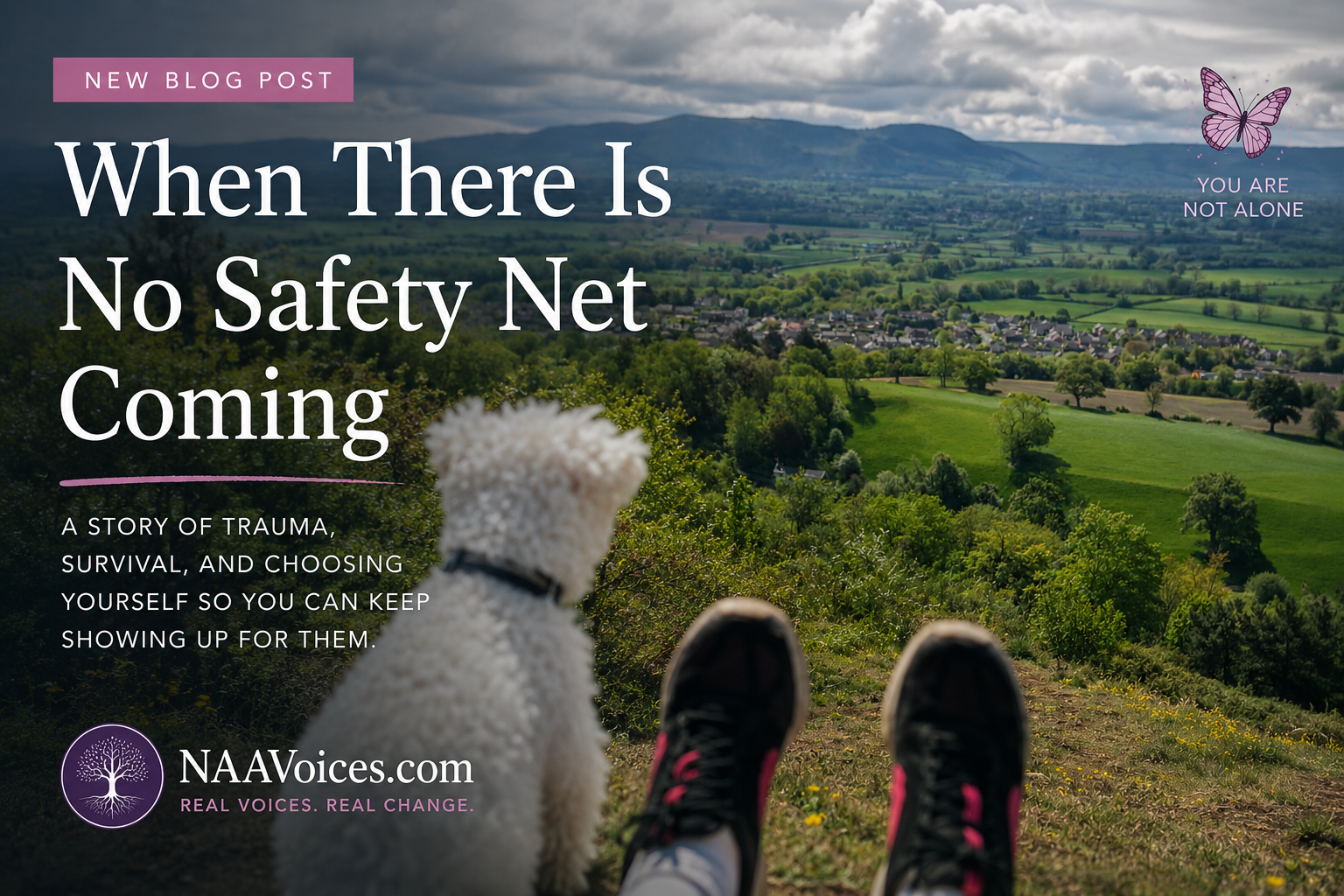
    When There Is No Safety Net Coming

    This weekend was difficult.

    The events that unfolded were directly linked to the abuse my children lived through. I will not expand on those details publicly because some things belong to them, not the internet. Their story is not mine to expose. My role is to protect it, even while telling the truth about what trauma leaves behind.

    Friday also marked the anniversary of my ex’s arrest. For a short time, I believed that moment meant safety had finally arrived. The reality that followed was very different. What came afterwards exposed my children and family to risks I never thought possible, not only through one individual, but through systems and institutions that were supposed to protect us.

    This weekend was not only about an anniversary.

    It was about what resurfaced because of it.

    Trauma does not disappear because time passes. It shows up in behaviours, emotions, reactions, fear, anger and overwhelm. Especially in children.

    And when it does, the hardest reality is not just managing the moment. It is knowing that, when everything falls apart, me and the kids only truly have me.

    There is no reliable safety net arriving. Not in the way people imagine. Not consistently. Not when the damage has already been done and the consequences are still living inside my children.

    That is why I went to the rocks.

    Not because I had spare time. Not because it was scenic. Because my body knew I needed to reset before I broke under the weight of it.

    People often think trauma lives in memory alone. It does not.

    The body remembers what the mind tries to forget.

    Certain dates pull you backwards. Certain places do too. Sometimes it arrives without warning, tightness in your chest, pressure in your throat, a sudden need to move, drive, breathe, or escape. For years, I did not understand why I instinctively sought out open spaces, music, nature, long drives or silence.

    Now I do.

    This morning, I drove the children to school and then headed to the rocks, the same place I used to go after leaving. I remember the first few times I went there. I cried most of the drive. At the time, I did not understand why being there mattered so much.

    Looking back, I can see that my body was searching for regulation before my mind had fully processed what had happened.

    People can dismiss walking, music, fresh air, the sea, nature, or grounding techniques as “airy-fairy”. They are not. The nervous system carries trauma. It also recognises safety, rhythm, space and movement before we always have the words for why they help.

    Trauma changes the way you live. I have certain clothes I wear because they make me feel safer. Certain items I keep with me. Certain routines, places and songs that act as anchors. They may look insignificant to anyone else, but to a traumatised nervous system, they are reminders that I have survived before and can survive again.

    Today I walked to the top, somewhere I had not climbed since carrying my then three-year-old on my back with the dog beside me.

    It was almost comical at times. I avoided the proper path and ended up climbing through brambles instead. At one point, I was practically on my hands and knees dragging myself up the final stretch just to reach the spot I needed to get to.

    And the dog never left my side.

    She kept stopping and looking back to check where I was. No formal training. No commands. Just instinctively staying close while I crawled through mud, brambles and exhaustion towards somewhere my body had decided mattered.

    When I finally got there, I sat.

    Headphones on. Music playing. Breathing.

    For the first time in a while, everything went quiet.

    Walking back down, I did not want to leave. I circled for a while, climbed back through the brambles again, and delayed going home because something about being there made me feel human again.

    Maybe that is what healing sometimes is.

    Not fixing everything.

    Not pretending it never happened.

    Just finding a moment where your nervous system stops fighting long enough to let you breathe.

    There is a version of me that existed before all of this, and I know now I will never fully be that person again. For a long time, that grief consumed me. I thought being broken meant I had lost myself forever.

    But being broken also gave me understanding.

    It changed the way I see pain in other people. It taught me to recognise what fear, exhaustion and trauma can look like beneath behaviour. It changed the way I advocate, the way I work, the way I parent, and the way I see injustice.

    When you have lived through institutional failure, coercive control and fear, you begin to understand how many people are silently carrying things nobody else can see.

    I have spent much of my life giving other people what I never had myself, support, compassion, protection and reassurance. Somewhere along the way, I forgot that self-care is not selfish.

    It is necessary.

    Because school runs still happen.
    GCSEs still happen.
    Parenting still happens.
    Life still continues.

    Today, my 15-year-old came home after his first GCSE exam.

    I asked him how it went.

    He shrugged and said he did not even understand the question.

    And I just told him, “You’re fine, as long as you tried your best.”

    Because honestly, after everything he went through last year, I did not know whether he would emotionally make it to this point. Trauma comes out in children in ways people often fail to recognise. Attendance can be resilience. Showing up can be courage. Sitting an exam can be survival.

    So I am proud of him.

    Not because of grades.

    Not because of results.

    Because he showed up.

    Because despite everything, he walked through those school gates and sat that exam.

    Sometimes healing looks like climbing through brambles to sit on the rocks with your headphones on because your body needs reminding that you survived.

    Sometimes resilience looks like a child walking into a GCSE exam after a year that nearly broke him.

    And sometimes the strongest thing a person can do is keep showing up for their children, while finally learning to show up for themselves too.

    Even when healing means accepting that the people and systems you believed would stand beside you were never really there.

  • When the Training Becomes Personal

    When the Training Becomes Personal

    When the Training Becomes Personal

    December 28, 2025

    I’ve just completed the Narcissistic Abuse Recovery training, and it was tougher than expected.

    I began to deepen my understanding of supporting others through this. Facing how deeply it resonated with my own experiences required absolute honesty, humility, and resilience.

    This process reinforced a critical point: recovery isn’t theoretical. It’s lived, layered, and often confronting, but it’s also where meaningful transformation happens.

    If you’re navigating this kind of healing, you’re not “behind.” You’re doing complex work with courage and accountability. And that matters.

    Screenshot

    #NarcissisticAbuseRecovery

    #TraumaInformedHealing

    #SurvivorStrong

    #HealingJourney

    #DomesticAbuseAwareness

    #TraumaRecovery

    #EmotionalAbuse

    #MentalHealthMatters

    #BoundariesMatter

    #FromSurvivingToThriving