Tag: parenting

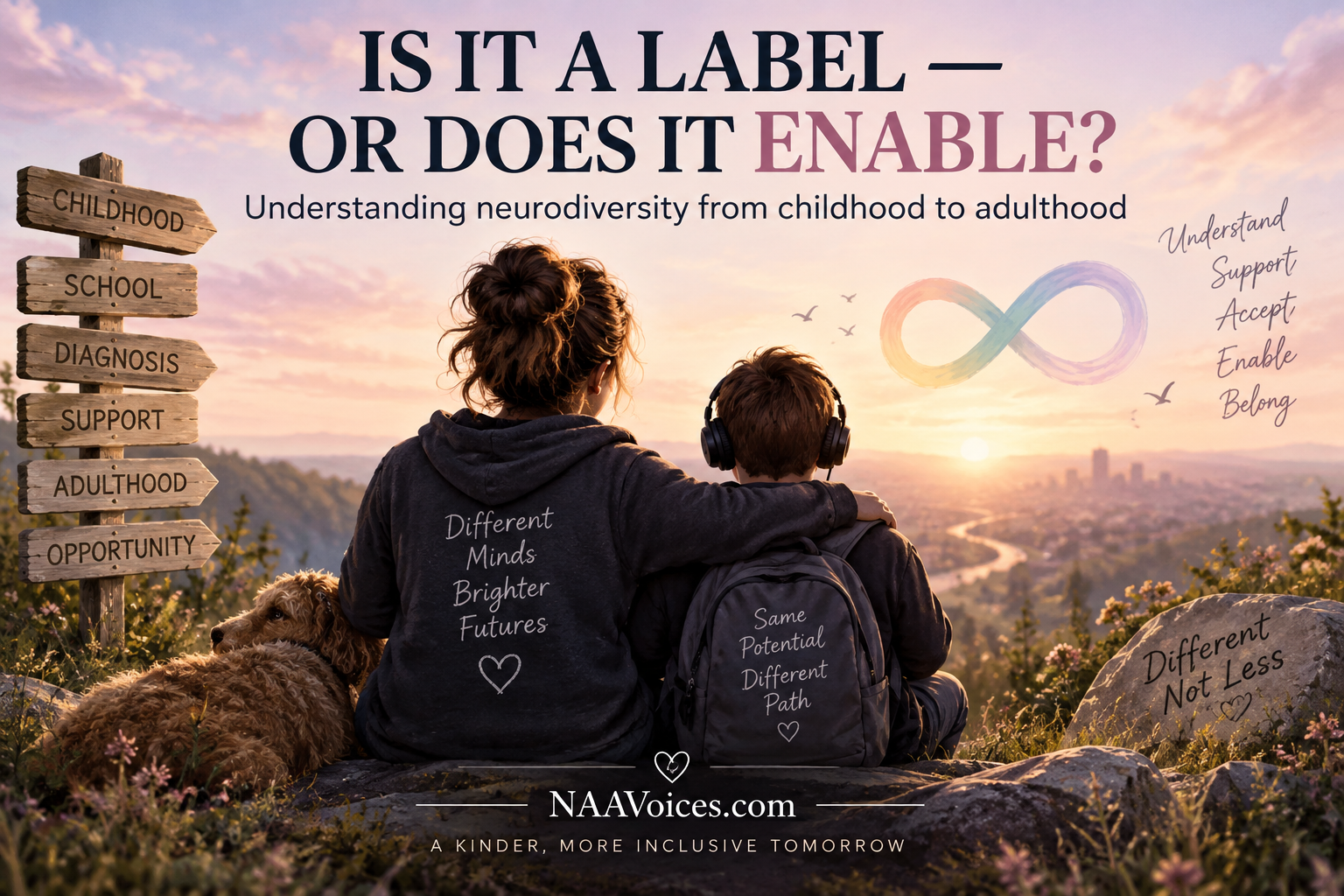
  • Is It a Label, or Does Understanding Neurodiversity Enable Us?

    Is It a Label, or Does Understanding Neurodiversity Enable Us?

    The children who mask, the adults who were missed, the parents running on empty, and why understanding matters

    We know neurodiversity exists. ADHD, autism, dyslexia, dyspraxia and other neurodevelopmental differences are spoken about far more openly than a generation ago. Yet alongside that awareness sits another reality: the waiting lists are long, and while a child waits, childhood doesn’t pause. They still have school, friendships, sensory environments, emotions and sleep to somehow manage, and their parents still have to get everyone through another day.

    For me, this has never been about collecting labels. I believe in enabling the child in front of us. My experience of neurodivergence, parenting neurodivergent children and working in healthcare led me to study neuroscience and the psychology of mental health, because I wanted to understand why we think, learn and respond differently.

    When we give something a name, are we labelling somebody, or finally giving them the understanding they need to thrive?

    Why Does Everyone Seem to Have ADHD or Autism Now?

    There is undoubtedly more public awareness, and social media has made information, good and bad, extraordinarily accessible. But increased awareness doesn’t mean every energetic child has ADHD, or that every difficulty requires a diagnosis. A TikTok video cannot diagnose ADHD; recognising yourself or your child in a list of traits is not the same as a proper assessment, and nothing here replaces one.

    But the opposite matters too. Greater recognition doesn’t automatically mean fad. Perhaps we’re simply getting better at recognising people who were always there, including adults who were the children nobody noticed decades ago.

    What Does a Diagnosis Actually Change?

    It doesn’t change the child; the child leaving an assessment is the same one who walked in. What can change is everybody else’s understanding: “they won’t concentrate” becomes “why is concentration difficult?”; “they’re being difficult” becomes “what is happening here?”

    That doesn’t mean removing boundaries or accepting harmful behaviour. It means understanding whether somebody needs a different route to the same destination. Sometimes understanding why is the beginning of working out how.

    “But They’re Fine at School”

    My eldest is sixteen; I became a mum at twenty-one, and didn’t recognise everything then that I can see now. I was fortunate: teachers saw signs before I did, referrals happened without a fight, and I was never once called into school about his behaviour. At school, he held things together. At home, things looked completely different. A child who is managing at school isn’t necessarily a child who is coping.

    The Coke Bottle Effect

    Imagine shaking a bottle: noise, changed plans, a missed instruction, sitting still, watching every word, an unwanted touch, unwritten social rules, something uncomfortable they can’t explain. Shake, shake, shake, but the lid stays on through the school day. Then they get home, the door closes, and everything comes pouring out.

    That doesn’t prove a diagnosis; there are many reasons children behave differently across environments. But “we don’t see that here” should never mean “there isn’t a problem.” Home is often simply where a child feels safe enough to stop holding it together.

    To the Parent Who Is Running on Empty

    Somewhere, a parent is reading this after an awful day: an explosion at the door, a three-hour bedtime, every strategy failing. Am I doing this wrong?

    You can understand behaviour as communication and still find it hard to live with. You can love your child completely and need ten minutes away from them. Both can be true. If your child is safe and you need a moment, take one, then tell the school, the professionals, whoever needs to know, that you’re struggling. Don’t be ashamed to say this is hard.

    Some days will feel pointless. Then you’ll get up and advocate again, because when your child can’t explain what’s happening, you are their voice. If you or your child are ever in crisis, contact your GP, NHS 111, or in an emergency, 999.

    Where Your Child Sits on a Waiting List Is Not a Parenting Score

    Services are stretched, thresholds exist, and the most urgent clinical risks are understandably prioritised. That doesn’t make waiting easy, but a long wait, a declined referral, or a low priority ranking is not a reflection of how much they’re struggling, how much you care, or how good a parent you are. If something changes or risk increases, say so and ask again.

    Support Shouldn’t Always Have to Wait for a Diagnosis

    A child’s needs exist the day before the diagnostic report arrives too. Some schools already do this well: predictable routines, visual information, movement breaks, smaller task stages, a calmer sensory environment. Not every adjustment needs a label, and what helps a neurodivergent child often helps others too. Someone once told me, “it’s so nice speaking to somebody who gets it.” Often, that’s the real need: to be heard, and pointed toward the right next step.

    Masking Can Be Remarkably Convincing

    The quiet child, the academically successful child, the polite child, the child whose parents are never called into school: none of them is necessarily coping. Some children become extremely good at watching, copying and suppressing what they’re experiencing. We see the result, not the cost. And those children grow up.

    Neurodivergent Children Become Neurodivergent Adults

    They become employees, parents, nurses, teachers, business owners. Some build lives that fit how their brains work; some become extraordinarily good at compensating, held together by calendars, alarms and perfectionism, until something changes and those systems stop working.

    Undiagnosed Men Matter Too

    Some energetic boys found an outlet through sport or practical hobbies; others were simply called lazy or told they weren’t reaching their potential. Some built careers that happened to suit their brains: fast-paced, practical, self-employed, no two days the same. Then a promotion, an injury, parenthood or a relationship ending removes what had been keeping things afloat. Perhaps the neurodivergence didn’t appear. Perhaps what enabled them to function did.

    And Then There Are the Women Nobody Noticed

    The girl who wasn’t disruptive, who did her work, who learned the rules and masked well, could be missed entirely. She grows into a capable woman, wondering why ordinary things require so much effort. Then, for some, another transition arrives.

    ADHD and Menopause: An Important Conversation, but One That Needs Care

    Hormonal change may interact with attention, executive functioning and mood, but research specifically on ADHD through perimenopause and menopause is still developing, so the biology shouldn’t be made to sound simpler than it is. Sleep, memory and concentration can also shift with menopause alone, independent of any neurodivergence. For a woman who has spent decades compensating, the combination can be particularly hard. “What has happened to me?” Perhaps she hasn’t become incapable; perhaps we’re finally seeing what the coping always cost. This deserves individual assessment, not a single universal explanation, and anyone noticing these changes should raise them with their GP or a menopause specialist.

    The Hidden Face of ADHD in Women: What I Learned Through Diagnosis, Research, and Real Support

    I Know What It Is Like to Build a Life Around Your Brain

    I don’t work well doing one thing at a time. I’m doing two courses right now because I absorb information better moving between them. A traditional classroom, sitting still with no outlet for stimulation, is almost physically uncomfortable for me. Music, fidgets, movement: I need it to concentrate, and I’m also very good at my job. Those things aren’t contradictory. I masked at school too, but I had practical hobbies outside it that gave my energy somewhere to go.

    “I Have Undiagnosed ADHD”

    At thirty-two, I wanted an explanation. I hadn’t taken antidepressants or anti-anxiety medication, and wasn’t prepared to treat something I didn’t believe fit without exploring an alternative first; that was the right call for me, not advice for anyone else, and medication decisions should always sit with a prescriber. I told my GP what I’d been experiencing and why I suspected ADHD, and she listened. No fight, no need to convince her that a woman who’d built a career and raised children could also have ADHD. I was referred. I know I was fortunate; not everyone’s route to being heard is that straightforward, and pathways vary by area and GP.

    Neurodivergence Can Bring Strengths, and Still Be Genuinely Hard

    We’ve swung from framing neurodivergence purely as deficit to calling everything a superpower. Neither is the whole story. Curiosity, creativity, hyperfocus and unconventional problem-solving are real strengths, but strengths don’t cancel difficulties. The same hyperfocus that produces extraordinary work can make switching tasks agonising. Someone can thrive in a crisis and struggle with an ordinary Tuesday. We should be able to talk honestly about both, without pretending the hard parts shouldn’t be hard.

    We Shouldn’t Be Teaching Children to Become Better at Hiding

    I don’t want the goal to be a neurodivergent child who’s simply good at looking neurotypical. I want them to understand themselves, know what overwhelms them, and feel able to ask for help. And I want them to find their thing, whatever it is, because support isn’t about lowering the ceiling. It’s about removing unnecessary barriers underneath it.

    Diagnosis Should Be a Beginning, Not an Ending

    A diagnosis doesn’t define somebody, excuse behaviour, or remove boundaries. At its best, it explains patterns, informs support, and eventually helps a child understand themselves. So perhaps the real question isn’t “why does everybody need a label now?” but “how many people did we fail to understand before?” Because the children who weren’t recognised didn’t disappear. They grew up: some flourished, some masked, some reached midlife before understanding why ordinary life took extraordinary effort.

    I don’t want children unnecessarily labelled, diagnosed from social media, or every difference medicalised. But I don’t want them dismissed either. I want understanding, proper assessment, and opportunity. And to the parent reading this after an impossible day: you don’t have to be perfect, or pretend you’re coping. Ask for help. When your child can’t find the words, be their voice. Use it.

    Understanding neurodiversity isn’t about deciding what somebody can’t become. It’s about understanding what they need, so they have the chance to discover what they can.

    Different Minds. Different Needs. Brighter Futures.

    Amy Royle Founder of NAAVoices. She holds a BSc in Adult Nursing, a PGCert in Neuroscience & Psychology of Mental Health, and certificates as an ADHD Coach, Neurodiversity Coach, Trauma Healing Practitioner, Narrative Therapy Practitioner and Narcissistic Abuse Healing Practitioner.

    NAAVoices.com

    Important Information

    This article combines lived experience, professional reflection and general educational information written in a personal advocacy capacity. Nothing here constitutes clinical advice, assessment or diagnosis for any named individual, and it is not a substitute for advice from an appropriately qualified and regulated professional. My nursing, postgraduate and coaching qualifications do not make me a specialist diagnostician of neurodevelopmental conditions; assessment, diagnosis and treatment decisions should always go through the appropriate professional pathway.

    Where this article references research on ADHD, masking or perimenopause, this is a general summary of an evolving evidence base, not a systematic review; readers seeking the underlying literature should consult NICE guidance and peer-reviewed sources directly. All personal anecdotes are Amy’s own and shared with consent; no other identifiable individual’s personal or clinical information appears in this article.

    If you are worried about your own or your child’s development, wellbeing or safety, please contact your GP, NHS 111, or, in an emergency, 999.
  • Looking Back: How Acceptance Changed Everything

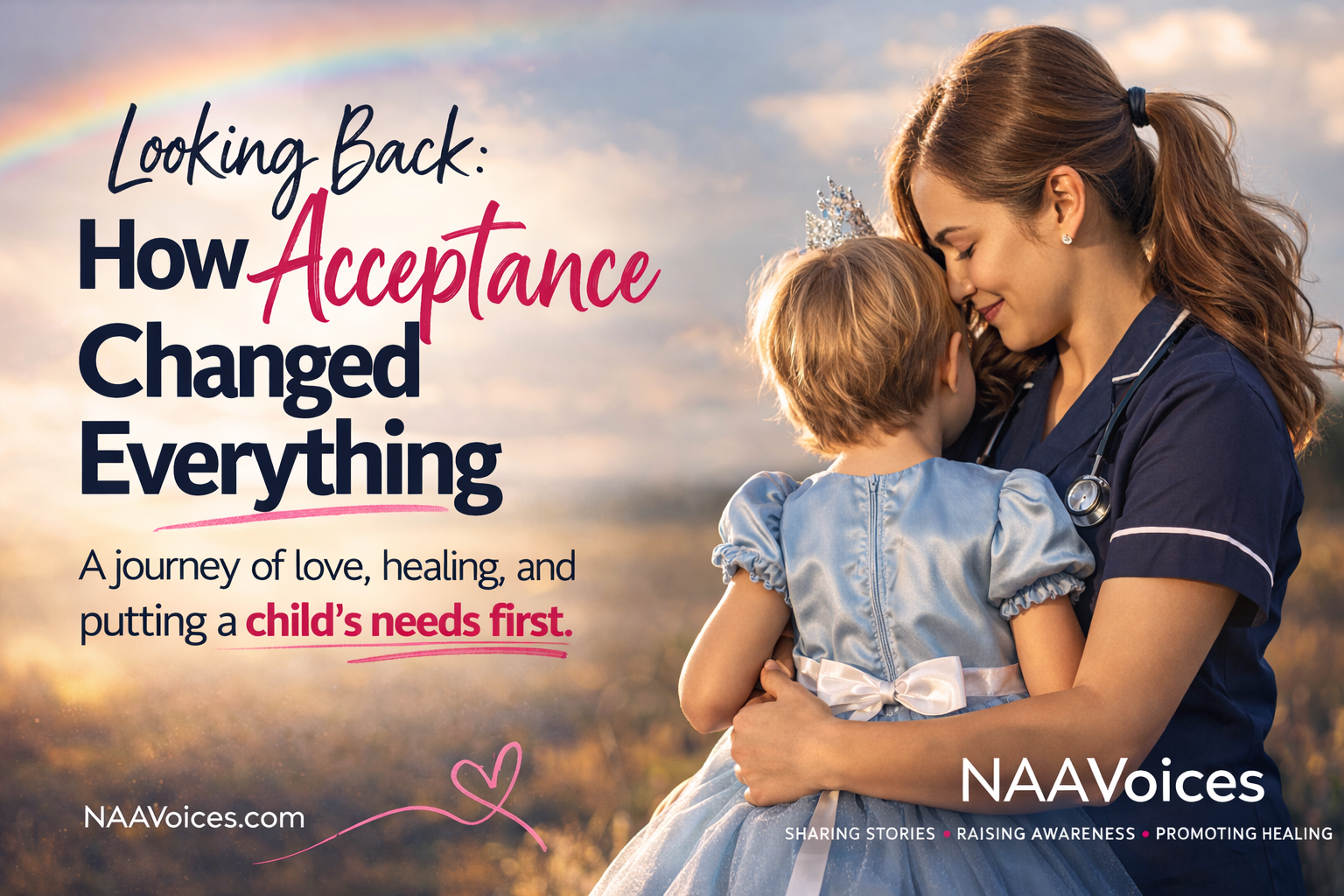
    Looking Back: How Acceptance Changed Everything

    NAAVoices was not created from certainty, but from lived experience and professional insight. As I migrate earlier work from the original platform, this post has been reviewed and approved for transfer. It remains true to its original context, with only minor clarity edits where needed. Some moments do not require rewriting to remain honest.

    27 February 2025

    It is only when I look back over the past six months that I realise just how different our reality could have been without acceptance, love, and a willingness to put a child’s needs first.

    This post is rooted in reflection, personal growth, and the quiet clarity that sometimes only comes with time. Looking back has brought me a little peace. It has also helped me join the dots.

    Although I remember many of the moments that led to my child identifying as female from such a young age, I sometimes wish I had written more down. But in another sense, perhaps what mattered most was not documenting every detail, but allowing freedom, expression, and acceptance to lead the way. That is what allowed her to shine.

    I have kept the heart of this post true to how it was originally written. Since then, those around us have worked hard to use the correct pronouns, and we continue to do our best to support her in every way we can. I wrote the original draft four months before my four-year-old was able to fully express the depth of how she felt. It has been a journey. It has not been perfect. At times, I have wondered whether I should have noticed sooner.

    To my beautiful little one — you are the brightest star I have ever seen, now that you are free to be yourself.

    Draft originally written on 10 August 2024

    The post I was too scared of judgement to share

    I have a four-year-old who, from quite early on, loved playing with dolls and adored Princess Poppy, just like her older brother once did. What began with small interests gradually became more consistent. It turned into a Frozen dress, and for 18 months she asked for one.

    Growing up, there were three of us. I am the middle child, with an older sister and a younger sibling who does not use pronouns. We refer to them as “auncle”.

    I have always believed that people should be free to be themselves. I have always recognised that stereotypes around gender, sexuality, and social roles can be restrictive, harmful, and deeply unfair.

    As a parent, I have always tried to raise my children with the belief that everyone is equal, that no one is “better” than anyone else, and that kindness costs nothing.

    I have never believed boys should only like blue, girls should only like pink, or that children should be boxed into certain toys, clothes, or interests.

    That had already been clear with my older son, who once loved Princess Poppy costumes, dance classes, and hairdressing toys.

    Although my ex-husband initially found some of it unusual, he never allowed his own views to shape or limit our son. That little boy is now 12 years old, over 5 foot 7, and would be mortified if he knew I had written this about him.

    Now he is into rugby, the gym, running, and Xbox. I am incredibly proud of him for being exactly who he is, regardless of anyone’s expectations about gender or interests. He is funny, compassionate, and accepting of everyone.

    This weekend, the older two were with their dad, and I took my youngest to a toy sale. Like most four-year-olds, she was full of excitement, pointing at everything she liked. Since she had been allowed to choose her own toys more freely, the house had become increasingly sparkly and pink. We had already bought a Barbie campervan and some Barbies, and that had not bothered me at all.

    But when she asked for the Barbie Dreamhouse, I hesitated.

    That hesitation was not about her. It was about what had been done to me.

    What I realised in that moment was that four years in a toxic relationship had not only affected my identity, but had also changed the way I saw myself as a parent. It had created a version of me I did not recognise — one shaped by anxiety, fear, and the constant pressure of anticipating judgement.

    For a split second, I questioned my own instincts. Was it okay to buy it? What would people think?

    That was not who I truly was. But the fact those thoughts appeared at all told me just how much damage had been done.

    Why should it be wrong for a four-year-old to want a doll’s house?

    The man running the stall was with his daughter, whose toys were all pink and glittery. He seemed to notice my discomfort, though it had nothing to do with him or his stock. I had simply frozen.

    At that point, I was off work. I had finally admitted I needed help for what I had been through and was trying to learn how to live with PTSD.

    I had never had an issue with dolls, dresses, babies, or Frozen. But over time, I had been made to feel that these things were wrong if they did not fit someone else’s beliefs.

    That same day, the gentleman at the stall spoke openly about how, when he was younger, he used to dress as a girl and how his family had questioned what that meant. It struck me deeply.

    I felt ashamed that I had allowed fear to creep into something that should have been simple.

    Just two weeks earlier, I had gone to a solicitor’s office to collect a parcel for my child. She wanted to wear her Elsa dress. Instead of simply letting her, I found myself trying to persuade her to wear “regular” clothes because I was frightened it would somehow be reported back to my ex.

    I was scared that allowing her to wear a dress would lead to more accusations, more scrutiny, more control.

    And that is what it always came back to: control.

    My ex had controlled my life for so long that even after I had left, I still panicked about what he might say, what he might do, and whether I would somehow be punished for allowing my child to be herself.

    I had spent so long living under someone else’s judgment that I had started to question my own values.

    For four years, I felt as though I had lived with two versions of myself. One was the woman constantly bracing for threats, fear, and fallout. The other was the version of me that still existed at work — the one who was grounded, compassionate, professional, and clear on what was right.

    Looking back now, I know that version was the real me all along.

    The fear was never my identity. It was the effect of abuse.

    When a patient walks through my door, I do not see labels first. I do not assess someone’s worth based on gender, identity, relationship status, work, or appearance. Every person is entitled to dignity, safety, and respect. Nobody has the right to strip that away.

    That day, my child and I left the sale with the Barbie Dreamhouse and the biggest smile I had seen in a very long time.

    On the way home, I said, “Yes, you are my beautiful little boy.”

    And she replied, “No mummy, I’m your beautiful little girl.”

    This time, I did not correct her. I did not shut it down. I did not try to control what she was expressing.

    Instead, I listened.

    I had fought so hard to get control out of my own life. She deserved the same freedom — the freedom to tell me who she was, without fear.

    So I said, “Yes, you are my beautiful little girl, if that is what you want to be.”

    At the time, neither of us fully understood what that moment would come to mean. We did not yet know that this was more than role-play. There were many moments before and after it, many small signs and snippets that only make sense now when I look back.

    Six months later, I had what felt like a completely different child — happier, more carefree, and more confident. She had begun wearing girls’ clothes to school and had been met with wonderful support from family and friends.

    We are still finding our way. We are still learning. We are still navigating this path together.

    But she is loved for who she is. She is wanted. She is accepted.

    And perhaps most importantly of all, she is now confident enough to correct anyone — including me — when we get her pronouns wrong.

    She is still finding her feet at school.

    But she is finding them as herself.

    February 27, 2025

    At the top a boy- bottom a Girl
    Parenting and Learning, Through a Gender Journey
  • Big Hearts: A Four-Year-Old, a Stranger, and a 60-Mile Round Trip

    Big Hearts: A Four-Year-Old, a Stranger, and a 60-Mile Round Trip

    Today, my youngest and I ventured into Telford shopping centre for a bit of shopping. As we made our way to the car park pay station near Primark, we encountered a gentleman sitting on the floor, drawing with a tin out for donations.

    I rarely carry cash — only my card — but seeing him there, I immediately checked. My little one asked about his drawings. Children have a unique way of seeing the world, and my son sees no harm in others.

    Over the past year, I’ve realised that despite what others may project about who I am, he has been shielded from the true events and the behaviours of others. He has always been my priority, and I have protected him from the harsh reality that not everyone is kind, considerate of others’ wellbeing, or capable of causing harm.

    This year has truly highlighted how hard life can be, and what I would have given to change even one aspect of what was happening. Life can take unexpected turns, making it difficult for some to find a way out of their circumstances.

    We met ‘Sketch,’ who shared a bit of his story with us. He had been through a lot, especially during COVID when he ended up in intensive care. His life took a downward turn from there. He had even written his experiences in a book but felt his handwriting wasn’t good enough to share.

    That hit close to home. When I wrote over 40,000 words about the abuse I had endured, no one listened or cared. A police officer told me I didn’t even need to provide a statement. Journaling became the thing that helped me find closure and process what had happened. Sitting there with Sketch, I realised how many of us feel that our lives and experiences simply don’t matter to others.

    It’s something I’ve made it a point to change — at work and in my daily life. I let people know that they do matter, that their stories matter. That need to affirm others perhaps stems from my intense desire to protect my children and fight for them, despite my ex manipulating others the way he had manipulated me for years.

    Listening to people’s stories is vital, because so many endure hardships in silence.

    It’s not realistic to help every person you come across, especially financially, but I felt for him. He had commented on his handwriting, and I knew that converting it into text was something I could do without much effort — something that might actually help him. I offered to do it if he ever decided to share his story and gave him my website email address.

    Sketch shared his journey of finding solace in drawing, a heartfelt way he copes with his challenges. As my little one carefully looked through Sketch’s pictures, he eagerly searched his bag for a drawing he wanted to share with him.

    I felt compelled to ask Sketch if I could write about him in my blog, highlighting the importance of instilling kindness and empathy in my children. To my joy, he agreed to a photo.

    Initially, he appeared a bit reserved, but by the time we left, a warm smile lit up his face. It was a beautiful reminder of the connection we can create through understanding and compassion.

    On the way back to the car, my son said something that melted my heart: “Mummy, I have a big heart, like you.” This brought tears to my eyes, especially after a teacher recently told me he was like his older brothers. I was incredibly proud to hear that.

    Before the youngest’s dad came into my life, my older boys were amazing kids who saw no harm in others and cared unconditionally about the people around them. Ten years ago, my middle son, at the same age my little one is now, had asked to buy water for a homeless man we encountered on the street. Sadly, they have since witnessed and experienced the harm that others can cause, and that is something I will never forgive myself for.

    Just a year ago, my little one was struggling with his emotions while living in an environment I wouldn’t wish on anyone. He rarely showed me much empathy. One of his ‘long’ memories with his dad is of him shouting at me because he wanted to play with his toys in the room I was cleaning. For a three-year-old to have that as a ‘happy long’ memory speaks volumes about the kind of behaviour he saw as acceptable. But today, he demonstrated profound empathy and understanding, showing how far he’s come.

    Once back in the car, I rummaged through our belongings to find something for Sketch. I found an old jumper of my teenage son’s and my little one’s drawing pad. I turned around, and my little one eagerly grabbed a toy train to give as well.

    As we returned to find Sketch, my son expressed his pride in being kind, suggesting we give him his pennies from his bag. It’s unsettling what he remembers — like how an act of kindness wasn’t the norm. He said, “Daddy has a bad heart. I don’t want to shout at you.” I reassured him that he indeed has a big heart, one capable of kindness and love.

    When we found Sketch again, my son proudly showed him the elephant he had drawn in the sketch pad, declaring it was for him. He also playfully pointed out his “dirty hands” — a charming reminder that, at four years old, such things are just part of life. The train was a gift for Sketch to play with while he wasn’t drawing.

    We chatted on our way back to the car, and just as we were leaving, Sketch ran after us with stickers he had found, eager to share them with my son. It was a little reminder that those who have so little often give what they can — not just in material possessions, but in time, energy, and effort, often to their own detriment.

    In the car, my little one suggested we get Sketch a house and some dinner.

    We returned after running our errands, only to find that he had left the car park.

    Today, I felt a swell of pride for my young man, but also for myself. I’ve chosen not to let the actions of others deter my desire to help those in need. Life may throw challenges our way, but moments like these remind us of the power of kindness and the importance of teaching our children to care for others.

    Since arriving home, my little one has put together a bag of things all on his own: popcorn, which he insisted on cooking himself, baby wipes for Sketch’s dirty hands after drawing, and snacks. But the most beautiful part is that he has drawn and cut out about a million hearts, colouring them in for Sketch.

    It looks like we’ll be making another 60-mile round trip tomorrow. Because I want this boy to know that even if we can’t find Sketch in the same spot, the effort, care, and compassion he has shown at the age of four is beyond anything many others would or could show. And I am unbelievably proud of him.


    Shout out to Sketch: Your resilience and creativity are truly inspiring. Despite all you’ve been through, you’ve shown that there is still room for kindness and generosity. It’s a powerful reminder for us all to care for one another and not judge others, because we never know where life might take us.