Category: Life Through a Neurodiverse Lens

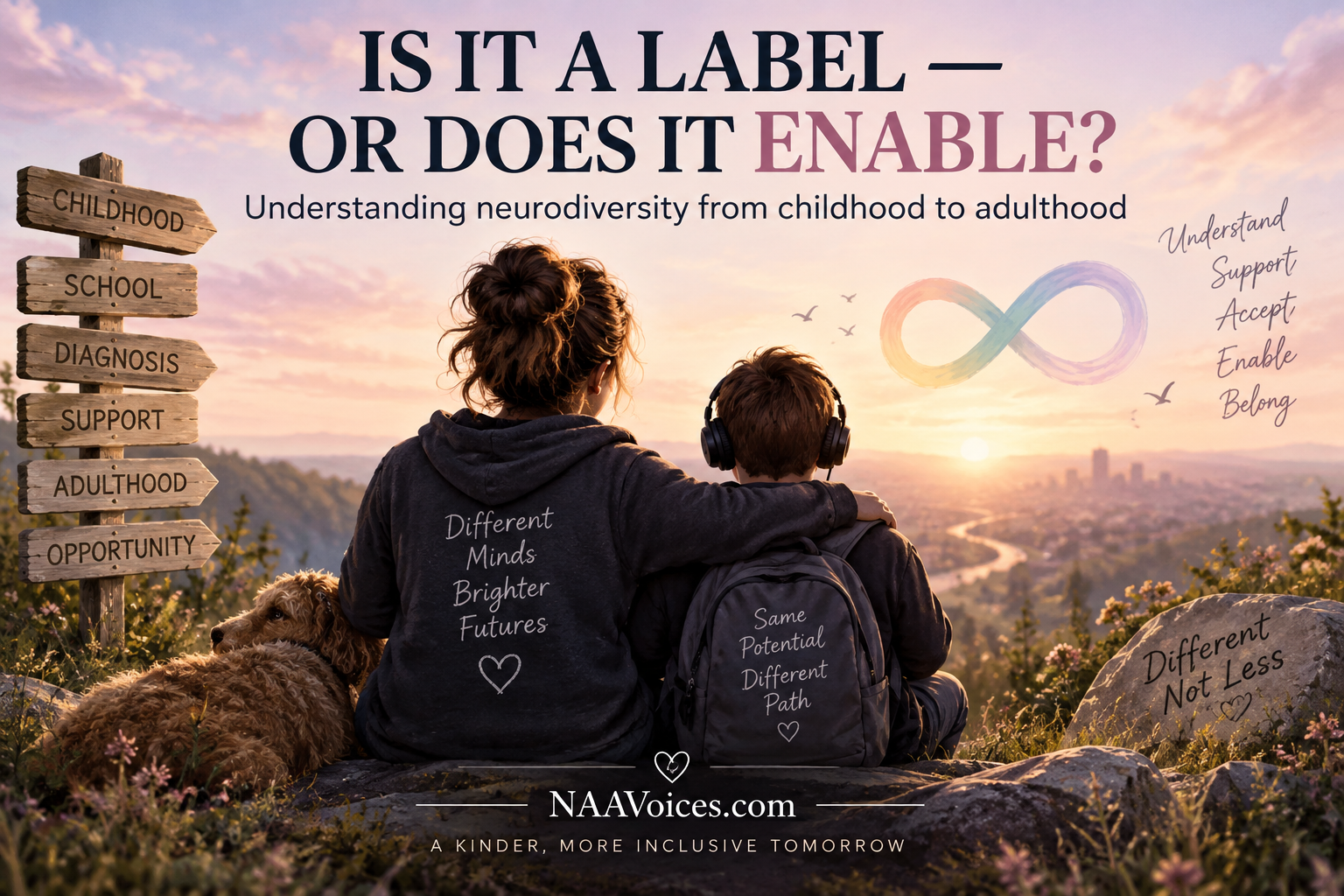
  • Is It a Label, or Does Understanding Neurodiversity Enable Us?

    Is It a Label, or Does Understanding Neurodiversity Enable Us?

    The children who mask, the adults who were missed, the parents running on empty, and why understanding matters

    We know neurodiversity exists. ADHD, autism, dyslexia, dyspraxia and other neurodevelopmental differences are spoken about far more openly than a generation ago. Yet alongside that awareness sits another reality: the waiting lists are long, and while a child waits, childhood doesn’t pause. They still have school, friendships, sensory environments, emotions and sleep to somehow manage, and their parents still have to get everyone through another day.

    For me, this has never been about collecting labels. I believe in enabling the child in front of us. My experience of neurodivergence, parenting neurodivergent children and working in healthcare led me to study neuroscience and the psychology of mental health, because I wanted to understand why we think, learn and respond differently.

    When we give something a name, are we labelling somebody, or finally giving them the understanding they need to thrive?

    Why Does Everyone Seem to Have ADHD or Autism Now?

    There is undoubtedly more public awareness, and social media has made information, good and bad, extraordinarily accessible. But increased awareness doesn’t mean every energetic child has ADHD, or that every difficulty requires a diagnosis. A TikTok video cannot diagnose ADHD; recognising yourself or your child in a list of traits is not the same as a proper assessment, and nothing here replaces one.

    But the opposite matters too. Greater recognition doesn’t automatically mean fad. Perhaps we’re simply getting better at recognising people who were always there, including adults who were the children nobody noticed decades ago.

    What Does a Diagnosis Actually Change?

    It doesn’t change the child; the child leaving an assessment is the same one who walked in. What can change is everybody else’s understanding: “they won’t concentrate” becomes “why is concentration difficult?”; “they’re being difficult” becomes “what is happening here?”

    That doesn’t mean removing boundaries or accepting harmful behaviour. It means understanding whether somebody needs a different route to the same destination. Sometimes understanding why is the beginning of working out how.

    “But They’re Fine at School”

    My eldest is sixteen; I became a mum at twenty-one, and didn’t recognise everything then that I can see now. I was fortunate: teachers saw signs before I did, referrals happened without a fight, and I was never once called into school about his behaviour. At school, he held things together. At home, things looked completely different. A child who is managing at school isn’t necessarily a child who is coping.

    The Coke Bottle Effect

    Imagine shaking a bottle: noise, changed plans, a missed instruction, sitting still, watching every word, an unwanted touch, unwritten social rules, something uncomfortable they can’t explain. Shake, shake, shake, but the lid stays on through the school day. Then they get home, the door closes, and everything comes pouring out.

    That doesn’t prove a diagnosis; there are many reasons children behave differently across environments. But “we don’t see that here” should never mean “there isn’t a problem.” Home is often simply where a child feels safe enough to stop holding it together.

    To the Parent Who Is Running on Empty

    Somewhere, a parent is reading this after an awful day: an explosion at the door, a three-hour bedtime, every strategy failing. Am I doing this wrong?

    You can understand behaviour as communication and still find it hard to live with. You can love your child completely and need ten minutes away from them. Both can be true. If your child is safe and you need a moment, take one, then tell the school, the professionals, whoever needs to know, that you’re struggling. Don’t be ashamed to say this is hard.

    Some days will feel pointless. Then you’ll get up and advocate again, because when your child can’t explain what’s happening, you are their voice. If you or your child are ever in crisis, contact your GP, NHS 111, or in an emergency, 999.

    Where Your Child Sits on a Waiting List Is Not a Parenting Score

    Services are stretched, thresholds exist, and the most urgent clinical risks are understandably prioritised. That doesn’t make waiting easy, but a long wait, a declined referral, or a low priority ranking is not a reflection of how much they’re struggling, how much you care, or how good a parent you are. If something changes or risk increases, say so and ask again.

    Support Shouldn’t Always Have to Wait for a Diagnosis

    A child’s needs exist the day before the diagnostic report arrives too. Some schools already do this well: predictable routines, visual information, movement breaks, smaller task stages, a calmer sensory environment. Not every adjustment needs a label, and what helps a neurodivergent child often helps others too. Someone once told me, “it’s so nice speaking to somebody who gets it.” Often, that’s the real need: to be heard, and pointed toward the right next step.

    Masking Can Be Remarkably Convincing

    The quiet child, the academically successful child, the polite child, the child whose parents are never called into school: none of them is necessarily coping. Some children become extremely good at watching, copying and suppressing what they’re experiencing. We see the result, not the cost. And those children grow up.

    Neurodivergent Children Become Neurodivergent Adults

    They become employees, parents, nurses, teachers, business owners. Some build lives that fit how their brains work; some become extraordinarily good at compensating, held together by calendars, alarms and perfectionism, until something changes and those systems stop working.

    Undiagnosed Men Matter Too

    Some energetic boys found an outlet through sport or practical hobbies; others were simply called lazy or told they weren’t reaching their potential. Some built careers that happened to suit their brains: fast-paced, practical, self-employed, no two days the same. Then a promotion, an injury, parenthood or a relationship ending removes what had been keeping things afloat. Perhaps the neurodivergence didn’t appear. Perhaps what enabled them to function did.

    And Then There Are the Women Nobody Noticed

    The girl who wasn’t disruptive, who did her work, who learned the rules and masked well, could be missed entirely. She grows into a capable woman, wondering why ordinary things require so much effort. Then, for some, another transition arrives.

    ADHD and Menopause: An Important Conversation, but One That Needs Care

    Hormonal change may interact with attention, executive functioning and mood, but research specifically on ADHD through perimenopause and menopause is still developing, so the biology shouldn’t be made to sound simpler than it is. Sleep, memory and concentration can also shift with menopause alone, independent of any neurodivergence. For a woman who has spent decades compensating, the combination can be particularly hard. “What has happened to me?” Perhaps she hasn’t become incapable; perhaps we’re finally seeing what the coping always cost. This deserves individual assessment, not a single universal explanation, and anyone noticing these changes should raise them with their GP or a menopause specialist.

    The Hidden Face of ADHD in Women: What I Learned Through Diagnosis, Research, and Real Support

    I Know What It Is Like to Build a Life Around Your Brain

    I don’t work well doing one thing at a time. I’m doing two courses right now because I absorb information better moving between them. A traditional classroom, sitting still with no outlet for stimulation, is almost physically uncomfortable for me. Music, fidgets, movement: I need it to concentrate, and I’m also very good at my job. Those things aren’t contradictory. I masked at school too, but I had practical hobbies outside it that gave my energy somewhere to go.

    “I Have Undiagnosed ADHD”

    At thirty-two, I wanted an explanation. I hadn’t taken antidepressants or anti-anxiety medication, and wasn’t prepared to treat something I didn’t believe fit without exploring an alternative first; that was the right call for me, not advice for anyone else, and medication decisions should always sit with a prescriber. I told my GP what I’d been experiencing and why I suspected ADHD, and she listened. No fight, no need to convince her that a woman who’d built a career and raised children could also have ADHD. I was referred. I know I was fortunate; not everyone’s route to being heard is that straightforward, and pathways vary by area and GP.

    Neurodivergence Can Bring Strengths, and Still Be Genuinely Hard

    We’ve swung from framing neurodivergence purely as deficit to calling everything a superpower. Neither is the whole story. Curiosity, creativity, hyperfocus and unconventional problem-solving are real strengths, but strengths don’t cancel difficulties. The same hyperfocus that produces extraordinary work can make switching tasks agonising. Someone can thrive in a crisis and struggle with an ordinary Tuesday. We should be able to talk honestly about both, without pretending the hard parts shouldn’t be hard.

    We Shouldn’t Be Teaching Children to Become Better at Hiding

    I don’t want the goal to be a neurodivergent child who’s simply good at looking neurotypical. I want them to understand themselves, know what overwhelms them, and feel able to ask for help. And I want them to find their thing, whatever it is, because support isn’t about lowering the ceiling. It’s about removing unnecessary barriers underneath it.

    Diagnosis Should Be a Beginning, Not an Ending

    A diagnosis doesn’t define somebody, excuse behaviour, or remove boundaries. At its best, it explains patterns, informs support, and eventually helps a child understand themselves. So perhaps the real question isn’t “why does everybody need a label now?” but “how many people did we fail to understand before?” Because the children who weren’t recognised didn’t disappear. They grew up: some flourished, some masked, some reached midlife before understanding why ordinary life took extraordinary effort.

    I don’t want children unnecessarily labelled, diagnosed from social media, or every difference medicalised. But I don’t want them dismissed either. I want understanding, proper assessment, and opportunity. And to the parent reading this after an impossible day: you don’t have to be perfect, or pretend you’re coping. Ask for help. When your child can’t find the words, be their voice. Use it.

    Understanding neurodiversity isn’t about deciding what somebody can’t become. It’s about understanding what they need, so they have the chance to discover what they can.

    Different Minds. Different Needs. Brighter Futures.

    Amy Royle Founder of NAAVoices. She holds a BSc in Adult Nursing, a PGCert in Neuroscience & Psychology of Mental Health, and certificates as an ADHD Coach, Neurodiversity Coach, Trauma Healing Practitioner, Narrative Therapy Practitioner and Narcissistic Abuse Healing Practitioner.

    NAAVoices.com

    Important Information

    This article combines lived experience, professional reflection and general educational information written in a personal advocacy capacity. Nothing here constitutes clinical advice, assessment or diagnosis for any named individual, and it is not a substitute for advice from an appropriately qualified and regulated professional. My nursing, postgraduate and coaching qualifications do not make me a specialist diagnostician of neurodevelopmental conditions; assessment, diagnosis and treatment decisions should always go through the appropriate professional pathway.

    Where this article references research on ADHD, masking or perimenopause, this is a general summary of an evolving evidence base, not a systematic review; readers seeking the underlying literature should consult NICE guidance and peer-reviewed sources directly. All personal anecdotes are Amy’s own and shared with consent; no other identifiable individual’s personal or clinical information appears in this article.

    If you are worried about your own or your child’s development, wellbeing or safety, please contact your GP, NHS 111, or, in an emergency, 999.
  • The Therapy Nature Gives Me

    The Therapy Nature Gives Me

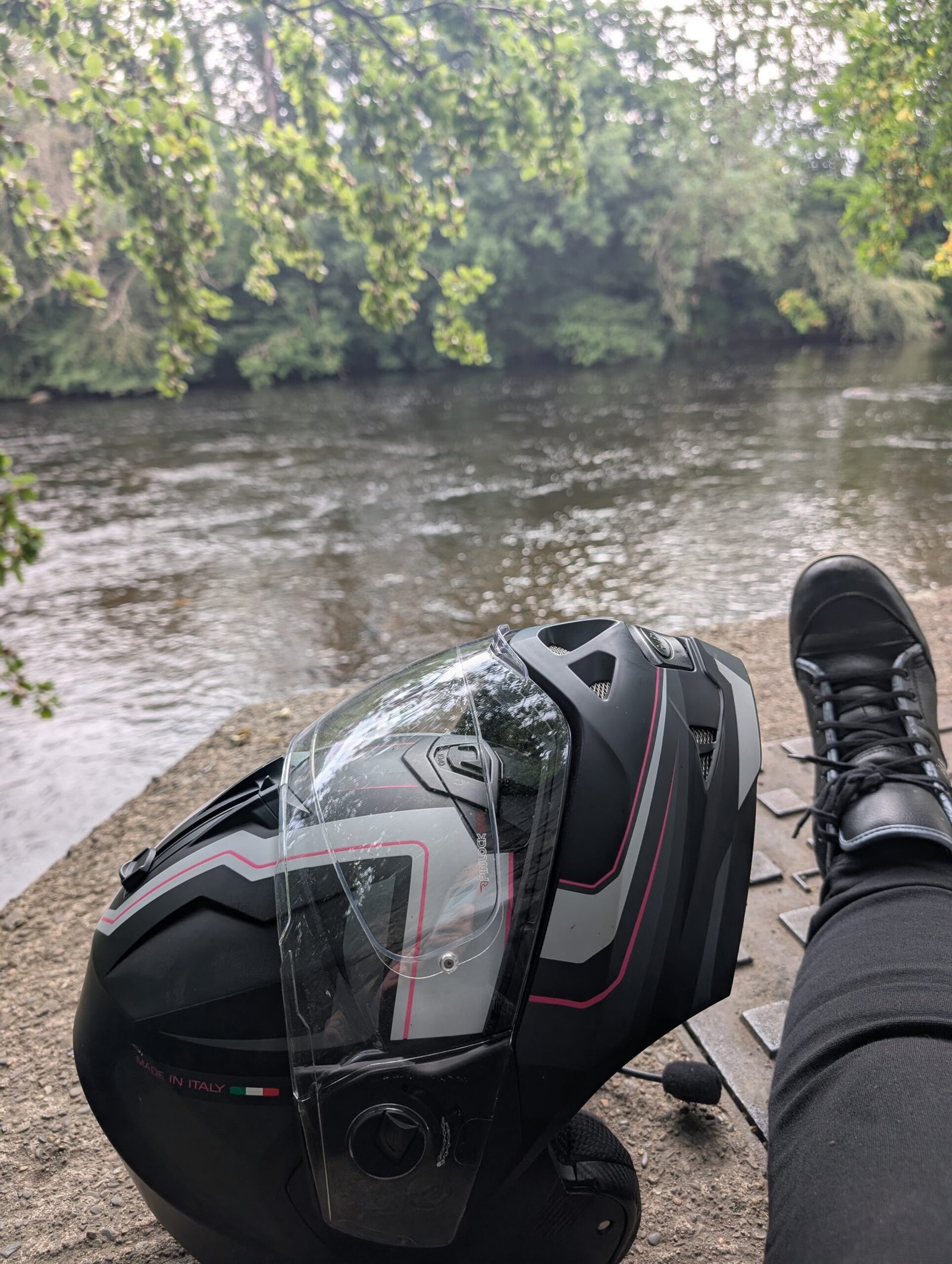
    Therapy doesn’t always happen in a counselling room.

    Life is often a million miles an hour, and I’m regularly asked how I keep going or how I never seem to stop. The truth is, that’s the reality of living with ADHD and PTSD. Keeping busy is often how I cope. Silence leaves space for memories, and with PTSD, silence isn’t always peaceful.

    But when I need to reset, this is where I come. Somewhere natural. Somewhere that helps me ground myself.

    I’ve said it many times: the body remembers what the mind forgets. In reality, the mind doesn’t forget the events; it just loses track of time. The dates blur, the anniversaries become less obvious, and the conscious reminders fade. But the body still knows. It remembers long before the mind catches up.

    So for a few hours today, I’m choosing to appreciate life. To recognise everything we’ve survived, to be grateful for how far I’ve come, and simply to be present.

    I’m still here.

    The truth is, far too many people never get that chance.

  • The Hidden Face of ADHD in Women: What I Learned Through Diagnosis, Research, and Real Support

    The Hidden Face of ADHD in Women: What I Learned Through Diagnosis, Research, and Real Support

    Part of the “Two Years On” reflection series

    When I first began writing publicly, I was writing from survival. I knew something was deeply wrong, but I didn’t yet have the language for it — not the link between ADHD, trauma bonds, or Rejection Sensitive Dysphoria. All I had were my experiences, raw and unfiltered. I could describe what was happening, but I couldn’t yet understand the mechanisms beneath it. At the time, that was all I had the capacity to do.

    I realised the trauma bond had finally broken just ten days after my diagnosis. I phoned Samaritans that day. From July 2023 until the day I left, I fought hard not to be pulled back into the narcissistic cycle. And as anyone who has lived it knows, things got much worse before they got better.

    Two years on, I understand so much more — not only about myself, but about why ADHD in women is so consistently overlooked by systems, professionals, and often by women themselves.

    This post is not about reopening old wounds. It is about articulating what I could not see then, and why that lack of language matters.

    Why ADHD in Women Is So Often Missed

    ADHD in women rarely matches the stereotype most people are taught to recognise. We are not always disruptive or visibly hyperactive. More often, we are capable, empathetic, articulate, and quietly overwhelmed.

    In women, ADHD commonly presents as:

    • internal restlessness
    • emotional intensity
    • chronic overwhelm
    • perfectionism masking chaos
    • people-pleasing
    • hyper-responsibility
    • burnout disguised as competence

    Looking back, I can see how easily this was misinterpreted. Functioning became evidence that nothing was wrong. Coping became proof that support was not needed. Distress was reframed as anxiety, sensitivity, or personality, rather than recognised as neurodevelopmental.

    This misinterpretation is one of the primary reasons women are missed.

    Masking: When Coping Looks Like Capability

    For much of my life, I believed I was simply managing. What I now understand is that I was masking.

    Masking in women is rarely a conscious performance. It is a survival response shaped by social conditioning. Girls learn early to adapt, to accommodate, and to regulate others’ emotions before their own. Instead of acting out, we internalise.

    Masking can look like:

    • over-preparing
    • rehearsing conversations
    • suppressing overwhelm
    • pushing through exhaustion
    • appearing calm while internally dysregulated

    When masking is effective, it is invisible, even to the person doing it. You believe you are coping. This is precisely why ADHD in women remains unseen for so long.

    When ADHD Traits Are Misunderstood and Used Against You

    Certain ADHD traits in women are frequently mislabelled. These include emotional openness and deep empathy. Other traits are oversharing, difficulty with boundaries, and fear of rejection.

    In isolation, these traits are often misunderstood. Within abusive or coercive dynamics, they can be exploited.

    In my case, qualities that were once strengths were gradually reframed as flaws. Openness became something to use against me. Fear of rejection became a tether. Empathy became a reason to excuse behaviour that should never have been excused.

    ADHD did not cause abuse.
    However, ADHD shaped how I responded and how difficult it was to leave.

    When neurodivergent traits are interpreted as emotional instability, the underlying ADHD becomes even harder to recognise.

    Rejection Sensitive Dysphoria: The Language I Did Not Have Then

    One of the most significant insights I have gained since writing my first blog is Rejection Sensitive Dysphoria. It is often referred to as RSD.

    At first, it was suggested to me. It gave language to experiences I had lived with for years. I could not explain them. These included the physical pain of rejection. There was also the intensity of emotional responses. It involved the fear of disappointing others and the difficulty letting go of harmful relationships.

    Two years ago, I wrote about heartbreak without understanding why it felt so overwhelming. I had the pain, but not the framework.

    RSD is not being overly sensitive. It is a neurological response linked to ADHD. In women, it is frequently mistaken for insecurity, dependency, or unresolved attachment. This is another reason women with ADHD are missed.

    The Science and the Gender Blind Spot

    ADHD is a neurodevelopmental condition involving differences in brain structure, connectivity, and neurochemistry. In women, these differences are often obscured by adaptation and expectation.

    Dopamine dysregulation affects motivation, reward, and emotional regulation, yet is often mislabelled as depression. Differences in the prefrontal cortex affect planning and impulse control, but many women compensate so effectively that impairment goes unnoticed. Oestrogen influences dopamine, meaning symptoms can fluctuate across the lifespan and are frequently misinterpreted as mood disorders. Trauma overlap further complicates presentation, and without trauma-informed assessment, ADHD is often overlooked.

    With this understanding, I can now see how clear the signs were, and how consistently they were misinterpreted.

    Facing the Truth, Two Years On

    I revisited the blog i wrote in august 2024. The words were honest and unfiltered, and the impact surprised me.

    “Today, I asked a close friend to repeat a truth I’ve been avoiding — a simple statement I’d asked them to say out loud because I needed to hear it clearly, without softening or reassurance. It’s a truth that has haunted me for months. Hearing it wasn’t easy, but it was necessary. That moment marked a turning point: a step towards understanding and, hopefully, eventually, healing.

    Because accessing mental health support has been so difficult, I’ve often relied on email as a way to process my thoughts. Recently, I stumbled across a message I’d written at the start of the month — a raw, honest attempt to explain how I was feeling. I hadn’t expected the emotional weight it would carry when I read it back. The truth, as they say, hurts. And for someone with ADHD — or anyone wired with deep empathy — it takes immense strength not to react defensively or spiral.

    I have to remind myself that I spent years ignoring the truth. Every word Gabriel spoke was a lie, and yet I believed him. I never imagined he could lie to me. That betrayal still stings. But knowing the truth now is vital. It’s the foundation for every decision I need to make moving forward.

    What I didn’t expect was the physical toll. After months free from cardiac pain, dizziness, and discomfort, it all came rushing back. I know this reckoning had to happen — but the old cliché, ‘things happen for a reason,’ feels hollow when I’m once again left picking up the pieces.”

    Two years ago, that destabilised me. Now, I understand it as integration, painful but necessary.

    Why Diagnosis Matters, Even Later in Life

    Diagnosis did not change who I am. It changed how I understand myself.

    It explained why I pushed myself to breaking point. It also explained why certain relationships felt impossible to leave. It showed why emotional pain felt disproportionate yet real. It clarified why I coped outwardly while struggling internally.

    More importantly, it removed shame.

    Two years on, I no longer see sensitivity as weakness or intensity as instability. I understand the wiring behind it, and why helping others was never a phase, but a responsibility born of insight.

    Two Years Forward

    Women with ADHD are not diagnosed late because they do not struggle.
    They are diagnosed late because they struggle quietly, competently, and alone.

    Two years ago, I was writing from survival.
    Now, I am writing from understanding.

    And understanding of ADHD, trauma, and RSD has not silenced me. It has clarified why advocacy, support, and speaking out were never optional.

    This is who I am now, with language I did not have then.

    Women with ADHD are not diagnosed late because they do not struggle. They are diagnosed late because they struggle quietly, competently, and alone.

    Understanding did not silence me. It clarified why helping was never optional.

    If You’re Struggling

    If anything in this post resonates with you and you’re finding things difficult, please reach out for support. You don’t have to navigate ADHD, emotional overwhelm, or rejection sensitivity on your own.

    If you’d like to explore more guidance, tools, and lived‑experience insights, you can also visit our Neurodiversity Home Page or browse the Neurodiversity Hub for further information and support.

    You can find reliable information, guidance, and community support through ADHD UK – Homepage – ADHD UK

    Reaching out is not a weakness — it’s the first step towards understanding yourself with compassion.

  • Understanding Types of Neurodiversity
Exploring the natural variation in how human brains process information, communicate, and experience the world

    Understanding Types of Neurodiversity Exploring the natural variation in how human brains process information, communicate, and experience the world

    Types of Neurodiversity | NAAVoices.com

    Understanding Types of Neurodiversity

    Exploring the natural variation in how human brains process information, communicate, and experience the world

    Survivor-led | Neuro-affirming | Evidence-informed

    What is Neurodiversity?

    Neurodiversity is the understanding that human brains and minds naturally differ from one another. Just as biodiversity describes the variety of life on Earth, neurodiversity recognises the natural variation in how people think, learn, process information, and experience the world.

    Australian sociologist Judy Singer coined the term in the 1990s, representing a shift from viewing neurological differences as deficits to recognising them as natural variations of human neurology. This perspective acknowledges that conditions such as autism, ADHD, dyslexia, dyspraxia, dyscalculia, and others are not disorders to be cured, but different ways of being that come with both challenges and strengths.

    The neurodivergent brain is not broken. The environments and expectations placed upon them often are.

    🧩
    Autism Spectrum Condition

    Autism

    A lifelong neurodevelopmental difference characterised by variations in brain structure, connectivity, and function that affect how individuals process sensory information, communicate, navigate social situations, and experience the world.

    Autism exists across a spectrum, meaning presentation varies significantly between individuals and across the lifespan. No two autistic people are the same.

    Common Characteristics

    • Sensory differences (hyper or hypo-sensitivity to stimuli)
    • Need for predictability and routine
    • Communication differences (literal interpretation, preference for clarity)
    • Social fatigue from interaction demands
    • Intense, focused interests in specific topics
    • Pattern recognition and systematic thinking
    • Attention to detail others may miss
    • Honesty and direct communication
    ⚡
    Attention Deficit Hyperactivity Disorder

    ADHD

    A neurodevelopmental condition characterised by differences in brain structure, neurochemistry, and connectivity that affect executive function, attention regulation, impulse control, and activity levels.

    ADHD manifests in three presentations: predominantly inattentive, predominantly hyperactive-impulsive, and combined presentation.

    Common Characteristics

    • Difficulty sustaining focus on routine tasks
    • Restlessness and internal sense of being “driven”
    • Impulsivity in decisions and actions
    • Executive dysfunction (planning, organising, initiating tasks)
    • Hyperfocus on tasks of high interest
    • Time blindness and difficulty with deadlines
    • Emotional dysregulation and intensity
    • Creativity and innovative thinking
    📖
    Specific Learning Difference

    Dyslexia

    A neurological difference that primarily affects reading, writing, spelling, and sometimes speaking. Dyslexia is characterised by difficulties with accurate and fluent word recognition, poor spelling, and decoding abilities.

    These difficulties typically result from a deficit in the phonological component of language and are often unexpected in relation to other cognitive abilities. Dyslexia affects approximately 10% of the population.

    Common Characteristics

    • Difficulty with phonological awareness (connecting sounds to letters)
    • Slow or inaccurate reading despite adequate intelligence
    • Challenges with spelling and written expression
    • Difficulty with rapid naming of familiar objects
    • Problems with working memory for verbal information
    • Exceptional visual-spatial reasoning abilities
    • Strong creative and problem-solving skills
    • Ability to see “big picture” connections
    🎯
    Developmental Coordination Disorder

    Dyspraxia

    A neurological condition affecting physical coordination, movement planning, and organisation. Dyspraxia impacts the ability to plan and coordinate physical movements, making everyday activities that others find simple potentially challenging.

    Also known as Developmental Coordination Disorder (DCD), dyspraxia affects fine motor skills (writing, buttoning), gross motor skills (sports, balance), and often organisational and planning abilities.

    Common Characteristics

    • Difficulty with fine motor skills (handwriting, using cutlery)
    • Challenges with gross motor skills (catching, balance)
    • Poor spatial awareness and perception
    • Difficulty following multi-step instructions
    • Challenges with organisation and time management
    • Sensitivity to sensory stimuli
    • Strong verbal communication skills
    • Creative thinking and empathy
    🔢
    Mathematical Learning Difference

    Dyscalculia

    A specific learning difference affecting mathematical understanding and number processing. Dyscalculia involves difficulty understanding number concepts, number relationships, and struggles with mathematical reasoning and calculation.

    Often called “maths dyslexia,” dyscalculia is a neurological condition affecting the areas of the brain responsible for processing numbers and mathematical concepts, affecting approximately 5-7% of the population.

    Common Characteristics

    • Difficulty understanding number concepts and relationships
    • Struggles with basic arithmetic (addition, subtraction)
    • Difficulty with mental maths calculations
    • Problems understanding mathematical symbols and operations
    • Challenges with time management and reading clocks
    • Difficulty with money management and financial concepts
    • Strong verbal and creative abilities
    • Often strong intuition and holistic thinking

    Recognising Neurodivergent Strengths

    Neurodivergent individuals often possess remarkable strengths that are valuable in personal, educational, and professional contexts. These strengths are not despite their neurodivergence, but often because of the unique way their brains process information.

    Pattern Recognition

    Enhanced ability to identify patterns, sequences, and logical systems—valuable in fields such as mathematics, programming, engineering, and data analysis.

    Creative Innovation

    Exceptional creativity, innovative thinking, and unconventional problem-solving approaches. Ability to see connections others miss and generate novel solutions.

    Hyperfocus & Expertise

    Periods of intense concentration when engaged with topics of interest, leading to remarkable productivity and deep levels of expertise in specific areas.

    Visual-Spatial Thinking

    Enhanced visual-spatial abilities allowing excellence in fields such as architecture, design, engineering, and the arts. Thinking in pictures rather than words.

    Attention to Detail

    Noticing details others overlook and maintaining high standards for accuracy and quality—invaluable in fields requiring meticulous attention.

    Authentic Communication

    Remarkable directness and honesty in communication. Authenticity that builds trust and cuts through ambiguity in professional and personal relationships.

    Holistic Thinking

    Ability to see “big picture” connections and think holistically about problems, bringing fresh perspectives to complex challenges.

    Resilience & Determination

    Having navigated a world not designed for their neurological differences, neurodivergent individuals often develop exceptional resilience and determination.

    Understanding Support Needs

    While neurodivergent individuals have many strengths, they may require specific supports to navigate a world predominantly designed for neurotypical functioning. Understanding these needs is essential for creating inclusive environments.

    Sensory Accommodations

    Many neurodivergent people experience sensory differences, being over- or under-sensitive to sounds, lights, textures, smells, or tastes.

    • Sensory-friendly environments with adjustable lighting
    • Noise-cancelling headphones and quiet spaces
    • Permission to use fidget tools or movement breaks
    • Choice over seating position and proximity to sensory triggers

    Clear Communication

    Direct, explicit communication without implied meanings or social subtext helps many neurodivergent individuals understand expectations.

    • Written instructions alongside verbal communication
    • Visual schedules and step-by-step instructions
    • Clear advance notice of changes to routine
    • Explicit expectations without “reading between the lines”

    Structure & Predictability

    Predictable routines and advance warning of changes help many neurodivergent people feel secure and manage anxiety.

    • Consistent daily structures and routines
    • Visual organisers, checklists, and timers
    • Advance notice of changes with explanations
    • Breaking down large tasks into manageable steps

    Time & Processing Support

    Additional time for processing information, completing tasks, or responding to questions can be crucial.

    • Extended time for exams and assignments
    • Flexible deadlines where possible
    • Patience during conversations and processing time
    • Tools to externalise time (visual timers, clocks)

    Executive Function Support

    Many neurodivergent individuals benefit from support with planning, organisation, time management, and task initiation.

    • Visual organisers and planning tools
    • Checklists and reminder systems
    • Task breakdown and step-by-step guidance
    • Regular check-ins without judgment

    Learning Accommodations

    Specific accommodations can make significant differences in educational and professional settings.

    • Assistive technology (text-to-speech, speech-to-text)
    • Alternative assessment methods
    • Multi-sensory learning approaches
    • Access to written materials in advance
  • NAAVoices.com I Need Support With… Neurodiversity A plain-English guide for England & Wales

    NAAVoices.com I Need Support With… Neurodiversity A plain-English guide for England & Wales

    I Need Support With… Neurodiversity (England & Wales) | NAAVoices.com

    I Need Support With… Neurodiversity

    A plain-English guide for England & Wales

    Prepared: 03 January 2026

    Section 1 — I Think I’m Autistic

    What that means (plain English)

    Autism is a neurodevelopmental difference that affects how people process information, communicate, and experience sensory input. It is not a defect; it is a different way of thinking and sensing. The goal is access, not “fixing”.

    💡 Good to know

    Many autistic people are diagnosed later in life, particularly women and those who have learnt to mask their differences. There is no “wrong” time to seek understanding.

    Communication & social interaction

    • Preferring clear, literal language; missing hints or sarcasm
    • Finding small talk draining; enjoying deep, specific topics
    • Needing longer processing time before responding

    Sensory & environment

    • Over- or under-sensitivity to sound, light, touch, or smell
    • Needing predictable routines; distress with sudden change
    • Regulation through stimming (movement, fidgets, repetition)

    Thinking style & interests

    • Focused interests/hyperfocus; detail-oriented thinking
    • Difficulty switching tasks; fatigue after social demands

    Key resources

    Steps to follow

    1. Book a GP appointment and request an autism assessment.
    2. Bring a one-page impact summary with 3–5 everyday examples.
    3. Children: referral to community paediatrics or neurodevelopmental services.
    4. Adults: referral to local adult autism service.
    5. England: ask about current Right to Choose options.
    6. Wales: schools use ALN/IDP; healthcare referrals via GP.
    • One-page symptom impact summary
    • 2–4 week diary of challenges and patterns
    • School/college notes or workplace observations
    • Any developmental history (if available)

    Communication

    • Ask for written instructions or agendas in advance
    • Request extra processing time in meetings
    • Use email for complex topics rather than impromptu discussions

    Sensory needs

    • Use noise-cancelling headphones or ear defenders
    • Request a desk away from bright lights or high-traffic areas
    • Take regular sensory breaks

    School/college

    • Request a quiet space for exams or study
    • Ask for advance notice of changes to timetables
    • Use visual schedules and reminders

    Workplace

    • Request flexible working patterns
    • Ask for clear, written expectations
    • Use calendar reminders and task lists

    Self-Reflection Quiz

    This is for self-understanding only — it is not a diagnostic tool.

    1. Do you prefer clear, direct communication over hints or implied meanings?

    2. Do you experience strong reactions to sensory input (sounds, lights, textures)?

    3. Do you have specific interests that you focus on deeply?

    Your Reflection

    These responses are for your own self-understanding. If several of these experiences resonate strongly with you, it may be worth exploring further through the assessment pathway above.

    Remember: self-identification is valid, and seeking formal assessment is a personal choice.

    ➡️ Next Steps

    • Review the evidence checklist in the Evidence Pack section
    • Use the GP referral template in the Templates section
    • Start a 2-week diary of your experiences
    • Connect with autistic-led communities for peer support

    Section 2 — I Think I Have ADHD

    What that means

    ADHD (Attention Deficit Hyperactivity Disorder) affects attention regulation, impulse control, and activation. It is a difference in how the brain prioritises and moves between tasks. ADHD is not about lacking attention—it’s about regulating attention.

    ℹ️ Note

    ADHD presents differently across people. Some experience primarily inattentive symptoms, others hyperactive-impulsive symptoms, and many a combination of both.

    Inattention

    • Difficulty sustaining focus on tasks that don’t interest you
    • Frequently losing items or forgetting appointments
    • Being easily distracted by external stimuli or internal thoughts
    • Making careless mistakes in work or daily tasks
    • Difficulty following through on instructions or finishing tasks

    Hyperactivity & impulsivity

    • Feeling restless or needing to move frequently
    • Talking excessively or interrupting others
    • Difficulty waiting your turn
    • Acting on impulse without considering consequences
    • Fidgeting or feeling internal restlessness

    Executive function

    • Difficulty starting tasks (task initiation)
    • Poor sense of time passing (time blindness)
    • Challenges with organisation and planning
    • Working memory difficulties
    • Emotional dysregulation

    Key resources

    Steps to follow

    1. Request an ADHD assessment via your GP.
    2. Bring an impact diary and school/work evidence.
    3. Children: referral to paediatrics or CAMHS/ND services.
    4. Adults: referral to adult ADHD service.
    5. England: ask about Right to Choose options.
    6. Wales: GP referral + ALN/IDP support in education.

    Activation strategies

    • Body doubling (working alongside others, even virtually)
    • Breaking tasks into tiny, concrete steps
    • Using external motivation (deadlines, accountability partners)
    • Starting with the easiest part of a task

    Time management

    • Visual timers and alarms
    • Time-blocking with buffer periods
    • Using “now, not now” systems rather than complex scheduling

    Workplace adjustments

    • Flexible working hours
    • Regular check-ins rather than end-of-project reviews
    • Permission to use headphones
    • Standing desk or opportunity to move

    Self-Reflection Quiz

    This is for self-understanding only — it is not a diagnostic tool.

    1. Do you often struggle to start tasks, even ones you want to do?

    2. Do you frequently lose track of time or underestimate how long things take?

    3. Do you experience intense focus on interesting activities but struggle with less engaging ones?

    Your Reflection

    These responses are for your own self-understanding. If several of these experiences significantly impact your daily life, it may be worth discussing with your GP.

    ADHD assessment considers how symptoms affect you across different areas of life.

    ➡️ Next Steps

    • Start an impact diary tracking challenges over 2–4 weeks
    • Gather any school reports mentioning concentration
    • Use the GP referral template in the Templates section
    • Try some of the “what helps” strategies while waiting

    Section 3 — Learning Differences

    Dyslexia, Dyspraxia/DCD, Dyscalculia

    Dyslexia primarily affects reading, writing, and spelling. It is not related to intelligence. People with dyslexia may process written language differently, often showing strengths in verbal reasoning and creative thinking.

    Indicators

    • Reading slowly or with effort
    • Spelling inconsistently
    • Difficulty copying accurately
    • Strong verbal skills but written work doesn’t reflect ability

    Dyspraxia (also called DCD) affects motor coordination and planning. It can impact fine motor skills, gross motor skills, and motor planning.

    Indicators

    • Difficulty with handwriting, often slow or illegible
    • Challenges with physical coordination and balance
    • Trouble learning new motor skills
    • Challenges with organisation and planning sequences

    Dyscalculia affects numerical understanding and mathematical reasoning. Like dyslexia, it is not related to intelligence.

    Indicators

    • Difficulty understanding number concepts
    • Trouble with mental arithmetic
    • Challenges remembering mathematical procedures
    • Difficulty with time, money, and measurement

    Key resources

    School/College (England)

    1. Speak to the school SENCO.
    2. Request assessment through school or educational psychologist.
    3. School should provide SEN Support without formal diagnosis.
    4. For significant needs, request EHCP assessment.

    Adults & Higher Education

    1. Contact your university’s disability service for assessment.
    2. Apply for Disabled Students’ Allowance (DSA).
    3. DSA can fund specialist equipment and study support.

    Assistive technology

    • Text-to-speech software
    • Speech-to-text for writing
    • Reading rulers and coloured overlays
    • Mind-mapping software

    Assessment adjustments

    • Extra time in exams (usually 25%)
    • Use of a reader or scribe
    • Alternative assessment formats
    • Coloured paper or screen backgrounds

    ➡️ Next Steps

    • Contact your school’s SENCO/ALNCo or university disability service
    • Explore DSA if you’re in higher education
    • Try assistive technology — many options are free
    • Use the school/college request template

    Section 4 — Templates (Copy-Ready)

    These templates can be adapted to your situation. Replace the bracketed text with your specific details.

    📋 GP Referral Request
    Dear [GP Name/Practice],I am writing to request a referral for [autism/ADHD/neurodevelopmental] assessment.I have been experiencing difficulties with [brief summary — e.g., focus and organisation / social communication and sensory processing] that significantly impact my daily life.Key areas of difficulty include: • [Example 1 — e.g., I struggle to maintain focus on tasks] • [Example 2 — e.g., I find it very difficult to start tasks] • [Example 3 — e.g., I feel overwhelmed in busy environments]These difficulties have been present [since childhood / for as long as I can remember] and affect my [work/education/relationships/daily functioning].I have attached a summary of my experiences. I would also like to discuss Right to Choose options if available.Yours sincerely, [Your Name] [Date of Birth] [NHS Number if known]
    📋 School/College Adjustments Request
    Dear [SENCO/ALNCo/Tutor Name],I am writing to discuss support for [my child, Name / myself] who [is awaiting assessment for / has characteristics of] [autism/ADHD/dyslexia/other].Current difficulties include: • [Example 1 — e.g., difficulty concentrating in busy environments] • [Example 2 — e.g., challenges with written work] • [Example 3 — e.g., need for routine and advance notice of changes]We would like to request a meeting to discuss: • What support can be put in place now • How needs can be monitored and reviewed • What the assessment pathway looks likeAdjustments that would help include: • [Suggestion 1 — e.g., seating at the front] • [Suggestion 2 — e.g., written instructions alongside verbal] • [Suggestion 3 — e.g., extra time for processing]Yours sincerely, [Parent/Carer Name or Student Name] [Date]
    📋 Workplace Adjustments Request
    Dear [Manager/HR Contact],I am writing to discuss reasonable adjustments that would help me work effectively. I [have been diagnosed with / am awaiting assessment for / identify as having] [autism/ADHD/dyslexia/other].This affects me in the following ways at work: • [Example 1 — e.g., difficulty filtering background noise] • [Example 2 — e.g., challenges with task prioritisation] • [Example 3 — e.g., need for clear, written instructions]Adjustments that would help me perform at my best include: • [Adjustment 1 — e.g., permission to use headphones] • [Adjustment 2 — e.g., written agendas before meetings] • [Adjustment 3 — e.g., flexible working hours]I would welcome a conversation about how we can work together.Yours sincerely, [Your Name] [Date]
    💡 Tip

    Keep a copy of all correspondence. Follow up verbal conversations with an email summarising what was discussed.

    Section 5 — Evidence Pack (Checklist)

    Gathering evidence strengthens your case for assessment and support. Not everything will apply — collect what’s relevant.

    Personal documentation

    • One-page impact summary (3–5 concrete examples)
    • 2–4 week diary of difficulties and patterns
    • Timeline of when you first noticed difficulties
    • List of strategies you’ve tried

    Childhood/developmental history

    • School reports (comments about behaviour, concentration)
    • Any previous assessments or reports
    • Parent/carer observations (written statement)
    • Developmental milestones if known

    Current impact

    • Examples of impact on work or education
    • Examples of impact on relationships
    • Examples of impact on daily living
    • Partner/family/colleague observations

    Professional evidence

    • Letters from previous healthcare providers
    • Occupational health reports
    • Educational psychology assessments

    Section 6 — Important Notes

    ⚠️ Please read

    This resource is for information and self-understanding only. It does not constitute medical advice, diagnosis, or treatment.

    About this resource

    • This is educational, not diagnostic. The quizzes here are designed to help you understand yourself better — they cannot replace professional assessment.
    • Self-identification is valid. Many neurodivergent people find understanding without or before formal diagnosis.
    • Pathways vary. Assessment availability and processes differ across England and Wales, and change over time.

    Your rights

    • You have the right to request assessment and to be taken seriously
    • You can ask for reasonable adjustments without a formal diagnosis
    • In England, you have the Right to Choose for some mental health assessments
    • You can request copies of your medical records and reports

    If you’re struggling

    • Take breaks — this doesn’t have to be done all at once
    • Ask someone you trust to help with paperwork
    • Connect with neurodivergent communities for peer support
    • Remember that your experiences are valid regardless of diagnosis
    💡 Remember

    You are not broken. You are not “too much” or “not enough”. Neurodivergent brains work differently, and understanding how yours works is a form of self-care.

    You’ve taken an important step

    Seeking understanding about how your brain works takes courage. Whether you’re at the beginning of this journey or well along the path, know that you deserve support, accommodations, and acceptance.

    This resource was created to make navigating these systems a little easier. You don’t have to do this alone.

  • Voices: Real Stories, Real Strategies

    Voices: Real Stories, Real Strategies

    The Impact of Late or Missed Diagnosis

    🎵 A Personal Story: 🌟 A Moment That Stayed With Me

    Three years ago, I met Craig while he was performing at an event for Learning Disability Awareness in Oswestry. When I mentioned that the children with me, all diagnosed with ASD/ADHD, were struggling to stay still, he immediately understood. He shared his own late‑diagnosis story, and his honesty stayed with me.

    Recently, Craig posted an original song that moved me deeply, both as an adult diagnosed with ADHD and as a healthcare professional. His words capture the reality of growing up undiagnosed, masking, and carrying years of misunderstanding and internalised blame. He turned that pain into music that gives voice to those who never had one.

    🎵 Craig’s Words About “Know Your Enemy”

    Craig Harding Music

    12 March 2024 ·

    I finished my E.P. last year, but haven’t done anything with it yet. If I’m honest, I think I’ve just been scared and anxious about what people might think. So today feels like the first day of fighting back.

    “Know Your Enemy”, track three from Just Like The Stars, is about battling an unknown illness for decades and getting nowhere. For 30 years, I was treated for depression and anxiety when the real issue was ADHD, something I had to discover myself, and something I can never get those years back from.

    Sharing this song is a big step for me. If you could listen, give feedback, or share it, I’d be incredibly grateful. I know there’s something special in my music; I just need to start believing in myself again.

    If you’d like to support Craig’s music, follow his journey, or book him for gigs and events, please use the link to his social media. Sharing his work helps amplify a voice that deserves to be heard.

    Click to view his social media.

    Written by a founder with no mental health difficulties until PTSD, this is the most open and honest I have ever been. My lived experience caring for others has changed how I see the silence so many people carry. I share this blog so anyone facing invisible battles feels less alone, more understood, and reminded that their life matters.

    Read blog here

    CONTENT CURRENTLY BEING CONSTRUCTED

  • From Survival to Voice: The Journey Behind NAAvoices

    From Survival to Voice: The Journey Behind NAAvoices

    From Survival to Voice | NAAVoices.com
    NAAVoices.com

    From Survival
    to Voice

    The journey behind NAAVoices

    If you met me at work, you would see a primary care nurse getting on with the job. The clinic lists. The assessments. The routine pressures of general practice. You might notice that I take safeguarding seriously, that I ask different questions, that I pay attention when something doesn’t quite fit.

    What you would not see is the path that brought me here, or why I rebuilt my entire life, and this website, from scratch.

    This is that story.

    The Name on This Page

    I first wrote this story as Laura Prince.

    The pseudonym was protection, but it was also honesty about where I was when I started writing. The early pages were not produced from clarity; they were produced from inside the storm. I was still raw, still in active legal proceedings, still finding language for things I had no framework for. Laura Prince gave me a place to put words on the page when my own name could not yet hold them.

    I have since unpublished my first memoir, Everything Was Beautiful and Nothing Hurt. It was written in a season of trauma, before I had the channel or the capacity to properly articulate what I was processing. It was true. But it was raw.

    One day it will become part of a trilogy. When that trilogy arrives, it will not be a record of trauma. It will be a record of the healing that so many people walk through in silence. The slow, unspectacular work of coming back to yourself, over time. And it will arrive in my own name.

    I am no longer writing under Laura Prince. She was the name that held the words while I was still inside what had happened to me. Amy Royle is the name that will tell the story of what came after: the integration, the rebuilding, the return to a self that is no longer hiding. The trilogy has earned that name. So have I.

    This site is the same decision. NAAVoices is not memoir. It is advocacy, clinical reflection, and survivor work in real time, and it belongs to my own name from the start.

    My name is Amy.

    I am here under my own name now because the work has changed, and so have I. The healing has happened, and is still happening. My children have walked through every part of this with me, and they have come through their own years alongside mine. They have learned, as I have, that their lives matter. They have learned to speak the truth. They know their mum will do everything in her power to protect them. They are proud of what I have built.

    My daughter’s story is her own. Even at her age, her voice and her strength are extraordinary. Her name, like the names of her brothers, will be shielded until she is old enough to choose what she wants to do with it. Throughout the books, the blogs, and any future publication, my children appear under names they have chosen for themselves. They know they are written about. The choice of name is theirs.

    Their privacy is not silence. Their privacy is consent.

    So I sign this in my own name. I leave theirs for them.

    The Question That Sent Me Back to University

    By the time everything fell apart, I had already earned my BSc (Hons) in Nursing, completed multiple master’s-level modules, and gained advanced diplomas across general practice. Years of primary care experience, a foundation in acute medicine, and several years in mental health and child and adolescent services sat behind me.

    None of it protected me.

    After years of coercive control and abuse, I left. What followed was worse than I had imagined. The abuse continued through the very services meant to protect us, then through the family court, where professionals looked the other way and systems I had trusted were turned into weapons.

    I found myself asking a question I could not let go of:

    How can a human being choose to inflict that level of pain on the people closest to them and remain unmoved by it? How does deceit come so easily, as though truth were meaningless? How can someone act with deliberate cruelty and still rest at night?

    It was not an abstract interest in psychology. I was living with the aftermath of it. I needed to understand coercive control, psychopathy, and intentional harm because I needed to understand what kind of mind can cause that level of damage and still perform “normality” for professionals.

    That question sent me back to university. I self-funded a Postgraduate Certificate in Neuroscience and Psychology of Mental Health, completing it quietly alongside my job in primary care. Few colleagues even knew I was studying. It was not about promotion or another title. It was about survival and understanding.

    The reality is blunt: no amount of academic theory will ever make intentional cruelty make sense in human terms. But the course did something else important. It gave me language, evidence, and a framework for what I had lived through: trauma, attachment, adverse childhood experiences, personality structure, chronic stress, and the way the brain adapts in order to survive.

    I am qualified in mental health, but my day-to-day employed role remains in primary care, with different clinical priorities. The mental-health training sits behind the scenes. It informs how I think, how I listen, and how I have built this work. I am not employed as a specialist mental-health clinician, and that distinction matters.

    What also matters is what came next. The PGCert became a foundation. From there, my focus shifted from personal survival to a commitment to serve others standing where I once stood. That commitment led to further specialised training: Certified Trauma Healing Practitioner, Certified Narcissist Recovery Practitioner, and Certified Neurodiversity Coach, all through CMA- and IPHM-accredited providers.

    These qualifications are not credentials for their own sake. They represent a deliberate effort to turn lived experience and academic knowledge into structured, ethical, evidence-informed tools, so this work can extend beyond personal narrative into something practical for the people who need it.

    ADHD, Masking, and the Shape of “Resilience”

    At 34, I was finally diagnosed with ADHD. I had suspected it for years, but I had never prioritised it. I was too busy coping.

    Suddenly, a lot made sense: the ability to hyperfocus through chaos; the drive to fix complex problems that were not, technically, mine to fix; the tendency to keep going long after most people would stop, until I crashed.

    ADHD had quietly shaped both my career success and my personal vulnerability. It helped me advocate, absorb information quickly, and think laterally about systems. It also meant I masked distress and over-functioned for far too long, calling it resilience while my nervous system burned out beneath it.

    The combination of primary care nursing, postgraduate mental-health training, ADHD, and lived experience of abuse and institutional failure produced a particular kind of clarity. I could see the patterns. I could name the dynamics. I could track exactly how systems were failing: not only for me, but for my children.

    The Day the Music Told the Truth

    There was a point where the clinical knowledge, the qualifications, and the “I’m fine” façade all came apart.

    One night, I sat in a chair and listened to “I Am Not OK” on repeat for an hour. I was not writing. I was not coping. I was rocking, dissociating, and trying to keep my brain from breaking under the weight of what had happened, and what was still happening through the courts and the institutional response.

    Two months later, in September 2024, I was diagnosed with PTSD. The label did not shock me. It simply caught up with reality. Hypervigilance, flashbacks, sensory overload, the constant scanning for threat. Textbook trauma,, layered on chronic stress and unresolved safeguarding failures.

    At that point, writing stopped being a hobby.

    It became survival.

    When Your Children Show You the Cost

    Some memories do not fade, no matter how much time passes.

    I will never forget the day my eldest son cut his wrists.

    I will never forget my middle child hiding at the bottom of the stairs, convinced his stepdad had come back.

    Their fear was a mirror. It reflected my own internal state: the same dread, the same hyperawareness, the same sense that danger could reappear at any moment.

    These were not isolated incidents. They were symptoms of living in prolonged fear and then being failed by the very systems meant to protect us. Those moments changed the trajectory of my life. They moved advocacy from something I did around my job to something that sits at the centre of who I am.

    The Courtroom Where My Voice Did Not Count

    Leaving an abuser should mark the beginning of safety. Instead, I watched the family court become another arena for control.

    My ex played the system. Professionals stayed silent. I was never properly heard. Evidence that should have mattered was omitted from the narrative. At one point, the court even accepted the names of individuals presented as “police officers”, individuals who were not, in fact, officers at all.

    One person stood up and did his job: a police officer who tried to act with integrity. He paid a heavy price for it. His own investigating officer eventually became my point of contact, and her humanity ruffled the wrong feathers in the process. That told me everything I needed to know about where the priorities really sat.

    You can be a nurse, a mother, and a credible witness, and still be silenced the moment your truth threatens the wrong reputation.

    That level of institutional betrayal changes a person.

    The Moment NAAVoices Was Born

    The night after court, I was not okay. My daughter was upset that evening because she was not “the best” at something. I had been trying to explain that everyone is good at different things. She looked at me and said:

    “You are the best at looking after people.”

    When the systems around us refused to protect us, that one sentence became my compass. If I could not make institutions listen to me, I could at least build a space where others would not feel the same erasure. A space where they would not be left without a map.

    During a period of severe mental decline, triggered by further police leaks and ongoing court proceedings, I realised something uncomfortable but undeniable: if I kept trying to be heard in spaces designed not to listen, I was going to break.

    So I did the only thing that made sense to my ADHD brain, my nurse brain, and my traumatised brain all at once. I built something new.

    Nurse Against Abuse did not start as a brand. It started as a survival mechanism. It began with a nurse who had no idea how to build a website, documenting everything in real time. It was raw: a rolling account of disclosure failures, safeguarding concerns, and procedural anomalies as they accumulated.

    Over time, informed by my postgraduate mental-health training and my ongoing experience, it evolved. I rebuilt the blog. I turned loose posts into structured tools, timelines, and resources. Now, two years on, it is evolving again, into NAAVoices: a space built not only from my story, but for every voice that deserves to be heard.

    From Troubled Minds to Empowered Voices

    From Troubled Minds to Empowered Voices was never a branding exercise. It grew out of my own journey: traumatised, feeling voiceless, unable to find the words I so desperately needed.

    Traditional trauma therapies do not fit everyone living with PTSD. For me, speaking was impossible. Out of that silence, I developed a technique. It became a journal for myself first, then a tool for others who also struggled to speak but longed for help.

    The journals are available to purchase, but the honest truth is that I give away and donate far more than I ever sell.

    Not Broken

    Not Broken: A Nurse’s Guide to Understanding Loss, Trauma, Symptoms and Rebuilding Life is a different kind of book. It is not a memoir. It is not a workbook. It is the clinical companion to everything else I have written: a practical, evidence-informed guide for anyone trying to understand what is happening in their mind and body after bereavement, trauma, abuse, chronic stress, anxiety or depression, and what support might actually help.

    It is not false reassurance. It is the book I wish someone had handed me at the beginning.

    The story of why I had to write it is told in a separate piece on this site: Finding the Stars: Why Not Broken Had to Be Written →

    Work as Sanctuary

    Through all of this, work remained constant. I love primary care. I love my patients and my work family. Though it is a workplace, it has always been the place I turn to when I am struggling.

    A CAMHS worker asked me this week whether I had support in place, given that my children are still recovering from the abuse they endured. My answer was simple: I have work. There, I could just be myself. Not a victim. Not only the parent of traumatised children. Just someone able to give others the care they deserve. My therapy has been the ability to serve others. Work was where I could still be me.

    Work became my sanctuary when home was no longer safe. My mental-health qualification provides the theoretical foundation for what I share here. My lived experience ensures none of it drifts into abstract theory. Together, those threads underpin everything on this site: the blogs, the survivor tools, the professional resources, and the insistence that people deserve to be heard, believed, and properly safeguarded.

    Why This Story Is Here

    This page exists for one reason: context. When you read my work on coercive control, family court, ADHD, PTSD, child safeguarding, or institutional failure, I want you to know the perspective it is written from:

    A clinician with lived experience and the qualifications to support that knowledge. A mother whose children have lived through domestic abuse and systemic failure. A survivor who has seen what happens when institutions protect themselves instead of the vulnerable.

    I am not neutral.

    I am informed.

    And I am still here.

    If you are reading this because you are trying to make sense of your own situation, as a survivor, a parent, a professional, or all three at once, hear this clearly:

    You are not overreacting. You are not weak. You are not the problem. And you no longer have to walk through this without language, without tools, or without a voice.

    Founder, NAAVoices.com
    Registered Nurse (RN, NMC)  ·  Survivor  ·  Neurodivergent
    Trauma Healing Practitioner  ·  Neurodiversity Coach
    🎓 Qualifications
    🎓 PGCert Neuroscience & Psychology of Mental HealthDistinction, University of Warwick, self-funded
    🎓 BSc (Hons) Adult Nursing, RN NMC
    ★ Certified Excellence: Neurodiversity CoachingCMA & IPHM accredited
    ★ Certified Excellence: Trauma Healing
    ★ Certified Excellence: Narcissistic Abuse Recovery
    📋 128+ CPD courses, self-funded
    🧡 Lived experience
    ♡ Survivor of DA & coercive control
    🧠 Neurodivergent, ADHD (diagnosed age 34)
    👪 Parent, children with SEN
    🛡 PTSD, diagnosed September 2024
    📚 Published authorPublications →
    🏥 Primary care nurseGeneral practice, acute medicine and CAMHS
  • ADHD, RSD and Coercive Control: A Survivor’s Guide to Understanding and Awareness

    ADHD, RSD and Coercive Control: A Survivor’s Guide to Understanding and Awareness

    In July 2023 I was diagnosed with Combined Attention Deficit Hyperactivity Disorder. For the first time in my life, everything made sense. I had never realised that the constant internal restlessness I lived with was hyperactivity. I did not know it could present this way, but it is common in women and girls.

    I had not planned to start medication. The clinician used a simple comparison that stayed with me. If I were deficient in B12, would I take supplements? Of course I would. ADHD involves differences in dopamine regulation in parts of the brain such as the substantia nigra, ventral tegmental area and hypothalamus. Yet I hesitated, believing I had managed for 34 years without any medication. I worried medication would dull the parts of me that made me driven. I did not want to feel numb or altered.

    Looking back, I wish I had understood this sooner. I had not been myself for a long time. The impact of coercive control had stripped away many of the traits I once valued in myself.

    Rejection Sensitivity Dysphoria

    The clinician who assessed me also believed I experienced rejection sensitivity dysphoria. After researching it, so much of my life suddenly aligned. My childhood, my friendships, my fear of criticism and the intense emotional pain triggered by perceived rejection all made sense.

    Understanding RSD helped me recognise why I felt so compelled to help someone who was harming me, why I feared losing him, and why the emotional impact of his behaviour was so severe. It is not weakness. It is a recognised pattern linked to neurodivergence.

    When Abuse Is Dismissed

    On 21 December 2023, a police officer with more than 25 years of service told me, “Some relationships are just bad, not all are abusive.” It was the second time he failed to act on a disclosure, despite a documented history of controlling behaviour.

    This is the reality many victims face. Coercive control is often invisible to those who do not understand it. Dismissal from professionals can be devastating.

    Understanding Coercive Control

    Professor Evan Stark describes coercive control as being taken hostage. The victim becomes captive in an unreal world created by the abuser, trapped in confusion, contradiction and fear.

    Emotional abuse is not always shouting or threats. It can be sarcasm, dismissiveness, character attacks, subtle put downs and constant button pushing. It often stems from the abuser’s insecurities and their need to create a hierarchy where they are always right and you are always beneath them.

    Gaslighting Tactics Survivors Should Know

    Gaslighting is one of the most damaging tools of coercive control. Survivors often recognise the behaviours long before they have the language for them.

    Common tactics include:

    • Blatant lies told with confidence to destabilise your sense of truth
    • Denial even when presented with evidence
    • Using what matters most to you as ammunition
    • Gradual erosion of your confidence over time
    • Occasional praise to keep you off balance
    • Creating confusion so you rely on them for clarity
    • Projection, accusing you of what they are doing
    • Turning others against you to isolate you
    • Questioning your sanity to undermine your credibility
    • Claiming everyone else is lying so they become your only “truth”

    Recognising these tactics is essential for breaking the cycle.

    Socioeconomic Disadvantage

    Socioeconomic disadvantage significantly affects mental health outcomes. Children growing up in disadvantaged households are two to three times more likely to develop mental health disorders. When low socioeconomic status persists, the lifetime risk increases further. Improvements in household income and stability can reduce this risk, showing how strongly parental circumstances shape a child’s mental health (Misirliyan et al., 2023).

    Resilience in Children

    Resilience is shaped by a child’s personal qualities, their relationships and the wider systems around them. Children adapt best when their environments are safe, predictable and supportive. The focus should be on improving the child’s environment rather than expecting the child to become more resilient in the face of adversity (Misirliyan et al., 2023).

    A Personal Reflection on Diagnosis and Stigma

    When my son was diagnosed with ADHD at the age of five, I began researching everything I could. I did not expect to see myself reflected in the information. By the time I reached 32, I felt overwhelmed by different aspects of my life, particularly my home environment. I went to my GP hoping she would look beyond the surface.

    Before she prescribed antidepressants, I explained that I did not believe I was experiencing depression. I suspected undiagnosed ADHD. The stigma I had carried for years disappeared the moment she responded with understanding. She referred me to an adult ADHD service, and for the first time I felt seen.

    Years later, my diagnosis has strengthened my belief that correct identification of neurodiversity or mental health conditions is essential for appropriate support. Too many adults hide their struggles until everything collapses. If we recognised these challenges earlier in childhood, we could create a far more positive future.

    Embracing Neurodiversity

    Children thrive when they are understood. When we reassure them that there is nothing wrong with them, and that their differences are simply part of who they are, we help them build identity rooted in strength rather than shame.

    Some of the world’s most talented artists, musicians, authors and innovators are neurodivergent. Their challenges would be far less daunting if society accepted that difference is not deficiency.

    Embracing neurodiversity enriches our communities, workplaces and culture. Recognising different ways of thinking enhances creativity and innovation. Seeing conditions such as autism, ADHD and dyslexia as natural variations encourages acceptance and supports advocacy for the strengths associated with neurodivergence (Doyle, 2020).

    This shift is reflected in the growing number of specialist services and programmes designed to support neurodiverse individuals (LeFevre‑Levy et al., 2023). Advocates and thought leaders continue to drive this change, reinforcing neurodiversity as an essential aspect of human diversity (Johnson and Ahluwalia, 2024).

    Different is not less.

    Research and Evidence

    Research from the Evidence‑Based Practice Unit at University College London highlights the importance of school interventions. Community interventions are also crucial. These efforts improve mental health outcomes for children and young people (UCL, 2023).

    A systematic review by University College London found a clear association between academic pressure and adolescent mental health problems. These problems include anxiety and depression. This reinforces the need for public health approaches that address academic stress (Stearea et al., 2023).

    A scoping review exploring how children and young people perceive mental health emphasises the importance of developing a shared language. When children understand the difference between everyday challenges and issues that require support, outcomes improve significantly (Beckman et al., 2023).

    Research from the Evidence-Based Practice Unit at UCL highlights important factors. School and community interventions play a vital role. They help improve mental health outcomes for children and young people. Their findings suggest that targeted interventions can significantly reduce mental health issues and promote well-being (UCL, 2023).

    Domestic Abuse

    Domestic abuse is a mental health risk for both maternal depression and infant and child mental health. Abuse may contribute to toxic stress syndrome. This can lead to anxiety, depression, and long-term difficulties in handling stress and relationships. Abuse may first occur or intensify during pregnancy, further exacerbating these risks (Misirliyan et al., 2023).


    Embracing neurodiversity.

    Viewing conditions such as autism, ADHD, and dyslexia as natural variations rather than deficits fosters societal acceptance. It encourages advocacy for the positive aspects of neurodiversity, particularly within professional settings (Doyle, 2020).

    This shift is evident in the growing number of specialised services and programs designed to support neurodiverse individuals, promoting their well-being and enabling them to contribute meaningfully to society (LeFevre-Levy et al., 2023).

    The ongoing efforts of thought leaders and advocates play a crucial role in driving this change, reinforcing the importance of recognising neurodiversity as an essential aspect of human diversity (Johnson & Ahluwalia, 2024).

    Different is NOT less.