My teenager came home with a couple of his older friends and, somehow, I was the excited one.
“Can I go on my bike?”
Just for an hour.
There was something slightly ridiculous about the role reversal. When I say teenagers, we’re talking nearly 18. These are lads we’ve known for years, who my six-year-old absolutely worships and who have babysat her before.
So there I was, apparently the child of the household, while my teenager grabbed my earphones for me and I hurried into my bike jeans and threw on my leather jacket.
One of the lads had brought his girlfriend with him.
“I love your jacket,” she said. “It’s like a biker jacket.”
I laughed.
Hmm.
Yes.
Shock horror.
It is, in fact, a biker jacket.
And then I was gone.
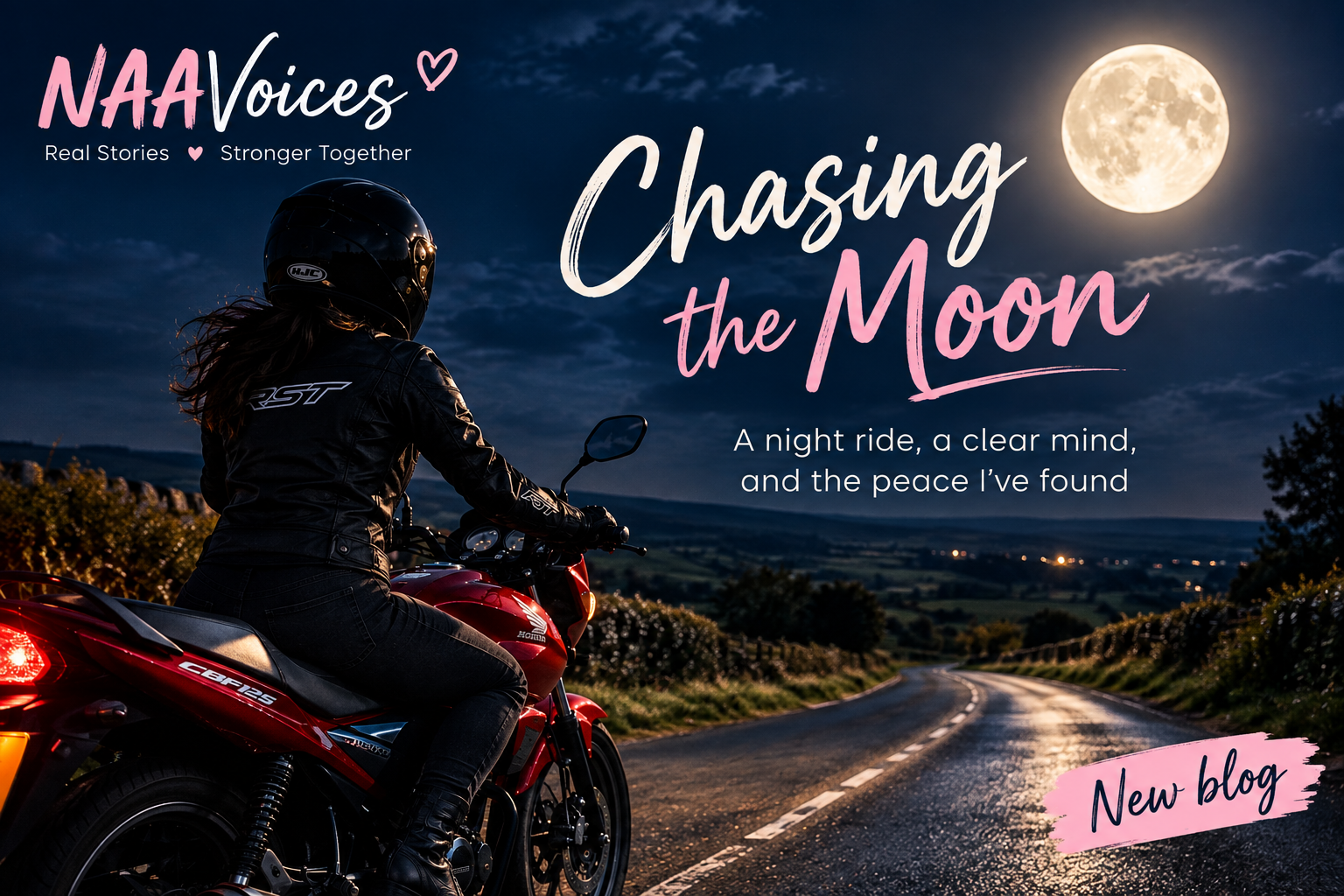
Out of the house. Helmet on. Engine running. Into the dark.
We live rurally, so once you get away from the houses, darkness really is darkness. The roads disappear ahead of you except for the stretch illuminated by the bike.
But tonight there was the moon.
It was enormous.
Bright enough that I kept catching sight of it as the road twisted and opened up again, and for an hour it genuinely felt as though I was chasing it.
And my God, it was beautiful.
There is something about riding that clears my head in a way very little else can.
You can’t carry everything with you on a motorbike.
Your brain has to be where your body is.
The road.
The bend.
The gears.
The sound of the engine.
The cold air finding the tiny gaps in your clothes.
For once, there isn’t room for tomorrow, yesterday, paperwork, arguments, money, people, responsibilities or the thousand things constantly competing for space in my head.
There is just now.
For an hour, I chased the moon.
Then I came home.
My daughter had spent the evening with people she adores, making bracelets and generally having the time of her life.
Later, I watched a film with my 14-year-old.
Eventually everyone went to bed.
And now I’m sitting here with the moonlight coming through the window, thinking about how different life feels sometimes.
Not necessarily easier.
But different.
There are moments when I can actually see how far we’ve all come.
For a long time, home wasn’t synonymous with peace. Safety wasn’t something I could simply assume. My nervous system didn’t understand the concept of switching off because there was always something else to anticipate, manage or survive.
Now, increasingly, there are ordinary evenings.
Teenagers turning up.
A six-year-old making bracelets.
A film on the sofa.
Children sleeping safely upstairs.
And me disappearing for an hour because I fancied riding my motorbike under a ridiculously bright moon.
Ordinary things.
But after you’ve lived without peace, ordinary can feel extraordinary.
I’ve also learned something else.
People will come and go.
I don’t have the energy anymore for people who only appear when they want something from me, or relationships where I am valued primarily for what I can give, fix, carry or provide.
Peace changes your tolerance for that.
Once you’ve fought this hard to build a safe life, you become much more careful about who gets access to it.
And perhaps that is part of healing too.
Not becoming harder.
Just becoming more protective of the peace you’ve worked so hard to create.
Every time I get on that bike, I feel a little bit of it.
A sanctuary I haven’t felt in a very long time.
I’m not running away.
I’m not trying to disappear.
Sometimes I only get an hour. Sometimes it’s a short ride between everything else life demands of me.
But for those few miles, there is nothing to solve.
Just me.
Two wheels.
An open road.
And tonight, a moon so bright I couldn’t resist chasing it.
Then I get to turn around and ride home.
And perhaps that’s the biggest difference of all.
These days, I have somewhere safe to come back to.
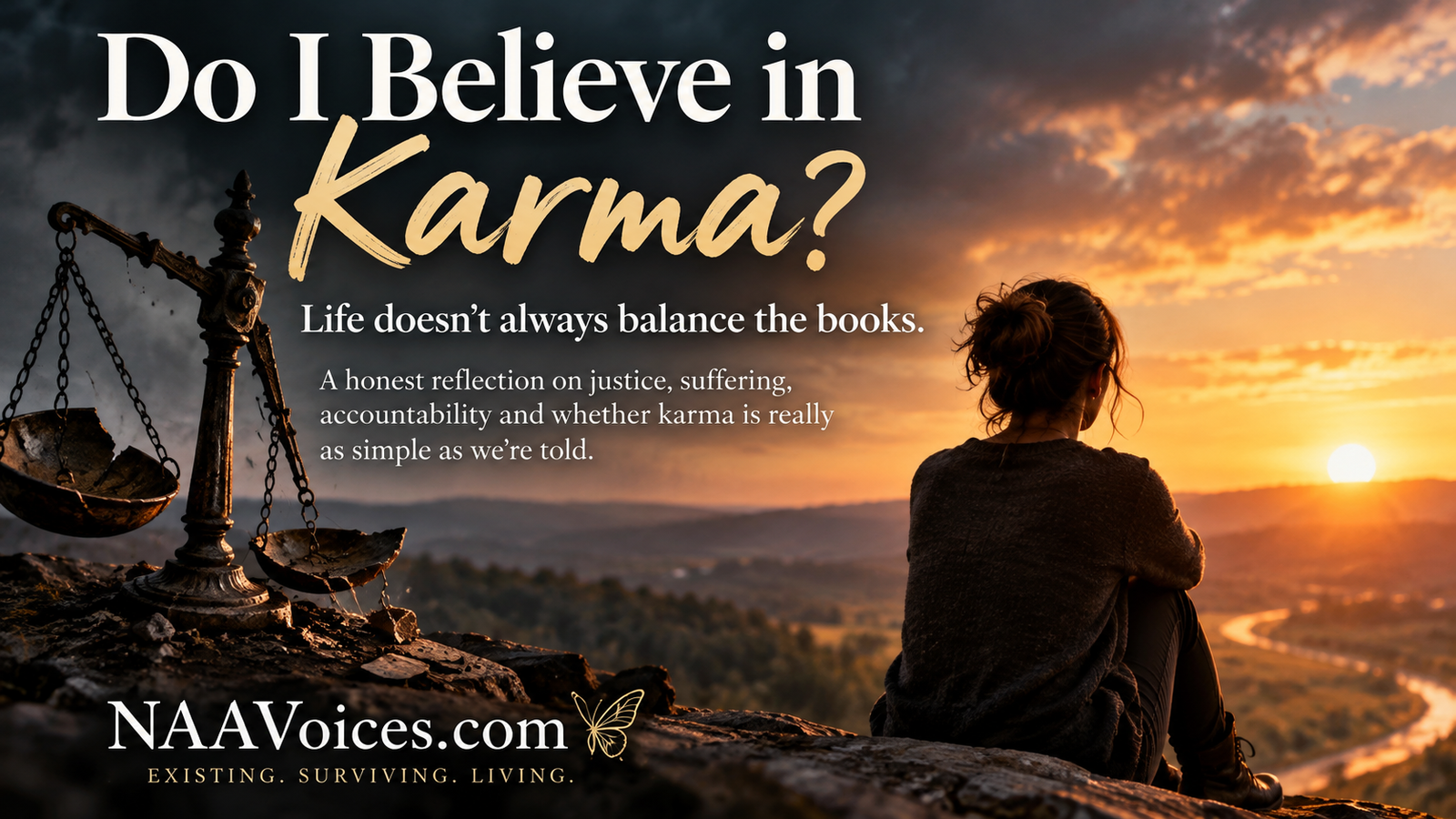
We like the idea of karma because it makes the world feel fair.
Do good, and good will eventually find you.
Cause harm, and somehow, somewhere, life will make you answer for it.
But I’ve lived long enough to know that life doesn’t always work like that.
I’ve watched good people suffer because of things they never caused, never deserved and could not have prevented.
I’ve watched people carry trauma created entirely by somebody else’s choices.
And I’ve watched people do hideous things and seemingly walk away from them.
So where is the karma in that?
If a good person is harmed, traumatised and left rebuilding their life while the person who caused it carries on as normal, are we really supposed to believe the universe has somehow balanced the scales?
I don’t.
At least, not in the traditional sense.
Maybe karma isn’t punishment.
Maybe it isn’t some invisible court where every wrong eventually receives an equal sentence.
Maybe sometimes there simply isn’t justice.
That is uncomfortable to admit, particularly when you have spent years waiting for accountability.
But perhaps there is another way of looking at it.
The person who harmed you does not get to decide who you become afterwards.
They may have changed your life. They may have left consequences they never have to carry themselves. They may never fully understand the damage they caused.
But surviving does something too.
You learn.
You rebuild.
You become more discerning about who gets access to you.
You recognise things you once overlooked.
You speak when you once stayed silent.
Sometimes you even take what nearly destroyed you and turn it into something that helps somebody else survive.
That isn’t karma.
And I don’t particularly like calling it a “lesson”, either. Some things should never have happened in the first place.
It is simply what human beings can sometimes do with what remains.
So, do I believe in karma?
Not really.
I believe actions have consequences — although frustratingly, those consequences don’t always land on the person who caused the harm.
I believe accountability matters precisely because we cannot rely on the universe to provide it.
And I believe being a good person does not guarantee you a painless life.
Perhaps the better question isn’t whether the people who hurt us eventually get what they deserve.
Perhaps it’s whether we can reach a point where their future no longer determines ours.
Because I don’t want to spend the rest of my life waiting for karma.
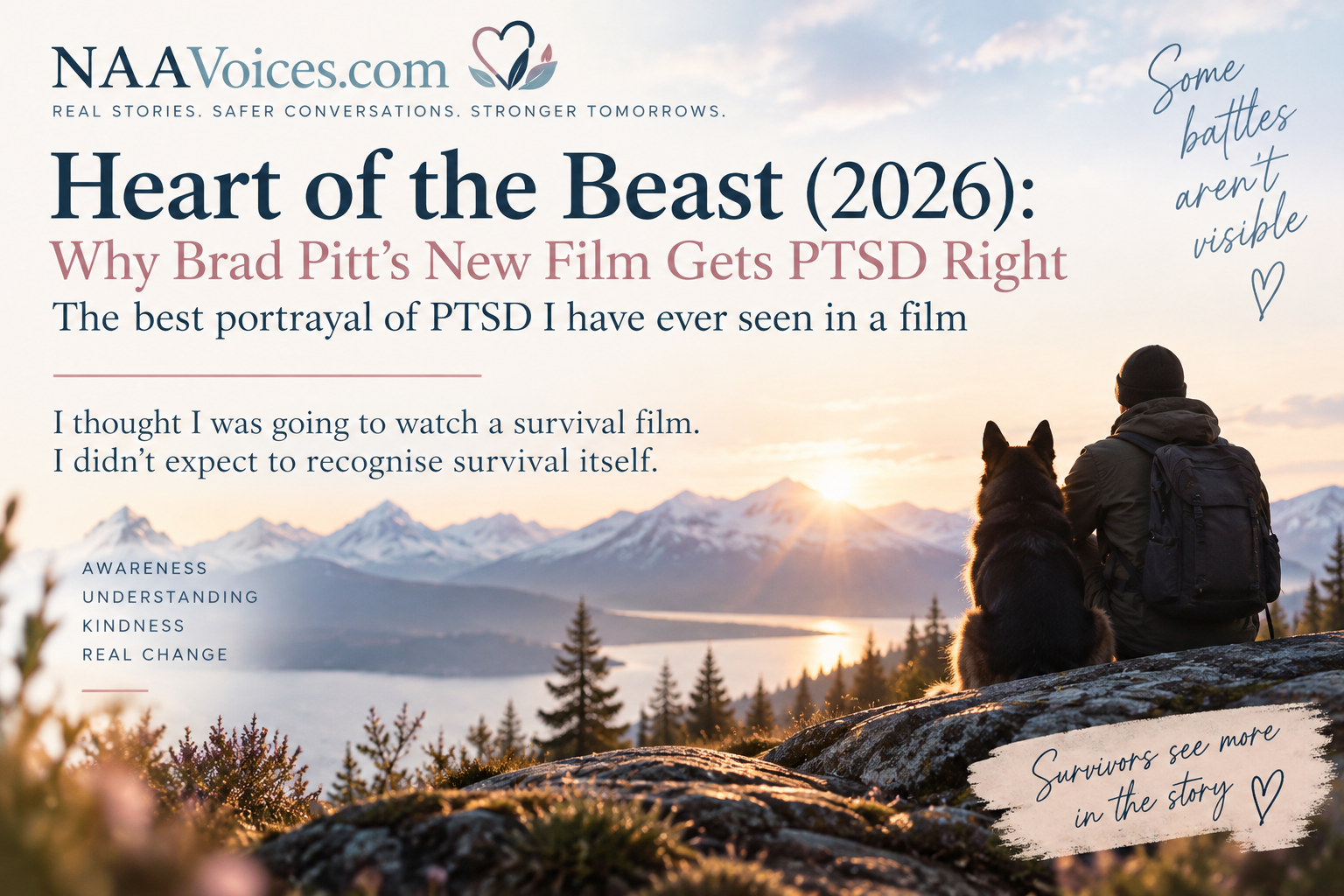
The best portrayal of PTSD I have ever seen in a film
I thought I was going to watch a survival film. I didn’t expect to recognise survival itself.
Spoiler warning: This piece discusses themes and events from Heart of the Beast. Content note: PTSD, combat trauma, grief, and animals in distress. No graphic personal account of abuse. If you need support while reading, skip to the directory at the end.
9–14 minutes
I went in expecting Brad Pitt, the Alaskan wilderness, a dog, and a physical fight to stay alive. Heart of the Beast, directed by David Ayer and written by Cameron Alexander, delivers all of that on the surface. Pitt plays James Belmont, a former Special Forces soldier stranded in the Alaskan wilderness with his combat dog, Odin. Released by Paramount, it’s an adventure thriller about endurance and the bond between man and dog, while early reviews have already noted the quiet thread of combat trauma running underneath.
The setup is simple: a seaplane crash leaves James and Odin alone in terrain that would kill most people and most dogs. A trek of around 50 miles through brutal weather, wildlife, injury, and exhaustion. The film gives you the survival story you came for, but it also gives you something else, something quieter, something that doesn’t announce itself.
It gives you recognition.
Home, in this film, isn’t comfort. It’s recognition. James isn’t surrounded by people; he’s pulled into the wild with Odin, doing the next necessary thing. It’s a hard kind of belonging, not safety, but familiarity. The body knowing the work.
Before the film even started, there was an armed forces recruitment advert. In it, a soldier turns, sees a dog on the floor, and doesn’t shoot. I didn’t know then how much that moment would echo.
By the time the credits rolled, I could barely speak.
I didn’t cry, though my friend did. Largely over the dog, I suspect. What I felt wasn’t sadness; it was something deeper. Under the adventure narrative sits a portrayal of trauma that doesn’t declare itself. Not the loud, familiar version of PTSD that films often highlight. The quiet kind. The one most people never notice.
It doesn’t oversell it
That is the most striking thing about the film. It refuses to oversell trauma.
There are no endless explanations of what is happening inside James’s head. No speeches that tell the audience he is traumatised. It lives in the subtleties. The withdrawal. Standing back from people. The distance. The way the past can suddenly sit beside the present. The instinct to protect. The exhaustion. And then the ability to keep going anyway.
Films often get this wrong because PTSD is not always someone visibly falling apart. Sometimes it gets up in the morning. Sometimes it works. Sometimes it looks after everyone else. Sometimes it laughs. Sometimes it looks completely composed. Sometimes it becomes exceptionally capable because being capable was once necessary for survival. Sometimes it simply says “I’m fine,” and people believe it. They see someone still standing and assume the battle must be over. They do not see how much effort standing takes.
They do not see how much effort standing takes.
That is what Heart of the Beast shows. Not a man constantly collapsing. A man repeatedly putting himself back together.
The military context matters. James is a former Special Forces soldier. Odin is a former combat dog with the physical scars to match. Titanium teeth, a prosthetic leg, nightmares. Many years ago, long before my nursing degree, I worked in acute mental health, and some of the people I met there were veterans. I will never forget them. I fully respect just how difficult it is for veterans. Support written for that world exists too, including Combat Stress and PTSD Resolution.
But PTSD does not solely sit with military veterans. Trauma after war, violence, loss, accidents, childhood experiences, or repeated exposure through work is not interchangeable. The events are not identical. Some of what follows can still be frighteningly recognisable. Hypervigilance. Withdrawal. Protectiveness. The habit of functioning at a cost no one else can see. PTSD UK explains that wider picture clearly. What this film does is make that relatable to anybody who lives with post-traumatic stress disorder.
For some people, “home” is the first room where those things do not have to be performed away. For James, that room is the wilderness, and the only other heartbeat in it is Odin’s.
Just get back up
There are so many points where James could have stopped. Physically. Emotionally. Psychologically. Enough had already happened. He keeps getting back up. Another obstacle, another reserve, another reason, another way through.
Every time he got there, the trauma would come back, and he would just keep fighting. He would find a way through. Yes, it was for the dog, and for himself. But it was his trauma, the flashbacks, the haunting, that kept him going. His trauma made him push through. I got it. I really got it.
That lands hard because trauma is not only the thing that knocks you down. Sometimes the survival mechanisms created by it become the things that make you get back up. Not because you are fearless or particularly positive or some inspirational version of “strong.” Sometimes you are absolutely exhausted. You just know how to survive. There is a difference.
When a nervous system has spent long enough treating the world as dangerous, it learns how to function in circumstances other people might find impossible. Another crisis. Another hurdle. Something inside simply goes: Right. What now? You deal with it. Then the next thing. Every hurdle becomes another battle in a war you never volunteered to fight. A never-ending battle. It feels relentless. There’s no end to it. People look at you and say they don’t know how you do it. Sometimes neither do you. You just keep getting back up.
This should never be romanticised. There is nothing beautiful about PTSD. There is nothing desirable about intrusive memories, avoidance, emotional numbing, or a nervous system shaped by something that should never have happened. Home should not have to mean danger you already know how to walk through.
Human beings are still complicated. Trauma can injure someone profoundly while the survival responses developed because of it become extraordinarily difficult to switch off. Fight. Protect. Keep moving. Get everyone else safe. Deal with yourself later. That last one especially. Later does not always come.
The person who keeps functioning can become very good at hiding how much functioning costs.
Even when everything is falling apart, the instinct to protect remains. Protect the dog. Protect the people who matter. Keep going. Get them through it. You can be depleted and still notice everyone else. You can be drowning and still check whether the person beside you can swim. From the outside that looks like strength. Inside it can feel completely different.
Towards the end the film itself seems to change. Towards the end the film itself seems to change. The light. The colour. The pace. Everything quieter. That strange stillness when you know you might be about to leave someone you love, or lose them. There are not always words big enough. Sometimes there are no words at all. And even then the instinct remains. Are they going to be okay? Still protecting. Still thinking about everybody else. Even when there is almost nothing left to give.
Odin is so much more than “the dog”
The relationship between James and Odin sits at the centre of the film. Loyalty. Dependence. Mutual protectiveness. If anywhere on that map feels like home, it is that bond. Not the landscape. The other living thing that already knows the cost.
The film also shows, without over-explaining, that trauma does not look one way, in humans or in animals. Fear does not always look like fear. Distress does not always look like distress. It can look like withdrawal, avoidance, aggression, hypervigilance, silence, restlessness, attachment, protectiveness, shutting down, or simply behaving differently because something inside no longer feels safe. I highly respect the film for raising awareness that dogs experience these symptoms too, and display them in their own ways.
The film lets you observe rather than lecture. That restraint is what makes it powerful.
Why I didn’t cry and why I couldn’t speak
There is a kind of emotional overload where tears don’t come. Everything just goes quiet. That is where I was. I couldn’t really speak. Not through tears. Through overwhelm. Through overload.
Not because I had watched a sad film about a man and his dog. Because I had watched something that put a complicated experience on screen without constantly explaining it. The withdrawal. The isolation. The memories. The distance. The protectiveness. The exhaustion. The moments where giving up would almost have been understandable. And then getting back up. Again. Again. Again.
My dissociation means that anything emotional that relates too closely to PTSD is something my nervous system often protects itself from. During those times I write. Or I dictate. To get it out. For processing. That is what this is.
So todays blog prompt asked for a place that felt like home.. The honest answer is awkward. It was a dark room full of strangers, and a story that did not flinch from the silent version of a fight most people never see. Recognition can feel like home even when it is not gentle.
The battle nobody sees
What stays with me most is this. There are people walking around every day fighting battles nobody else can see. They do not necessarily look traumatised. They do not always cry. They do not collapse in front of you. They might be the person everybody else depends on. Working. Parenting. Laughing. Helping other people. Making plans. Getting things done. Surviving.
Because they are functioning, people assume they are okay. Functioning and being okay are not the same thing. Sometimes functioning is simply what survival looks like. Sometimes the person everyone thinks is incredibly strong is someone who learned a very long time ago that when something knocks them down, they have to get back up.
Functioning and being okay are not the same thing.
I keep coming back to the title. Different people will take different things from Heart of the Beast. For me the beast was not only the wilderness, the physical danger, everything waiting outside. It was also the thing carried within. The part of trauma that can pull you backwards without warning. The memories you cannot simply decide to forget. The instinct to withdraw. The exhaustion of fighting something other people cannot see. And also that relentless survival instinct. Get up. Keep moving. Protect them. One more step.
I didn’t leave the cinema crying. I left silent. Because for once I didn’t feel as though I had watched somebody acting out the textbook version of PTSD. I felt as though I had watched somebody understand the silent one. The one people don’t see. That is to the credit of Brad Pitt, and of David Ayer’s direction.
It was probably the best portrayal of post-traumatic stress disorder I have ever seen in a film.
I felt it.
🎬 Heart of the Beast (2026) Directed by David Ayer. Written by Cameron Alexander. Starring Brad Pitt, J.K. Simmons, Anna Lambe, and Uber as Odin. In UK/US cinemas from 25 September 2026.
Deadline, Heart of the Beast review (distributor and release date): deadline.com/2026/09/heart-of-the-beast-review-brad-pitt-german-shepherd-survive-1237109761 Empire, Heart of the Beast review: empireonline.com/movies/reviews/heart-of-the-beast Flickering Myth, Heart of the Beast review: flickeringmyth.com/movie-review-heart-of-the-beast-2026
If this film, or this piece, has stirred something up
You do not have to sit with it alone. If you are in immediate danger, call emergency services (999 in the UK, 911 in the US and Canada, 000 in Australia).
UK and Ireland
Samaritans: 116 123 (24/7) · samaritans.org Combat Stress (veterans, serving personnel and families): 0800 138 1619 · text 07537 173 683 · combatstress.org.uk Mind: 0300 123 3393 · mind.org.uk PTSD UK: ptsduk.org PTSD Resolution (veterans, reservists and families): 0300 302 0551 · ptsdresolution.org NHS 111 (England, Scotland, Wales): 111 · in Wales, press 2 for 24/7 mental health support Op COURAGE (NHS veterans’ mental health, England): ask your GP or search NHS Op COURAGE Veterans’ NHS Wales (VNHSW): ask your GP or search Veterans NHS Wales
United States
988 Suicide & Crisis Lifeline: call or text 988 · 988lifeline.org Veterans Crisis Line: 988 then press 1 · text 838255 · veteranscrisisline.net NAMI HelpLine: 1-800-950-NAMI (6264) · nami.org National Center for PTSD (VA): ptsd.va.gov
Canada
988 Suicide Crisis Helpline: call or text 988 · 988.ca Canadian Mental Health Association: cmha.ca
IASP local crisis centres: iasp.info/suicidalthoughts
If you are supporting someone else, those same numbers are for you too.
Comments are welcome. Please do not share graphic detail about other people’s trauma, and do not use the comments as a crisis service. If you need help now, please use the numbers above.
This is a personal reflection on a film and not clinical advice.
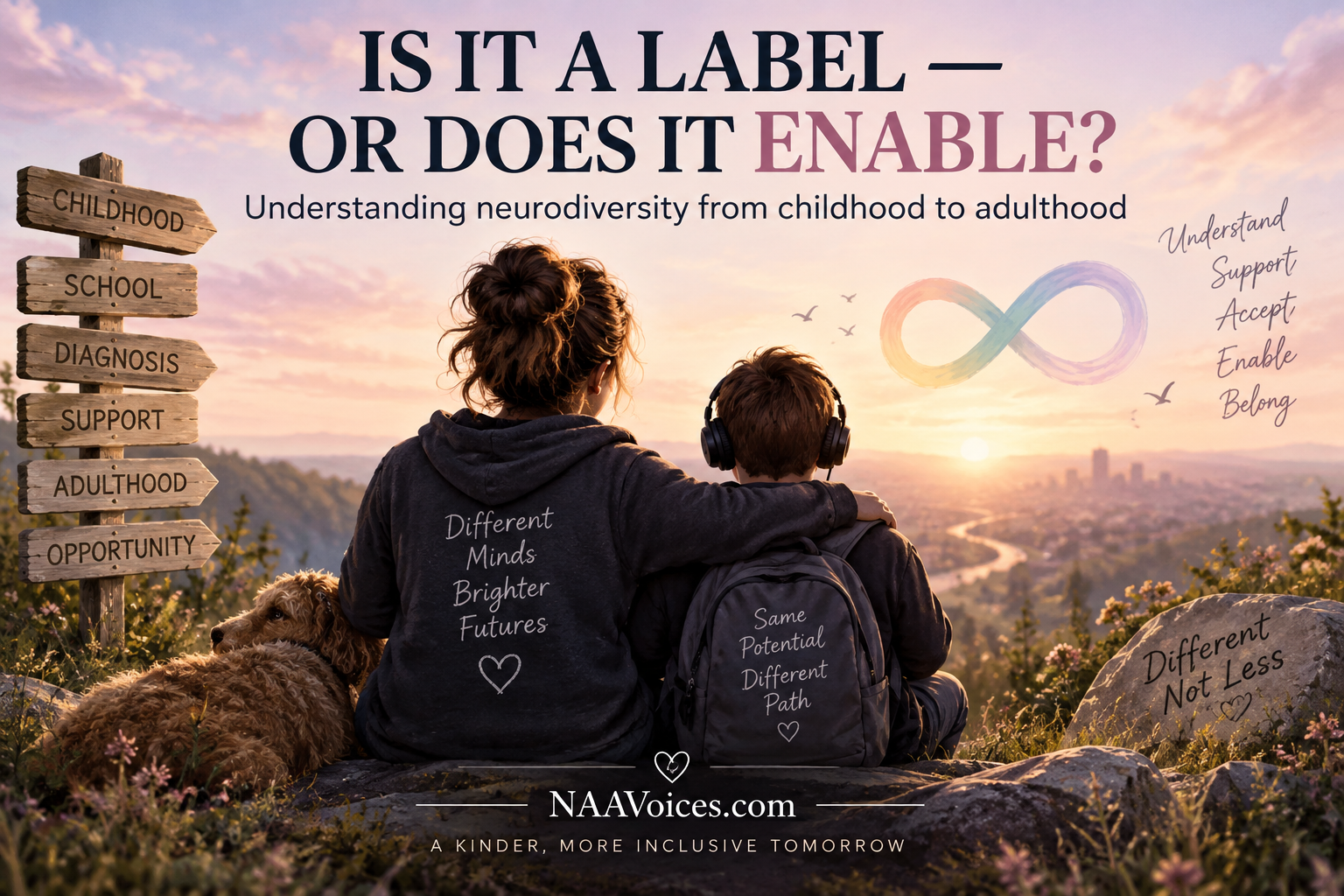
The children who mask, the adults who were missed, the parents running on empty, and why understanding matters
We know neurodiversity exists. ADHD, autism, dyslexia, dyspraxia and other neurodevelopmental differences are spoken about far more openly than a generation ago. Yet alongside that awareness sits another reality: the waiting lists are long, and while a child waits, childhood doesn’t pause. They still have school, friendships, sensory environments, emotions and sleep to somehow manage, and their parents still have to get everyone through another day.
For me, this has never been about collecting labels. I believe in enabling the child in front of us. My experience of neurodivergence, parenting neurodivergent children and working in healthcare led me to study neuroscience and the psychology of mental health, because I wanted to understand why we think, learn and respond differently.
When we give something a name, are we labelling somebody, or finally giving them the understanding they need to thrive?
Why Does Everyone Seem to Have ADHD or Autism Now?
There is undoubtedly more public awareness, and social media has made information, good and bad, extraordinarily accessible. But increased awareness doesn’t mean every energetic child has ADHD, or that every difficulty requires a diagnosis. A TikTok video cannot diagnose ADHD; recognising yourself or your child in a list of traits is not the same as a proper assessment, and nothing here replaces one.
But the opposite matters too. Greater recognition doesn’t automatically mean fad. Perhaps we’re simply getting better at recognising people who were always there, including adults who were the children nobody noticed decades ago.
What Does a Diagnosis Actually Change?
It doesn’t change the child; the child leaving an assessment is the same one who walked in. What can change is everybody else’s understanding: “they won’t concentrate” becomes “why is concentration difficult?”; “they’re being difficult” becomes “what is happening here?”
That doesn’t mean removing boundaries or accepting harmful behaviour. It means understanding whether somebody needs a different route to the same destination. Sometimes understanding why is the beginning of working out how.
“But They’re Fine at School”
My eldest is sixteen; I became a mum at twenty-one, and didn’t recognise everything then that I can see now. I was fortunate: teachers saw signs before I did, referrals happened without a fight, and I was never once called into school about his behaviour. At school, he held things together. At home, things looked completely different. A child who is managing at school isn’t necessarily a child who is coping.
The Coke Bottle Effect
Imagine shaking a bottle: noise, changed plans, a missed instruction, sitting still, watching every word, an unwanted touch, unwritten social rules, something uncomfortable they can’t explain. Shake, shake, shake, but the lid stays on through the school day. Then they get home, the door closes, and everything comes pouring out.
That doesn’t prove a diagnosis; there are many reasons children behave differently across environments. But “we don’t see that here” should never mean “there isn’t a problem.” Home is often simply where a child feels safe enough to stop holding it together.
To the Parent Who Is Running on Empty
Somewhere, a parent is reading this after an awful day: an explosion at the door, a three-hour bedtime, every strategy failing. Am I doing this wrong?
You can understand behaviour as communication and still find it hard to live with. You can love your child completely and need ten minutes away from them. Both can be true. If your child is safe and you need a moment, take one, then tell the school, the professionals, whoever needs to know, that you’re struggling. Don’t be ashamed to say this is hard.
Some days will feel pointless. Then you’ll get up and advocate again, because when your child can’t explain what’s happening, you are their voice. If you or your child are ever in crisis, contact your GP, NHS 111, or in an emergency, 999.
Where Your Child Sits on a Waiting List Is Not a Parenting Score
Services are stretched, thresholds exist, and the most urgent clinical risks are understandably prioritised. That doesn’t make waiting easy, but a long wait, a declined referral, or a low priority ranking is not a reflection of how much they’re struggling, how much you care, or how good a parent you are. If something changes or risk increases, say so and ask again.
Support Shouldn’t Always Have to Wait for a Diagnosis
A child’s needs exist the day before the diagnostic report arrives too. Some schools already do this well: predictable routines, visual information, movement breaks, smaller task stages, a calmer sensory environment. Not every adjustment needs a label, and what helps a neurodivergent child often helps others too. Someone once told me, “it’s so nice speaking to somebody who gets it.” Often, that’s the real need: to be heard, and pointed toward the right next step.
Masking Can Be Remarkably Convincing
The quiet child, the academically successful child, the polite child, the child whose parents are never called into school: none of them is necessarily coping. Some children become extremely good at watching, copying and suppressing what they’re experiencing. We see the result, not the cost. And those children grow up.
Neurodivergent Children Become Neurodivergent Adults
They become employees, parents, nurses, teachers, business owners. Some build lives that fit how their brains work; some become extraordinarily good at compensating, held together by calendars, alarms and perfectionism, until something changes and those systems stop working.
Undiagnosed Men Matter Too
Some energetic boys found an outlet through sport or practical hobbies; others were simply called lazy or told they weren’t reaching their potential. Some built careers that happened to suit their brains: fast-paced, practical, self-employed, no two days the same. Then a promotion, an injury, parenthood or a relationship ending removes what had been keeping things afloat. Perhaps the neurodivergence didn’t appear. Perhaps what enabled them to function did.
And Then There Are the Women Nobody Noticed
The girl who wasn’t disruptive, who did her work, who learned the rules and masked well, could be missed entirely. She grows into a capable woman, wondering why ordinary things require so much effort. Then, for some, another transition arrives.
ADHD and Menopause: An Important Conversation, but One That Needs Care
Hormonal change may interact with attention, executive functioning and mood, but research specifically on ADHD through perimenopause and menopause is still developing, so the biology shouldn’t be made to sound simpler than it is. Sleep, memory and concentration can also shift with menopause alone, independent of any neurodivergence. For a woman who has spent decades compensating, the combination can be particularly hard. “What has happened to me?” Perhaps she hasn’t become incapable; perhaps we’re finally seeing what the coping always cost. This deserves individual assessment, not a single universal explanation, and anyone noticing these changes should raise them with their GP or a menopause specialist.
I Know What It Is Like to Build a Life Around Your Brain
I don’t work well doing one thing at a time. I’m doing two courses right now because I absorb information better moving between them. A traditional classroom, sitting still with no outlet for stimulation, is almost physically uncomfortable for me. Music, fidgets, movement: I need it to concentrate, and I’m also very good at my job. Those things aren’t contradictory. I masked at school too, but I had practical hobbies outside it that gave my energy somewhere to go.
“I Have Undiagnosed ADHD”
At thirty-two, I wanted an explanation. I hadn’t taken antidepressants or anti-anxiety medication, and wasn’t prepared to treat something I didn’t believe fit without exploring an alternative first; that was the right call for me, not advice for anyone else, and medication decisions should always sit with a prescriber. I told my GP what I’d been experiencing and why I suspected ADHD, and she listened. No fight, no need to convince her that a woman who’d built a career and raised children could also have ADHD. I was referred. I know I was fortunate; not everyone’s route to being heard is that straightforward, and pathways vary by area and GP.
Neurodivergence Can Bring Strengths, and Still Be Genuinely Hard
We’ve swung from framing neurodivergence purely as deficit to calling everything a superpower. Neither is the whole story. Curiosity, creativity, hyperfocus and unconventional problem-solving are real strengths, but strengths don’t cancel difficulties. The same hyperfocus that produces extraordinary work can make switching tasks agonising. Someone can thrive in a crisis and struggle with an ordinary Tuesday. We should be able to talk honestly about both, without pretending the hard parts shouldn’t be hard.
We Shouldn’t Be Teaching Children to Become Better at Hiding
I don’t want the goal to be a neurodivergent child who’s simply good at looking neurotypical. I want them to understand themselves, know what overwhelms them, and feel able to ask for help. And I want them to find their thing, whatever it is, because support isn’t about lowering the ceiling. It’s about removing unnecessary barriers underneath it.
Diagnosis Should Be a Beginning, Not an Ending
A diagnosis doesn’t define somebody, excuse behaviour, or remove boundaries. At its best, it explains patterns, informs support, and eventually helps a child understand themselves. So perhaps the real question isn’t “why does everybody need a label now?” but “how many people did we fail to understand before?” Because the children who weren’t recognised didn’t disappear. They grew up: some flourished, some masked, some reached midlife before understanding why ordinary life took extraordinary effort.
I don’t want children unnecessarily labelled, diagnosed from social media, or every difference medicalised. But I don’t want them dismissed either. I want understanding, proper assessment, and opportunity. And to the parent reading this after an impossible day: you don’t have to be perfect, or pretend you’re coping. Ask for help. When your child can’t find the words, be their voice. Use it.
Understanding neurodiversity isn’t about deciding what somebody can’t become. It’s about understanding what they need, so they have the chance to discover what they can.
Different Minds. Different Needs. Brighter Futures.
Amy Royle Founder of NAAVoices. She holds a BSc in Adult Nursing, a PGCert in Neuroscience & Psychology of Mental Health, and certificates as an ADHD Coach, Neurodiversity Coach, Trauma Healing Practitioner, Narrative Therapy Practitioner and Narcissistic Abuse Healing Practitioner.
NAAVoices.com
Important Information
This article combines lived experience, professional reflection and general educational information written in a personal advocacy capacity. Nothing here constitutes clinical advice, assessment or diagnosis for any named individual, and it is not a substitute for advice from an appropriately qualified and regulated professional. My nursing, postgraduate and coaching qualifications do not make me a specialist diagnostician of neurodevelopmental conditions; assessment, diagnosis and treatment decisions should always go through the appropriate professional pathway.
Where this article references research on ADHD, masking or perimenopause, this is a general summary of an evolving evidence base, not a systematic review; readers seeking the underlying literature should consult NICE guidance and peer-reviewed sources directly. All personal anecdotes are Amy’s own and shared with consent; no other identifiable individual’s personal or clinical information appears in this article.
If you are worried about your own or your child’s development, wellbeing or safety, please contact your GP, NHS 111, or, in an emergency, 999.