Seven days ago, I finished work carrying the kind of weight you don’t always have words for. I’d received difficult news about a patient, the kind of news that shifts the tone of an entire day, even when you keep functioning on the outside.
In my own private language, I call people stars when they’re gone. It’s how I hold grief without letting it swallow everything else. It’s how I file loss in my mind when I still need to drive home, feed children, answer questions, and keep moving.
The Place I Didn’t Know Was Saving Me
For over a year, I used to escape. I’d get in the car and drive to a lay‑by I always ended up at. Not because it was on the way to anything. Not because it fixed anything. But because it gave me a pocket of stillness, a place where my body could downshift when my life couldn’t.
Back then, I didn’t understand the language of nervous systems, grounding, or trauma responses. I just knew I was living under sustained pressure, in a situation that was eroding me, and I needed somewhere that I could breathe. Somewhere I could be safe.
That lay‑by became my therapy before I even knew what therapy was supposed to look like.
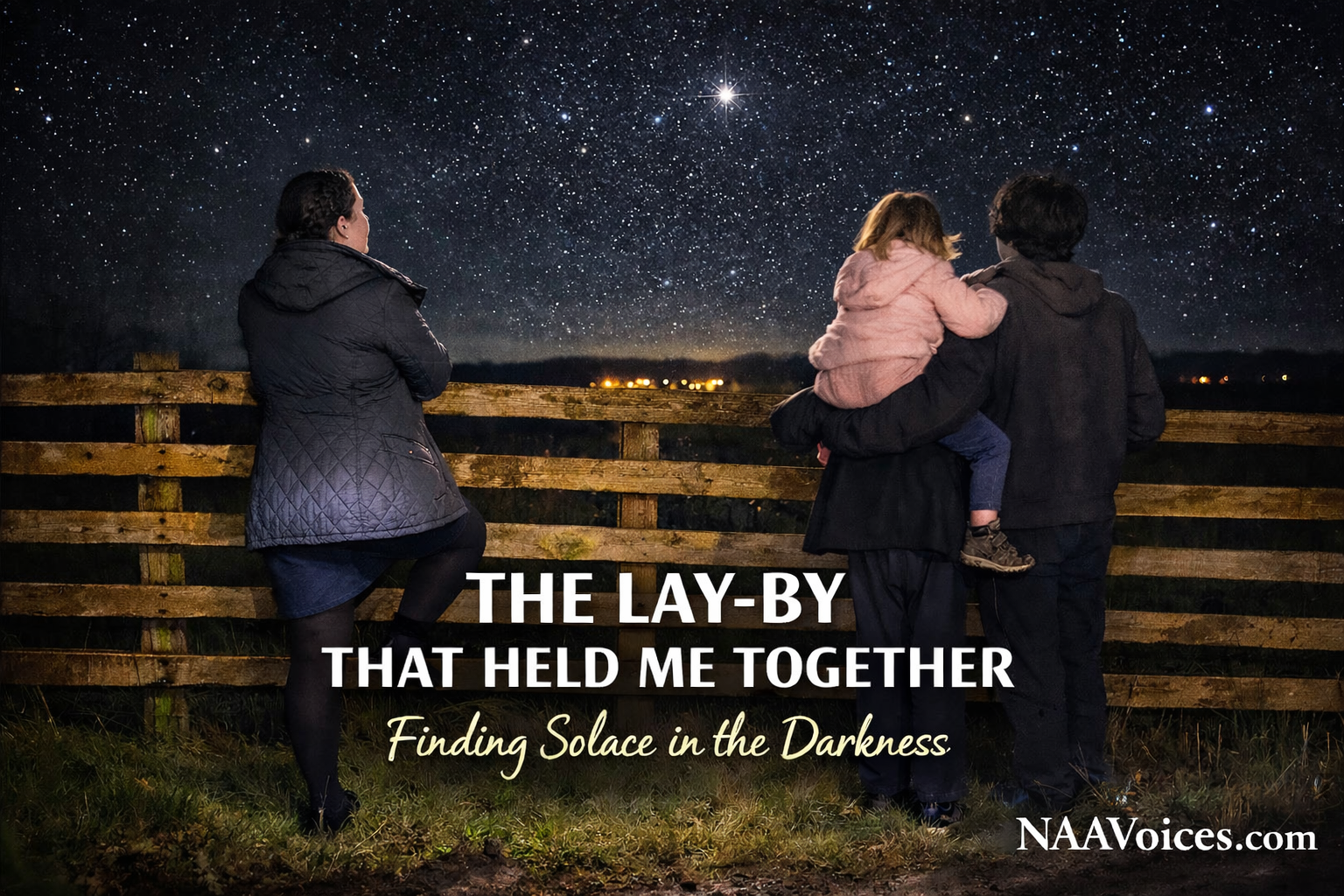
I slept there many times. My little girl slept there overnight many, many times. We’d sit and look at the stars. She grew up believing that when someone leaves, they become a star. It gave her something gentle to hold onto, and in truth, it gave me something too.
Returning to the Road That Once Held My Fear
I hadn’t been there for a while.
But last Thursday, after receiving that difficult news, I left work carrying more than tiredness. When I collected my daughter, she asked what was wrong. I told her I felt sad because there was a new star in the sky.
Then we collected my eldest and my middle one, the teenagers who have lived through more than most people will ever understand. One of them was struggling and asked if we were going to drive. And because of the conversation in the car, my five‑year‑old said, very simply:
“Let’s take him to see our star’s.”
So we did.
I drove the hour‑and‑a‑half round trip.
And this is what surprised me: it was different.
A Body That Finally Knows It’s Safe
Every time I’d driven that road before, it was in a state of activation: trigger, panic, dread, adrenaline, that constant internal noise that comes with prolonged stress. I learned that road in survival mode. I knew every bend, every stretch, every pull‑in point because I’d driven it while trying to keep myself together.
But this time, it felt like shifting gears.
My body relaxed.
No palpitations. No urgency. No bracing for impact. No internal pleading for the night to end.
Just calm.
The memories were still there. The past was still the past. But my nervous system didn’t respond as if it were still trapped in that time. And that’s not a small thing. That’s not “positive thinking.” That’s physiological change. That’s recovery showing up quietly, without ceremony.
I am a different person now.
Not fully healed and not pretending to be. Life is still hard. Trauma leaves marks. I’m not the person I once was.
Driving that road felt like an epiphany. It revealed something concrete to me. The place that once held my worst moments has also become evidence that I survived them.
The Field, the Stars, and the Quiet Truth
I know that lay‑by like the back of my hand. I’ve sat there in snow, ice, and rain. I’ve stood in that field. I’ve cried until my chest ached. I’ve lain under the stars trying to work out how I’d get through the next day.
And for a long time, nobody knew.
I’ve been there in uniform. I’ve been there in the middle of the night. I’ve been there when the world was sleeping, and I was wide awake, trying to stabilise myself enough to return to a life that didn’t feel safe.
I have photos of my feet in the field because sometimes I had to sit in the grass just to feel something real. To feel the earth. To feel grounded. It wasn’t aesthetic. It wasn’t curated. It was a lifeline when I didn’t have words, support, or accessible options.
This time, all three of my kids got out of the car.
And they appreciated it.
Not dramatically, quietly. In the way that says, we understand why this mattered. Because they’ve been through so much, too. They’re still healing. I’m still healing.
Even this time last year, there were moments when we didn’t know what the future would look like. whether things would stabilise, whether I’d be okay, whether any of this would ever feel “over.” The year before that, there were people who didn’t believe I’d still be here.
But I am.
What the Lay‑By Really Represents
I want to be clear about what that lay‑by represents, because it isn’t just a scenic stop.
Sometimes the thing that keeps you going isn’t a big intervention. It isn’t a perfect plan or the right professional at the right time. Sometimes it’s the small escape you build quietly when you can’t say what’s happening, when you don’t feel believed, when you’re functioning publicly but unravelling privately.
Sometimes it’s a lay‑by. Sometimes it’s the stars. Sometimes it’s a field where you can sit in the grass and let your body remember that the world is bigger than what you’re living through.
And then, one day, that same place shifts.
It flips.
It becomes a positive. A source of comfort. A marker of survival rather than panic.
Driving Home With a Different Kind of Grief
On the drive home, I realised I’d driven there and back almost on autopilot, not in shutdown, not in fear, just steady. And the significance of that landed hard, because for so long, that road was associated with crisis.
That night, I carried my new “star” quietly. The sadness was still there. The reflection was still there. But it wasn’t layered with the same terror, the same frantic need to escape the life I was living.
This time, it was grief held in a body that has learned, slowly, that the emergency is not constant anymore.
Life can get easier. Not neatly. Not quickly. Not without scars. But it can.
When you’re living in continuous trauma, you can’t always see that. You can’t picture a future where your body isn’t braced for impact. And yet, here I am, driving that road differently, feeling that place differently, and showing my children the real truth:
Even in the darkest periods, something can hold you.
And later, when you’re ready, that same place can become proof that you made it through.
For the past two and a half years, I’ve been living a life I never expected to face. People often say that after two years, things should feel different, that healing should have taken root by now. And in some ways, it has. There are days when I can breathe again. Days when the world feels less sharp.
But in other ways, the impact remains, still shaping how I move through my life. This isn’t a story I ever expected to tell publicly, but silence only protects the systems that failed us. I never imagined I would have to learn how to live a life I didn’t understand. I never understood the weight of victim‑blaming or the reality of institutional corruption. I didn’t believe those things could happen to any genuine human being who simply asked for help, yet they did, and they continue to happen to others just like me. The harm has been profound, affecting me, my children, and countless victims who were left unprotected within the very systems that were supposed to keep us safe.
The Timeline No One Should Ever Have to Build
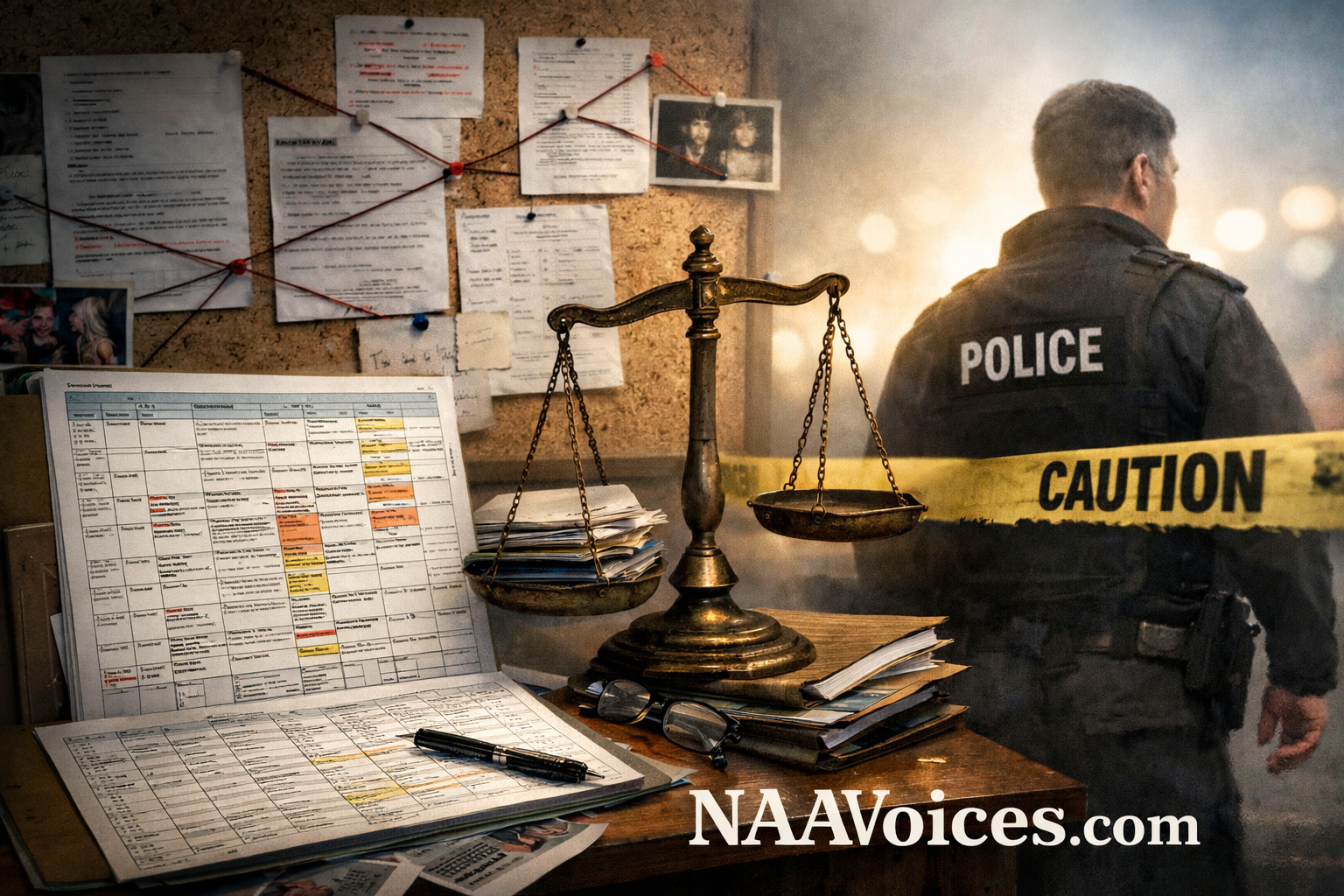
For a long time, I’ve been creating a comprehensive, chronologically ordered database for West Mercia Police, long before AI existed to help with data extraction. It consumed me. Years have now been taken from me by trauma, and nothing gets easier when there has been no closure. Life slows down. Everything takes longer. You work at your own pace, in the quiet hours when the house is still, and the kids are finally asleep.
Every entry came with a cost, because documenting trauma means reliving it. But I’ve now reached a point where every piece of correspondence, interaction, audio recording, document between myself and the police, between outside agencies, and nearly everything that shaped court proceedings and my children’s lives is compiled. It is factual, organised, and complete.
This wasn’t just paperwork. It was stepping back into an alternate universe and doing the kind of processing that counselling and EMDR couldn’t reach. I couldn’t cope with EMDR; not at someone else’s pace, not with the impact of being retraumatised week after week. It left me unable to function. So instead, I processed in the only way I could: slowly, deliberately, and on my own terms
A Note From the Book
There is a paragraph from the opening of Book Two that captures the foundation of what this stage of the story represents:
“Every date in this book is real. Every email is real. Every diary entry, every phone call, every timestamp. The correspondence quoted throughout has been preserved exactly as it was written, sent, and received. Names have been changed to protect the identities of those involved, with the exception of professionals acting in their official capacity whose conduct is a matter of public record. Among those professionals, there are a small number of officers for whom I have chosen to use pseudonyms not to obscure the truth, but out of respect for who they were as people, and for how they treated me and my children during a time when compassion was rare.”
That paragraph sits at the front of Book Two for a reason. It sets the tone for what follows — not fiction, not interpretation, but documented reality.
When New Correspondence Raises Old Questions
As I continued building the database, I thought I had reached a point where nothing could surprise me anymore. But recently, I received a significant amount of additional correspondence, not written by me or to me, but directly connected to me and any cross-over in my case. It added context to events I had already documented and raised questions that only make sense within the wider chronology I’ve built.
What matters is this: the new information didn’t contradict my documentation. It strengthened it. It confirmed patterns I had already identified. And it showed, with even more clarity, that from the moment I raised a complaint about PC Rolls and Sgt Smith walked into my home, my children and I never stood a chance.
When Accountability Becomes Impossible
There was a time when I considered submitting the entire database, every document, every contradiction, every timestamp, back to West Mercia’s legal team or the IOPC. But when you have written evidence showing both departments contradicting themselves, it becomes difficult to believe that another submission would achieve anything meaningful.
It is becoming painfully clear that, no matter the truth, they can write and do as they please. And when a system can rewrite reality on paper, accountability becomes almost impossible.
When Risk Is Created — Not Prevented
What happened to my children wasn’t just unacceptable; it was dangerous. Decisions were made that placed them at risk, and time proved that risk to be real. Over the summer, the same pattern of behaviour returned, almost identically, and the consequences could have been far worse.
Thankfully, my child is safe. But the fact remains: a five‑year‑old should never have been placed in that position in the first place. The system that was supposed to protect them instead created the conditions for further harm.
Stories like mine aren’t rare — they’re simply rarely acknowledged.
Living Without Fear — But Not Without Impact
I am no longer afraid of what comes next from the man who abused me. I don’t hold fear for him, or for anything else in that sense. But the truth is, I wasn’t free when I thought I was. The abuse didn’t end when I left him; it continued because of the police. And as someone recently said to me, the retraumatisation I’ve lived through is likely the reason I now exist in a state of dissociation most of the time.
It’s not fear. It’s distance.
And every time I put on my uniform, I feel a layer of protection. It acts as a shield in my own life and enables me to protect others from harm. There’s something almost comical about that, because it was a uniform that caused so much harm to me and mine. Yet somehow, wearing my own gives me back a sense of purpose that trauma tried to take.
The Person I Was Is Gone — But My Voice Isn’t
I know I will never be the person I once was. My children won’t be the same either. But we are still here. And we still have voices.
There is no rush to finish this work. It will be done at my pace. It has to be. I shut down socially because of the trauma. This is the database I work on when the kids are asleep. One day, all of this will come out.
Choosing Whether to Publish Under My Own Name
I questioned whether I should publish under my own name; whether I should own it publicly. That decision was made for me by my two teenagers, who are still receiving support for the trauma they endured. Their voices matter. Their safety matters. Their truth matters.
What the Database Shows
Reading through the database, now 87 sheets long with over 3,617 entries — one thing is painfully clear:
The continuation of trauma and the lack of healing were fuelled by the absence of justice. By the refusal to acknowledge the abuse my children suffered. By the consequences that rippled through our home, including having a mum who is no longer the parent she once was.
This is the reality so many survivors face. Not just the abuse itself, but the systems that fail them afterwards.
And this is why NAAVoices exists — to document, to educate, to expose, and to ensure that no one feels alone in a life they never asked to live.
And As for Accountability…
I don’t know yet what form accountability will take. I don’t know when, or how, or through which route.
What I do know is this:
I have the evidence. I have the chronology. I have the contradictions in writing. I have the names, the departments, the policies, the breaches. And I have a database that can be used again if and when the time is right.
I’m not done, I’m simply choosing not to fight a system on its terms while I’m still rebuilding my own life. For now, the truth is documented, and that alone is a form of accountability.
Because accountability doesn’t disappear just because a system refuses to see it. Sometimes it simply waits for the right moment to be used.
NAAVoices – Neurodiversity-Affirming Guidance & UK Support Pathways
Choose Your Path
Neurodiversity-Affirming Guidance for Real Life
UK pathways, evidence-based strategies, and ready-to-use templates — built to help you communicate needs, access support, and reduce harm from misunderstandings.
About the Creator
Built from Professional & Lived Experience
I’m neurodivergent (ADHD, dyspraxia, dyslexia) and a Specialist Nurse Practitioner with a PGCert in Psychology & Neuroscience of Mental Health. This hub translates complexity into practical, respectful steps, enabling people to communicate their needs, access support, and reduce harm from misunderstandings.
Privacy commitment: Names and identifying details are never shared.
Choose Your Path
Select your role for tailored guidance
For Parents & Carers
Navigate school support, healthcare pathways, and your child’s rights
Quick Navigation
England: Getting School Support (SEND)
Step-by-Step Process
Ask for SEN Support now — You don’t need a diagnosis. Put your request in writing to the SENCO (Special Educational Needs Coordinator).
Agree on reasonable adjustments — The school must make changes to remove barriers (e.g., visual timetables, movement breaks, quiet spaces).
Get a written plan — Request an SEN Support Plan or provision map detailing what support will be provided, by whom, and when.
If needs are significant/long-term, request an EHC needs assessment — This formal assessment can lead to an Education, Health and Care Plan with legally binding provision.
Review termly — Insist on regular reviews with measurable outcomes.
The Equality Act 2010 protects anyone with a substantial, long-term impairment affecting day-to-day activities. Schools must make reasonable adjustments immediately, based on identified need.
If school says “wait for assessment”: Politely remind them that reasonable adjustments are required now, and waiting for diagnosis breaches the Equality Act.
Sensory & Eating: Practical Support
Restricted diets and sensory sensitivities can impact constipation, growth, and dental health. These aren’t “fussy eating” — they’re neurological responses requiring practical support.
Portion Prompts
Visual guides and portion control tools to support consistent intake
Texture Ladders
Gradual exposure to new textures at the child’s pace
Hydration Reminders
Scheduled prompts and preferred containers to support fluid intake
School Lunch Notes
Written agreements that respect safe foods whilst gently expanding choice
Toothbrushing Scaffolds
Visual steps, hand-over-hand support, and sensory modifications
What is Neurodiversity?
Neurodiversity recognises that differences such as autism, ADHD, dyslexia, and dyspraxia are natural variations, not defects. The aim isn’t to ‘fix’ individuals but to reduce barriers so everyone can thrive.
What is Neurodiversity?
Neurodiversity recognises that differences such as autism, ADHD, dyslexia, and dyspraxia are natural variations, not defects. The aim isn’t to ‘fix’ individuals but to reduce barriers so everyone can thrive.
For Healthcare Professionals
Clinical pathways, NICE guidance, and referral frameworks
Making physical alterations — e.g., quiet spaces, sensory-friendly environments
Critical: Reasonable adjustments duty is anticipatory. Schools must not wait for a request or diagnosis — they should identify and remove barriers proactively.
UK Legislation & Rights
Understanding your legal rights is essential for accessing support. Here’s what protects neurodivergent people across the UK.
You do not need a diagnosis to request reasonable adjustments. Support should be based on identified need and functional impact, not diagnostic labels. The Equality Act 2010 protects anyone with a physical or mental impairment that has a substantial and long-term adverse effect on their ability to carry out normal day-to-day activities.
Key Support Organisations
England: IPSEA (Independent Provider of Special Education Advice) Contact (for families with disabled children) SOS!SEN (Special Educational Needs advice)
Wales: SNAP Cymru (Special Needs Advisory Project) PACEY Cymru (Professional Association for Childcare) Meic (Advocacy for children and young people)
Restricted diets (such as dry, predictable foods) and sensory sensitivities can impact constipation, growth, and dental health. These aren’t “fussy eating” — they’re neurological responses that require practical support.
Practical Levers
Portion Prompts
Visual guides and portion control tools to support consistent intake
Safe-Food Rotations
Systematically expand accepted foods while respecting sensory needs
Texture Ladders
Gradual exposure to new textures at the child’s pace
Hydration Reminders
Scheduled prompts and preferred containers to support fluid intake
School Lunch Notes
Written agreements that respect safe foods while gently expanding choice
Toothbrushing Scaffolds
Visual steps, hand-over-hand support, and sensory modifications
Dentist-Ready Summaries
One-page profiles explaining sensory needs and successful strategies
Learning Differences
Dyslexia, dyspraxia, and dyscalculia
Support isn’t about lowering expectations
It’s about changing the access route so neurodivergent learners can demonstrate their full capability.
No — adjustments should be made based on identified need and functional impact. The Equality Act 2010 protects anyone with a substantial, long-term impairment affecting day-to-day activities, regardless of diagnostic label.
What’s the difference between England and Wales frameworks?
England uses SEN Support and EHCPs (Education, Health and Care Plans); Wales uses ALN (Additional Learning Needs) and IDPs (Individual Development Plans). Both systems must provide reasonable adjustments, but the terminology and processes differ.
What if school says ‘wait for assessment’?
Reasonable adjustments should start immediately based on current need. Assessment may clarify needs further, but waiting for diagnosis should never delay basic support. Reference the Equality Act 2010 duty to make adjustments.
How do I evidence impact?
Use the One-Page Symptom Impact Summary to document specific examples of how differences affect daily functioning. Keep logs of incidents, attendance patterns, work avoidance, meltdowns, or health impacts. Photographs of work samples can also demonstrate need.
Can I request workplace adjustments without disclosing my diagnosis?
Yes. You can request adjustments by describing functional needs without naming a diagnosis. However, disclosure may help access more comprehensive support and protection under the Equality Act 2010.
What is Access to Work and who can apply?
Access to Work is a UK government scheme providing practical support if your disability or health condition affects your work. It can fund specialist equipment, adaptations to premises, support workers, job coaches, and travel costs. Anyone employed or self-employed in England, Scotland, or Wales can apply.
Glossary
Reasonable Adjustments
Practical changes to remove barriers for disabled people, required under the Equality Act 2010. Must be implemented unless they impose a disproportionate burden on the organisation.
SEN (England)
Special Educational Needs — the framework used in England for identifying and supporting children with learning differences or disabilities.
ALN (Wales)
Additional Learning Needs — Wales’s framework (replacing SEN) for supporting learners aged 0–25 who need additional provision to access education.
EHCP (England)
Education, Health and Care Plan — a legal document in England describing a child or young person’s needs and the provision required to meet them (ages 0–25).
IDP (Wales)
Individual Development Plan — Wales’s statutory plan outlining additional learning provision, targets, and review arrangements for learners with ALN.
Right to Choose (England)
NHS policy allowing patients in England to choose any qualified provider for NHS-funded treatment, including ADHD and autism assessments (subject to local ICB policies).
Public Sector Equality Duty
Legal obligation on public bodies to eliminate discrimination, advance equality of opportunity, and foster good relations. Applies to schools, NHS, local authorities, etc.
Executive Function
Mental skills for planning, organizing, focusing attention, managing time, and regulating behavior. Often affected in ADHD, autism, and dyspraxia.
Sensory Processing
How the nervous system receives and responds to sensory information (sight, sound, touch, taste, smell, movement). Differences are common in neurodivergent people.
Reasonable Adjustments Request Template (UK)
Use this template to request support at school, work, or healthcare settings under the Equality Act 2010. Copy the parts you need, add specifics, and attach any one-page summaries or evidence.
I am requesting reasonable adjustments for [me/my child] due to [diagnosed/suspected] neurodivergence (e.g., ADHD, autism, dyslexia, dyspraxia). These adjustments are needed to remove barriers to access and participation.
3) Needs in Brief
Attention/processing: short, concrete instructions; extra processing time
Communication: written follow-up; literal language; avoid idiom
Environment: quiet space option; seating away from high-traffic areas
4) Adjustments Requested
School/College: visual timetable; movement breaks; reduced copying; alternative recording; toilet/changing privacy plan; flexible transitions
Workplace: written instructions; flexible deadlines; reduced meetings; quiet workspace; noise-cancelling; clear priorities; meeting agendas in advance
Healthcare: quiet waiting; first/last appointment; written after-care; allow supporter present
5) Legal Footing (Plain English)
Under the Equality Act 2010, organisations must make reasonable adjustments to avoid substantial disadvantages arising from disability. Public bodies also have a Public Sector Equality Duty.
6) Close
Please confirm in writing which adjustments will be implemented and when. I’m happy to discuss workable options.
1) _________________________ by __________ (name) by ______ (date)
2) _________________________ by __________ (name) by ______ (date)
3) _________________________ by __________ (name) by ______ (date)
Review Date & Metrics:
Review on: ________ Success looks like: ____________________________
Understanding the Narcissist’s Cycle of Abuse – UK Evidence-Based Guide
Understanding the Narcissist’s Cycle of Abuse
Evidence-Based UK Resource • Knowledge is Power • Recovery is Possible
What is Narcissistic Abuse?
Narcissistic abuse is a pattern of psychological and emotional manipulation perpetrated by individuals with narcissistic personality traits. In the UK, this form of abuse is increasingly recognised within the framework of coercive and controlling behaviour, which became a criminal offence under the Serious Crime Act 2015.
Emergency Support:
If you are in immediate danger, call 999. For non-emergency support, the National Domestic Abuse Helpline is available 24/7 on 0808 2000 247 (free to call, including from mobiles).
UK Research Context:
Research from the University of Hull highlights that narcissistic abuse formulations of domestic violence are lesser known concepts and not commonly recognised in UK health care or mental health services. This gap in recognition can leave victims without appropriate support and understanding from professionals.
Understanding the Pattern
The cycle of abuse typically includes four main stages: Idealisation, Devaluation, Discard, and Hoovering. These patterns align with behaviours defined under UK law as coercive and controlling, including:
Isolating a person from their sources of support
Exploiting their resources and capacities for personal gain
Depriving them of the means needed for independence and escape
Regulating their everyday behaviour
📊 UK Statistics: As of March 2024, an estimated 3.9 million people aged 16 and over experienced domestic abuse in the last year (8.0% of the adult population), with 9.5% of women and 6.5% of men affected.
The Impact of Narcissistic Abuse
Research published in Issues in Mental Health Nursing emphasises that the effects on individuals who have experienced narcissistic abuse can be fatal or extremely debilitating, long-lasting, and that individual recovery can be a complex process. Common impacts include:
Social isolation: Withdrawal from support networks
Cognitive distortions: Difficulty trusting one’s own perceptions (gaslighting effects)
Important Context:
Whilst “narcissistic abuse” is commonly used in popular discourse, UK research suggests this term may be problematic. The behaviours described aren’t exclusive to narcissistic individuals and can occur in various forms of intimate partner violence and family abuse. What matters most is recognising the harmful patterns, not diagnosing the perpetrator.
UK Evidence and Research
Research Foundation:
This resource is informed by peer-reviewed research from UK institutions including the University of Hull, Edinburgh Napier University, University of Bristol, and data from the Office for National Statistics.
Prevalence in the UK
📊 Latest ONS Data (Year Ending March 2024):
8.0% of adults (3.9 million people) experienced domestic abuse in the last year
2.3 million women (9.5%) and 1.5 million men (6.5%) affected
26.1% of adults (12.6 million) have experienced domestic abuse since age 16
30.3% of women and 21.7% of men have experienced abuse since age 16
Coercive Control Statistics
Police Recorded Offences
There were 45,310 offences of coercive control recorded by police in England and Wales in the year ending March 2024. This represents a continued increase from:
43,774 offences in year ending March 2023
41,626 offences in year ending March 2022
33,954 offences in year ending March 2021
The rise in recorded coercive control offences may be attributed to improvements made by police in recognising incidents and using the law accordingly, rather than necessarily indicating an increase in prevalence.
Gender Differences in Narcissistic Traits and Abuse
Edinburgh Napier University Research:
A qualitative study published in 2019 found important differences between grandiose and vulnerable narcissism in domestic violence contexts:
Grandiose narcissists: Violence triggered by threats to self-esteem and challenges to perceived authority
Vulnerable narcissists: Explosive anger triggered by fears of abandonment
Both types: Exhibited covert and overt aggressive and violent reactions to narcissistic injury
Gender-Sensitive Assessment:
Research highlighted by the British Psychological Society reveals that vulnerable narcissism (but not grandiose narcissism) is a risk factor in female perpetrators. When using gender-sensitive assessments:
Vulnerable narcissistic features in women include manipulative tactics such as withholding intimacy and affection, playing the ‘mother card’, and making false allegations
Male violence is often exerted overtly and physically
Female-perpetrated narcissistic abuse is more likely overlooked as it deviates from stereotypical expressions of (male) narcissism
Analysis of Merseyside Police data found 95% of coercive control victims were women and 74% of perpetrators were men
Relationship Between Narcissism and IPV
Systematic Review Findings
A 2023 meta-analysis published in Trauma, Violence, & Abuse found:
Significant positive relationship between narcissism and intimate partner violence perpetration
Both cyber IPV and psychological IPV were significantly related to narcissism
No significant relationship found between narcissism and physical IPV specifically
Vulnerable narcissism showed stronger correlations with IPV than grandiose narcissism
Types of Coercive Control Behaviours
Merseyside Police Analysis (Barlow et al., 2018):
Common abusive behaviours used in coercive control cases included:
Use of technology (phone trackers, controlling social media usage, barrage of text messages, monitoring phone usage)
Sexual coercion
Monitoring behaviours
Isolation from support networks
Threats and intimidation
Financial abuse
Deprivation (depriving access to support)
Physical violence (present in 63% of coercive control cases)
Recognition in UK Healthcare
Healthcare Gap:
Research published in Issues in Mental Health Nursing argues that narcissistic abuse formulations should be at the forefront of multidisciplinary teams’ knowledge, particularly mental health nurses’, to enable victims to be directly supported or signposted to appropriate support services for timely interventions.
Psychotherapeutic Considerations:
Research in the British Journal of Psychotherapy highlights that whilst social media narratives about narcissistic abuse have exploded in popularity, those clinging rigidly to simplistic narratives often struggle to engage deeply in psychodynamic treatment. Professional therapeutic support requires nuanced understanding beyond popular psychology frameworks.
The Four Stages of the Abuse Cycle
Research from Edinburgh Napier University and international studies has identified consistent patterns in how individuals with narcissistic traits perpetrate abuse. Understanding these stages can help victims recognise what they’re experiencing.
1. Idealisation: The Honeymoon Phase
At the beginning of a relationship, the narcissistic individual creates an illusion of perfection, engaging in behaviours that make their target feel incredibly valued and special.
Key Behaviours:
Love Bombing: Overwhelming the target with compliments, extravagant gifts, and constant attention
False Intimacy: Claiming to be soulmates or expressing profound emotional connection very early
Mirroring: Adopting the target’s interests, values, and personality traits to create false compatibility
Future Faking: Making grand promises about the future together without genuine intent
Building Dependency: Making the target feel that the narcissist is their perfect partner
What to Look Out For:
This level of affection often feels “too good to be true” because it is. The goal is to hook the target emotionally and build dependence. Be wary of relationships that escalate extremely quickly or where someone seems too perfect. Healthy relationships develop gradually with mutual respect and realistic expectations.
2. Devaluation: The Cracks Begin to Show
Once the individual feels their target is securely attached, they shift into devaluation. Research shows this is when their true controlling nature starts to emerge, aligning with coercive and controlling behaviours defined in UK law.
Common Tactics:
Gaslighting: Manipulating the target into doubting their perceptions and reality
Criticism and Ridicule: Undermining self-esteem with frequent put-downs
Emotional Withdrawal: Withholding affection, approval, or attention as punishment
Creating Chaos: Using unpredictable behaviour to keep the target off balance
Jealousy and Possessiveness: Controlling social interactions, movements, or communications to isolate them
Triangulation: Bringing a third party into the dynamic to create jealousy and competition
Silent Treatment: Ignoring the target as a form of punishment
Projection: Accusing the target of behaviours they themselves exhibit
Research Insight:
Edinburgh Napier University research found that for those with vulnerable narcissistic features, explosive anger episodes during devaluation were often triggered by fears of abandonment, whilst those with grandiose features reacted violently to challenges to their self-perceived authority.
The Psychological Impact:
By this point, the target may feel confused, anxious, and desperate to regain the approval and affection once given in the idealisation phase. This further entrenches their dependence on the abuser.
3. Discard: The Sudden Exit or Emotional Abandonment
In the discard stage, the individual abruptly withdraws, either emotionally or physically, often leaving the target feeling blindsided and devastated.
How Discard Manifests:
Ending Without Explanation: May ghost the target or deliver a cold, calculated breakup
Emotional Coldness: Remaining in the relationship but showing indifference, contempt, or hostility
Seeking New Supply: Moving on to new targets to secure fresh admiration and attention
Blame Shifting: Making the target feel entirely responsible for the relationship’s failure
Smear Campaigns: Spreading false or distorted information about the target to mutual contacts
Why This Happens:
The individual discards their target when they no longer find them useful or when they crave the thrill of a new source of admiration. Remember: the discard reflects the abuser’s dysfunction, not your worth. Domestic abuse charity research emphasises that victims often internalise this rejection, but it’s a manipulation tactic, not a reflection of their value.
4. Hoovering: The Recycle Tactic
Even after the discard, the abusive individual may reappear through a process known as hoovering (named after the Hoover vacuum cleaner, as they attempt to “suck” the target back in).
Hoovering Tactics:
Promising Change: Swearing they’ll seek help or be the person the target initially fell in love with
Using Guilt or Pity: Claiming to be lost or broken without the target
Fake Remorse: Apologising without truly accepting responsibility for their actions
Breadcrumbing: Sending occasional messages to keep the target interested
Emergency Contact: Reaching out during holidays, birthdays, or claiming emergencies
Nostalgia: Reminiscing about the “good times” to trigger emotional memories
The Danger:
The hoovering phase reignites the cycle and gives the abuser further opportunities to continue their harmful behaviour. Research shows that each time the target returns, the cycle often becomes more intense and damaging. UK domestic abuse services report that leaving an abusive relationship takes an average of 7 attempts, partly due to these manipulation tactics.
Breaking the Cycle:
If you recognise these patterns, it’s important to establish “no contact” where possible and safe. Seek support from UK domestic abuse services who understand these dynamics and can help you develop a safety plan.
Recognising the Warning Signs
Based on UK research and clinical practice, here are the key indicators that you may be experiencing abuse within the narcissistic pattern.
Early Red Flags in Relationships
Women’s Aid and other UK domestic abuse charities identify these early warning signs:
Moving the relationship forward at an unusually rapid pace
Love bombing: excessive flattery, gifts, and attention that feels overwhelming
Idealising you as “perfect” or their “soulmate” very early on
Sharing very personal information too soon or expecting you to do the same
Pressuring you to commit or make major decisions quickly
Intense jealousy masked as “caring deeply” about you
Subtle criticism disguised as jokes or “helpful advice”
Monitoring your communications, whereabouts, or social media
Dismissing your boundaries or needs as unimportant
Isolating you from friends and family early on
Gaslighting: Recognising Reality Distortion
What is Gaslighting? Gaslighting is a manipulative tactic where the abuser makes you question your own memory, perception, and sanity. Research from the University of Hull emphasises this as a core component of narcissistic abuse.
Common Gaslighting Tactics:
Denying things they clearly said or did, even when you have evidence
Telling you you’re “too sensitive,” “overreacting,” or “dramatic”
Accusing you of making things up or being “crazy” or “mental”
Twisting conversations to make you appear to be the problem
Using your vulnerabilities or mental health against you
Trivialising your feelings and experiences (“you’re making a big deal out of nothing”)
Countering your memories with their own “version” of events
Telling others you’re unstable, creating doubt about your credibility
Using confusion and contradiction to keep you off balance
UK Legal Context:
Gaslighting behaviours fall under the coercive and controlling behaviour offence in the Serious Crime Act 2015, particularly where they serve to “regulate everyday behaviour” and cause psychological harm.
Emotional Manipulation Tactics
Based on Edinburgh Napier University research and UK domestic abuse literature:
Triangulation: Creating competition by involving a third party (ex-partner, new interest, family member) to make you jealous or insecure
Silent Treatment: Withdrawing communication as punishment, leaving you anxious and desperate to “fix” things
Projection: Accusing you of their own behaviours (e.g., accusing you of cheating when they are)
Word Salad: Confusing, circular conversations that go nowhere and leave you exhausted
Moving the Goalposts: Changing expectations constantly so you can never succeed or please them
Hoovering: Reeling you back in after discard with false promises
DARVO: Deny, Attack, Reverse Victim and Offender – claiming they’re the victim of your abuse
Financial Control: Restricting access to money, monitoring spending, or sabotaging employment
Technology Abuse: Using phone trackers, monitoring social media, barrage of text messages (identified in Merseyside Police research)
Signs You’re Being Isolated
Isolation is a key component of coercive control under UK law. Warning signs include:
They criticise your friends and family constantly, finding fault with everyone
Creating conflicts between you and loved ones
Monopolising your time and attention, becoming upset when you’re unavailable
Becoming angry, sulky, or punishing when you spend time with others
Gradually cutting you off from your support network
Making you feel guilty for maintaining outside relationships
Discouraging your hobbies, interests, and activities
Monitoring or controlling your movements and communications
Making excuses to prevent you from seeing others
Undermining your relationships by spreading false information
Why Isolation Matters:
UK domestic abuse research shows isolation is one of the strongest predictors of escalating abuse and difficulty leaving. It removes your support network and makes you dependent on the abuser.
How Your Body and Mind React
Research published in Issues in Mental Health Nursing highlights that narcissistic abuse can be “fatal or extremely debilitating.” Common responses include:
Physical Symptoms:
Chronic anxiety or feeling constantly “on edge”
Sleep disturbances, nightmares, or insomnia
Digestive issues, nausea, or loss of appetite
Persistent fatigue or exhaustion
Headaches, migraines, or muscle tension
Panic attacks or heart palpitations
Weakened immune system (frequent illness)
Emotional and Mental Signs:
Constantly second-guessing yourself and your decisions
Feeling confused or “walking on eggshells”
Significant loss of confidence and self-esteem
Difficulty making even simple decisions
Feeling responsible for the abuser’s emotions and actions
Losing touch with your own identity, interests, and goals
Depression, hopelessness, or suicidal thoughts
Hypervigilance – constantly monitoring the abuser’s mood
Difficulty trusting your own perception of reality
Seeking Help:
If you’re experiencing these symptoms, please reach out to your GP or a UK domestic abuse service. These are recognised trauma responses to abuse, not personal failings.
Coercive Control Indicators
Under the Serious Crime Act 2015, coercive and controlling behaviour is a criminal offence in England and Wales. You may be experiencing this if your partner:
Isolates you from friends, family, or other sources of support
Deprives you of basic needs (food, sleep, shelter)
Monitors your activities, time, or conversations
Controls aspects of your everyday life (what you wear, eat, where you go)
Takes your wages or controls finances
Repeatedly puts you down or humiliates you
Enforces rules and activities to humiliate or degrade you
Forces you to take part in criminal activity
Threatens to reveal private information or hurt you, children, or pets
Controls your access to contraception or forces pregnancy/abortion
Legal Definition:
The behaviour must be “repeated or continuous,” have a “serious effect” on you, and the perpetrator must know or ought to know it would have a serious effect. A serious effect means causing you to fear violence will be used against you, or causing you serious alarm or distress that substantially affects your day-to-day activities.
Types of Narcissistic Presentations
Edinburgh Napier University research and other UK studies identify different presentations of narcissistic traits. Understanding these can help you recognise manipulative behaviour in various forms.
Research Note:
UK academic research emphasises that narcissistic traits exist on a spectrum. Whilst Narcissistic Personality Disorder (NPD) is a clinical diagnosis requiring professional assessment, many individuals display narcissistic features that cause significant harm without meeting full diagnostic criteria.
Grandiose (Overt) Narcissism
This is the “classic” presentation most people envision when thinking about narcissism.
Characteristics:
Openly boastful, arrogant, and self-aggrandising
Expects special treatment, admiration, and constant attention
Domineering and aggressive in behaviour
Loud, attention-seeking, and socially dominant
Lacks empathy and doesn’t hide it
Exploits others without guilt or remorse
Reacts with rage when authority is challenged (narcissistic injury)
May be successful professionally due to confidence and ambition
Edinburgh Napier Research:
Grandiose narcissists in domestic violence contexts showed violence triggered by threats to their self-esteem and challenges to their perceived authority. Their reactions tend to be overt and explosive.
Vulnerable (Covert) Narcissism
Vulnerable narcissists are harder to identify because they present as introverted, sensitive, or victim-like.
Characteristics:
Plays the victim to gain sympathy and control
Passive-aggressive behaviour patterns
Chronically envious of others’ success or happiness
Hypersensitive to any perceived criticism
Martyrdom and self-sacrifice (with expectation of recognition)
Subtle manipulation through guilt and shame
May present as shy, anxious, or depressed
Explosive anger triggered by fears of abandonment
Sulking, silent treatment, and emotional withdrawal
UK Research Findings:
A 2023 meta-analysis found vulnerable narcissism showed stronger correlations with intimate partner violence than grandiose narcissism. British Psychological Society research revealed vulnerable narcissism is a risk factor in female perpetrators, with tactics including withholding intimacy, playing the “mother card,” and making false allegations.
Why It’s Dangerous:
Covert narcissists are often harder to recognise because their tactics are more subtle. They may appear vulnerable or wounded, making it difficult for targets to identify the manipulation. Their victimhood narrative can be particularly effective at garnering support from others.
Malignant Narcissism
The most dangerous form, combining narcissism with antisocial traits, aggression, and sadism.
Characteristics:
Deliberately cruel, vindictive, and destructive
Takes pleasure in others’ pain and suffering
Complete absence of remorse or conscience
Extremely controlling, possessive, and paranoid
May engage in physical violence or threats
Often exhibits criminal or antisocial behaviour
Manipulative and deceptive without guilt
May stalk, threaten, or seek revenge when challenged
Safety Warning:
If you’re dealing with someone showing these characteristics, your safety may be at serious risk. Contact the National Domestic Abuse Helpline (0808 2000 247) immediately to discuss safety planning. If in immediate danger, call 999.
Communal Narcissism
These individuals gain their narcissistic supply through appearing helpful, charitable, or community-oriented.
Characteristics:
Publicly generous but privately exploitative
Seeks recognition, praise, and status for “good deeds”
Uses charity and helping as a façade for superiority
Expects special treatment for their contributions
May work in helping professions, charity, or activism
Presents as selfless but underlying motive is admiration
Becomes angry if contributions aren’t sufficiently acknowledged
May use their “good person” image to deflect criticism
Important Clarification:
Narcissism exists on a spectrum, and individuals may display traits from multiple presentations. Only qualified mental health professionals can diagnose Narcissistic Personality Disorder (NPD). These descriptions are meant to help identify harmful patterns of behaviour, not to diagnose. UK research emphasises that what matters most is recognising the impact of abusive behaviours, not labelling the perpetrator.
Gender Considerations:
British Psychological Society research highlights that narcissistic abuse by women is often overlooked as it deviates from stereotypical (male) expressions. Female perpetrators may use tactics like withholding affection, manipulating through children, or making false allegations – forms of abuse that don’t fit traditional patterns but are equally harmful.
Self-Assessment: Recognising Patterns
This self-assessment can help you identify whether you might be experiencing abuse. This is not a diagnostic tool, but rather a guide for reflection based on UK research and clinical practice.
Please Note:
If you answer “yes” or “sometimes” to several of these questions, it may indicate you’re in an unhealthy or abusive relationship. Consider reaching out to a UK domestic abuse service for support and guidance.
Breaking Free and Recovery
Research shows that recovery from narcissistic abuse is possible, though it can be a complex process. Here’s evidence-based guidance for UK residents.
You Are Not Alone:
8% of UK adults experienced domestic abuse in the last year. Recovery is possible with the right support. Many people go on to live fulfilling, healthy lives after abuse.
Safety Planning
Creating a Safety Plan (UK-Specific)
If you’re planning to leave or have concerns about your safety:
Emergency contacts: Save the National Domestic Abuse Helpline (0808 2000 247) and 999 in your phone under different names
Important documents: Gather passport, birth certificates, bank statements, tenancy agreements – store copies with a trusted person or in cloud storage
Financial safety: Open a separate bank account they don’t know about; document financial abuse
Safe person: Identify someone you can stay with; pack an emergency bag and leave it with them
Evidence collection: Keep screenshots, save threatening messages, photograph injuries (this can support police reports)
Exit route: Plan how you’ll leave safely; consider timing when they’re out
Children’s safety: If you have children, contact social services for support; inform schools of the situation
Pet safety: Make arrangements for pets, as abusers often threaten or harm animals
Leaving Can Be Dangerous:
Research shows the period when leaving or immediately after is when risk is highest. Always contact domestic abuse services for professional safety planning support. The National Domestic Abuse Helpline can help you create a personalised safety plan.
Establishing No Contact or Grey Rock
No Contact Method
No contact means completely cutting off communication. This is the most effective method when possible:
Block their number, email, and social media accounts
Block their friends and family who may act as “flying monkeys”
Change your number if necessary
Avoid places you know they frequent
Do not respond to hoovering attempts
If you receive threatening communication, document it and report to police
Consider a Non-Molestation Order through UK courts if harassment continues
Legal Protection:
In England and Wales, you can apply for a Non-Molestation Order to prevent someone from harassing or threatening you. You can also apply for an Occupation Order to regulate who can live in your home.
Grey Rock Method (When No Contact Isn’t Possible)
If you share children or have unavoidable contact (e.g., workplace, legal proceedings), the Grey Rock method can help:
Keep all responses brief, boring, and factual
Don’t share personal information, emotions, or details about your life
Stay neutral in tone – don’t react emotionally to provocations
Limit communication to essential topics only (children’s needs, legal matters)
Use written communication (email, text) rather than phone calls when possible
Keep all communication for potential evidence
Don’t engage with emotional manipulation or baiting
Use parallel parenting rather than co-parenting if you share children
Example: If they ask “How was your weekend?” respond with “Fine” rather than detailing your activities.
Recovery Steps
Your Recovery Journey
Recovery isn’t linear, but these steps can help guide your healing:
Acknowledge the abuse: Recognise what happened wasn’t your fault and was a form of abuse
Establish safety: Create a safety plan and reach out to domestic abuse services
Cut contact: Implement no contact or grey rock method where possible
Seek professional support: Contact GP, therapist, or counsellor experienced in trauma
Reconnect with support network: Rebuild relationships with friends and family
Process trauma: Work through the abuse with professional support (trauma-focused therapy)
Rebuild self-esteem: Challenge negative self-beliefs instilled by abuse
Learn about healthy relationships: Understand what respectful partnerships look like
Rediscover yourself: Reconnect with your interests, values, and identity
Set boundaries: Learn to establish and maintain healthy boundaries in relationships
Practice self-compassion: Be patient and kind with yourself during recovery
Build resilience: Develop coping strategies and emotional regulation skills
Therapeutic Support
Recommended Therapies for Trauma Recovery
Research supports these therapeutic approaches for recovering from abuse:
Trauma-Focused CBT: Available through NHS; helps process traumatic memories and develop coping strategies
EMDR (Eye Movement Desensitisation and Reprocessing): NICE-approved for PTSD; particularly effective for trauma
Psychodynamic therapy: Explores patterns and helps understand the abuse experience
Group therapy: Connect with other survivors; many domestic abuse charities offer this
Counselling: Available through GP referral, IAPT services, or private practice
Accessing Therapy in the UK:
Contact your GP for NHS mental health referral. IAPT (Improving Access to Psychological Therapies) services are available across England. Many domestic abuse charities also offer free specialist counselling. Women’s Aid, Refuge, and local services provide trauma-informed support.
Legal Options in the UK
Legal Protections Available
Report to Police: Coercive control is a criminal offence; police can investigate and prosecute
Non-Molestation Order: Court order preventing someone from harassing, threatening, or using violence against you
Occupation Order: Regulates who can live in the family home and can exclude an abuser
Restraining Order: Can be issued by criminal courts to protect you after a conviction or acquittal
Clare’s Law (Domestic Violence Disclosure Scheme): Right to ask police if a new or existing partner has history of domestic abuse
Housing support: Local authorities have duty to help if you’re homeless due to domestic abuse
Legal aid: May be available for domestic abuse cases (evidence of abuse required)
Evidence of Abuse:
For legal proceedings or legal aid, evidence can include: police reports, GP records, photographs of injuries, threatening messages, witness statements, or letters from domestic abuse services supporting you.
Financial Recovery
Regaining Financial Independence
Open a bank account at a different bank in your name only
Check your credit report (free through Credit Karma, Clearscore, or MSE Credit Club)
Report any fraudulent activity or accounts opened in your name
Apply for Universal Credit if needed; domestic abuse exemption from benefit cap available
Contact MoneyHelper (government service) for free financial advice
Seek help from Citizens Advice for benefits, debt, and financial guidance
Consider a grant from Refuge, Turn2Us, or other charities supporting abuse survivors
Employment support available through JobCentre Plus with domestic abuse disclosure
Recovery Timeline:
Research indicates that recovery from narcissistic abuse is “a complex process” and varies greatly between individuals. Be patient with yourself. Many survivors report it takes 1-3 years to feel significantly better, but healing continues beyond this. You don’t have to do this alone – professional support significantly aids recovery.
UK Support Services and Resources
These UK-based organisations provide specialist support for people experiencing domestic abuse, including narcissistic abuse and coercive control.
Safety Warning:
If your abuser monitors your internet use, browse in private/incognito mode or use a safe device. Consider clearing your browser history. Most domestic abuse websites have a “quick exit” button.
🆘 National Domestic Abuse Helpline
Phone: 0808 2000 247
Available: 24/7, free, confidential
Run by Refuge. Support for women and children experiencing domestic abuse.
Website: nationaldahelpline.org.uk
👨 Men’s Advice Line
Phone: 0808 8010 327
Available: Mon-Fri 9am-8pm
Email: info@mensadviceline.org.uk
Confidential support for male victims of domestic abuse.
Website: mensadviceline.org.uk
🏳️🌈 Galop (LGBT+ Support)
Phone: 0800 999 5428
Available: Mon-Fri 10am-5pm, Wed 10am-8pm
Email: help@galop.org.uk
National LGBT+ domestic abuse helpline.
Website: galop.org.uk
🏠 Women’s Aid
Live Chat: Available on website
Email: helpline@womensaid.org.uk
Support, information, and refuge services. Survivor’s Handbook available online.
Website: womensaid.org.uk
🏠 Refuge
Refuge services and support across the UK.
Website: refuge.org.uk
Information about leaving safely, finding refuge accommodation, and recovery resources.
👮 Rights of Women
Legal Advice: 020 7251 6577
Available: Tue-Thu 11am-1pm, 2pm-4pm, 7pm-9pm
Free confidential legal advice for women on family law, criminal law, and more.
Website: rightsofwomen.org.uk
🌐 The Survivors Trust
Phone: 08088 010 818
Umbrella agency for specialist rape and sexual abuse services in the UK.
Website: thesurvivorstrust.org
💭 Samaritans
Phone: 116 123
Available: 24/7, free
Email: jo@samaritans.org
Confidential emotional support for anyone in distress or at risk of suicide.
Website: samaritans.org
👶 NSPCC (Children at Risk)
Phone: 0808 800 5000
Available: 24/7
Help for adults concerned about a child at risk. Children can contact Childline on 0800 1111.
Website: nspcc.org.uk
💷 MoneyHelper
Phone: 0800 138 7777
Free, impartial financial guidance from government. Support for financial abuse survivors.
Website: moneyhelper.org.uk
📞 Respect (Perpetrator Services)
Phone: 0808 802 4040
Support for people who are concerned about their own behaviour and want to stop being abusive.
Website: respectphoneline.org.uk
🏴 Scotland: Domestic Abuse Helpline
Phone: 0800 027 1234
Available: 24/7
Website: sdafmh.org.uk
🏴 Wales: Live Fear Free Helpline
Phone: 0808 80 10 800
Available: 24/7
Website: gov.wales/live-fear-free
Northern Ireland: Domestic Abuse Helpline
Phone: 0808 802 1414
Available: 24/7
Website: dsahelpline.org
👥 Victim Support
Phone: 08 08 16 89 111
Free, confidential support for victims of crime across England and Wales.
Website: victimsupport.org.uk
🔗 The Mankind Initiative
Phone: 01823 334244
Support for male victims of domestic abuse and domestic violence.
Website: mankind.org.uk
Additional Resources
Online Support Communities
Women’s Aid Survivors’ Forum: Moderated online community for women survivors
The Chayn: Open-source resources for abuse survivors (chayn.co)
Survivors UK: Support for male and non-binary survivors of sexual abuse
Recommended UK Books
“Why Does He Do That?” by Lundy Bancroft – Understanding abusive men
“The Body Keeps the Score” by Bessel van der Kolk – Understanding trauma
“Complex PTSD: From Surviving to Thriving” by Pete Walker
“Healing from Hidden Abuse” by Shannon Thomas
“Psychopath Free” by Jackson MacKenzie
Finding Local Support:
Contact your local authority’s community safety team or search “domestic abuse support near me” with your city/town name. Most areas have local domestic abuse services offering face-to-face support, advocacy, and refuge services.
Remember:
You deserve to be safe, respected, and valued. Reaching out for help is a sign of strength, not weakness. These services are confidential and exist to support you, not to judge you.
LGBTQI+ Resource Hub | Support for Children, Adults & Families
🏳️🌈 🏳️⚧️
LGBTQI+ Resource Hub
Support, information, and resources for children, adults, and families. You are not alone — help is available.
“No matter where you are on this journey, support is available. Whether you’re a parent trying to understand, a young person finding your voice, or a family member seeking guidance — you deserve support, understanding, and compassion.”
Mental Health & Neurodiversity Support Resources | NAAVoices.com
NAAVoices.com
Empowering voices, supporting recovery
🚨 In immediate danger? Call 999 | Urgent mental health support: 111 (Option 2)
Mental Health & Neurodiversity Support
Comprehensive resources for individuals, families, and professionals
What type of support are you looking for?
🧠
Mental Health Support
Crisis helplines, NHS services, counseling, and emotional wellbeing resources
🧩
Neurodiversity Support
ADHD, Autism, Dyslexia, and other neurodevelopmental support services
You’re Not Alone
This comprehensive resource directory connects you with mental health and neurodiversity support services. Whether you’re seeking crisis support, diagnostic assessment, or ongoing help for yourself or a loved one, these services are here for you. Help is always available, and no concern is too small to reach out.
Community Advice and Listening Line – Wales’ dedicated mental health helpline. For anyone in Wales concerned about their own mental health or that of a relative or friend. Offers confidential emotional support, information, and signposting to local services.
For adults (18+) experiencing mental health difficulties. Comprehensive support from psychiatrists, social workers, nurses, and occupational therapists.
Wales’ helpline for children and young people up to age 25. Information, advice, and advocacy in Welsh or English. Free, confidential, anonymous support via phone, text, WhatsApp, or online chat.
Free, safe, and anonymous online mental health platform. Text-based counselling, peer support forums, self-help resources. No referral needed, no waiting lists.
Inspire – Self-Harm Support
Age:11-18 years old (Wrexham & Flintshire)
Award-winning hospital youth work project supporting young people with self-harming behaviours. Offers 1-to-1 support (around 8 sessions), coping strategies, confidence building, diversionary activities. Referral via health professionals.
Open access hub providing information, advice, support, advocacy and counselling. Handles 10,000+ queries annually on mental health, sexual health, homelessness prevention, drug & alcohol support.
Mental health improvement through group-led activities. KIM 4 Her (women’s support), KIM 4 Him (men’s mental health), and youth support for managing emotions and wellbeing.
Men’s mental health peer-to-peer support groups. Free to attend, no referral required. Online and face-to-face meetings in a safe, judgment-free environment.
For adults (16+) in Shropshire and Telford & Wrekin. Offers guided self-help, online CBT, and 1-to-1 therapy for anxiety, depression, and stress. Self-referral available.
Leading charity for autistic people covering Shropshire, Telford & Wrekin, and West Midlands. Free information helpline, family outreach, support groups, resource cafés, 1:1 advice sessions.
Specialist bereavement support for widows, widowers, and those affected by loss. One-to-one and group sessions, phone support, grief management guidance.
Peer-led charity for people with ADHD. Video support groups on topics like “Recently diagnosed Adult ADHD”, “Finding the right career”, “Parenting”. Information on diagnosis pathways.
Free advice and support for families with disabled children, including those with neurodevelopmental conditions. Benefits advice, practical help with caring, workshops.
Cheshire and Wirral Partnership NHS Foundation Trust’s dedicated 24/7 all-age urgent mental health helpline. Open to people of all ages including children and young people who need urgent mental health support.
Charity improving lives of people with mental ill-health in West Cheshire. One-to-one support, group activities, wellbeing workshops, telephone listening service, and professional training.
Specialist counselling and wellbeing support for autistic and neurodivergent children, adults, and families across Cheshire and beyond. 1:1 therapy, parent support, and workshops.
Free service in Manchester city centre offering in-person and phone support. Safe space for anyone experiencing mental health crisis. Please phone ahead before dropping in.
Listening Lounge Salford
Referral:Via Crisis Teams, 111 option 2, GPs, Living Well Services
Alternative to A&E for people in Salford experiencing mental health crisis. Referral required from mental health services, GPs, or 111.
Free, safe, and anonymous online mental health support. Online community available 24/7, chat with mental health professionals, self-help tools and activities.
NAAVoices – Neurodiversity-Affirming Guidance & UK Support Pathways
Choose Your Path
Neurodiversity-Affirming Guidance for Real Life
UK pathways, evidence-based strategies, and ready-to-use templates — built to help you communicate needs, access support, and reduce harm from misunderstandings.
About the Creator
Built from Professional & Lived Experience
I’m neurodivergent (ADHD, dyspraxia, dyslexia) and a Specialist Nurse Practitioner with a PGCert in Psychology & Neuroscience of Mental Health. This hub translates complexity into practical, respectful steps, enabling people to communicate their needs, access support, and reduce harm from misunderstandings.
Privacy commitment: Names and identifying details are never shared.
Choose Your Path
Select your role for tailored guidance
For Parents & Carers
Navigate school support, healthcare pathways, and your child’s rights
Quick Navigation
England: Getting School Support (SEND)
Step-by-Step Process
Ask for SEN Support now — You don’t need a diagnosis. Put your request in writing to the SENCO (Special Educational Needs Coordinator).
Agree on reasonable adjustments — The school must make changes to remove barriers (e.g., visual timetables, movement breaks, quiet spaces).
Get a written plan — Request an SEN Support Plan or provision map detailing what support will be provided, by whom, and when.
If needs are significant/long-term, request an EHC needs assessment — This formal assessment can lead to an Education, Health and Care Plan with legally binding provision.
Review termly — Insist on regular reviews with measurable outcomes.
The Equality Act 2010 protects anyone with a substantial, long-term impairment affecting day-to-day activities. Schools must make reasonable adjustments immediately, based on identified need.
If school says “wait for assessment”: Politely remind them that reasonable adjustments are required now, and waiting for diagnosis breaches the Equality Act.
Sensory & Eating: Practical Support
Restricted diets and sensory sensitivities can impact constipation, growth, and dental health. These aren’t “fussy eating” — they’re neurological responses requiring practical support.
Portion Prompts
Visual guides and portion control tools to support consistent intake
Texture Ladders
Gradual exposure to new textures at the child’s pace
Hydration Reminders
Scheduled prompts and preferred containers to support fluid intake
School Lunch Notes
Written agreements that respect safe foods whilst gently expanding choice
Toothbrushing Scaffolds
Visual steps, hand-over-hand support, and sensory modifications
What is Neurodiversity?
Neurodiversity recognises that differences such as autism, ADHD, dyslexia, and dyspraxia are natural variations, not defects. The aim isn’t to ‘fix’ individuals but to reduce barriers so everyone can thrive.
What is Neurodiversity?
Neurodiversity recognises that differences such as autism, ADHD, dyslexia, and dyspraxia are natural variations, not defects. The aim isn’t to ‘fix’ individuals but to reduce barriers so everyone can thrive.
For Healthcare Professionals
Clinical pathways, NICE guidance, and referral frameworks
Making physical alterations — e.g., quiet spaces, sensory-friendly environments
Critical: Reasonable adjustments duty is anticipatory. Schools must not wait for a request or diagnosis — they should identify and remove barriers proactively.
UK Legislation & Rights
Understanding your legal rights is essential for accessing support. Here’s what protects neurodivergent people across the UK.
You do not need a diagnosis to request reasonable adjustments. Support should be based on identified need and functional impact, not diagnostic labels. The Equality Act 2010 protects anyone with a physical or mental impairment that has a substantial and long-term adverse effect on their ability to carry out normal day-to-day activities.
Key Support Organisations
England: IPSEA (Independent Provider of Special Education Advice) Contact (for families with disabled children) SOS!SEN (Special Educational Needs advice)
Wales: SNAP Cymru (Special Needs Advisory Project) PACEY Cymru (Professional Association for Childcare) Meic (Advocacy for children and young people)
Restricted diets (such as dry, predictable foods) and sensory sensitivities can impact constipation, growth, and dental health. These aren’t “fussy eating” — they’re neurological responses that require practical support.
Practical Levers
Portion Prompts
Visual guides and portion control tools to support consistent intake
Safe-Food Rotations
Systematically expand accepted foods while respecting sensory needs
Texture Ladders
Gradual exposure to new textures at the child’s pace
Hydration Reminders
Scheduled prompts and preferred containers to support fluid intake
School Lunch Notes
Written agreements that respect safe foods while gently expanding choice
Toothbrushing Scaffolds
Visual steps, hand-over-hand support, and sensory modifications
Dentist-Ready Summaries
One-page profiles explaining sensory needs and successful strategies
Learning Differences
Dyslexia, dyspraxia, and dyscalculia
Support isn’t about lowering expectations
It’s about changing the access route so neurodivergent learners can demonstrate their full capability.
No — adjustments should be made based on identified need and functional impact. The Equality Act 2010 protects anyone with a substantial, long-term impairment affecting day-to-day activities, regardless of diagnostic label.
What’s the difference between England and Wales frameworks?
England uses SEN Support and EHCPs (Education, Health and Care Plans); Wales uses ALN (Additional Learning Needs) and IDPs (Individual Development Plans). Both systems must provide reasonable adjustments, but the terminology and processes differ.
What if school says ‘wait for assessment’?
Reasonable adjustments should start immediately based on current need. Assessment may clarify needs further, but waiting for diagnosis should never delay basic support. Reference the Equality Act 2010 duty to make adjustments.
How do I evidence impact?
Use the One-Page Symptom Impact Summary to document specific examples of how differences affect daily functioning. Keep logs of incidents, attendance patterns, work avoidance, meltdowns, or health impacts. Photographs of work samples can also demonstrate need.
Can I request workplace adjustments without disclosing my diagnosis?
Yes. You can request adjustments by describing functional needs without naming a diagnosis. However, disclosure may help access more comprehensive support and protection under the Equality Act 2010.
What is Access to Work and who can apply?
Access to Work is a UK government scheme providing practical support if your disability or health condition affects your work. It can fund specialist equipment, adaptations to premises, support workers, job coaches, and travel costs. Anyone employed or self-employed in England, Scotland, or Wales can apply.
Glossary
Reasonable Adjustments
Practical changes to remove barriers for disabled people, required under the Equality Act 2010. Must be implemented unless they impose a disproportionate burden on the organisation.
SEN (England)
Special Educational Needs — the framework used in England for identifying and supporting children with learning differences or disabilities.
ALN (Wales)
Additional Learning Needs — Wales’s framework (replacing SEN) for supporting learners aged 0–25 who need additional provision to access education.
EHCP (England)
Education, Health and Care Plan — a legal document in England describing a child or young person’s needs and the provision required to meet them (ages 0–25).
IDP (Wales)
Individual Development Plan — Wales’s statutory plan outlining additional learning provision, targets, and review arrangements for learners with ALN.
Right to Choose (England)
NHS policy allowing patients in England to choose any qualified provider for NHS-funded treatment, including ADHD and autism assessments (subject to local ICB policies).
Public Sector Equality Duty
Legal obligation on public bodies to eliminate discrimination, advance equality of opportunity, and foster good relations. Applies to schools, NHS, local authorities, etc.
Executive Function
Mental skills for planning, organizing, focusing attention, managing time, and regulating behavior. Often affected in ADHD, autism, and dyspraxia.
Sensory Processing
How the nervous system receives and responds to sensory information (sight, sound, touch, taste, smell, movement). Differences are common in neurodivergent people.
Reasonable Adjustments Request Template (UK)
Use this template to request support at school, work, or healthcare settings under the Equality Act 2010. Copy the parts you need, add specifics, and attach any one-page summaries or evidence.
I am requesting reasonable adjustments for [me/my child] due to [diagnosed/suspected] neurodivergence (e.g., ADHD, autism, dyslexia, dyspraxia). These adjustments are needed to remove barriers to access and participation.
3) Needs in Brief
Attention/processing: short, concrete instructions; extra processing time
Communication: written follow-up; literal language; avoid idiom
Environment: quiet space option; seating away from high-traffic areas
4) Adjustments Requested
School/College: visual timetable; movement breaks; reduced copying; alternative recording; toilet/changing privacy plan; flexible transitions
Workplace: written instructions; flexible deadlines; reduced meetings; quiet workspace; noise-cancelling; clear priorities; meeting agendas in advance
Healthcare: quiet waiting; first/last appointment; written after-care; allow supporter present
5) Legal Footing (Plain English)
Under the Equality Act 2010, organisations must make reasonable adjustments to avoid substantial disadvantages arising from disability. Public bodies also have a Public Sector Equality Duty.
6) Close
Please confirm in writing which adjustments will be implemented and when. I’m happy to discuss workable options.
1) _________________________ by __________ (name) by ______ (date)
2) _________________________ by __________ (name) by ______ (date)
3) _________________________ by __________ (name) by ______ (date)
Review Date & Metrics:
Review on: ________ Success looks like: ____________________________
Voices: Living Neurodiverse – Real Stories, Real Strategies
The Impact of Late or Missed Diagnosis
🎵 A Personal Story: 🌟 A Moment That Stayed With Me
Three years ago, I met Craig while he was performing at an event for Learning Disability Awareness in Oswestry. When I mentioned that the children with me, all diagnosed with ASD/ADHD, were struggling to stay still, he immediately understood. He shared his own late‑diagnosis story, and his honesty stayed with me.
Recently, Craig posted an original song that moved me deeply, both as an adult diagnosed with ADHD and as a healthcare professional. His words capture the reality of growing up undiagnosed, masking, and carrying years of misunderstanding and internalised blame. He turned that pain into music that gives voice to those who never had one.
I finished my E.P. last year, but haven’t done anything with it yet. If I’m honest, I think I’ve just been scared and anxious about what people might think. So today feels like the first day of fighting back.
“Know Your Enemy”, track three from Just Like The Stars, is about battling an unknown illness for decades and getting nowhere. For 30 years, I was treated for depression and anxiety when the real issue was ADHD, something I had to discover myself, and something I can never get those years back from.
Sharing this song is a big step for me. If you could listen, give feedback, or share it, I’d be incredibly grateful. I know there’s something special in my music; I just need to start believing in myself again.
If you’d like to support Craig’s music, follow his journey, or book him for gigs and events, please use the link to his social media. Sharing his work helps amplify a voice that deserves to be heard.
Written by a founder with no mental health difficulties until PTSD, this is the most open and honest I have ever been. My lived experience caring for others has changed how I see the silence so many people carry. I share this blog so anyone facing invisible battles feels less alone, more understood, and reminded that their life matters.
Content note: This piece discusses suicidal ideation and trauma. If you’re struggling, please don’t hesitate to reach out. Resources are at the end.
For 34 years, I lived with ADHD, and never once needed mental health services.
I’d worked through the front line during COVID, wards, diabetes clinics, and mental health services. Thirty-hour weeks, raising three children, advocacy work on the side, a mortgage, a routine that worked. No medication. No therapy. No “management plans.”
I exhibited all the familiar traits, including constant energy, rapid processing, big emotions, and the usual executive-function challenges, but I’d built systems that worked for me. Hyperfocus helped me manage multiple critically unwell patients in acute medicine, keep the children organised, and continually take in new information while noticing details others missed. My ability to process information quickly meant I performed at my best in emergencies, where a calmness always settled over me, and my emotional intensity helped patients feel genuinely seen. ADHD wasn’t a weakness; it was often the thing that set me apart.
Then trauma arrived, and everything changed.
It didn’t just add stress. It felt like my brain had been rewired overnight. The mechanisms that sustained me for decades suddenly stopped working, and I had no idea why.
The Day My Superpower Became My Kryptonite
My brain had always processed quickly, scanned constantly, thrived on stimulation. But introduce PTSD into that system, and it accelerated into something I didn’t recognise.
My productive energy turned into agitation, and I couldn’t settle. My hyperfocus became locked onto legal papers and perceived threats, rather than the work I loved. My rapid thinking spiralled into intrusive loops I couldn’t escape. The emotional depth that made me a good nurse now overwhelmed me.
I wasn’t overreacting. My brain was in neurological overload, and I felt utterly destabilised by it.
When Everything I Knew Stopped Working
I’d built a toolkit over 34 years, honing my structure, movement, and ability to thrive in high-pressure environments, where empathy guided me. It had served me well.
Trauma dismantled all of it.
Leaving the house felt unsafe. My routines collapsed under flashbacks that came from nowhere. My hyperfocus became a prison, locking me onto court documents and risk assessments. The empathy that once guided me now overwhelmed my nervous system, leaving me unable to function.
I kept thinking: Why can’t I just cope like I always have?
But this wasn’t about resilience. My brain was prioritising survival at any cost. And my three children were watching me disappear in real time. They didn’t understand why. How could they, when the system couldn’t either?
They watched me lose the ability to live, to take them out, to walk into a shop, to function, even to eat without vomiting. They slowly had to learn what PTSD meant and why I was no longer the person I once was. They saw me retreat, pull down walls, teach myself DIY, and avoid driving the routes we used to sing along. They learned why I needed to stop suddenly, why certain songs grounded me while others didn’t, why I would drop to my knees to stop myself from fainting, why I constantly looked over my shoulder, and why I withdrew from family and friends. I needed the house, them, and work; anything more overwhelmed me.
The worry they tried to hide, the questions they didn’t know how to ask, I saw all of it, and I felt powerless to stop what they were witnessing.
When My Neurodiversity Became a Weapon
The psychological fallout wasn’t the only battle to be fought. The systems around me made everything worse.
In family court, my ADHD, the same neurotype I’d successfully lived with for 34 years, was suddenly reframed as evidence that I was “violent and aggressive because she has ADHD.”
That allegation came from someone with a lengthy criminal history. Yet his behaviour was never questioned. Never scrutinised.
I wasn’t given the chance to respond. My neurodiversity became their weapon. His history became invisible.
At the same time, I lost four stone in seven weeks. I was vomiting constantly, barely eating, and my body was in physiological shock. I could see myself disappearing. Clothes hanging off me. The faces of my children when they looked at me, the worry they tried to hide, the questions they didn’t know how to ask. But instead of recognising trauma, I was told, “It’s mediation stress.”
I had to prove otherwise, while being retraumatised in real time.
ADHD didn’t harm me; it never had in 34 years, and it wasn’t about to start now. What harmed me was bias, ignorance, and procedural failures that couldn’t tell the difference between a neurotype and a threat.
And the emotional cost was devastating.
Watching DARVO Play Out in Real Time
I finally found a name for what I was experiencing: DARVO — Deny, Attack, Reverse Victim and Offender.
He denied. He attacked my credibility. He recast himself as the victim — and me as the risk.
And instead of identifying the pattern, the agencies reinforced it. I watched it happen in real time — and felt utterly powerless to stop it.
Over and over, I was told: “Focus on your mental health.”
But at that stage, I didn’t have a mental health history. I had ADHD — and a system that couldn’t tell the difference between neurodiversity and pathology.
The cruel irony? It was the retraumatisation — the system’s response to me — that created the PTSD I now live with.
That distinction matters to me.
Shutdown: When Survival Looks Like Withdrawal
When the overload became too much, my life narrowed in ways I’d never experienced.
Messages went unread. Noise became physically intolerable. Engaging with anyone felt unsafe.
From the outside, I know it looked like I was withdrawing. Avoiding. Giving up.
But inside, it felt like my brain had thrown a circuit breaker to prevent complete collapse. I wasn’t checking out, I was trying to survive.
I had to learn to recognise the early signals, because by the time I hit shutdown, it was too late: my thoughts became too loud, sensory overload creeping in, and I avoided my phone and people, experiencing irritability that felt foreign to me, fatigue, and headaches, along with a desperate urge to disappear and decompress.
I learned: respond early, or collapse entirely.
This wasn’t a weakness. It was my brain trying to protect itself.
The Day I Almost Didn’t Survive
April 17th, 2024.
That’s the day my three children almost lost me.
I had planned it in silence, convinced that my pain was too much to share, that my children deserved better than a mother who couldn’t hold herself together under the weight of a system that kept failing us. No one knew. No one saw the signs because I’d become an expert at hiding them. I gave away everything of value, belongings, keepsakes, pieces of myself that meant something. I disguised it as decluttering, but it was actually a form of generosity. No one questioned it because I made it look intentional.
What pulled me back wasn’t strength or sudden clarity. It was someone telling me that in their 38‑year career, they had never met anyone who had done what I had to protect my children, even in the circumstances I was facing. Hearing that forced me to see the reality of what I’d already survived. I booked an urgent GP appointment that day and asked for help. For a few months, I found a small space to begin processing the abuse.
My youngest, an old soul even before turning four, seemed to sense everything. At the strangest moments, when the outside world was being shielded, and my mind felt tortured, she would say something that reminded me why I had fought so hard to keep them safe.
I used to believe that suicide was selfish, and I still understand why people feel that way when they’re the ones left behind. But living inside a mind with no respite, in a world that no longer makes sense, carrying pain no one else can see, can push a person to a place where they feel they can’t survive anymore.
That level of mental pain affects every part of the body and feels endless. People in that state don’t need judgment.
They need reminders of who they are, what they’ve survived, and that they matter. And we all need to check in on the friends who suddenly withdraw, give away belongings, or seem “lighter” in a way that doesn’t match their reality.
I’ve never written about this in such detail before. For a long time, I couldn’t even think about it. I had been threatened with suicide as a form of control for so many years, but I’m not that person anymore. Something shifted. I lost the fear that had ruled me. I let go of a phobia I’d carried for more than twenty years. I became a different person.
When you’re facing someone who has harmed you and your children, and the people meant to protect you don’t, it demands a strength you never knew you had.
I realised that my silence and everything I had been forced to endure could become my children’s future if I didn’t break the cycle.
The system’s failure to protect me couldn’t become my failure to protect them from further harm or from the grief that would follow.
After that, survival became minute‑by‑minute. Getting out of bed. Making breakfast for three children who needed me.
Going to work was the only thing that gave me some living, because it was there that I didn’t have to be the victim, tortured by the life she was being forced to live; I could be the nurse protecting others from feeling the pain.
So I was putting one foot in front of the other, not because I felt strong, but because I had passed the point of survival; I was merely existing.
My children lost part of their mum over the past two years.
But things are better now. Not perfect, I still have hard days, days when the circuit breaker threatens to flip, but I have language for it now. I have strategies that work for an injured brain, not just a neurodivergent one. And my children are getting a mum back who understands that vulnerability isn’t weakness, that asking for help is a sign of strength, and that healing is possible.
They got a different version of me: a stronger one.
Silence almost cost me everything. It nearly took me from my children. I thank the stars not through death, but through a system that couldn’t see the injury for what it was, and through my belief that I had to carry it alone.
Rebuilding Function From Scratch
Living with this meant redesigning everything:
Lower sensory environments. Adjusting to being triggered, Clear boundaries. Simplified routines I could actually maintain. Structured pauses before I hit the breaking point. Learning trauma-informed self-regulation. Knowing when to escalate to support.
It’s disciplined. Pragmatic. Protective.
And it’s kept me functioning, for myself, and for my three children who needed me to survive.
The Moment Everything Shifted
For a long time, I genuinely feared admitting I was suffering to close my eyes at night, that the reliving and symptoms had become so severe, the problem was me. My worry was that I would be viewed differently if others knew I had ptsd, whether it was friends, family, or my colleagues.
Then I attended a lecture on neuroimaging.
They showed scans side-by-side, PTSD compared to traumatic brain injury. Disrupted pathways. Altered regulation systems. Structural stress patterns.
What I’d been experiencing wasn’t weakness. It wasn’t instability. It was a neurological injury.
And in that moment, something clicked: This isn’t my fault. My brain is functioning exactly as a brain with an injury would.
I felt anger. Relief. Grief for the years I’d spent apologising. But mostly — validation.
Understanding the neuroscience gave me language. It gave me dignity. It gave me the confidence to return to work.
The Conversation That Changed Everything
Returning to work after a two-month absence, the longest of my career, was awful. My desk, once a safe space, now held the imprint of police visits and ongoing abuse. Very few people knew what I’d been living through, and I walked back into the surgery carrying all of it, unseen.
I wasn’t meant to be seeing patients that day, but in reception I bumped into one of my regulars trying to book an urgent appointment. I offered to see them the next day.
That night, I spiralled. I worried that everything I’d endured had taken something vital from me. If every system meant to protect my children and me had failed, would it have changed me? Had it damaged the part of me that cared for others? I stayed up late with my neuroscience module, printing brain-scan images and staring at the affected areas, desperate to know whether my compassion, my ability to connect, was still intact.
The next day proved it was.
The patient had been struggling with her Alzheimer’s diagnosis, so I sat with her and her family and explained the neuroscience behind it. I showed them the scans, talked through what was happening in her brain, and what it meant for her memory and future. Her daughter and son, whom I knew well, watched closely. She knew I wasn’t just teaching; I was working something out inside myself.
Then something shifted.
I asked her, with her cardiology background, to talk me through how she’d treat a heart attack. She explained the protocols, interventions, monitoring, and rehabilitation. And then I asked: Why is the brain any different from the heart?
She looked at me and said, “There isn’t one.”
We talked about illness, prevention, acceptance, and the parallels between the organs. And it hit me: We would never expect a heart to heal solely through willpower. We shouldn’t expect a brain to, either. A heart attack needs intervention, monitoring, and rehabilitation. A brain injury, PTSD, deserves the same.
That conversation brought me back. Not just to work, but to myself.
After the appointment, they came back in with gifts, small, thoughtful things they’d chosen with such care. One of them was from a learning‑disability charity, something so specific and meaningful that it stopped me in my tracks.
I hadn’t expected anything; I certainly hadn’t expected to feel seen in that moment.
The kindness of it, the intention behind it, broke through everything I’d been carrying.
I cried, not out of sadness, but because for the first time in a long time, someone’s gesture reminded me that what I do still matters, and that I hadn’t lost the part of me that connects with people.
Why I Refuse to Be Ashamed of Needing Help
I functioned independently for 34 years, and I still needed mental health support after trauma.
That’s not a weakness. That’s an injury that requires treatment.
We wouldn’t tell someone with spinal trauma to “push through.” We wouldn’t tell someone recovering from a heart attack to just “focus on staying positive.”
Brains deserve the same standard.
Where the System Failed Me
Police guidance on supporting neurodivergent victims exists. Across my entire case, one officer seemed aware of it, and that officer’s understanding stood in stark contrast to every other interaction I had. They inquired about my processing style and sensory needs. They didn’t treat my ADHD as evidence; they treated it as context.
One person who recognised neurodivergence for what it actually is.
That’s not a training gap. That’s a safeguarding failure.
My ADHD didn’t cause the harm I experienced. The stigma around it did.
My neurodiversity strengthened my analytical thinking. It accelerated my learning. It heightened my risk awareness. It improved my advocacy.
I thrived with ADHD for 34 years.
The last two years, I’ve had to survive while living with PTSD created by repeated retraumatisation.
ADHD shaped how I process the world. Systemic failures shaped how the world treated me.
Both truths matter.
What I Know Now
Neurodiversity is not pathology. It’s not evidence of risk. And it should never be weaponised in courtrooms or policing.
The harm I experienced wasn’t created by ADHD. It was created by bias, DARVO, and institutional failure to understand neurodivergence.
Yet despite everything, my neurodiversity remains my strength.
It fuels my learning. It drives my purpose. It keeps me engaged, analytical, and compassionate.
I thrived with ADHD for 34 years. For over two years, I’ve lived alongside PTSD, and I’m rebuilding.
Both realities coexist. Neither excuses abuse. And neither should ever be used as a weapon against survivors.
Now I see the pain in others that I felt then, in the families I work with through NAAVoices, in the survivor stories that mirror my own. I recognise it immediately. And I refuse to let them drown in silence the way I nearly did.
What I’d Tell Myself Two Years Ago
If I could go back to before April 17th, 2024, I’d tell myself: This will break you open, but it won’t break you.
You’ll lose six stone, teeth from the stress-induced vomiting. Your hair will fall out. You’ll lose your sense of safety. You’ll temporarily lose yourself. Your children will watch you disappear, and that will be the hardest part to forgive yourself for.
But your ADHD isn’t the problem. The system’s response to it is.
And you’ll survive this, not despite your neurodiversity, but in many ways, because of it.
Your brain isn’t broken. It’s injured. And just like that, a heart you know how to treat can heal.
Your three children will get more of you back. Not the same version, but a stronger one. Someone who spent 34 years believing she understood mental health, only to realise she knew nothing until she survived PTSD and learned how to live openly with a mental health condition. Someone who now knows that honesty isn’t weakness; it’s strength, especially in a world where stigma still exists.
Through lived experience, I see the pain in others’ eyes, the pain no one recognised in mine. And because of that, I ask the questions. I advocate. I remind people that their lives matter, because they do. I know now that the brain deserves the same care, compassion, and rehabilitation as any other organ.
I became someone who survived.
For 34 years, I never needed support for my mental health. For the past two years, I’ve learned to live with PTSD. My therapy came through training, courses, and a deep need to understand my own brain. Everyone heals differently, and for me, giving back to others was the beginning of my healing journey, and there’s no shame in that. My brain, like any other organ, deserved treatment when it was injured. And now, slowly, with the right support, it’s healing.
If you’re in crisis:
Samaritans: 116 123 (UK) – Available 24/7
Crisis text line: Text SHOUT to 85258
NHS 111 (select mental health option)
For neurodivergent survivors: Visit NAAVoices.com for trauma-informed, evidence-based resources created by and for families navigating complex systems.